If you need a temporary email generator for SASE software free trials, use one during early evaluation to activate the trial, receive setup emails, and compare secure access service edge platforms without handing every vendor your permanent work address on day one.
It is especially useful when you are shortlisting multiple SASE vendors at once and want the verification links, rollout notes, and product-tour emails you need without letting weeks of follow-up pile into the inbox your team actually uses for daily work.
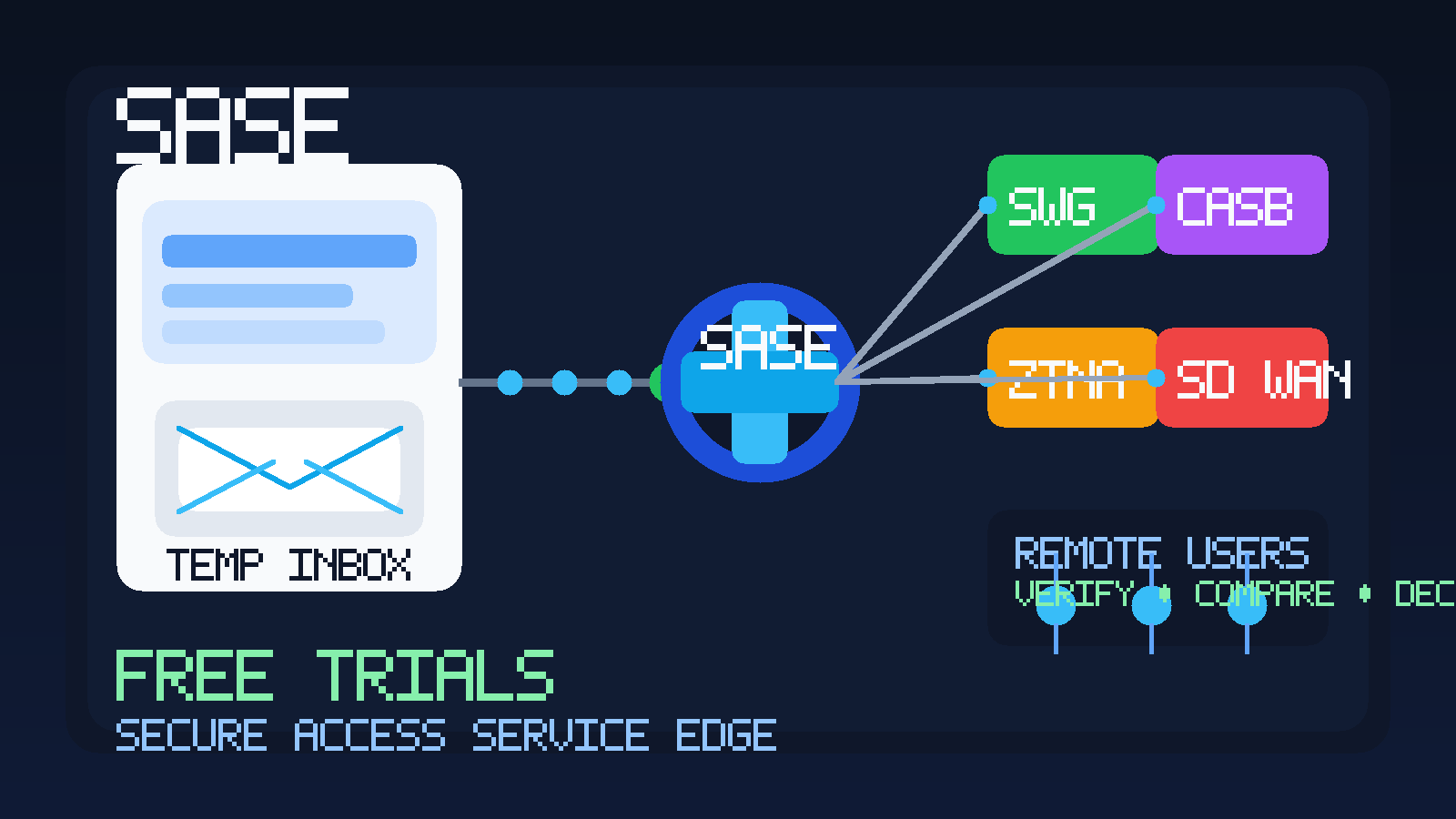
SASE trials can get noisy fast. A single signup often turns into account verification, admin onboarding, deployment guides, browser prompts, client downloads, branch networking questionnaires, architecture diagrams, and a steady stream of follow-up from sales and solution engineers. That is not unusual. SASE is a big-ticket category, and vendors treat every free trial like a serious buying signal.
A temporary inbox gives you breathing room during the research phase. You still get the activation message and the first setup instructions, but you keep exploratory vendor traffic away from your long-term work mailbox until a platform actually earns deeper attention. A service like Anonibox fits that stage well because it lets you separate curiosity from commitment without pretending the shortlisting process is the same thing as deployment.
Why SASE evaluations create so much inbox clutter
SASE is broad by design. Buyers are not just comparing one narrow control. They are often evaluating how secure web gateway features, zero trust network access, cloud access security broker controls, and edge connectivity work together in one operating model. That usually means more stakeholders, more onboarding material, and more vendor outreach than a simple single-purpose tool trial.
That is also why this topic is different from neighboring component pages such as CASB software free trials, ZTNA software free trials, and secure web gateway software free trials. Those are valuable point evaluations. A SASE trial is the umbrella comparison where buyers want to understand how the pieces fit together, how consistent policy feels, and whether one platform can reduce operational sprawl.
When a temporary inbox makes sense for SASE software free trials
This is usually the right move when you are still screening options rather than preparing a real production rollout. It makes practical sense when:
- you want to compare two or more SASE vendors in the same week
- you need access to a trial environment before looping in procurement or security leadership
- you want to review architecture, policy models, and client experience before booking multiple follow-up calls
- you expect heavy nurture sequences from enterprise vendors and want to keep them contained
- you are running an early market scan for remote access modernization, branch security, or vendor consolidation
For IT leaders, security architects, network teams, consultants, and MSP buyers, that separation is useful. Your main inbox already handles incidents, approvals, vendor renewals, and internal requests. It does not need every preliminary SASE signup mixed into the same stream before you know which platforms deserve a real pilot.
What to evaluate inside a SASE trial
If you are using a temporary inbox to keep the process clean, spend the saved attention on the product itself. The best SASE trial is not the one with the most polished emails. It is the one that makes architecture, policy, and rollout tradeoffs easier to understand.
Policy consistency across use cases
Look at whether the platform applies policy in a coherent way across web access, SaaS usage, remote access, and branch scenarios. You want to know whether you are seeing one operating model or a bundle of stitched-together products with mismatched rules and reporting.
Identity and access integration
SASE decisions live close to identity. Check how cleanly the platform works with your identity provider, user groups, conditional access patterns, and device posture signals. If user-based policy setup feels awkward during the trial, it will not feel simpler when hundreds or thousands of users are involved.
Secure web, SaaS, and private-app coverage
Do not stop at marketing diagrams. Test the practical paths. Review how the platform handles web filtering, SaaS visibility, sanctioned versus unsanctioned app controls, and access to private applications. If the vendor claims all-in-one coverage, the experience should feel integrated rather than fragmented.
Performance and user experience
Performance matters because users notice it immediately. Review login flow, policy enforcement delay, browsing responsiveness, client behavior, and access reliability. A secure platform that feels slow or fragile creates support problems fast, especially for remote teams.
Branch and network architecture fit
Some buyers need branch connectivity, SD-WAN alignment, or a clear migration path away from older VPN and appliance-heavy designs. Others mostly care about remote-user security. Use the trial to understand whether the platform matches your actual architecture instead of the vendor’s favorite reference story.
Visibility, reporting, and operations
Ask how easy it is to answer useful questions after deployment. Can you see blocked activity, risky SaaS behavior, user-level policy events, private-app access patterns, and admin actions without fighting the interface? A SASE platform should reduce operational ambiguity, not add a prettier layer on top of it.
Rollout friction
Even a short trial can reveal whether deployment will be painful. Pay attention to agent install flow, browser requirements, certificate handling, connector setup, branch onboarding, and policy staging. Early friction does not always kill a platform, but it often predicts the real implementation cost better than a polished demo does.
How to use a temporary email generator for SASE software free trials
1. Create the inbox before the first signup
Start with the temporary inbox, then fill out the vendor form. That keeps the entire early evaluation separate from your long-term mailbox from the first click.
2. Consider one inbox per vendor if you are running a shortlist
When you are comparing multiple platforms, separate inboxes make the process easier to manage. Verification emails, client-download instructions, onboarding reminders, and follow-up sequences stay neatly isolated instead of blending into one generic stream.
3. Use the temporary address for activation and early trial coordination
The sweet spot is account verification, welcome messages, setup notes, and early access information. That gives you enough signal to evaluate the platform without opening your main work inbox to every nurture path right away.
4. Save key trial details outside the inbox
Temporary email is a filter, not your permanent system of record. Save the login URL, trial expiration date, admin credentials path, connector notes, policy observations, and rollout questions in your own document. If a vendor becomes a finalist, you will want that handoff to be clean.
5. Judge the platform by deployment and policy quality, not email quality
Enterprise vendors can send very polished trial sequences. That does not mean the product will fit your environment. Focus on access flow, policy coherence, visibility, and performance rather than rewarding whoever follows up most aggressively.
6. Move real finalists to a permanent team-controlled address
Once a vendor is under serious review, switch to a durable business email. That is the right stage for procurement, security reviews, architecture workshops, pricing, contract questions, and shared admin ownership.
A practical SASE trial checklist
A useful trial should help you answer the same questions for every platform you review:
- Does the product feel like one consistent platform or a stack of loosely connected modules?
- Can it enforce sensible policy across web, SaaS, and private-app access?
- How clean is the identity and user-group integration?
- What does the client or browser experience feel like for actual end users?
- Can your team understand reporting and admin workflows without excessive training?
- How much rollout friction shows up in the first week of testing?
- Would this platform reduce complexity in your environment or just move it around?
That checklist keeps you focused on architecture and operations instead of getting pulled off course by generic platform claims.
Common mistakes to avoid
- Using one inbox for every vendor: that removes most of the organizational benefit.
- Confusing component depth with platform fit: a strong SWG or ZTNA feature set does not automatically mean the broader SASE story works for your environment.
- Skipping performance checks: policy diagrams are easy to admire, but users feel slow or brittle access immediately.
- Forgetting to save connector and rollout notes: those details matter later, especially if a vendor makes the shortlist.
- Staying temporary too long: once legal, pricing, architecture workshops, or shared admin work begin, move the relationship to a permanent address your team controls.
When a temporary inbox is the wrong tool
A temporary inbox is excellent for screening and early comparison, but it is the wrong place for production ownership. Once you are inviting teammates, connecting real infrastructure, starting security review, or moving toward purchase, use a durable mailbox with clear recovery, shared visibility, and documented ownership. The goal is not to hide forever. The goal is to stop early vendor exploration from turning into long-term inbox clutter before a platform earns that level of attention.
Final takeaway
A temporary email generator for SASE software free trials is a practical way to compare secure access service edge platforms without turning every early signup into a long tail of sales follow-up. You still get the verification links and setup guidance you need, but you keep the shortlist phase separate from the inbox your team depends on every day.
Use temporary email while you are evaluating policy consistency, user experience, visibility, and rollout friction. Then, when a vendor becomes a serious contender, move the relationship to a permanent business address and continue the process with proper ownership and documentation.