Usually, no—you do not need to volunteer your veteran status on job applications unless the employer specifically asks in a legitimate self-identification or eligibility section. If the question is optional, it is reasonable to answer honestly or decline, depending on your comfort level and the context.
What matters is the difference between job-relevant military experience and a broad veteran-status disclosure. Share what helps your candidacy, protect what is personal, and treat any early request for extra documents or sensitive details with caution.
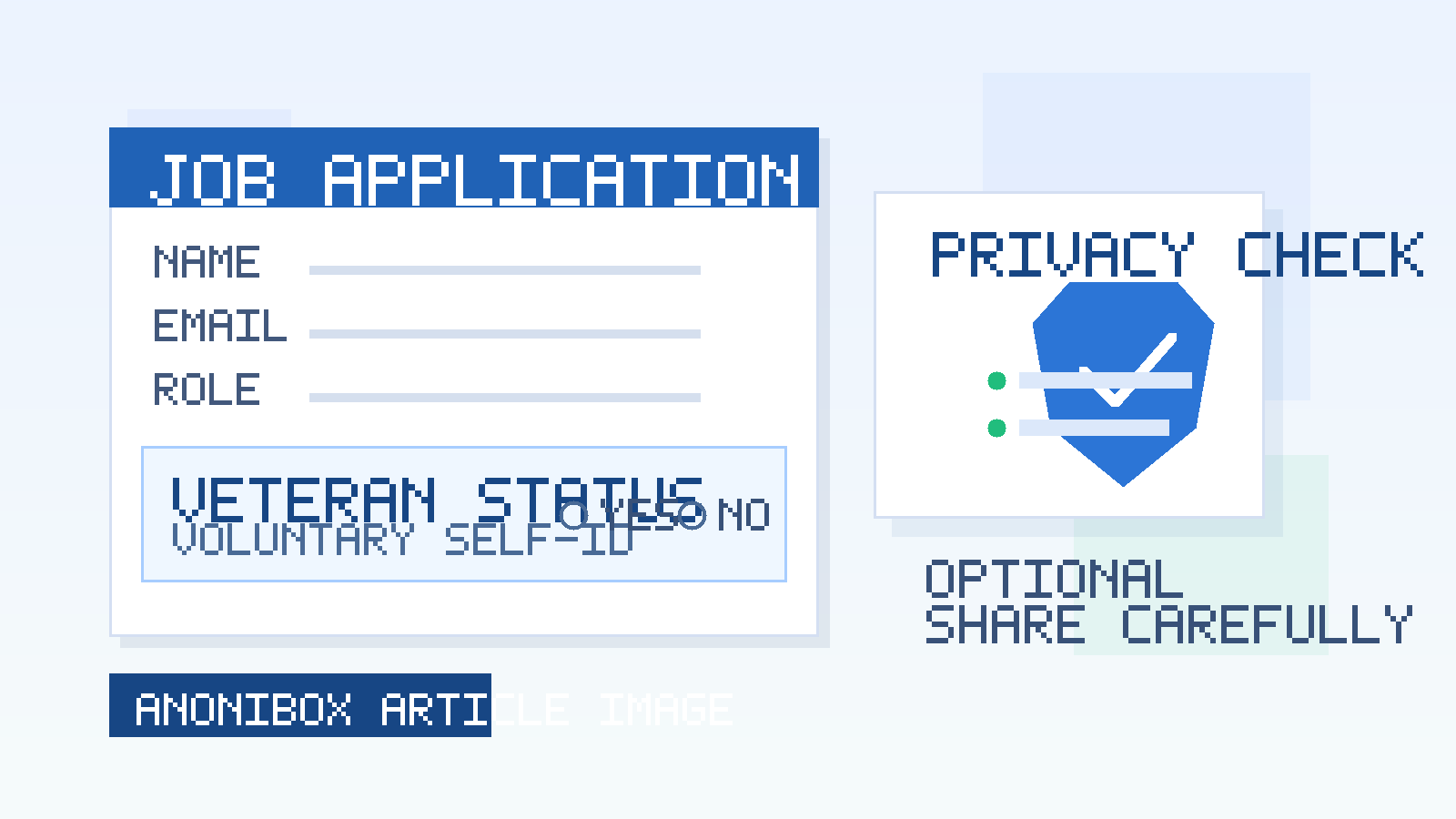
Why this question appears on some job applications
Veteran status shows up on job applications for a few different reasons, and they are not all the same. In some cases, the question appears in a separate voluntary self-identification form used for internal reporting, equal opportunity tracking, or employer compliance processes. In other cases, the employer may consider military experience relevant to the role, especially in operations, logistics, security, public service, or jobs where leadership under pressure matters.
That does not mean every employer needs detailed information about your service history at the first application stage. Often, the most they need is a simple yes, no, or “prefer not to say.” If the application is asking for far more than that early on, it is worth slowing down and checking whether the request is legitimate.
Veteran status is not the same as military experience
This is the distinction that trips a lot of people up. Your veteran status is a personal classification. Your military experience is part of your professional background.
If your service gave you directly relevant experience—team leadership, technical certifications, equipment training, operations planning, compliance work, cybersecurity exposure, language skills, or project coordination—it can make sense to present that clearly in your résumé, cover letter, or work-history section. That is different from volunteering personal status information in a generic application field that may or may not help your candidacy.
In other words, if your service history strengthens your application, explain the experience. If the employer is asking about veteran status for a separate self-ID purpose, answer that question on its own terms instead of mixing the two together.
When it can make sense to disclose your veteran status
There are situations where sharing your veteran status is practical and reasonable:
- The employer asks in a clearly labeled voluntary self-ID section. That is a normal context for the question.
- The organization openly supports veteran hiring programs. Some employers actively recruit veterans and want applicants to know that background is welcome.
- The role is closely connected to military experience. If your service background is directly relevant, disclosure may feel more natural.
- You want to use veteran preference or related hiring pathways. In some environments, that information may matter to how your application is evaluated.
- You are comfortable sharing it. Privacy is still your call when the question is optional.
In those cases, answering honestly can be fine. The key is making sure the request is proportionate, clearly explained, and connected to a legitimate application flow.
When it is smart to be more cautious
There are also situations where disclosing veteran status early is not necessary or not wise:
- The application is on a low-trust job board or third-party form. The more copies of your personal data floating around, the harder it is to control.
- The employer is vague. If the company name, website, or recruiter identity is unclear, there is no reason to volunteer extra personal information.
- The question is outside a normal context. A clean self-ID field is one thing. A random free-text box asking for service details is another.
- You suspect the role may be a scam. Fake employers often collect personal details long before there is any real interview process.
- The application asks for too much too soon. Early-stage forms usually do not need detailed documents, service records, benefit paperwork, or anything similar.
If something feels off, it probably is not the right moment to share more. You can stay professional while still protecting your privacy.
What you should not share early in the process
Even when a veteran-status question is legitimate, most employers do not need deep documentation at the application stage. Be cautious about sharing:
- Discharge paperwork or military records
- Service numbers or identity documents
- VA disability details or medical information
- Benefit account information
- Scans of IDs unless the hiring stage clearly justifies it and the employer is verified
A simple status answer is very different from handing over sensitive records. If a company jumps straight to document collection before normal screening, interviews, or offer-stage paperwork, that is a red flag.
Common red flags around veteran-status questions
Most legitimate employers handle self-identification in a pretty boring, standardized way. Be careful when the process stops looking boring.
- The recruiter contacts you from a personal email address but asks for military or identity documents.
- The application asks you to upload paperwork before any real conversation.
- You are pressured to move off the company site to text, Telegram, or another channel immediately.
- The form mixes veteran status with unrelated sensitive requests like bank details or ID photos too early.
- The company cannot explain why it needs the information.
Those warning signs do not prove fraud by themselves, but together they are enough reason to pause and verify the employer before sharing more.
Best practices if you are asked about veteran status
1. Check whether the question is optional or required
A lot of veteran-status questions are explicitly voluntary. If the form says “prefer not to say” or “decline to answer,” that usually means you have room to make a privacy-based choice.
2. Answer the exact question, not more
If the employer only needs a yes/no/self-ID response, do not expand into a detailed explanation unless there is a clear benefit to doing so. Less exposure is usually better.
3. Separate your experience from your status
If military service is relevant, describe the skills and results in your work history. Keep self-ID questions separate from the story of your qualifications.
4. Verify the employer before sharing documents
If the process later reaches a stage where proof is genuinely required, make sure you are dealing with a real employer, a real HR contact, and a secure submission method.
5. Keep your job-search communication organized
If you are applying widely, especially through job boards or talent pools, using a separate inbox can help you keep employer messages organized while reducing long-term spam in your main account. That is one reason some job seekers use a dedicated application email or a privacy-first workflow with a tool like Anonibox for early-stage signups and alerts.
What if the employer seems genuinely veteran-friendly?
That can be a positive sign, but it still does not mean you have to overshare. An employer can be supportive of veteran applicants without needing detailed documents immediately. The strongest approach is usually to share what helps your candidacy, keep sensitive records back until they are truly needed, and respond through normal HR channels rather than informal messages.
If you want your veteran background to strengthen your application, focus on the part recruiters can actually evaluate: leadership, discipline, training, teamwork, technical ability, operations experience, and measurable outcomes. Those details make your value clear without exposing more personal information than necessary.
A quick decision checklist
Before answering a veteran-status question on a job application, ask yourself:
- Is this a real employer or a low-trust third-party listing?
- Is the question in a normal self-ID section or in an odd free-text box?
- Is the field optional, required, or paired with a “prefer not to say” choice?
- Am I being asked for a simple answer or for sensitive documents too early?
- Would disclosing here actually help, or am I just giving away more personal data than necessary?
If the process looks legitimate and the question is framed appropriately, answering may be completely fine. If the request feels invasive, rushed, or loosely explained, protecting your privacy is the better move.
Final answer
So, should you put your veteran status on job applications? Usually only when the employer specifically asks for it in a legitimate, clearly explained application section. If it is optional, you can answer or decline based on your comfort level, the trustworthiness of the employer, and whether the disclosure meaningfully helps your application.
The safest rule is simple: share relevant experience freely, share personal status carefully, and never hand over detailed documents before the hiring process justifies it. That gives you the benefit of presenting your background well without giving up control of sensitive information too early.