Yes — using a temp email for Catho can help you test job alerts, recruiter emails, and early applications without giving your main inbox permanent exposure too early.
It works best while you are exploring the platform. If a real employer conversation, interview process, or time-sensitive application starts moving forward, switch to an address you monitor every day.
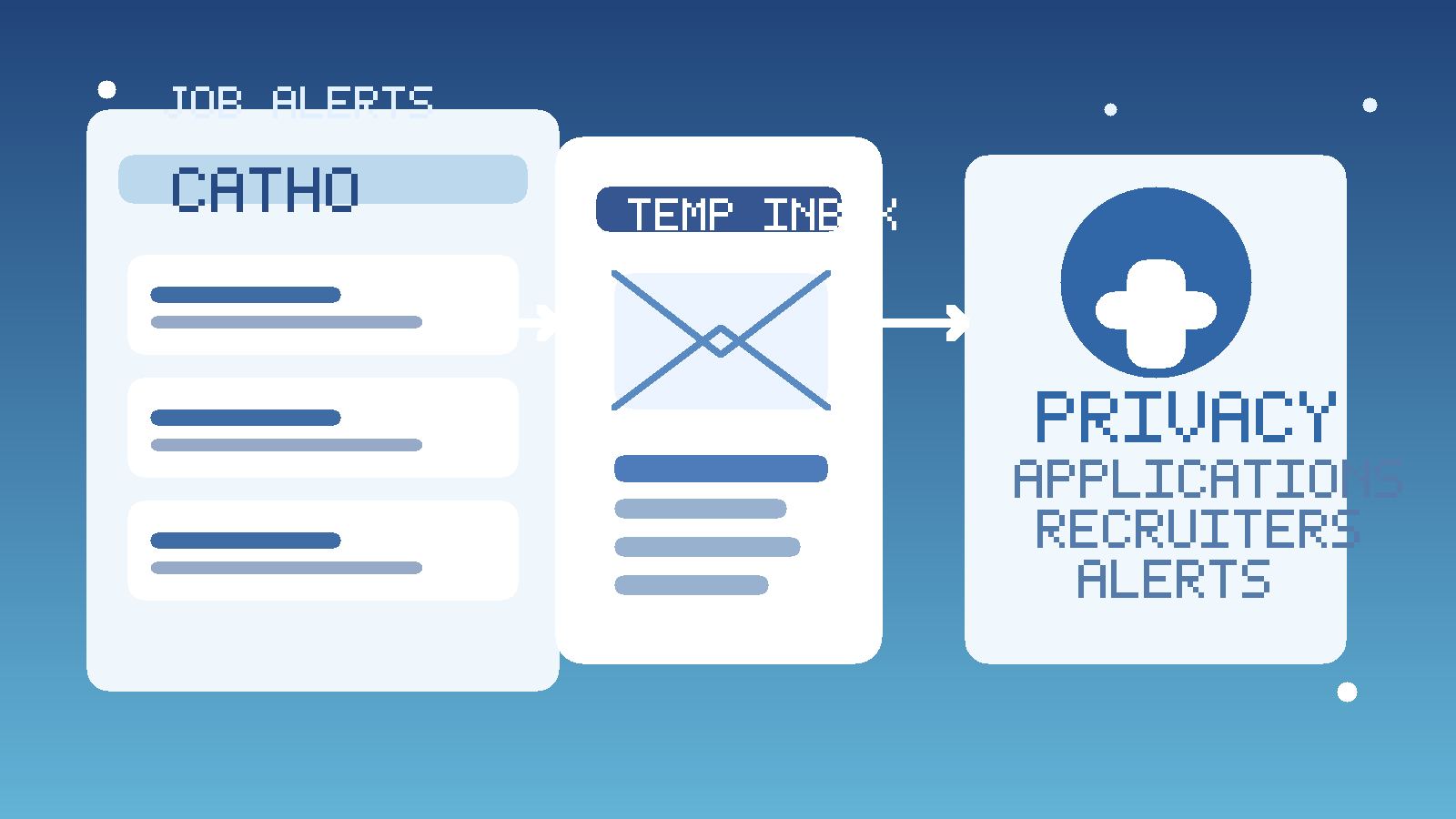
That balance matters because job boards are useful precisely because they centralize a lot of activity. You can browse openings, create an account, save searches, upload a resume, turn on alerts, and sometimes hear from recruiters or employers without bouncing across dozens of separate company sites. The convenience is real. The inbox spillover can be real too.
If you are comparing several platforms at once or quietly checking the market before a serious job search, your email can fill up fast with verification messages, alert digests, profile reminders, recruiter follow-ups, and “recommended jobs” you never planned to track long term. A temporary inbox gives you a practical way to keep that early-stage traffic separate while you decide whether Catho is actually worth keeping in your regular workflow.
That is where a tool like Anonibox fits naturally. It is not about hiding from legitimate employers or avoiding serious communication forever. It is about controlling when a platform gets durable access to your main inbox and keeping your search organized while you test what is useful.
Why people look for a temp email for Catho
Most people searching this are not trying to do anything complicated. They usually want one or more of these things:
- to test Catho before committing their main address,
- to separate job-search traffic from personal and work email,
- to reduce long-term inbox clutter,
- to organize recruiter contact more cleanly, or
- to lower privacy exposure while comparing multiple job boards.
That makes sense. Job searching often starts wide. You may check regional platforms, global job aggregators, staffing sites, and company career pages all at once. If every site gets your primary email on day one, the volume builds quickly, and it becomes harder to tell which messages matter.
What Catho can send to your inbox
Depending on how you use the platform, your inbox may start receiving more than just one signup email. A Catho account can lead to several kinds of messages over time:
- account verification or account-change notices,
- saved-search or new-job alerts,
- profile completion reminders,
- recommendation emails based on browsing or resume activity,
- application-related updates, and
- recruiter or employer outreach if your profile is visible in the right contexts.
None of that is automatically a problem. In fact, some of those emails can be genuinely helpful when you are actively searching. The issue is timing. Early in the process, you may not know whether you will keep using the platform, whether the alerts are relevant, or whether the recruiter traffic will be useful enough to justify long-term inbox access.
When a temp email for Catho makes the most sense
1. You are still evaluating the platform
If you have not decided whether Catho fits your industry, location, or salary range, using a temporary inbox for the first round of testing is reasonable. You can create the account, confirm it if needed, review the available jobs, and see what kind of alerts the platform generates before mixing those messages into your main inbox.
2. You are running a broad multi-platform search
A lot of job seekers do not rely on one site. They might combine Catho with LinkedIn Jobs, regional boards, employer career pages, and other local or international platforms. In that setup, a temp inbox can help you isolate one source of alerts so you can judge whether the signal is actually worth the noise.
3. You want cleaner inbox organization
Sometimes the goal is not privacy in a dramatic sense. It is simply operational. A separate inbox makes it easier to tell which messages came from a job board experiment, which ones came from direct applications, and which ones need a fast response.
4. You are browsing quietly before a serious search
Maybe you are currently employed and only checking the market. Maybe you want salary context or role trends without turning one evening of browsing into months of extra email. A temporary address is useful for that kind of low-commitment research.
When you should switch to a real email address
A temp inbox is usually best for the research and testing phase, not the entire hiring process. Once an opportunity becomes real, the safer move is to switch to an address you own, keep, and check consistently.
That is especially true when:
- an employer wants to schedule an interview,
- a recruiter is having an actual back-and-forth conversation with you,
- you need password recovery or long-term account access,
- application updates may continue for weeks, or
- important documents or next steps are likely to arrive by email.
If you keep using a short-lived inbox after the conversation becomes serious, the downside is obvious: you can miss something that actually matters. The smart play is to use the temp address to qualify the platform, then move important threads to a stable inbox when the stakes change.
Best practices if you use a temporary inbox with Catho
Use it for the right stage
Think of the temp address as a filter, not a permanent home for every hiring interaction. It is good for account creation, alert testing, and low-commitment platform evaluation. It is less suitable once the relationship turns into active recruiting.
Save the emails that matter
If you get a useful confirmation link, application reference, or recruiter message, save it somewhere you control. That could mean copying the details into your notes, an application tracker, or a more permanent email thread if you decide to continue.
Keep your resume and profile consistent
If you upload a resume or build a profile on the platform, make sure your core details stay accurate even if you are using a temporary email for initial access. A separate inbox should improve organization, not create confusion about who you are or how to contact you later.
Do not ignore security basics
A temp inbox is useful for privacy, but it does not replace ordinary caution. Be careful with suspicious links, vague recruiter outreach, and requests for sensitive information too early in the process. The same job-scam rules still apply.
What a temp email will not solve
It helps to be realistic here. A disposable or temporary address can reduce inbox clutter and limit how quickly your primary address spreads, but it does not fix every job-search problem.
- It does not make a weak application stronger.
- It does not guarantee fewer scams.
- It does not replace a stable inbox for serious opportunities.
- It does not remove the need to monitor messages carefully once something important starts moving.
In other words, it is a useful workflow tool, not a magic shield. Used properly, it helps you stay organized and privacy-conscious. Used carelessly, it can make follow-up harder than it needs to be.
A practical workflow that works well
If you want a simple approach, this is a good one:
- Create a temp inbox first.
- Use it to open or test the Catho account.
- Review the quality of jobs, alert frequency, and recruiter traffic.
- Decide whether the platform deserves a place in your real search workflow.
- If a real opportunity appears, move the conversation to your stable email address.
That approach gives you the upside of experimentation without forcing immediate long-term commitment from your main inbox. It also makes it easier to compare platforms honestly instead of just keeping every alert stream alive forever.
How Anonibox fits into that workflow
Anonibox is useful here because job-search privacy is often less about secrecy and more about control. You may want separate inboxes for different experiments, or you may simply want to avoid turning every new account into permanent background noise. A temporary inbox supports that kind of cleaner decision-making.
For example, if you are testing Catho alongside other regional job boards, you can keep each platform’s early messages separate, see which one produces better opportunities, and only move the worthwhile conversations into your main communications setup. That is a much cleaner system than dumping everything into one address and hoping you notice the important parts later.
Final answer
Using a temp email for Catho is a practical way to test job alerts, recruiter emails, and early applications without handing your primary inbox to another platform before you know whether it is useful. It works best during account setup, alert testing, and broad job-board comparison.
Once an employer conversation becomes real, switch to a stable email you check consistently. That gives you the privacy and inbox control benefits of a temp inbox without risking missed follow-ups when an actual opportunity matters.