Yes—using a temp email for WorkIndia is a practical way to keep job alerts, employer follow-ups, and early applications out of your main inbox while you figure out which opportunities are actually worth pursuing. It helps you stay reachable without giving every platform and recruiter immediate long-term access to your primary email address.
The best approach is to use that separate inbox for sign-up, alert testing, and early-stage applications, then switch to a stable professional address once a real employer conversation becomes serious. That gives you privacy early without creating avoidable friction later.
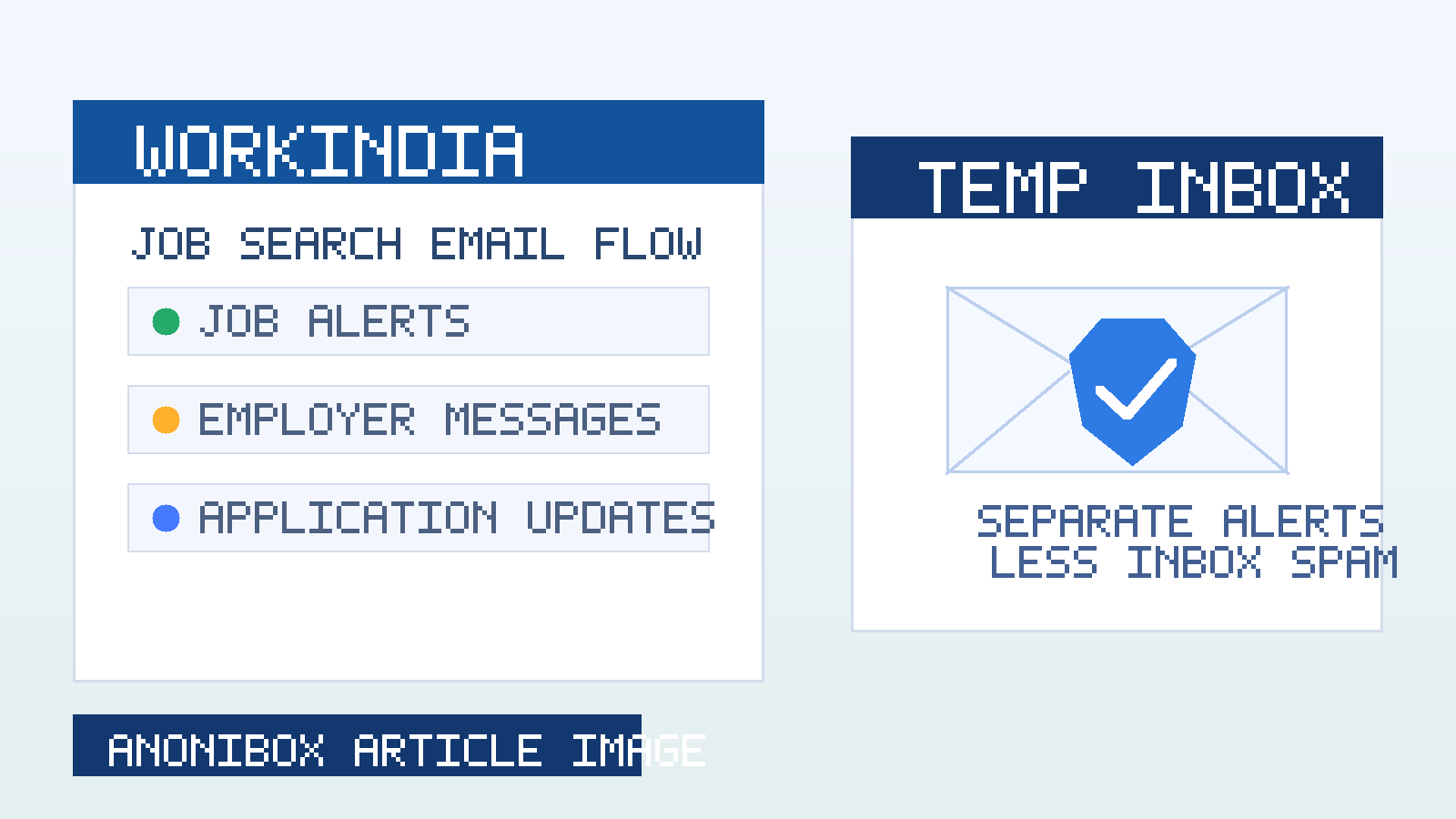
Why someone would use a temp email for WorkIndia
Job platforms are useful because they centralize listings, profile visibility, application updates, and employer outreach in one place. The downside is email volume. Once you start subscribing to alerts or applying broadly, your inbox can fill up with new-role notifications, reminder emails, profile prompts, and follow-ups that continue long after you have moved on.
A temporary or separate inbox gives you a cleaner way to test the platform before folding it into your everyday email life. If you are searching across several boards at once, that separation becomes even more useful. You can see whether the listings are relevant, whether the alerts are too noisy, and whether the employer responses are worth keeping—all without mixing everything into the same account you use for personal communication, bills, travel, or long-term professional contacts.
That can be especially helpful if you are:
- comparing multiple job sites during an active search
- trying to keep recruiter traffic separate from personal email
- currently employed and being careful about where job-search messages land
- testing alert quality before committing to ongoing subscriptions
- protecting your main inbox from long-term clutter and spam
What a temp inbox actually helps with
Account setup and early exploration
If you want to create an account, verify your email, and browse how the platform works, a temp or secondary inbox can be a smart first step. You still receive the confirmation and onboarding emails you need, but you avoid handing over your main address before you know whether the platform belongs in your regular workflow.
Alert testing
A lot of job seekers set up several alert combinations by role, city, salary range, or work type before they find something useful. A separate inbox makes it easy to judge the quality and frequency of those alerts. If the results are repetitive, low-quality, or simply too frequent, you can cut that stream off without cleaning up your primary mailbox afterward.
Early-stage employer communication
During the first part of a job search, you may receive a mix of legitimate replies, generic outreach, and messages you decide not to pursue. Keeping those early interactions in a separate inbox helps you sort signal from noise before you move promising opportunities into your main professional communication flow.
When a temp email is a good fit—and when it is not
A temp email is best for the top of the funnel. It works well when you are still exploring, still testing the platform, or still deciding how much attention a given board deserves.
It is a good fit when you want to:
- create an account and inspect the platform first
- try saved searches or alerts without committing your main inbox
- separate one job board from the rest of your job search
- keep early applications organized while you apply broadly
It is a poor fit when you are:
- deep in interviews with an employer you care about
- waiting for assessment links, interview confirmations, or offer details
- using a mailbox that could expire before follow-up arrives
- relying on one inbox you do not check consistently
That last point matters most. Privacy is useful, but not if it causes you to miss a real opportunity. If an employer conversation looks promising, move it to a stable, monitored address before the process becomes time-sensitive.
How to use a temp email for WorkIndia without hurting your own job search
1. Decide whether you need a disposable inbox or a dedicated secondary inbox
If you are only testing alerts or browsing the platform, a short-term temporary inbox may be enough. If you are actively applying and expect real replies, a dedicated job-search inbox is usually the safer choice. It still protects your main email, but it is more reliable for ongoing communication.
2. Use it for sign-up, alerts, and early applications
The biggest privacy win usually comes in the first stage: account creation, alert subscriptions, and broad early outreach. This is where volume is highest and signal is lowest, so separation helps the most.
3. Track where you applied
Keep a simple note, spreadsheet, or checklist that records which roles you applied for and which inbox you used. That way, if an employer replies days later, you can connect the message to the right application immediately instead of guessing.
4. Move serious conversations to a permanent inbox
When an application becomes real—screening calls, assessments, interviews, or document follow-up—switch to an address you plan to monitor long term. Legitimate employers care more about reliable contact than about whether you started with a temporary inbox.
5. Check the inbox consistently while it is active
A separate address only works if you actually look at it. If you are using it for live applications, set a routine for checking it so you do not miss important timing windows.
Best practices for alerts, recruiter messages, and applications
Keep platform noise separate from serious opportunities
Not every notification deserves the same treatment. Alert emails and generic prompts can stay in a temporary or secondary inbox. A credible employer conversation should usually graduate to a stable professional address once you know the opportunity matters.
Do not send sensitive information too early
Email is contact information, not a reason to trust everything that arrives. Be cautious if anyone asks for identity documents, bank details, payment, or other sensitive information before there is a clear, normal hiring process in place.
Verify vague recruiter outreach
If someone contacts you with little context, ask for the company name, role title, and official contact details before you engage deeply. A separate inbox helps contain questionable outreach, but it does not replace basic verification.
Use the same privacy logic across channels
If you are being thoughtful about email, apply the same thinking to your phone number and messaging apps. A privacy-conscious job search works best when you manage all of your contact points deliberately, not just one of them.
Common mistakes to avoid
- Using an inbox that disappears too quickly: fine for testing, risky for active applications.
- Applying seriously but never checking replies: privacy is pointless if it makes you unreachable.
- Mixing every platform into the same mailbox: that defeats the organization benefit.
- Never switching to a stable address: once a role is real, reliability matters more than perfect separation.
- Trusting every message just because it references a job application: scammers know job seekers are waiting for replies.
Temp inbox vs. dedicated job-search inbox
For many people, the smartest answer is not choosing one forever—it is using the right tool at the right stage.
A fully temporary inbox is great for low-commitment exploration: account creation, alert testing, and checking whether a platform is useful. A dedicated secondary inbox is better once you are actively applying and expect ongoing responses. It still protects your main account, but it is stable enough for serious follow-up.
If you are in the middle of a real search, a dedicated second inbox often gives the best balance. If you are only experimenting, a throwaway address may be enough. A tool like Anonibox can help you keep those early-stage signups and alert streams separate so your primary inbox does not absorb every platform you test.
A practical workflow that works well
- Create a temp or secondary inbox before signing up.
- Use it for email verification and alert setup.
- Test listing quality and notification frequency for a few days.
- Apply selectively rather than blasting your profile everywhere.
- Move promising employer conversations to a stable professional inbox.
- Retire or stop using the separate inbox if the platform is not worth keeping.
This approach keeps your search organized without making you harder to reach when a real employer shows up.
Final answer
Using a temp email for WorkIndia is a smart privacy move for account setup, job alerts, and early-stage applications. It helps you control inbox clutter, reduce long-term noise, and test whether the platform is useful before you commit your main email to it.
Just do not confuse privacy with permanence. A temporary inbox is best for exploration and filtering. Once a job lead becomes serious, switch to a stable address you monitor closely. That balance gives you the privacy benefit up front without risking missed opportunities later.