Use a temp email for BrighterMonday if you want to keep job alerts, recruiter messages, and early applications out of your main inbox while you decide which opportunities are actually worth serious follow-up.
Yes—it is a practical privacy move for signup, alert testing, and broad early-stage applications, but once a real employer conversation becomes active, you should switch to a stable professional address you monitor closely.
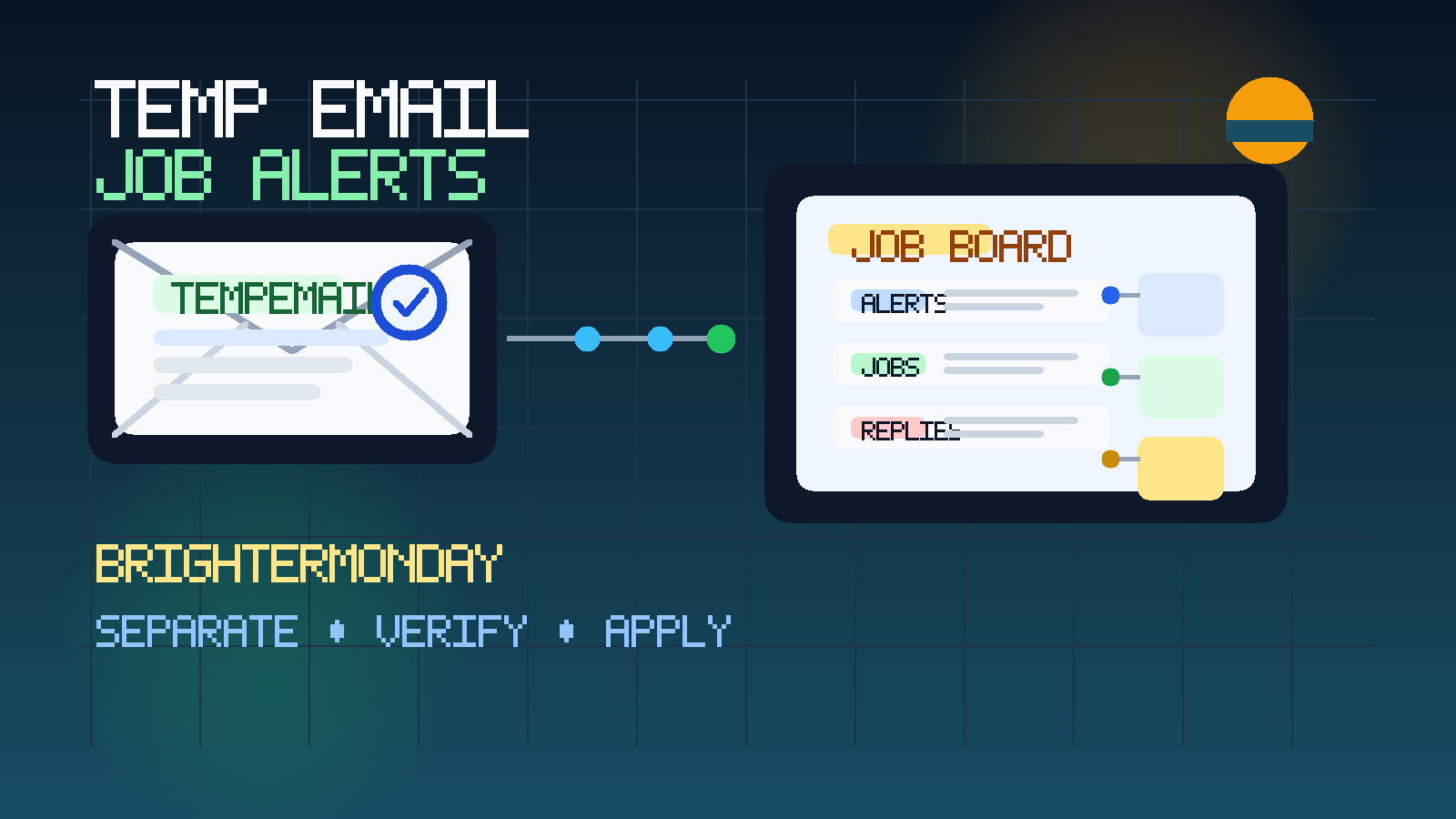
Job boards are useful because they reduce friction. You can create a profile, browse openings, save searches, apply faster, and hear from recruiters without starting from zero every time. The downside is that convenience often creates inbox spillover. A single account can lead to recurring alerts, profile reminders, recruiter outreach, application confirmations, and platform nudges that keep arriving long after you have stopped caring about a role.
That is where a temporary or separate inbox helps. Instead of tying every stage of your search directly to your main personal or long-term professional email, you create some breathing room. You still get the messages you need, but you decide when a conversation has earned access to your primary inbox. If you use a service like Anonibox for the early filtering stage, that separation can make your search easier to manage without making you harder to reach.
Why someone would use a temp email for BrighterMonday
Most job seekers are not trying to hide from legitimate employers. They are trying to control noise, protect privacy, and stay organized. That matters even more if you are applying broadly, comparing several job boards at once, or quietly searching while still employed.
A temp email can help if you want to:
- test whether BrighterMonday alerts are actually relevant before connecting the platform to your main inbox
- separate recruiter traffic from personal messages and everyday work email
- keep early-stage applications organized while you decide which roles deserve more energy
- limit long-term email clutter from saved searches, reminders, and marketing follow-ups
- protect your main address when you are still exploring the market rather than pursuing one specific employer
That does not make temporary email a trick or a loophole. It is just an inbox-management strategy. The goal is simple: keep exploratory job-search activity from taking over the address you use for everything else.
What a separate inbox actually helps with
Account setup and verification
If you want to create an account and see how the platform works, using a separate inbox is an easy first layer of privacy. You still receive the verification message and welcome emails, but you do not immediately add another source of recurring mail to your primary address.
Job alert testing
Many people set up multiple alerts by role, location, industry, or experience level before they know which settings will be useful. A temp inbox lets you judge alert quality and email volume before committing. If the alerts are helpful, you can keep using the address or move to a more permanent one later. If they are noisy, you can cut them off cleanly.
Early recruiter messages
Not every recruiter message deserves the same level of attention. Some are specific and promising. Some are generic and low-value. Some may not match what you want at all. Keeping those early messages in a separate inbox makes triage easier. You can respond to real opportunities without letting marginal ones crowd your main communication channel.
Broad early applications
If you are sending out a lot of applications in a short period, a separate inbox helps you keep the top of the funnel tidy. Application confirmations, password resets, and automated follow-up all stay in one place instead of being mixed into your everyday inbox.
When a temp email is a good fit—and when it is not
Temporary email works best at the exploratory stage. It is strongest when you are testing, browsing, or applying broadly and do not yet know which opportunities are worth deeper follow-up.
It is usually a good fit when you want to:
- create an account and inspect the platform first
- test job alerts before committing your main inbox
- separate one job board from the rest of your search
- protect your privacy while you are still passively looking
- keep early applications and recruiter traffic easier to review
It is a poor fit when you are:
- deep in interviews with an employer you care about
- waiting on time-sensitive scheduling messages or assessment links
- expecting contract, background-check, or offer-stage communication
- using an inbox that may disappear before important follow-up arrives
- depending on an address you are not checking consistently
The distinction matters. Privacy is helpful, but not if it causes you to miss a real opportunity. Once the conversation turns serious, reliability matters more than perfect separation.
How to use a temp email for BrighterMonday without hurting your job search
1. Decide whether you need disposable or just separate
If you only want to verify signup, browse roles, and test alerts, a short-term disposable inbox may be enough. If you plan to apply actively and expect replies, a dedicated secondary inbox is often the safer choice. It still protects your main email, but it gives you more continuity.
2. Use it for signup, alerts, and early-stage traffic
The biggest privacy gain usually comes early. This is where volume is highest and signal is lowest. Use the separate inbox for account creation, alert subscriptions, and broad early applications rather than for later interview-stage communication.
3. Track which email you used
Keep a simple note showing where you applied, what role it was, and which email address you used. That sounds obvious, but it prevents confusion when a recruiter replies days later and you need to connect the message to the right application quickly.
4. Check the inbox consistently
A separate inbox only helps if you actually monitor it. If you create one and forget it, you turn privacy into missed opportunities. During an active search, check it on a schedule just as you would your main email.
5. Move serious conversations to a stable address
When an employer conversation becomes real—screening calls, interview scheduling, assessment tasks, salary discussions, or document follow-up—switch to an address you plan to keep. Most legitimate employers care more about dependable communication than about the exact inbox used at signup.
6. Keep your phone and email strategy aligned
If you are already being careful with your inbox, think about your phone number too. A lot of job-search spam shifts from email to text once your details start spreading. A separate email strategy works best when the rest of your contact habits are equally deliberate.
A practical checklist before you use temporary email on a job board
Ask yourself these questions before you decide:
- Am I just exploring, or am I already in active interviews?
- Do I want to test job alerts before giving out my main address?
- Will I reliably check the inbox I am about to use?
- Would a dedicated secondary inbox serve me better than a fully disposable one?
- Do I have a plan for moving serious conversations to a stable address?
If you can answer those clearly, temporary email becomes a tool instead of a gamble.
Common mistakes to avoid
- Using an inbox you will not monitor: privacy does not help if it makes you miss interview requests.
- Keeping everything temporary for too long: once a role becomes real, move to a durable address.
- Forgetting which jobs match which inbox: that creates confusion when replies start arriving.
- Treating every recruiter message as equally urgent: a separate inbox is most useful when it helps you sort signal from noise.
- Sharing more information than necessary too early: your email address is one piece of privacy, but be cautious with phone numbers, IDs, and financial details too.
What about scams and low-quality outreach?
A separate inbox can reduce clutter, but it is not magic. You still need judgment. Be careful with any message that pushes urgency, asks you to move to WhatsApp or Telegram immediately, promises unrealistic pay, or requests sensitive documents too early. Legitimate employers can be fast, but they usually do not collapse basic professionalism the moment you ask for clarity.
If a message feels vague or rushed, slow the process down. Verify the employer, check the company site, compare the role details, and do not treat every inbound message as proof that the opportunity is real. Temporary email helps contain the noise, but it does not replace common sense.
When to stop using temp email and switch fully
There is a clear moment when privacy should give way to continuity. Once an employer is actively interviewing you, sharing assessment materials, coordinating schedules, or discussing an offer, use an address that you control long term. That makes future communication easier for both sides and lowers the chance of losing something important in the handoff.
Think of temporary email as a top-of-funnel tool. It helps you browse, test, filter, and organize. It should not be the permanent home for a job opportunity you truly want.
Final answer
Yes, using a temp email for BrighterMonday is a smart way to protect your privacy and reduce inbox clutter during the early part of a job search. It works especially well for account setup, job-alert testing, and broad applications where you want some distance between platform traffic and your everyday email.
Just do not let privacy turn into unreliability. Use temporary email while you are exploring, check it consistently, and move serious employer conversations to a stable professional inbox as soon as the opportunity becomes real. That gives you the benefit of separation without making yourself harder to hire.