If you are wondering whether a temp email for Firebase is a good idea, the short answer is yes for throwaway auth tests, demo apps, and one-off project invites, but no for production projects, billing, or long-term team ownership.
Use a temporary inbox to verify the account, test the workflow, and keep early experimentation out of your main mailbox, then switch to a stable address as soon as the project starts to matter.
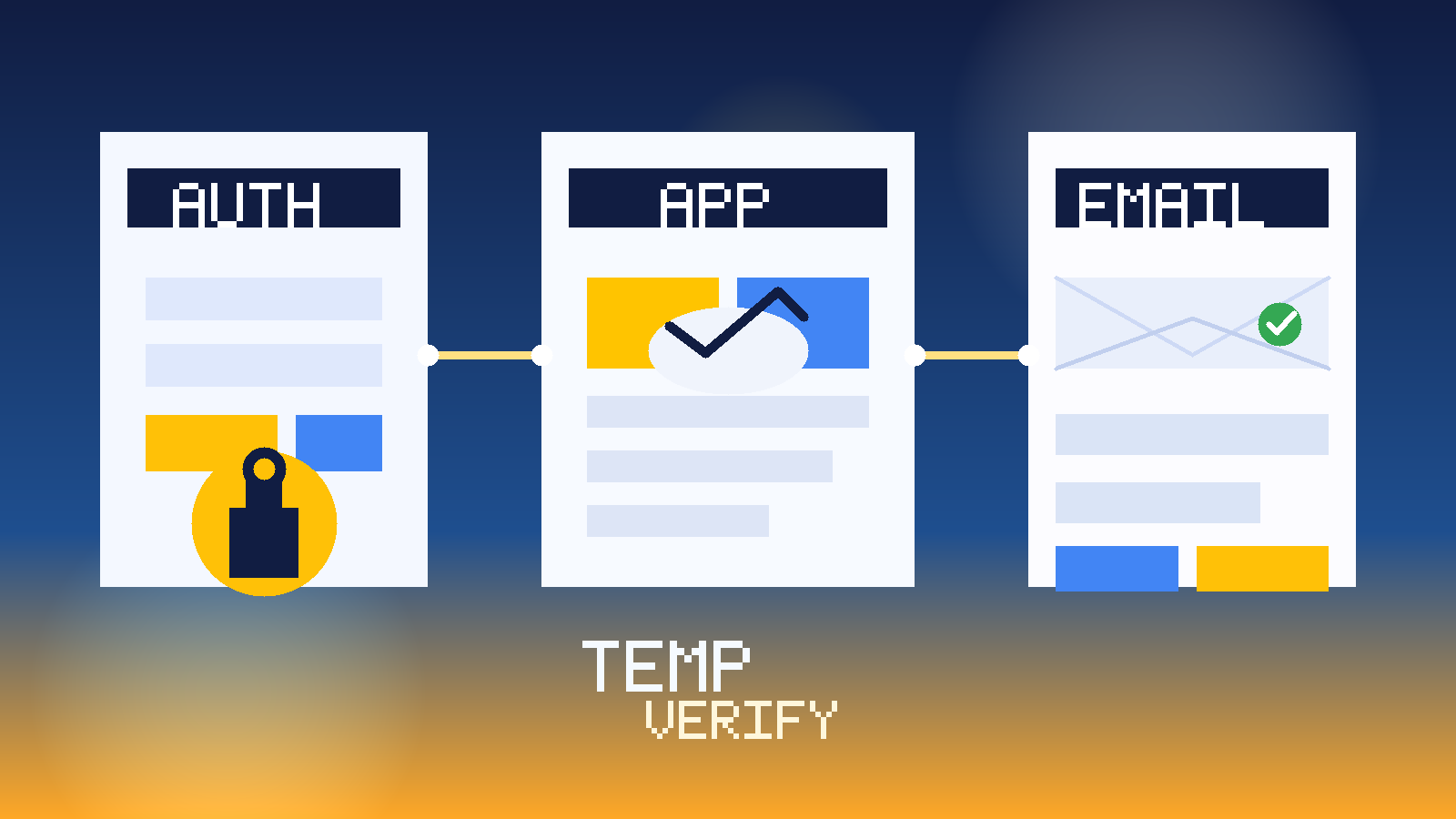
Why people look for a temp email for Firebase
Firebase is built for fast starts. A developer wants to test email sign-in, spin up a tiny app backend, share a proof of concept, try push notifications, or compare the stack with another backend platform. That kind of early work is useful, but it does not always justify handing every experiment over to the same inbox you use for real client work, personal correspondence, and long-term accounts.
That is why temporary inboxes come up so often in Firebase workflows. You still receive the verification email, onboarding notes, and invite messages needed to get started, but you keep low-stakes testing separate from your permanent email identity. If you already use a service like Anonibox for trial signups or disposable developer accounts, Firebase is a natural place to apply the same habit.
When a temp email for Firebase makes sense
A temporary inbox is usually reasonable when the project is clearly short-lived and experimental. Good examples include:
- testing email verification, password reset, or magic-link style auth flows,
- building a quick prototype for a demo, class, hackathon, or interview exercise,
- creating a disposable app to compare Firebase against another backend platform,
- opening a one-off project for UI, Hosting, Firestore, or Cloud Functions experiments,
- isolating invite noise and onboarding email from your permanent inbox while you evaluate the tool.
In those cases, the goal is speed and separation. You want to get into the product, test the workflow, and decide whether the platform deserves deeper attention without turning every small experiment into a permanent email relationship.
When a temp email is the wrong choice
Firebase projects often begin as small experiments and become real surprisingly fast. A prototype turns into an internal tool. A quick auth test becomes the base for a startup MVP. A solo demo becomes something a teammate, client, or future you needs to access again months later. Once that happens, a temporary inbox stops being convenient and starts becoming a weak point.
A temp email is a bad fit if the account is tied to:
- production apps or any service that real users depend on,
- billing, plan upgrades, invoices, or quota-related notices,
- shared team ownership, recurring collaboration, or admin handoffs,
- security alerts, account recovery, or settings you cannot afford to lose access to,
- client work or side projects you may need to revisit later,
- important notification flows such as auth troubleshooting or service-change emails.
If losing the inbox would create real stress, real cleanup work, or real risk, the project deserves a permanent address from the beginning.
A practical workflow for using a temp email with Firebase
1. Decide whether the project is truly disposable
Before you sign up, ask a blunt question: is this actually a throwaway test, or is there a decent chance it becomes something you keep? If the answer is “it might matter later,” a secondary permanent inbox is usually smarter than a fully temporary one. If the answer is “this is just a sandbox,” a temp inbox is fine.
2. Generate the inbox before signup
Create the temporary address first so every verification and onboarding message lands in one place. That keeps the setup clean and makes it easier to tell what the platform actually sends during the first hour of use.
3. Save anything you may need again
A temporary inbox is useful for access, not for long-term memory. If you receive an invite link, setup note, project URL, or anything you may need later, copy it somewhere under your control. Do not assume the inbox will still be around when you remember you need that message tomorrow.
4. Evaluate the platform, not just the signup
Once the account is active, stop obsessing over the inbox and test the reason you came to Firebase in the first place. Are you checking auth? Hosting? Firestore ergonomics? Cloud Functions? Project setup speed? The temp email is only useful if it helps you evaluate those things more cleanly.
5. Promote the project to a stable email early if it proves useful
If the experiment survives the first round of testing and starts looking like something you might keep, switch to a long-term email before the project becomes important. Do not wait until collaborators, billing, or user data are involved. The earlier you fix ownership, the less messy the transition will be.
What to evaluate inside Firebase, not just during signup
People sometimes spend more time thinking about the verification email than the actual product decision. That is backwards. A serious Firebase evaluation should go beyond “the signup worked.”
Auth and verification flow
Firebase is often chosen because the auth layer is quick to wire up. Test how email verification, password resets, and sign-in behavior feel in practice. Are the defaults easy to understand? Is the developer experience clean? Can you see how the flow would behave in a real app, not just in a tiny sandbox?
Project setup and console clarity
Fast starts are great, but long-term usability matters more. Check whether the console makes sense, whether important settings are easy to find, and whether navigation between app configuration, auth, database, hosting, and cloud features feels clear or scattered.
Data and app workflow
If you are evaluating Firestore or other app data patterns, pay attention to how quickly you can move from setup to real test data. A platform can feel impressive during signup and still become awkward once you start shaping actual app logic, collections, permissions, and environment structure.
Hosting and deploy convenience
Many Firebase tests are really about how quickly a small app can go from local experiment to public demo. If hosting or deployment is part of your reason for signing up, test that path directly instead of assuming the good first impression will hold all the way through.
Collaboration and ownership boundaries
This is one of the first places where a temp email can become a liability. Team invites, project access, and admin responsibilities all work better when the owner identity is stable. If you already expect more than solo testing, treat that as a sign the account may deserve something more durable than a throwaway inbox.
Long-term maintainability
The real question is not whether Firebase is easy to try. It is whether it still feels reasonable once the test turns into maintenance. Ask yourself whether this looks like a platform you would be comfortable owning later, not just a platform that was quick to access today.
Benefits of using a temp email for Firebase
- Less inbox clutter: throwaway auth tests and demo projects do not have to become permanent noise in your main mailbox.
- Cleaner experimentation: short-lived apps stay separate from client work, personal accounts, and long-term developer identities.
- Faster first-pass evaluation: you can activate the account, inspect the workflow, and decide whether Firebase deserves deeper attention.
- Better privacy discipline: not every small prototype or invite needs immediate access to your primary email address.
Those are workflow advantages, not guarantees about anonymity or security. The value is simply that you can test faster and with less long-tail inbox clutter.
Risks and trade-offs to be honest about
Temporary email is helpful, but it comes with real trade-offs that are easy to ignore during a fast-moving prototype.
- Recovery can become fragile: if the inbox disappears, regaining control later may be annoying or impossible.
- Billing and ownership get messy: a project that matters should not depend on a mailbox you never intended to keep.
- Team workflows weaken: invites, admin changes, and long-term access are easier when the account owner uses a stable identity.
- Important notices can be missed: security alerts, policy changes, and account notices should reach an inbox you actually monitor.
That is why the healthiest rule is simple: temporary email is for disposable evaluation, not durable ownership.
Common mistakes people make
Using a temp inbox for a project that is obviously becoming real
This is the most common mistake. Someone starts with a harmless prototype, then adds real logic, real teammates, or real users without ever fixing the owner email. The project changes, but the ownership setup does not. That mismatch is what creates future pain.
Forgetting to save important setup details
If the inbox contains a useful invite, project link, or setup note and you let it disappear, you created your own friction. Temporary means short-lived. Plan accordingly.
Treating the email trick as the whole strategy
The inbox is a small optimization, not the main event. The important question is whether Firebase fits your workflow for auth, hosting, app data, and maintenance. If you never test those things properly, the temp email saved almost nothing.
Using temporary email to avoid making ownership decisions
A disposable inbox can buy time, but it should not become an excuse to postpone obvious account hygiene. If the project matters, proper ownership matters too.
Temp inbox vs alias vs secondary permanent dev inbox
For many developers, the best answer is not always a fully disposable address. If you frequently create prototypes that sometimes survive longer than expected, a secondary permanent developer inbox or alias can be a better middle ground. You still keep experiments out of your main mailbox, but you do not sacrifice recovery and continuity so easily.
A simple rule of thumb looks like this:
- Temp inbox: short-lived auth tests, throwaway demos, interview exercises, disposable proof-of-concept apps.
- Alias or secondary permanent dev inbox: recurring experiments, side projects, platform comparisons you may revisit later.
- Main work or team inbox: production apps, shared ownership, paid projects, billing, and anything you cannot afford to lose.
Choosing the right tier keeps your workflow clean without pretending every test deserves the same treatment.
When to switch to a real email immediately
Move off the temporary inbox as soon as any of the following becomes true:
- you plan to keep the app active beyond the initial test,
- you are inviting teammates or sharing responsibility,
- you are enabling paid usage or depending on quota and billing alerts,
- you are storing meaningful data or supporting real users,
- you would be frustrated if you lost access to the project next month.
That switch is not a sign you used temp email incorrectly. It usually means the test succeeded well enough to deserve a proper owner identity.
Conclusion
A temp email for Firebase is a smart move when you want to test auth flows, spin up a demo app, or open a disposable project without turning a quick experiment into a long-term inbox commitment.
Just do not confuse a convenient short-term inbox with a good long-term ownership plan. Once the project becomes valuable, collaborative, or tied to billing, move it to a stable address you control. That balance gives you the speed and privacy benefits of temporary email without creating avoidable account and recovery problems later.