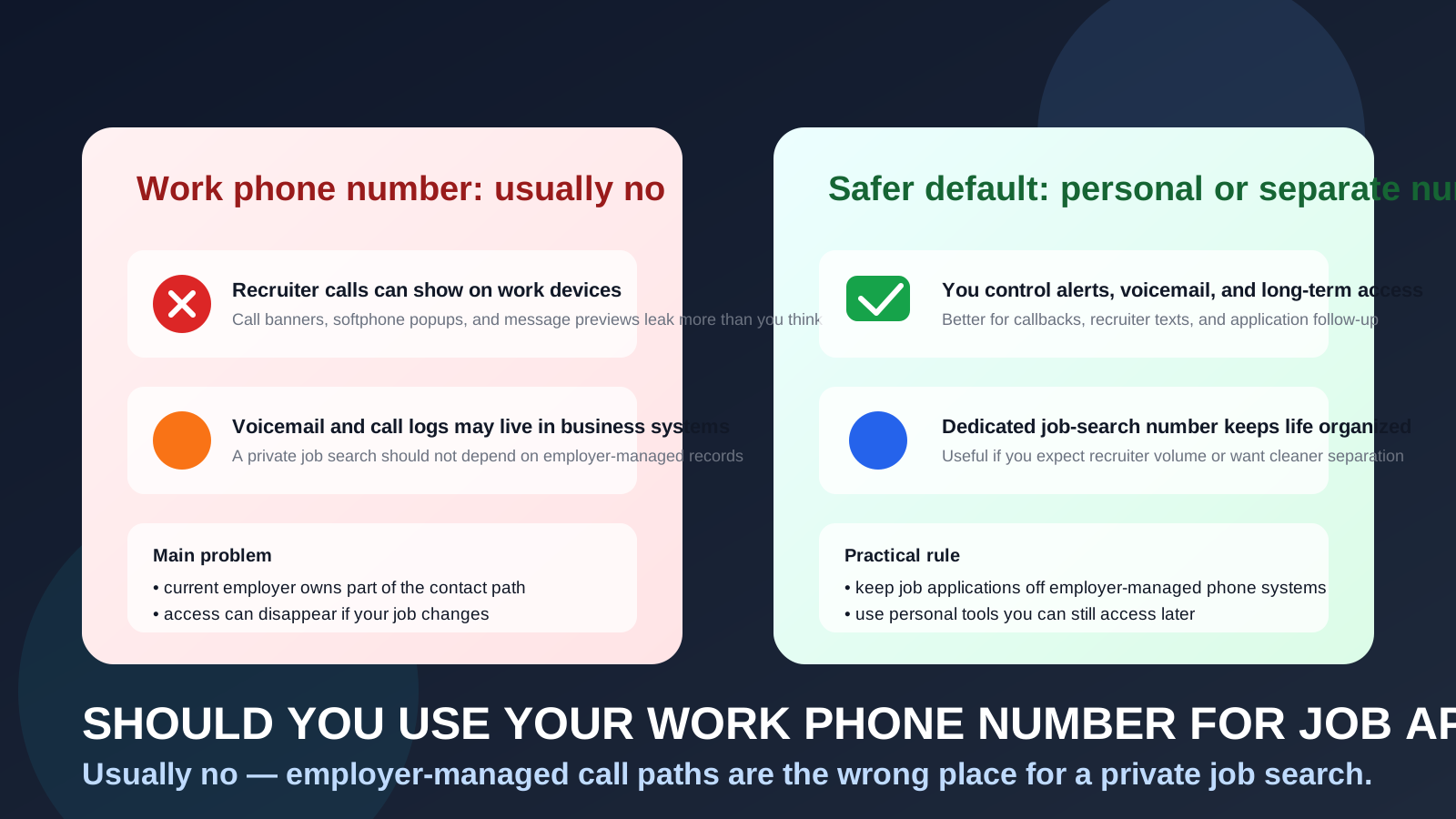
Usually no. If your work phone number is tied to an employer-managed device, account, or desk line, using it on job applications can expose your search through call logs, voicemail, and ordinary workplace notifications.
A personal number or a separate job-search number is usually safer because you control who reaches you, which devices show alerts, and whether that contact path still exists if your employment changes.
Phone numbers feel like basic contact details, so people often paste them into applications without much thought. But a work phone number is not just another number. It often sits inside a company-owned system, appears on employer-managed devices, or leaves traces in places that are not really private. That makes it a poor default for a confidential job search.
The issue is not that every employer is actively monitoring employees. The problem is simpler: work tools are built for work. If you use a number connected to that environment for job applications, recruiter calls, screening texts, or voicemail callbacks can become visible in ways that are hard to control later.
Short answer: usually no
In most cases, you should not use your work phone number for job applications. A company-controlled number can create unnecessary visibility, leave records inside systems you do not own, and make it harder to separate your current job from your next one.
If a job application asks for a phone number, the safer default is usually a personal number you control long term or a separate number dedicated to your job search.
Why employers ask for a phone number on job applications
There is nothing unusual about an employer requesting a phone number. Many hiring teams still use phone calls or text messages for practical reasons:
- Screening calls: recruiters often want a quick first conversation before scheduling a formal interview.
- Time-sensitive follow-up: hiring teams sometimes call when they need an answer quickly.
- Interview logistics: a phone number can help if a meeting link breaks, a coordinator needs to reschedule, or an interviewer is running late.
- Identity consistency: some applicant tracking systems are built to collect a standard phone field for every candidate.
So the question is not whether employers should ever ask. The real question is which number you should give them. That is where work and personal numbers become very different.
What makes a work phone number riskier than a personal one?
A work number often feels convenient because you already answer it during the day and you may assume it sounds more professional. But convenience is not the same as privacy. Depending on your role, a work number may be tied to a desk phone, a company-issued mobile phone, a business VoIP account, or a softphone app installed on employer-managed devices.
In all of those setups, your current employer may control some mix of the following:
- the device itself
- the carrier or business phone plan
- the calling software and admin settings
- voicemail storage or transcription
- call history and retention
- notifications on shared or managed systems
That means a recruiter reaching out is not just calling “you.” They may be contacting a channel that sits partly inside your employer’s infrastructure.
Main risks of using your work phone number on job applications
1. Recruiter activity can show up on employer-managed devices
The most obvious risk is simple visibility. If a recruiter calls while your work phone is on your desk, the company name may appear on-screen. If a scheduling text arrives during the workday, a banner preview may be visible to anyone nearby. If you use a softphone app, the alert may appear on a work laptop while you are screen sharing.
Private job-search leaks are often boring, not dramatic. You do not need a formal audit for the problem to happen. Normal notifications are enough.
2. Call logs may exist in systems you do not control
Business phone systems often keep logs for administration, billing, compliance, support, or quality purposes. That does not automatically mean someone is studying your personal activity. It does mean the number is part of an employer-run environment where records may exist beyond your control.
If recruiter calls, unknown numbers, or repeat callbacks land there, the activity can be harder to treat as purely private than if the same calls reached a personal device on a personal plan.
3. Voicemail can be even more revealing than the call itself
Missed calls are one thing. Voicemail is often worse. Recruiters and coordinators leave detailed messages: the company name, role title, interview timing, next steps, or instructions to call back. In some workplaces, voicemail is accessible through shared dashboards, email forwarding, transcription tools, or browser portals.
Even if nobody else listens, the possibility is enough reason to avoid using that channel for a confidential search.
4. Your access may disappear at the worst time
Application processes rarely move in a straight line. A company may call the same day, a week later, or a month later. If your work number changes, your role changes, you leave the company, or you lose access to the device, you may stop receiving callbacks from employers who only know that number.
A stable personal number is much safer because it stays with you regardless of what happens at your current job.
5. Shared answering workflows create extra exposure
In some jobs, a work number is not truly one-to-one. Calls might ring to a front desk, a shared admin team, a reception queue, or a collaborative business account. That setup may be fine for customer service, but it is obviously a bad fit for private recruiting conversations.
If anyone besides you can see, route, or answer the line, it should not go on a job application.
6. It blurs the line between your current employer and future opportunities
Using a work number sends your search through a channel associated with your present company. That is messy both practically and psychologically. Your next opportunity should not depend on a contact method that belongs to your current employer.
Good privacy habits work best when they create clean boundaries early, before a quick application turns into screening calls, interviews, references, and offer-stage follow-up.
When using a work phone number might be acceptable
There are a few exceptions, but they are narrow.
- You are self-employed and control the business number yourself: if it is truly your number, your billing, your device, and your voicemail, the privacy concerns are different.
- You are applying internally: if you are pursuing a role inside the same employer and internal processes expect your work contact details, a work number may be normal.
- The work number is really just a personal line you ported and fully own: the key issue is control, not the label.
For most employees, though, those exceptions do not apply. If the number exists because your employer gave it to you or manages the system around it, it is safer not to use it.
Better alternatives to a work phone number
Use your personal phone number
For many people, the personal number they already own is the simplest and best option. You control the device, the voicemail, the notifications, and the long-term availability. That makes it much more reliable for recruiter communication than a work line.
If you do use your personal number, keep an eye on privacy settings, voicemail greeting, and spam filtering. A personal number is not risk-free, but it is usually far safer than a company-controlled one.
Use a separate job-search number
If you want stronger separation, a dedicated job-search number is often the best compromise. It keeps recruiter traffic away from your main personal line while still giving you a stable, professional contact method you control.
This can be especially useful if you are applying widely, signing up for job boards, or expecting a lot of third-party recruiter outreach. When the search ends, you can tighten filters, mute the line, or retire it without affecting family, banking, or everyday contacts.
Pair it with a separate email strategy
Phone privacy and email privacy work better together. Many people focus only on the phone field, then forget they also spread their main inbox across job boards and candidate portals. If you want a cleaner setup, use a stable personal or job-search number alongside a separate application email.
Anonibox can also be useful at the very top of the funnel, especially when you are testing low-trust boards, gated salary tools, or one-off career resources and do not want to hand over your long-term inbox immediately. For serious applications, though, reliability matters more than disposability. The same principle applies to phone numbers too.
Best practices if a phone number is required
If a job application will not let you proceed without a phone number, here are the habits that usually work best:
- Prefer a number you control long term: that usually means a personal number or a dedicated job-search line.
- Keep voicemail professional: a simple greeting with your name is enough.
- Be cautious with text conversations: use them for scheduling, not for sending sensitive documents or personal identifiers.
- Watch for scam patterns: vague roles, urgent WhatsApp requests, and unexpected verification-code asks are all red flags.
- Save important recruiter numbers: that makes legitimate follow-up easier to spot among normal spam filtering.
What if you already used your work phone number?
Do not panic. One application does not automatically expose your search. The practical move is to clean up the workflow now.
- Use a personal or separate number on future applications.
- If a recruiter replies on the work line, move the conversation to a personal number as early as reasonable.
- Check voicemail, text previews, and synced-device notifications on the work system.
- Avoid storing future interview details in employer-managed call or messaging apps.
- If possible, update the number inside candidate portals you care about before the process gets deeper.
The goal is not to undo every past choice perfectly. It is to reduce future exposure before the search becomes more serious.
A quick decision checklist
- Who actually owns or manages this number?
- Which devices will show calls, texts, or voicemail from it?
- Could someone else see logs, alerts, or message previews?
- Will this number still be yours if your employment situation changes?
- Would a personal or dedicated number solve the problem with less risk?
If the number is employer-controlled in any meaningful way, the safer answer is usually to keep it off job applications.
Final answer
Usually no, you should not use your work phone number for job applications. It can expose your search through device notifications, voicemail, logs, and business systems that were never meant to handle private career moves.
A personal number or separate job-search line is usually the better choice. It keeps you reachable for real opportunities while giving you far more control over privacy, continuity, and how much of your job search touches your current workplace.