Yes — using a temp email for Yelp can make sense when you are requesting quotes, messaging local businesses, or comparing providers and you do not want your main inbox attached to every early inquiry.
It works best during research. Once you pick a business and need reliable long-term communication for appointments, attachments, or follow-up, switch to a permanent address you control.
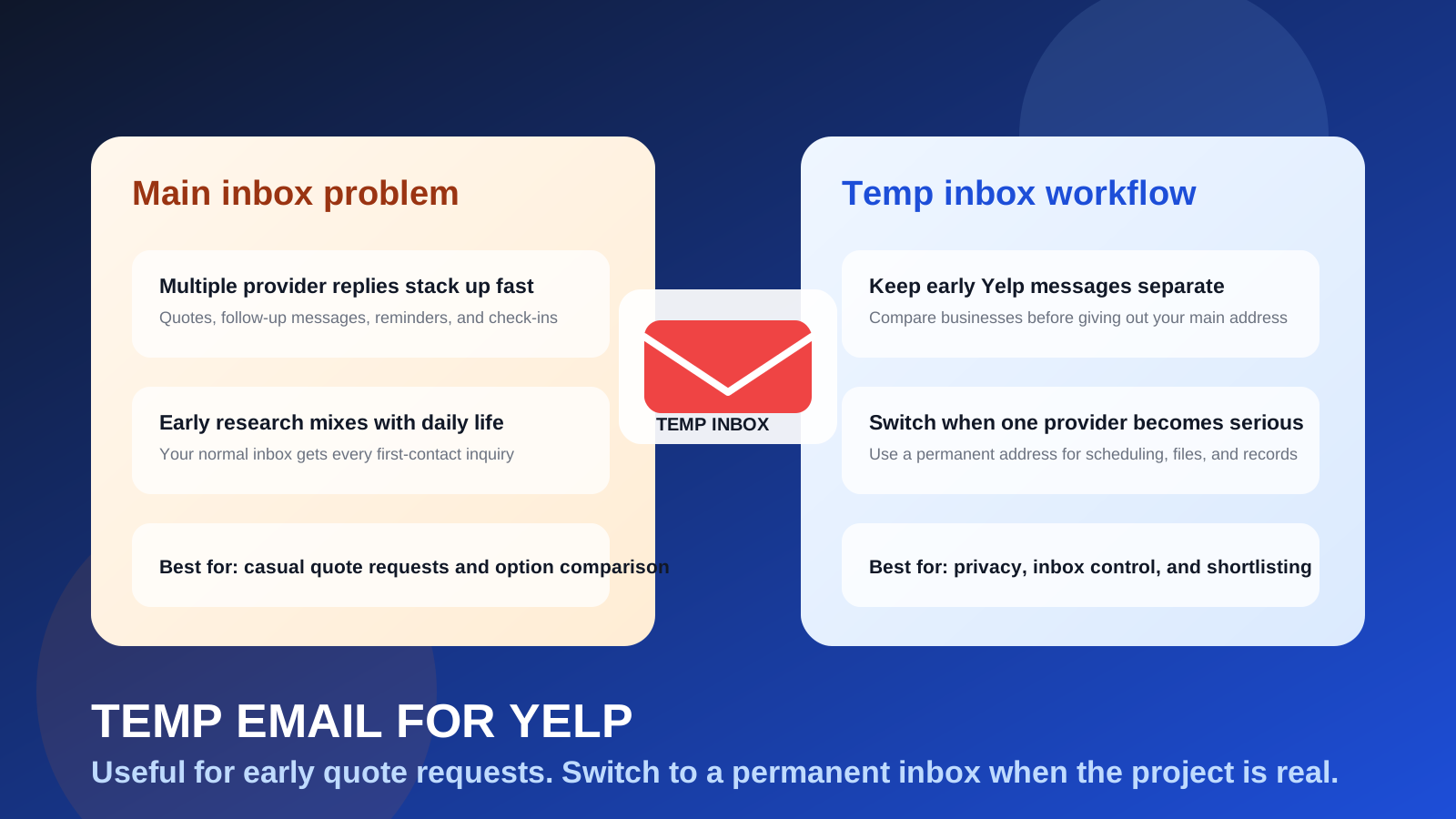
That is the practical answer behind the keyword temp email for Yelp. Most people are not looking for a throwaway inbox because they want to hide from legitimate businesses. They are trying to solve a simpler problem: they want to ask for quotes, compare options, and learn what a service might cost without turning their everyday email into a long stream of follow-up messages.
Yelp sits right in that zone where inbox boundaries matter. You might use it to contact movers, cleaners, plumbers, roofers, auto shops, pet services, tutors, or other local providers. Often you are still deciding whether the project is real, whether the business is a fit, or whether you even want to continue the conversation. That makes early-stage separation useful.
A temporary inbox from a service like Anonibox can help you keep those first messages contained. You still receive the replies you need, but you do not have to hand your main address to every business you contact before you know who is actually worth your time.
Why people look for a temp email for Yelp
Yelp is built for discovery. That is helpful, but discovery also creates a lot of low-commitment contact. People often start with questions like:
- How much would this job probably cost?
- Which local providers even serve my area?
- Who answers fastest?
- Do I need repair, replacement, cleaning, inspection, or a full project quote?
- Which business feels trustworthy enough for a real follow-up?
Those are normal questions, but they can create a surprisingly long tail of email. You may hear back from more than one business. Some may follow up later. Some may keep the thread going even after you have stopped researching. None of that automatically means the outreach is bad. It just means your address can end up in more conversations than you originally expected.
That is why a temp email can be useful here. It gives you a buffer between casual exploration and your permanent personal inbox.
When a temp email makes sense on Yelp
A temp email is most useful when you are still in comparison mode and have not yet committed to one business or one project path.
- Early quote requests: you want pricing ranges before deciding whether to move forward.
- Comparing multiple providers: you expect several replies and do not want them mixed into your everyday mail.
- Testing local availability: you are checking whether the service category is even active in your area.
- One-off research: you have a possible project but are not sure it will happen.
- Inbox control: you want Yelp-related messages separated from work, bills, family, and normal life.
In those situations, the goal is not secrecy. It is boundary-setting. You are creating a clean place for early replies so your main inbox does not become the long-term home for every estimate request you ever sent.
When a temp email becomes the wrong tool
A temporary inbox is useful at the top of the funnel, but it becomes a weaker choice once the conversation turns into a real business relationship.
You should usually move to a stable address you control long-term when:
- you are scheduling appointments or site visits,
- you expect quote revisions, invoices, or attachments,
- you want a reliable archive of what each business promised,
- you are down to one or two serious options,
- the project may continue for weeks or months.
This is the line many people miss. A temp email is excellent for filtering and early research. It is not always the best permanent home for important business records. Once the interaction becomes real, reliability matters more than early-stage privacy convenience.
What a temp email actually helps you avoid
People sometimes imagine temporary email as an all-or-nothing privacy move. In practice, it is usually much more ordinary and practical than that.
A temp email for Yelp can help reduce:
- repeat follow-up after you stop researching,
- inbox clutter when several businesses reply at once,
- identity sprawl from attaching your main address to every early inquiry,
- project mixing when one local-service search spills into the same inbox you use for everything else.
What it does not do is guarantee anonymity, block every future contact, or remove the need for judgment. If you later share your name, phone number, address, or scheduling details, those still matter. Temporary email is a boundary tool, not a magic invisibility switch.
A practical workflow for using a temp email for Yelp
1. Create the inbox before you send any quote requests
Start clean. If you use a temp inbox only after messages have already started landing in your main account, you lose most of the organizational benefit.
2. Use one inbox for one project or search theme
If you are comparing movers this week and roofers next month, do not pile both into one place. A separate inbox or clear project boundary makes replies easier to sort later.
3. Save useful details outside the inbox
If a provider gives you a rough price, timeline, or helpful next step, copy that into your notes. Temporary inboxes are good for receiving first contact, but they are not a substitute for keeping track of important project details.
4. Switch when one business becomes serious
Once you have identified a real contender, move the conversation to an address you will still monitor later. That helps with confirmations, changes, and any records you may need after the job is done.
5. Think about your phone number too
Email is only part of the privacy picture. If your real worry is long-tail follow-up, texts and calls may become the more annoying problem. Keep your phone-number strategy in mind alongside your email choice.
Use cases where this helps most
This approach tends to be most useful in categories where people naturally compare more than one business before committing.
- home repair and remodeling inquiries,
- cleaning and recurring service research,
- moving-company quote requests,
- auto-service price comparison,
- event or personal-service shopping,
- pet-care or tutoring research where you are still testing options.
In all of those cases, you may contact several businesses before you know who deserves a long-term thread. That is exactly where a temp inbox earns its keep.
The risks and limits to keep in mind
You can miss good replies if you stop checking
Not every follow-up is noise. Some of the best responses arrive after the first round. If you use a temporary inbox, check it consistently while you are actively comparing options.
You may need a durable record later
People often circle back to a project weeks later. A temporary inbox is less helpful if you suddenly need an old quote summary, a business name, or proof of what was discussed.
Temporary email is not the same as full anonymity
If you later share a home address, callback number, or scheduling details, you are still creating a normal real-world contact trail. Temp email only reduces how widely your main inbox gets exposed at the start.
Some situations call for a more stable middle ground
If your real problem is not “I need an address that disappears” but “I want separation from my main inbox,” then a dedicated secondary inbox or forwarding alias may be the better answer. That gives you privacy and organization without the fragility of a fully disposable workflow.
A better middle ground for many people
For some Yelp use cases, the best answer is not your main inbox and not a fully throwaway inbox. It is a stable separate address you control. That could be a dedicated project inbox or an alias you can keep long-term.
This middle option is often stronger when:
- you know the project may continue for a while,
- you want clean separation but still need reliable history,
- you are comparing a few serious businesses rather than casually browsing,
- you want less exposure without risking lost follow-up.
Anonibox fits best at the earliest stage, when you want low-friction inbox separation before you know whether the inquiry will become real. Once it does, a durable personal address is usually the smarter long-term home for the conversation.
Quick checklist before you use a temp email on Yelp
- Am I just researching, or am I actually ready to hire?
- Would I care if this inquiry created follow-up for months?
- Will I need these messages later for scheduling or records?
- Am I contacting several businesses at once?
- Would an alias or dedicated secondary inbox solve the problem better?
If your answers point toward short-term exploration, a temp inbox is a reasonable fit. If they point toward active project management, choose a stable address instead.
So, should you use a temp email for Yelp?
Usually yes — if you are still comparing providers, requesting early quotes, or testing whether a service is even worth pursuing. A temp email for Yelp helps keep those first-contact messages from taking over the inbox you rely on every day.
Just keep the role of the inbox clear. Use it for discovery, verification, and early filtering. Then move serious conversations to a permanent address you control once a business becomes a real option. That balance gives you the privacy upside without creating unnecessary headaches when it is time to book, confirm, or follow through.