Use a temp email for MyBuilder when you want to compare tradespeople or request early quotes without sending every follow-up into your main inbox.
Do not keep using it once you move into site visits, accepted quotes, deposits, invoices, or warranty conversations that depend on a long-term reachable address.
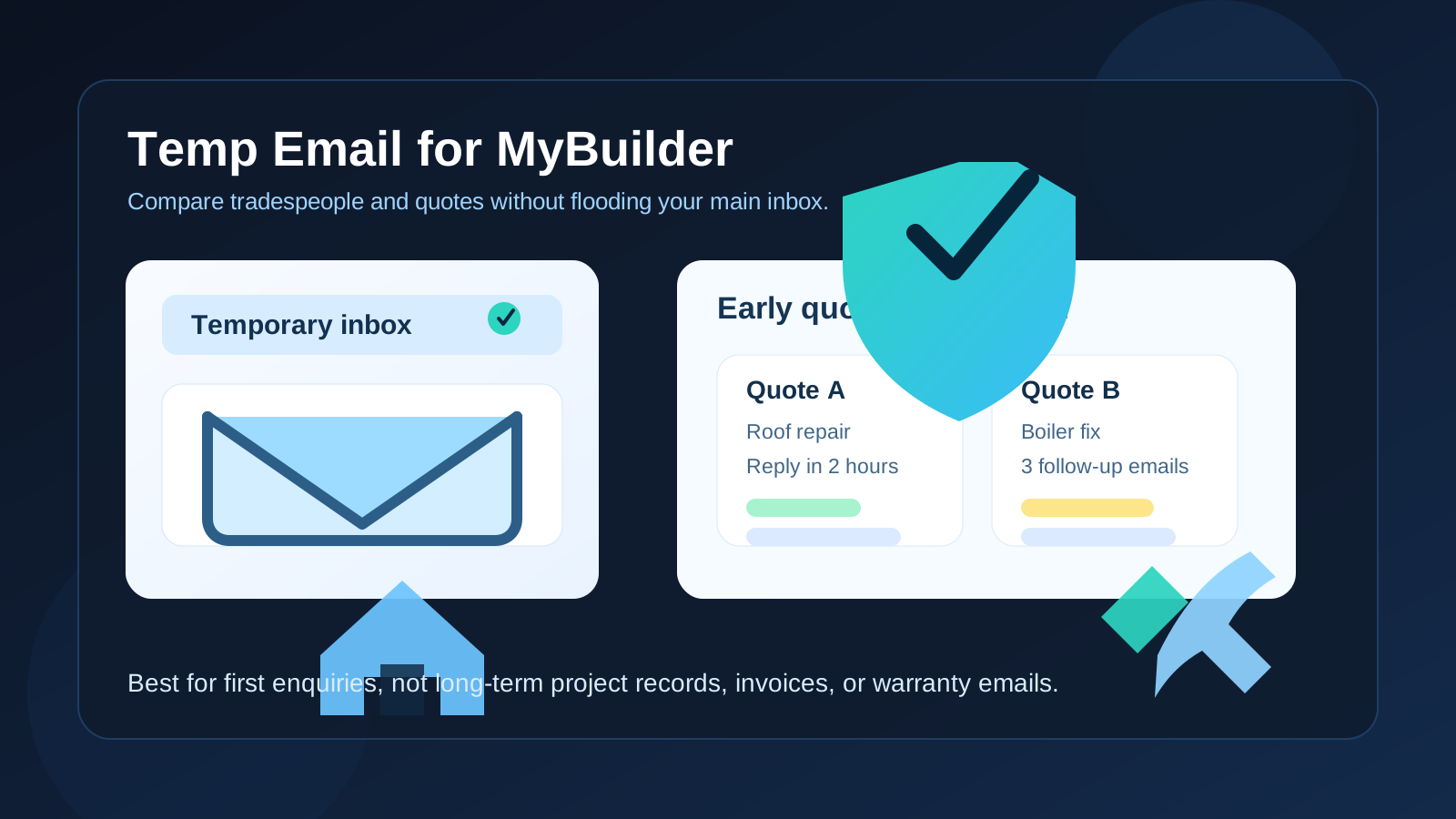
That is the practical middle ground. A temp inbox can be genuinely useful at the research stage, especially if you are still deciding whether to repair, renovate, or hire at all. MyBuilder sits in the broad home-services space where one enquiry can turn into multiple replies, reminders, availability checks, and “just following up” messages from different tradespeople. None of that is unusual, but it can make your everyday inbox noisy fast.
If you are only trying to compare first responses, pressure-test rough pricing, or see whether local interest is even worth your time, a separate temporary inbox can give you breathing room. A service like Anonibox helps by keeping those early messages in their own lane instead of mixing them with work, finance, family, and everything else in your primary account.
Why people look for a temp email for MyBuilder
Most people are not trying to hide forever. They are usually solving a simpler problem: they want to ask a few questions without opening the floodgates on their main address.
That is common with home-project research. Maybe you are thinking about a bathroom refresh, a roof repair, decorating, a new driveway, a boiler issue, some electrical work, or a bigger renovation that you are not even sure will happen this season. You want a realistic sense of availability and cost, but you do not necessarily want every response tied to your main inbox from day one.
A temp email for MyBuilder is appealing because it can help you:
- collect early replies in one place while you compare tradespeople
- avoid long follow-up chains after you decide not to move forward
- keep a tentative home project separate from your normal personal or work email
- reduce the chance that one enquiry turns into months of reminder messages
- test whether the platform is useful before you commit to a full conversation
Used that way, it is less about secrecy and more about inbox control.
When a temporary inbox makes sense
The best use case is the very early stage. You are still exploring. You have not chosen a contractor. You have not agreed to timings. You are not sending sensitive records. You simply want first-contact messages and maybe a handful of clarifying replies.
That can be reasonable if you are doing things like:
- asking for ballpark pricing before deciding whether the project is viable
- checking who services your area and how quickly they respond
- comparing communication style before giving out more durable contact details
- separating one home-improvement search from your main day-to-day email traffic
- avoiding extra clutter when you know you are still shopping around
In other words, a temp inbox is strongest when the goal is screening, not running the project.
What can go wrong if you keep using it too long
This is the part people sometimes underestimate. The same setup that feels neat and private during early comparison can become a liability once the project becomes real.
1. You miss time-sensitive messages
Contractor conversations often shift quickly. A tradesperson may send revised pricing, confirm a site visit window, ask for photos, or let you know a slot opened up earlier than expected. If your temporary inbox expires or you stop checking it closely, you can miss messages that actually matter.
2. The project starts needing continuity
Once you approve work, you may need one stable thread for scope changes, materials, access notes, invoices, deposit confirmations, or later warranty questions. Temporary inboxes are not ideal for that kind of longer relationship.
3. You lose context across multiple tradespeople
At first, a disposable inbox feels tidy. Later, it can become harder to remember which address you used, which messages you saved, and whether a contractor is replying to the same thread you are looking at. A reliable long-term address is simply easier to manage once decision-making gets serious.
4. You may create unnecessary friction
Most legitimate tradespeople care more about whether you reply than which email provider you use, but if a conversation moves into actual scheduling or documentation, using a short-lived inbox can create avoidable confusion.
Best practice: switch before the project stops being “just research”
The smartest approach is not “always use temp email” or “never use temp email.” It is to switch at the right moment.
A good rule is this: use the temporary inbox for discovery, then move to a durable address before any of the following happen:
- you book a site visit
- you ask for or receive a formal written quote
- you share your address, access details, or photos that you may need to reference later
- you start discussing deposits, invoices, or payment timing
- you choose a preferred contractor and want one dependable communication trail
That gives you the privacy benefits early on without creating a mess later.
How to use Anonibox for MyBuilder more safely
If you want the separation but do not want to miss good replies, keep the setup simple and intentional.
Use one inbox per project, not one inbox for everything
If you are pricing a new boiler and also thinking about exterior painting, do not mix both into the same temporary address if you can avoid it. Separate projects are easier to track when each one has its own clear inbox.
Save anything important immediately
If a reply includes availability, price detail, a named contact, or next-step instructions you care about, copy it into your notes right away. Temporary inboxes are best when you treat them as short-term staging areas, not permanent records.
Move serious conversations to a stable address on purpose
Once one contractor becomes the frontrunner, send a short note from the address you actually want to use long term. That gives both sides a clean handoff before details pile up.
Keep your expectations realistic
A temporary inbox can reduce inbox clutter. It does not guarantee anonymity, eliminate all follow-up, or remove every privacy tradeoff tied to asking strangers for quotes. You are still choosing to start a conversation. The tool just helps you control how early-stage email is organised.
Red flags to watch for in quote replies
Whether you use a temp email or a normal one, stay alert if a response feels off. Home-service platforms can attract both useful replies and low-quality outreach.
- pressure to move immediately without enough detail
- vague answers that dodge the job you described
- requests for sensitive information earlier than seems necessary
- links or attachments you were not expecting
- communication that becomes pushy the moment you ask basic questions
If a conversation crosses into something that feels risky, step back. A cleaner inbox helps, but judgment still matters more than the email format itself.
When you should not use a temp email for MyBuilder
There is a clear point where a temporary address stops being the right tool.
You should avoid relying on one if you are:
- finalising a contractor and expecting ongoing updates
- receiving invoices, receipts, or deposit instructions
- documenting project changes you may need to reference later
- handling guarantees, warranties, or complaints
- sharing information that you need preserved in a searchable long-term record
At that stage, privacy is still important, but continuity matters more. A dedicated long-term home-project inbox is often the better answer than a disposable one.
A simple decision checklist
Before you use a temp email for MyBuilder, ask yourself:
- Am I still comparing options, or am I already close to hiring?
- Would missing a reply in a few days create a real problem?
- Do I need a stable paper trail for quotes or payment discussions?
- Am I trying to reduce spam, or am I trying to manage a real contractor relationship?
- Would a separate permanent inbox be smarter than a temporary one for this project?
If you are still early, a temp inbox can be a solid fit. If the project is becoming real, step up to a dependable address before the communication trail gets important.
Final verdict
Temp email for MyBuilder is a smart option for early quote shopping, first-contact privacy, and keeping contractor follow-up out of your main inbox while you are still deciding what you want to do.
It is a poor option for the later stages of a real job, where scheduling, formal quotes, invoices, and aftercare depend on reliable long-term communication. Use the temp inbox to filter the noise, then switch to a stable address once a project moves from browsing to booking. That way you get the privacy benefit without undermining the part that actually matters: staying reachable when the work becomes real.