Yes — using a temp email for WeddingWire is a smart way to compare venues and vendors without attaching your main inbox to every inquiry.
No — it is not the best choice once you are ready to book, sign contracts, or rely on long-term planning messages, because consistent communication matters more than inbox separation at that stage.
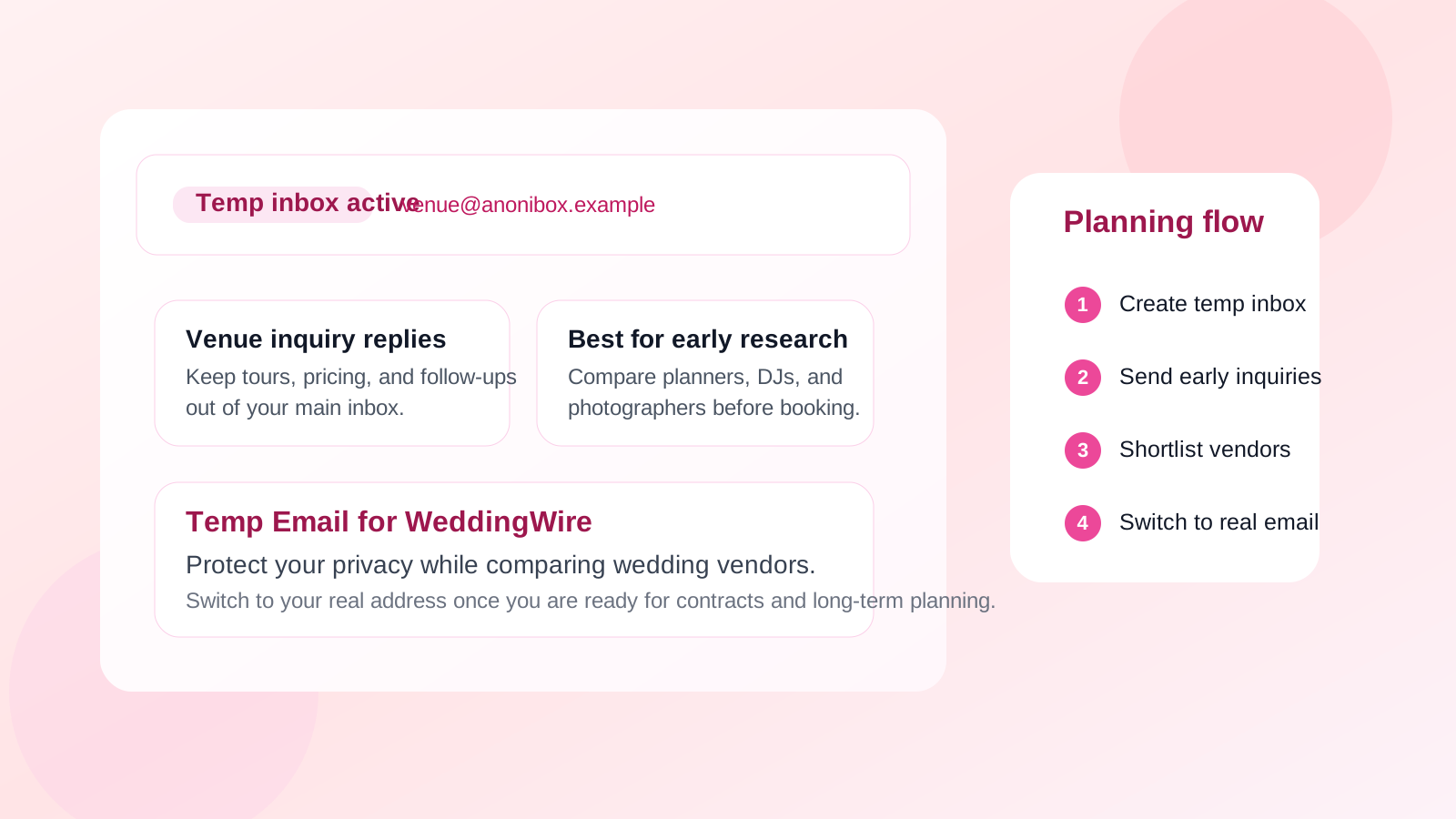
Wedding planning platforms are useful because they make it easy to browse several vendors in one place. The trade-off is that one round of outreach can quickly turn into a pile of availability checks, package PDFs, follow-up emails, automated reminders, promotional offers, and “just checking in” messages from multiple businesses at once.
That is where a temporary inbox helps. If you are still researching photographers, venues, caterers, DJs, planners, or florists, a separate email address lets you keep early-stage inquiries organized without letting your main inbox absorb every reply. A tool like Anonibox can help you create that separation so you can compare options first and commit later.
Why people look for a temp email for WeddingWire
Most couples do not open a wedding marketplace account because they are ready to book the first vendor they see. Usually, they are still gathering information. They want price ranges, availability windows, package details, response speed, and a sense of which businesses feel professional.
That research phase is exactly when inbox clutter starts. Even a small batch of inquiries can create overlapping messages about tours, consultations, limited-time promotions, date holds, and alternative packages. If the planning process stretches across weeks or months, the volume can become noisy fast.
A temp inbox gives you a buffer between that exploration phase and your everyday personal email. You still receive the responses you asked for, but you keep them contained.
When a temp email for WeddingWire makes sense
A temporary address is most useful when you are still sorting, comparing, and narrowing down options rather than managing an active vendor relationship.
- You are comparing multiple vendors at once: maybe several photographers, venues, caterers, or DJs are on your shortlist and you want to see who responds clearly and professionally.
- You are testing budget ranges: early outreach often reveals whether your expectations match the real market before you invest more time.
- You want to keep planning separate from your main inbox: wedding planning can get loud, especially when several categories are active at the same time.
- You are not sure you will book through the platform: sometimes you are only using the marketplace to research options, not commit immediately.
- You want cleaner organization: a separate inbox makes it easier to review only wedding-related replies in one place.
In short, a temp inbox is strongest during discovery. It lets you stay reachable without turning every tentative inquiry into a long-term inbox relationship.
When you should switch to a real email instead
A disposable or short-life inbox is not ideal for the entire wedding planning lifecycle. Once communication becomes important over time, reliability matters more than separation.
- You are ready to book: once deposits, contracts, and date confirmations enter the picture, you want a stable address you control long term.
- You are exchanging important files: proposals, invoices, timelines, menus, floor plans, and vendor questionnaires should not live in a throwaway inbox.
- You are coordinating across months: long planning windows make permanent access more important than temporary privacy.
- You are trusting one or two finalists: once a vendor is shortlisted seriously, consistent communication becomes more valuable than extra insulation.
A simple rule works well: use the temp inbox for comparison, then move to your real address for commitment.
What a temp inbox helps with — and what it does not
It is useful to be clear about what a temp email can and cannot do.
What it helps with
- Inbox control: early vendor replies stay out of your primary account.
- Cleaner decision-making: you can review inquiry traffic without mixing it with work, family, and daily life.
- Reduced long-tail clutter: if you decide not to move forward with certain vendors, your main email is less likely to keep collecting their follow-ups.
- Project-based separation: wedding planning becomes one contained stream instead of dozens of messages scattered across your usual inbox.
What it does not solve
- It does not guarantee anonymity: if you later share your real name, phone number, venue details, or event date with vendors, they will still know who they are talking to.
- It does not replace good judgment: you still need to review vendors carefully and watch for low-quality communication or suspicious requests.
- It is not ideal for long-term logistics: once planning becomes detailed, temporary access can become a problem instead of a benefit.
That balance matters. A temp inbox is a practical organization and privacy tool, not a magic shield.
A practical WeddingWire workflow that actually works
If you want the benefits without creating a communication mess later, use a simple staged workflow.
1. Create the separate inbox before sending inquiries
Start with the temp address first. That way, every early vendor message goes into the same isolated stream instead of leaking into your main account.
2. Use it only for early research
Send your first wave of inquiries through that address while you compare pricing, style, availability, and responsiveness. This is the stage where noise is highest and commitment is lowest.
3. Save the replies that matter
If a vendor sends a strong proposal, useful brochure, or thoughtful response, save the important details somewhere permanent. Do not assume you will want to rely on the temp inbox forever.
4. Shortlist vendors before switching
Once you narrow the list to serious options, move those conversations to your long-term email. That is when contracts, follow-up calls, and planning documents start to matter.
5. Keep one system for real bookings
After booking decisions begin, avoid splitting essential communication across too many inboxes. A temporary address is for filtering early noise, not for managing a wedding day timeline.
Situations where a temp email is especially helpful
Some vendor categories create more message volume than others. A temp address is especially useful when:
- You are browsing several venues and expect multiple tour follow-ups.
- You want style and pricing comparisons from photographers or videographers.
- You are collecting catering, florist, or entertainment options without making an immediate decision.
- You are planning far in advance and do not want months of promotional nudges hitting your personal inbox.
- You are comparing vendor marketplaces as well as standalone vendor websites.
In all of those cases, the value is less about secrecy and more about reducing clutter while you evaluate the field.
Mistakes to avoid
- Using the temp inbox after you are ready to sign: this is the most common mistake. Reliability matters more once money and scheduling are involved.
- Forgetting to save useful information: if a vendor sends a great quote or availability details, capture them before moving on.
- Treating every vendor the same: some businesses deserve to move into your real workflow once they become serious candidates.
- Assuming a temp inbox fixes every privacy issue: you still control how much other information you share in inquiry forms and follow-up messages.
- Letting the inbox become the only record: wedding planning works better when your important details live somewhere stable and searchable.
How Anonibox fits naturally into this process
If your goal is to keep wedding planning from swallowing your everyday inbox, Anonibox is a simple fit for the early stages. You can use a separate address to test vendor responsiveness, compare offers, and keep initial marketplace traffic contained. That helps you stay organized without making your main email the default destination for every exploratory message.
Then, when a vendor becomes real — meaning the conversation is moving toward a consultation, a proposal review, or an actual booking — you can shift to your long-term email and keep the important planning relationship stable.
Final answer: should you use a temp email for WeddingWire?
Yes, for early-stage research it is a very practical move. A temp email for WeddingWire helps you compare venues and vendors, keep promotional follow-ups under control, and protect your main inbox while you are still deciding who deserves serious attention.
No, it should not be your permanent communication channel once you are booking vendors or managing real planning details. Use it to contain the noise at the start, then switch to a reliable long-term address when the relationship matters. That gives you the best of both worlds: privacy and organization up front, dependable communication later.