Yes — a temp email for v0 can be a smart way to test AI prototype workflows, one-off signups, and early experiments without handing your main inbox to another product trial.
It works best for short-term testing, not for long-term projects, billing, recovery, or anything you may need to hand off to a team later.
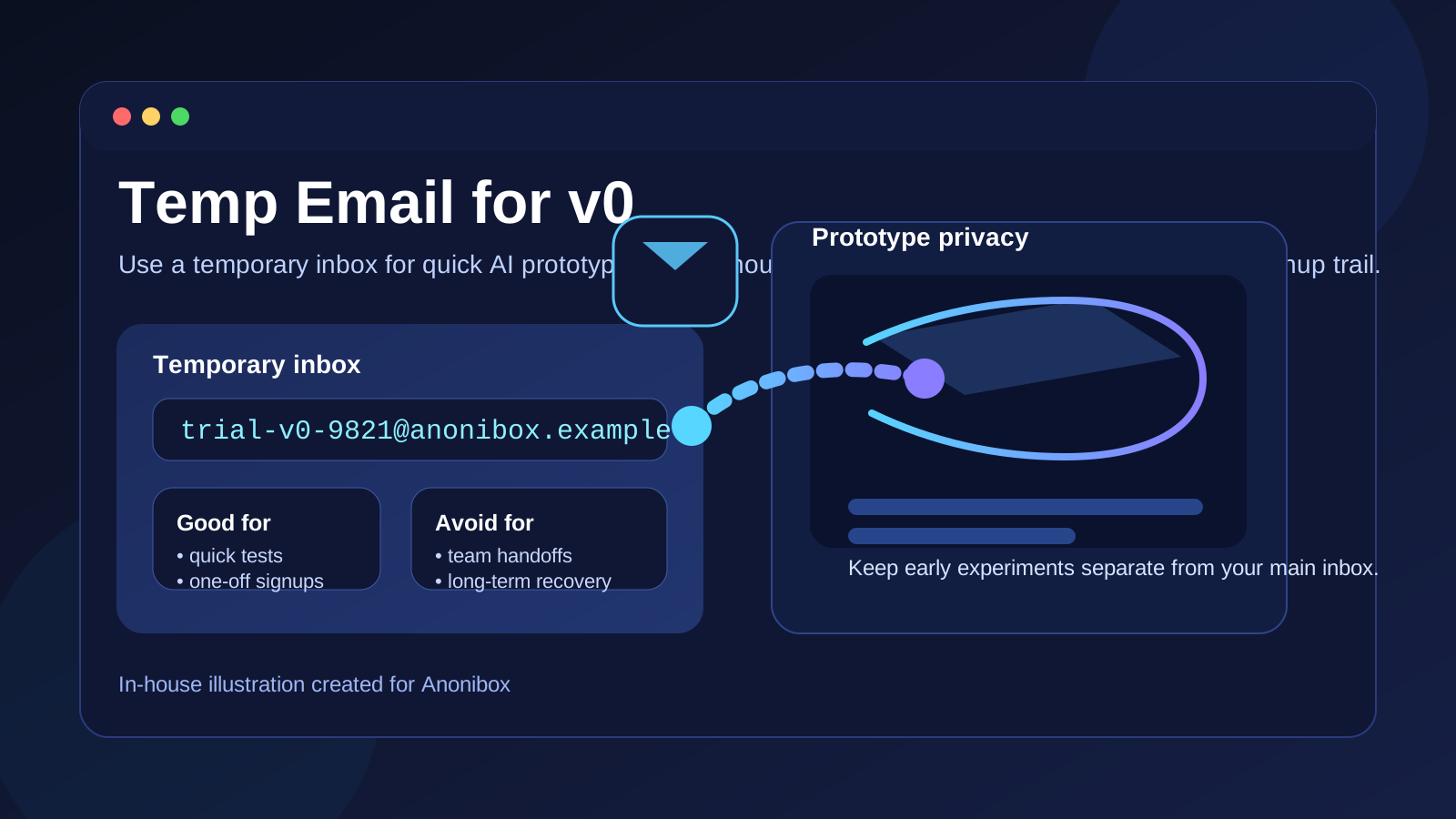
If you are experimenting with AI-generated app ideas, quick interface mockups, or throwaway prototype sessions, using a separate temporary inbox can keep your personal or work email from ending up in another long nurture sequence. That matters because early product tests often start small, but the follow-up can keep going long after you have decided the tool is not for you.
For a service like v0, the privacy question is straightforward: do you want to explore a new tool with minimal inbox exposure, or are you setting up something you expect to keep, revisit, recover, or share later? A temp address is excellent for the first case and weak for the second.
When a temp email for v0 makes sense
A temporary email is most useful when you are still in evaluation mode. You want to see the product, test the workflow, maybe generate a few outputs, and decide whether it deserves a place in your real stack.
- Quick curiosity clicks: you want to try the product without committing your main inbox yet.
- One-off prototype tests: you are checking output quality, prompt behavior, or speed on a small idea.
- Comparison shopping: you are trying multiple AI builders and do not want every one of them emailing you for weeks.
- Privacy-sensitive experimentation: you would rather not tie every early tool test to your main personal identity.
- Short-lived side ideas: you are exploring a concept that may never become a real project.
That is where a service like Anonibox fits naturally. It gives you a buffer between your main inbox and the flood of welcome emails, prompts, marketing sequences, and follow-up messages that often arrive after sign-up.
When it does not make sense
A temp email becomes a bad trade once the project stops being disposable. If the account might matter later, your address should be something you control long-term.
- Projects you may return to: if you want reliable access later, use a permanent inbox.
- Team collaboration: shared work is harder when the original login sits behind a throwaway mailbox.
- Billing or plan upgrades: receipts, payment notices, and account changes should not go to a short-lived inbox.
- Recovery and security events: password resets and login alerts are only helpful if you can still receive them.
- Important exports or handoffs: if the prototype could become client work, a durable address is safer.
The rule is simple: if you would be upset to lose access, do not anchor the account to a disposable inbox.
Why people look for a temp email for v0 in the first place
Most people do not mind a single confirmation email. What they mind is the long tail. A quick test can lead to onboarding nudges, reminder emails, feature announcements, upgrade campaigns, webinar invites, and “come back and finish your project” messaging for months. That is fine when you already know the product matters to you. It is annoying when you were only trying it for ten minutes.
There is also a privacy angle. Many people would rather not connect every experimental AI workflow to their main work identity or their oldest personal inbox. Keeping exploratory tool usage separate makes your inbox cleaner and your digital footprint smaller.
How to use a temp email for v0 safely
1. Decide whether this is a real project or just a test
Before you sign up, be honest about the goal. Are you evaluating the product, or are you starting something you may genuinely keep? If it is just a test, a temp email is reasonable. If it could turn into production work, start with a long-term address instead.
2. Generate the inbox first
Create the temporary address before you open the sign-up flow. That keeps the whole session clean and avoids accidentally using your default personal or work inbox out of habit.
3. Save the messages that matter immediately
For short-term signups, the only messages you often need are the verification email, the first login link, and maybe one onboarding message. Save what matters right away. Do not assume the inbox will be around forever.
4. Keep the project scope small
If you are using a disposable address, treat the account like a disposable test environment. Explore the interface, see how the output feels, maybe try a couple of prototype directions, then decide whether the tool is worth a permanent setup.
5. Upgrade your identity if the prototype becomes real
If you move from “interesting test” to “I want to keep building this,” switch to a real email while the project is still easy to manage. That is the cleanest moment to make the change.
Benefits of using a temp email for v0
- Less inbox clutter: your main address does not absorb another stream of product follow-up.
- Better privacy: early experiments stay separated from your primary identity.
- Cleaner testing: you can evaluate the tool on its merits instead of getting pulled into every email sequence.
- Easier comparison: if you are testing several AI tools, you can isolate each one instead of mixing everything in one inbox.
Limitations you should expect
A temp inbox solves one problem: signup exposure. It does not solve every account-management problem. It also introduces a few limits of its own.
- Recovery can break: if you lose access or need to verify a later login, the inbox may no longer help you.
- Notifications may disappear: useful updates are easy to miss if the address is not permanent.
- Team ownership gets messy: a throwaway identity is a weak foundation for shared work.
- Long-term trust is lower: anything tied to billing, account history, or serious project continuity deserves a stable email.
A practical decision checklist
Use a temp email for v0 if most of these are true:
- You are only testing.
- You do not expect to keep the account long-term.
- You want to avoid marketing follow-up in your main inbox.
- You are comparing multiple tools and want each trial isolated.
Use a permanent email if most of these are true:
- You may keep the project.
- You may pay for the service later.
- You may need recovery or ownership proof.
- You may collaborate with someone else.
Common mistake: treating a throwaway test like a durable account
The biggest mistake is not using a temp email. The biggest mistake is using one for the wrong stage. A disposable inbox is great when the work is disposable too. Problems start when people build real value inside an account they never intended to keep.
If you create something worth saving, move it under a permanent identity before that transition becomes painful. Think of temp email as a front-door filter, not a long-term home for important work.
Final answer
A temp email for v0 is a good idea for quick experiments, early AI prototype tests, and one-off signups where privacy and inbox control matter more than long-term continuity. It lets you explore without immediately tying another product to your main personal or work address.
Just do not confuse short-term privacy with long-term account safety. If the project becomes important, switch to an email you control permanently. That way you get the best of both worlds: a quieter inbox during evaluation and a stable account once the work becomes real.