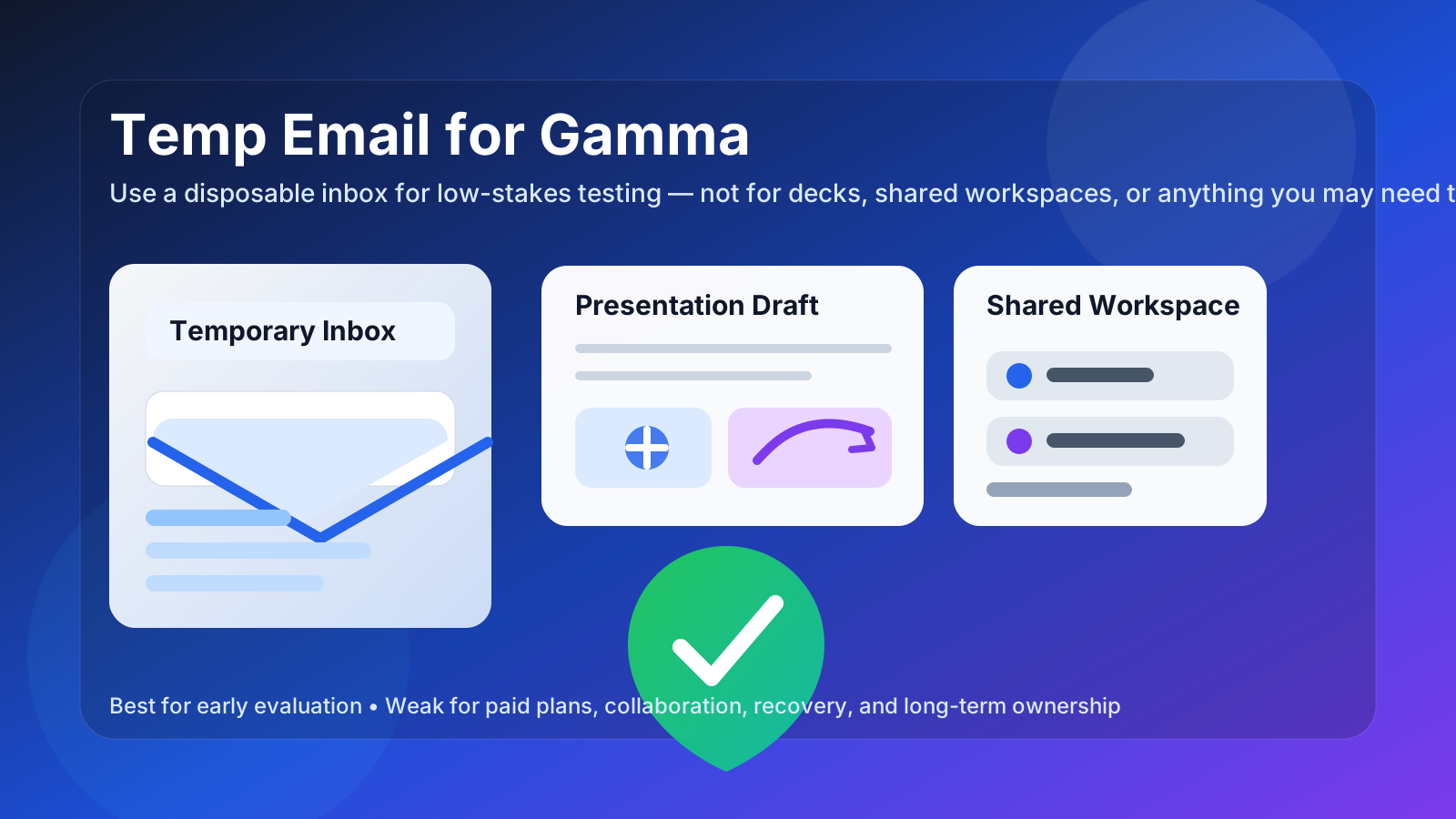
A temp email for Gamma can be useful for low-stakes testing, but it becomes a bad long-term choice once your decks, shared workspaces, exports, or paid access actually matter.
If you only want to explore Gamma, try a few AI-generated presentation drafts, or check whether the workflow fits you, a disposable inbox can keep extra signup mail out of your main account. If you expect to keep the account, collaborate, or come back later, use an address you control long term.
Why people look for a temp email for Gamma
Gamma sits in a category where temporary email sounds appealing right away. It is easy to be curious about an AI-powered presentation and page-building tool without wanting another permanent account relationship attached to your everyday inbox. You may want to test how it handles a rough deck outline, compare it with Canva, Notion, or PowerPoint workflows, see whether the generated layout quality is good enough, or join one shared workspace just to review a document.
That is exactly the kind of situation where people search for a temp email for Gamma. They want the verification link, but they do not necessarily want weeks or months of account emails, product updates, feature announcements, and onboarding sequences following them around after a one-off test.
The intent is reasonable. The tricky part is that Gamma can stop feeling disposable very quickly. A quick test can become a useful deck. A useful deck can become a real client presentation, an internal proposal, a workshop outline, or a shared project page. Once that happens, the email tied to the account matters much more than it did on day one.
Short answer: good for brief evaluation, weak for anything you may want to keep
If your goal is simple exploration, a temporary inbox can be a practical filter. You can verify the signup, spend a little time testing prompts and layouts, and decide whether Gamma deserves a place in your real workflow before handing over a more permanent address.
But if you think there is a decent chance you will save important decks, collect feedback from teammates, upgrade, switch devices, or rely on the account later, a throwaway inbox becomes fragile. Temporary email is best when the account is temporary too.
When using a temp email for Gamma makes sense
There are situations where a disposable inbox is a perfectly sensible choice:
- One-time testing: you want to see how Gamma handles an outline, a prompt, or a sample deck before committing.
- Comparing tools side by side: you are looking at Gamma alongside Canva, Figma slides, Notion pages, or other presentation tools and do not want every trial tied to your main inbox.
- Short-lived curiosity: you only need to open the product, inspect the interface, and decide whether it is even worth deeper evaluation.
- Inbox privacy: you want to reduce signup clutter while you test another tool in a crowded stack of AI and productivity apps.
- Low-stakes review access: you are checking a shared page or one presentation draft and would not care much if you never used that exact account again.
That is the sweet spot for a service like Anonibox. A temporary inbox helps you separate casual exploration from your permanent digital identity. Used this way, it is not about gaming the system. It is just a tidy way to avoid giving your main inbox to every product you experiment with.
When it starts becoming a bad idea
The problem is not that Gamma is special in some magical way. The problem is that presentation and workspace tools accumulate value inside the account.
Saved decks and pages can become more important than you expected
A lot of people start with a throwaway mindset: “I just want to test this for five minutes.” Then the AI draft turns out to be decent. You refine the structure. You swap some copy. You add screenshots. Suddenly the test deck becomes the version you actually want to use. Once the content itself becomes valuable, the account stops being disposable.
Collaboration raises the stakes fast
Gamma is the kind of tool people often use for sharing. Maybe you send a page to a teammate, review a proposal, collect comments, or show a client an early version. The moment other people are involved, recovery and continuity matter more. A temporary inbox is a poor foundation for anything collaborative because the account may need to survive longer than your initial curiosity.
Exports, revisions, and follow-up work matter later
Even if you are not paying for anything, a useful deck often creates a second wave of work. You may revisit the content, update a page, make a slightly different version for another audience, or reopen the workspace from another device. Those are normal, non-dramatic reasons to want stable access later. Temporary email is weakest exactly when “I might need this again” becomes true.
Account recovery becomes important at the worst time
Recovery is easy to ignore on day one because nothing feels important yet. Then you get logged out, clear your browser, try to sign in on another laptop, or need to confirm access again later. If the account is tied to a mailbox you no longer control, a routine recovery flow becomes a dead end.
Paid use and business use deserve a real address
If Gamma becomes part of work, client communication, training material, sales content, or anything tied to billing, ownership, or long-term access, a disposable inbox is the wrong tool for the job. Important receipts, security notices, plan changes, and support messages belong in an inbox you intentionally manage.
Good use cases for a temp email with Gamma
Here are the scenarios where using a temp email is usually reasonable:
- Trying Gamma for the first time to see whether the interface clicks with you
- Generating a practice deck you would not mind losing later
- Testing prompts, themes, or layout behavior before deciding whether to commit
- Keeping a one-off signup separate from your everyday personal or work email
- Reviewing whether Gamma belongs in your tool stack before switching to a stable address
In those cases, the value of privacy and reduced inbox clutter may outweigh the downside of weaker continuity.
Bad use cases for a temp email with Gamma
These are the situations where a disposable inbox is much more likely to create regret:
- You are building a real client presentation or proposal
- You plan to share the workspace with teammates or collaborators
- You expect to store multiple decks or pages in the account
- You may buy a plan, upgrade features, or depend on billing access later
- You want dependable sign-in and recovery across devices
- You are using Gamma as part of your normal work, school, or freelance workflow
If any of those apply, the account has already moved beyond throwaway testing. Use a permanent email you can keep.
What can actually go wrong?
People often imagine only one downside: maybe they lose a verification message. In reality, the bigger problems show up later.
- You forget which address you used. That sounds minor until the account ends up holding something useful.
- You lose recovery options. A password reset or sign-in challenge becomes much harder if the mailbox was temporary.
- You split your workflow awkwardly. The account begins as a test and then becomes something half-real, leaving you to migrate later.
- You create collaboration friction. Shared work feels shaky when the underlying mailbox was never meant to last.
- You save time up front but pay for it later. The convenience of a disposable signup can turn into cleanup, confusion, or lost access when the project grows.
How to use a temp email for Gamma more safely
If you do want to try Gamma with a temporary inbox, a few habits reduce the risk:
1. Treat it as evaluation only
Decide up front that the account is for testing, not for anything you would be upset to lose. That mindset keeps expectations realistic.
2. Save important outputs early
If you create something useful, export it, copy the important text, or save your outline elsewhere. Do not assume you will always have clean access to the same account later.
3. Do not attach payment or critical collaboration right away
If the workspace starts to matter, switch to a permanent address before the account becomes central to a real project.
4. Use a long-lived separate email when the project graduates
There is a middle ground between “main personal inbox” and “totally disposable inbox.” If you want privacy but also need stability, a dedicated secondary email or a long-term alias is often better than a pure throwaway address.
5. Be honest about whether you will come back
Most mistakes happen because people say “this is just a test” while already sensing that they may reuse the account later. If you think you will return, build on a durable address from the beginning.
A practical decision checklist
Before signing up, ask yourself:
- Am I only testing Gamma, or do I already expect to use it for real work?
- Would I care if this account became inconvenient to recover in a few weeks?
- Will I share decks or pages with anyone else?
- Could this turn into a paid or recurring workflow?
- Do I want short-term privacy, or do I want long-term account control?
If the answer is mostly short-term privacy and low stakes, temporary email is reasonable. If the answer is long-term control, collaboration, or repeat use, use a stable inbox instead.
Final answer
Yes, a temp email for Gamma can make sense for low-stakes experimentation. It is a good way to keep one more AI signup out of your main inbox while you figure out whether the product is worth your time.
But it is a weak long-term choice once your decks, shared workspaces, feedback loops, exports, or billing matter. Gamma is the kind of tool that can move from casual test to real workflow faster than people expect. If that happens, a permanent address is the smarter foundation. Use temporary email for the first look, then switch to something durable before the account becomes important.