Maybe, but mainly for low-stakes testing. A temp email for QuillBot can help you verify a one-off signup, try the current product flow, and keep early product emails out of your main inbox if the signup path accepts disposable addresses.
It becomes a weak choice once the account stops being disposable in practice. If you expect to come back to the tool, upgrade later, rely on account recovery, or make QuillBot part of regular writing work, a separate permanent inbox or email alias is usually safer.
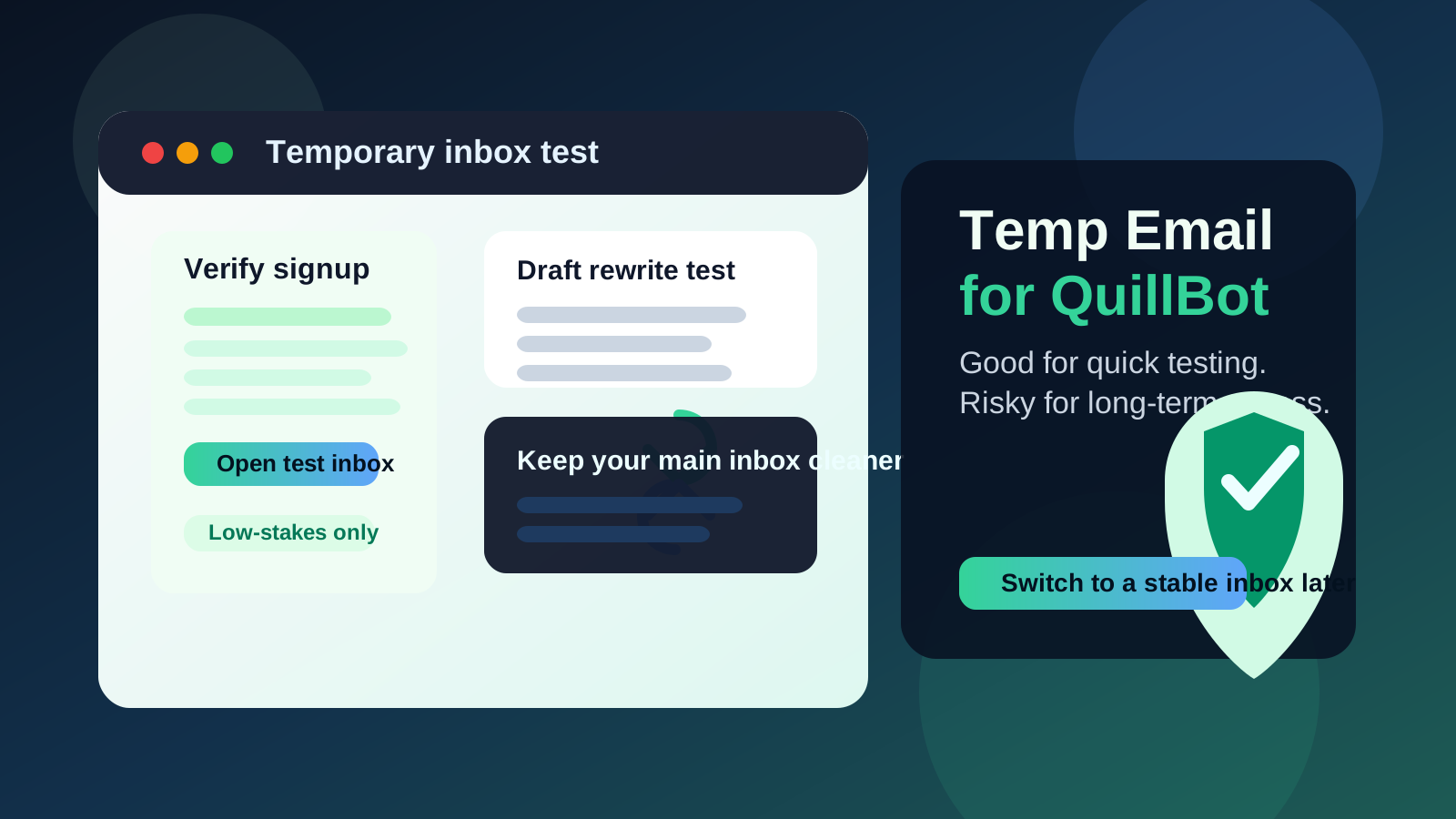
Why people look for a temp email for QuillBot
The reason is usually simple. People want help rewriting a paragraph, tightening grammar, comparing wording options, checking tone, or cleaning up a draft without handing their main email address to another tool before they know whether it is worth keeping.
That is a fair instinct. Writing tools often start as quick experiments. You test one essay paragraph, one cover letter, one blog intro, or one summary, and suddenly you are receiving onboarding emails, product tips, upgrade prompts, and feature announcements long after the original task is over. A temporary inbox can reduce that friction during the trial phase.
The catch is that writing tools are sticky. A tool that feels casual on day one can quietly become part of school work, job applications, content production, client edits, or internal team drafts. Once that happens, the email behind the account matters more than it did at signup.
Short answer: useful for testing, risky for ongoing use
If your goal is just to try QuillBot, see what the interface looks like, and decide whether the current version fits your workflow, a disposable inbox can be practical. It keeps the test separate from your main email and can help you avoid long-term inbox clutter from a short-term experiment.
If you think the account may become important, the answer changes. The moment the tool becomes part of real writing, study, publishing, or professional communication, a throwaway inbox stops being a good foundation. A temporary address may help with signup convenience, but it is not ideal for long-term access or recovery.
When a temp email for QuillBot can make sense
1. You are comparing several writing tools at once
Maybe you are weighing QuillBot against Grammarly, NotebookLM, or other writing assistants and only need enough access to compare the workflow. In that case, using a temporary inbox for the first pass can keep each trial isolated and stop your main inbox from filling up with overlapping product messages.
2. You only need the tool for a one-off task
If you are cleaning up a single draft, testing paraphrase quality on one paragraph, or checking whether the interface feels useful before moving on, a temporary address may be enough. The key is that the account itself is genuinely disposable too.
3. You want inbox privacy during early evaluation
Some people simply do not want their oldest work or personal inbox attached to every product they sample. That is reasonable. A service like Anonibox can help create distance between your primary email identity and low-commitment signups.
4. You are testing the signup and onboarding flow only
Sometimes the question is not whether you will use the tool every week. You just want to know how quickly you can get in, what the confirmation flow looks like, and whether the product feels worth a deeper look. That is one of the cleaner use cases for temporary email.
When it becomes risky fast
1. You may want to keep the account
The main problem with a disposable inbox is not day-one signup. It is day-thirty regret. If you decide the tool is useful and want to keep coming back, the convenience of a throwaway address starts turning into a liability.
2. You might need account recovery later
Password resets, verification checks, suspicious-login notices, and other account messages are manageable when the original inbox still exists. They become much harder when the address was only meant to survive the first few minutes of testing.
3. You may upgrade or attach billing
If you pay for anything or rely on premium access, your email should be stable, recoverable, and fully under your long-term control. Disposable addresses are the opposite of that. Even if the initial signup works, the account structure may not age well.
4. The tool becomes part of repeated work
Writing tools can move from casual to essential surprisingly fast. A student may start using one for summaries and revisions. A job seeker may use it for cover letters and résumé bullets. A marketer may use it for headlines and landing-page drafts. Once the tool is part of repeated work, the email behind it should stop being temporary.
What can go wrong with a disposable address?
Even if the current signup flow accepts the address, several practical issues can still show up later.
- Lost recovery access: you may not be able to reset a password or confirm changes once the inbox disappears.
- Missed notices: billing reminders, account warnings, or policy updates can go to an inbox you no longer control.
- Inconsistent verification: some services change how often they ask for email confirmation, and what worked once may not be enough later.
- Blocked disposable domains: a service may accept one temporary address and reject another, or tighten filters later.
- Workflow friction: the account may technically exist, but you may hesitate to rely on it because the contact address feels fragile.
That is the real trade-off. Temporary email reduces commitment up front, but it can weaken ownership later.
A better question to ask
Instead of asking only, “Can I use a temp email for QuillBot?” ask, “What kind of account am I creating right now?”
If the answer is a throwaway trial, then a temporary inbox may be fine. If the answer is a tool I might actually keep using, then it is smarter to start with a stronger email setup or switch early before the account becomes important.
That small change in thinking avoids a common mistake: choosing your contact identity based only on day-one convenience while ignoring what the account may become later.
Better alternatives than a temp email for QuillBot
Use a separate permanent inbox
A dedicated email account for writing tools, AI products, newsletters, and trials is often the best middle ground. You protect your main inbox without building long-term access on something disposable.
Use an email alias
If your provider supports aliases, that is often even cleaner. You still get filtering and separation, but you keep one stable account identity under your control.
Use temporary email only for the first checkpoint
Some people use a temporary inbox for early evaluation, then move to a permanent address if the tool proves useful. That approach makes sense because it limits the disposable part to the genuinely disposable stage.
A simple decision framework
If you are unsure, this quick checklist helps:
- Use a temp email if you only want to test signup, compare tools briefly, or avoid immediate inbox clutter.
- Use a separate permanent inbox if you expect to return, save value in the account, or rely on premium access later.
- Switch early if a casual test starts becoming part of your writing routine.
This keeps privacy benefits where they help most while avoiding the long-term fragility that disposable addresses can create.
How to use a temp email for QuillBot more safely
If you still want to try the temporary route, keep the process disciplined.
- Create the temporary inbox first. That keeps the full test separate from your main address from the start.
- Use it only for low-stakes evaluation. Treat the account as temporary in practice, not just in theory.
- Save anything useful during the test window. Do not assume the inbox will still be there when you need it.
- Avoid tying billing or important documents to the account. Keep the stakes low while the email is low-stability.
- Move to a stable address early if the tool proves useful. Do not wait until recovery, access, or payment becomes urgent.
Common mistakes to avoid
Treating every signup like it deserves your main inbox
It does not. If you are still experimenting, protecting your primary inbox is sensible.
Treating every experiment like it will stay temporary
This is the opposite mistake, and it is just as common. A quick writing test can turn into a recurring study habit, job-search workflow, or content process. Once that shift happens, the email plan should change too.
Assuming temporary means anonymous
A disposable inbox can reduce email exposure, but it is not a magic privacy cloak. It is best understood as an inbox-management tool, not a blanket anonymity guarantee.
Waiting too long to switch
If the tool becomes valuable, move to a stable email setup early. Waiting until you need a reset or support reply is the stressful version of the same task.
What a smart long-term setup looks like
For most people, the strongest arrangement is layered rather than extreme. Your primary personal or work inbox stays reserved for important accounts. A separate permanent inbox or alias handles tools, experiments, and newsletters. Temporary email is saved for truly low-stakes signups where you only need a quick verification step.
That model works because it gives you control. You can keep your main inbox clean without building every future login on disposable contact details. It is a more durable privacy habit than either sharing your main email everywhere or trying to run long-term accounts from throwaway addresses.
Final answer: is a temp email for QuillBot worth using?
Yes, sometimes. A temp email for QuillBot can be a practical way to test the current signup flow, compare the tool with alternatives, and keep a one-off writing experiment out of your main inbox if the platform currently accepts disposable domains.
No, it is usually not the best setup for an account you may care about later. If you think you will return, upgrade, or depend on the tool for recurring writing work, a separate permanent inbox or alias is the safer choice.
The clean rule is simple: use temporary email for temporary testing, not for accounts that are quietly becoming important. If the trial turns into real use, switch early and give the account a stable home.