Yes — a temp email for Wordtune can make sense when you want to test rewrites, summaries, or a short free trial without feeding more marketing mail into your main inbox.
It is less ideal for a long-term writing account, saved preferences, or anything you plan to keep using after the first evaluation phase, because disposable inboxes are not built for ongoing account recovery.
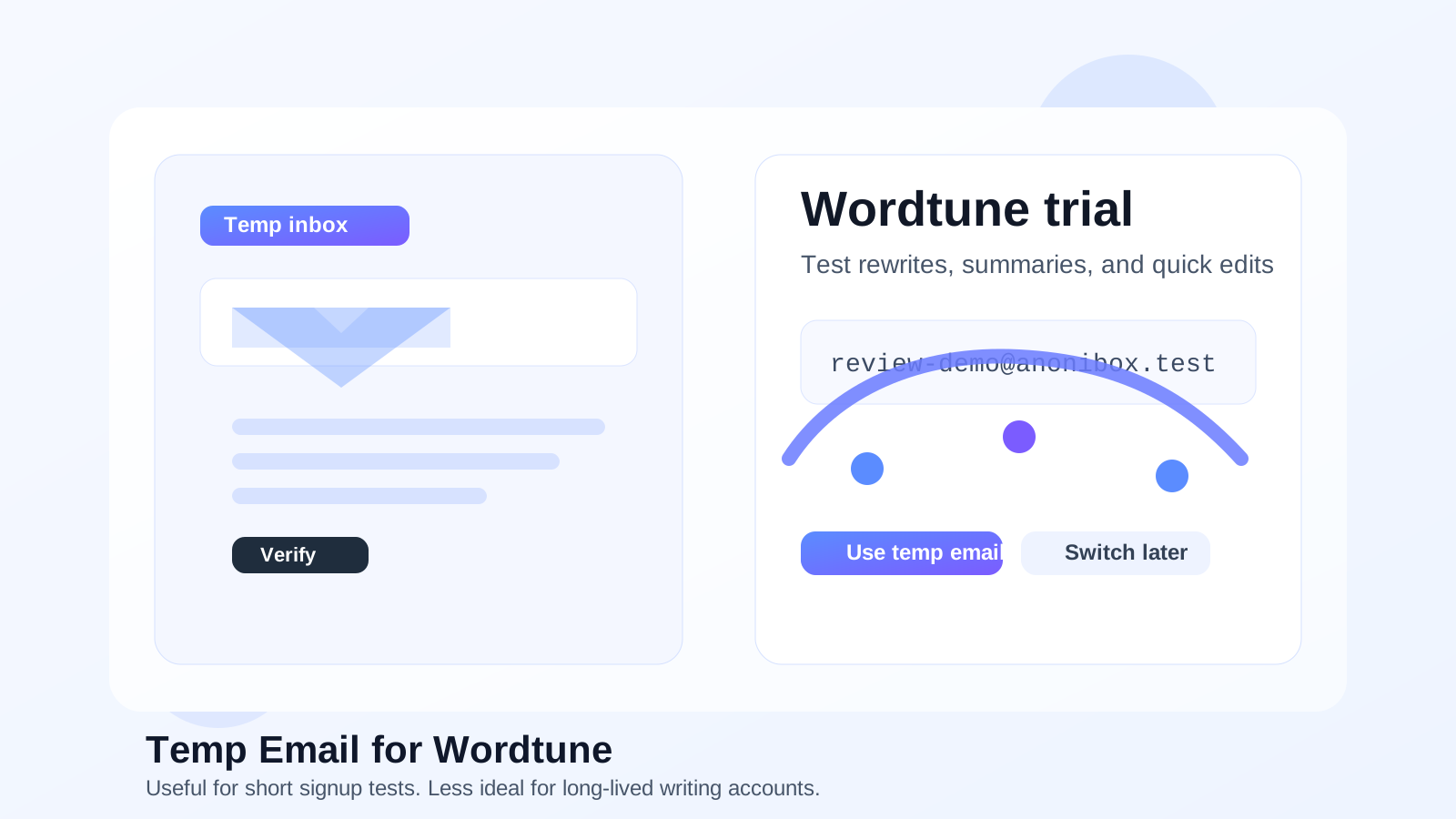
That simple distinction matters. A lot of people sign up for writing tools in a hurry, verify the email once, test a few features, and then forget about the account. Weeks later, their main inbox is still collecting product updates, upgrade nudges, webinar invites, and “come back” campaigns for a tool they only wanted to try once. Using a temporary inbox can keep that early research cleaner.
At the same time, it is worth being realistic about what a disposable address does and does not solve. It can reduce inbox clutter and limit casual exposure of your personal email, but it does not make you anonymous in every sense, and it is not a great fit for accounts you depend on later.
When a temp email for Wordtune actually helps
A temporary inbox is most useful during the first evaluation stage. That includes situations like:
- Testing whether Wordtune’s rewrite suggestions fit your writing style
- Comparing Wordtune against tools like Grammarly, QuillBot, Jasper AI, Writesonic, or Copy.ai
- Checking whether the free plan or trial is enough for your workflow
- Trying the product on one project without linking it to your long-term personal inbox
- Separating experimental signups from your everyday work or school email
If your goal is simply “I want to see how this feels before I commit,” a disposable email is often a sensible first step. You get the verification email, any welcome instructions, and enough access to decide whether the tool deserves more of your attention.
When it starts getting risky
The downside shows up once the account stops being temporary in practice.
If you save important documents, build habits around the tool, or subscribe with the idea that you will return to it next month, a throwaway inbox becomes fragile. If you lose access to the inbox, password resets and account recovery become harder. That is not a Wordtune-specific problem; it is true of almost any service where the email address eventually becomes part of your account identity.
A temp email is also a poor choice if you are using the account as part of team collaboration, shared billing, or any workflow that might matter later. Early testing is one thing. Long-term ownership is another.
What you are really protecting
Most people are not trying to hide from a writing tool. They are trying to protect their main inbox from unnecessary sprawl.
That matters because AI writing products often follow the same lifecycle: signup, confirmation email, onboarding tips, feature announcements, upgrade prompts, trial reminders, and re-engagement campaigns later. None of that is inherently bad. It is normal product marketing. But if you test lots of tools, your inbox fills up fast with messages you never meant to keep receiving.
Using a temp address gives you a cleaner boundary between evaluation and commitment. That is the real benefit.
How to use a temp email for Wordtune the smart way
1. Decide whether this is a trial or a real account
Be honest with yourself before you sign up. If you are just comparing features for 20 minutes, a temporary inbox is fine. If you already expect to depend on the account next week, use a stable address from the start.
2. Generate the inbox first
Create the disposable address before opening the signup page so the whole test stays separate. Tools like Anonibox are useful here because they make it easy to collect the confirmation email without exposing your main account at the first touchpoint.
3. Use the inbox only for verification and first-run messages
Click the verification link, read the welcome email, and keep anything essential from the early onboarding phase. For a short product test, that is usually all you need.
4. Judge the product fast
Once you are in, focus on the actual questions that matter:
- Are the rewrites actually better, or just different?
- Does the tone adjustment feel natural?
- Are summaries useful or too generic?
- Does it save time on emails, essays, reports, or blog drafts?
- Would you trust it enough to pay for it later?
The point of a trial is not to sit in the product forever. It is to decide whether the product deserves a stable place in your workflow.
5. Move to a permanent email if the tool earns it
If Wordtune becomes something you want to use regularly, switch to an email address you control long term. That can be your main inbox or a dedicated writing-tools inbox. Either way, the key is using an address that will still exist when you need support, billing history, or a reset link.
Better alternatives than a fully disposable inbox
Sometimes the best answer is not “use your main email” or “use a temp email.” It is something in the middle.
If you like to keep your signups organized, a separate long-lived email address just for tools and trials is often the safest compromise. It protects your primary inbox from clutter while preserving recovery access. For people who test a lot of SaaS products, that can work better than starting every account with a disposable address.
An email alias can also help, depending on your setup. The advantage is similar: you keep control over the address while still filtering or disabling it later if it starts attracting noise.
Common mistakes to avoid
- Using a disposable inbox for a tool you already know you want to keep: that just creates cleanup work later.
- Forgetting to save important links: temporary inboxes can disappear, so do not assume the verification message will always be there.
- Treating a temp email as a security guarantee: it reduces exposure of one email address, but it does not replace good password habits or careful account management.
- Testing too many tools without a system: if you evaluate multiple writing apps, label your notes so you remember which inbox and which account belong to which product.
Who should use a temp email for Wordtune?
This approach is usually best for:
- Students comparing writing aids before choosing one
- Freelancers testing rewrite tools for one project
- Marketers evaluating several drafting assistants at once
- Privacy-conscious users who do not want every experimental signup tied to their main inbox
It is a weaker fit for people who expect to store long-term work, manage paid subscriptions, or rely on the same account as part of a durable workflow.
A quick decision checklist
Before signing up, ask yourself:
- Am I only testing Wordtune, or do I plan to keep using it?
- Will I need account recovery later?
- Do I want to avoid future marketing email in my main inbox?
- Would a dedicated long-term trial inbox be smarter than a disposable one?
If your answers lean toward short-term experimentation, a temp email is reasonable. If they lean toward long-term use, go with a stable address instead.
Final answer
A temp email for Wordtune is a practical choice for quick evaluations, first-run signups, and one-off writing tests when you want to keep your personal inbox cleaner. It helps most during the “should I even keep this?” stage.
But once the tool becomes part of your real workflow, a disposable inbox usually stops being the smart option. At that point, switch to an email address you control long term so you can manage resets, billing, and account ownership without friction.
Used that way, temporary email is not a gimmick. It is just a clean way to separate curiosity from commitment.