Yes — a temp email for Doodle can be useful when you only need to vote in a scheduling poll, confirm a one-off booking, or keep organizer follow-up out of your main inbox. It becomes a bad fit once the thread matters long term, because you may need reminders, reschedule notices, participant updates, and follow-up links later.
Doodle is built to make meeting coordination easier, especially when several people need to choose a time. That convenience is exactly why people sometimes prefer a temporary inbox: one simple poll can trigger confirmations, reminders, organizer messages, calendar details, and future outreach you may not want tied to your everyday address. Used carefully, a disposable inbox can reduce that noise. Used carelessly, it can make you miss the details that actually matter.
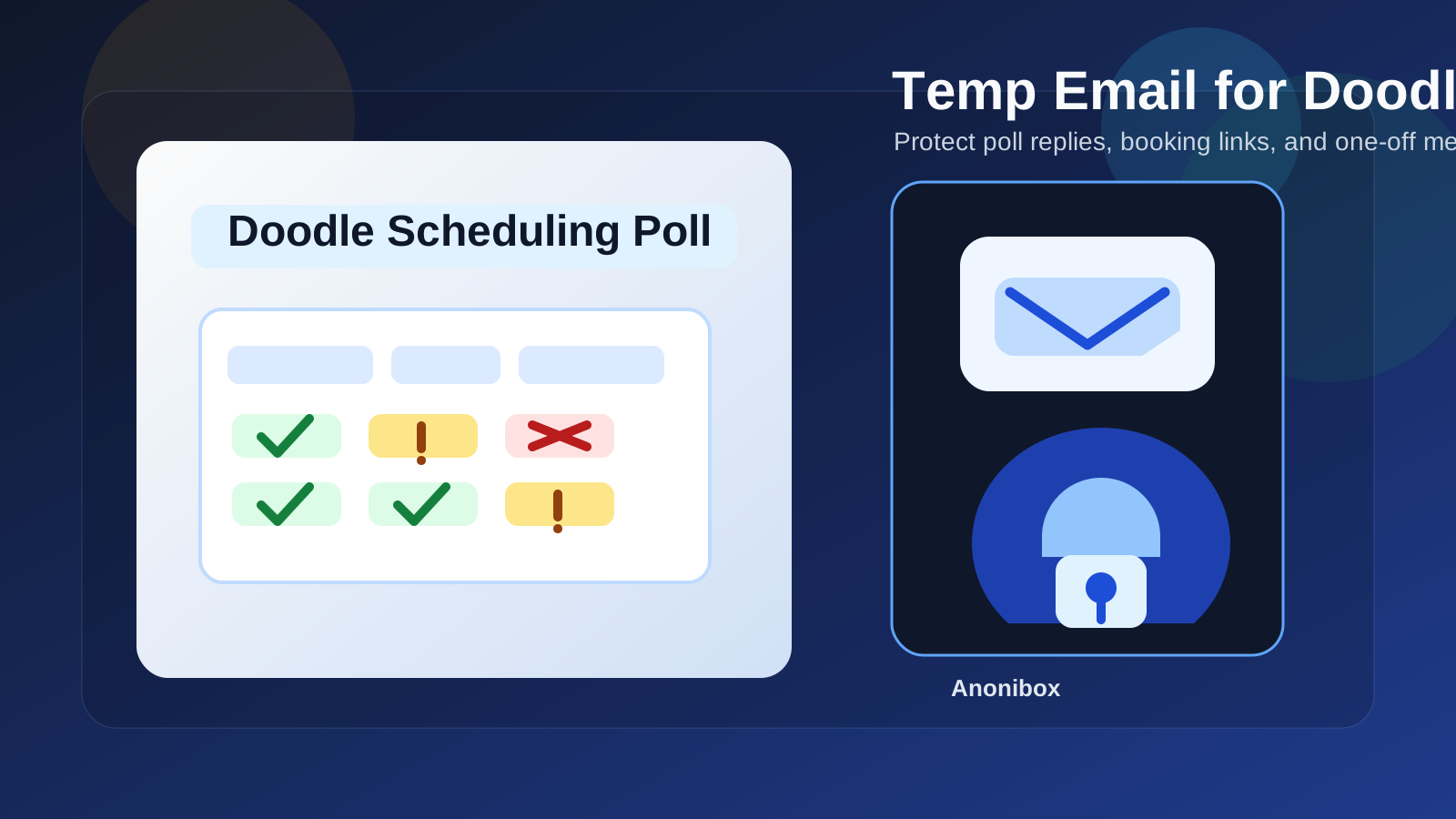
When a temp email for Doodle makes sense
A temporary email is most useful when the Doodle interaction is short-lived, low-risk, and easy to replace if something goes wrong. Common examples include:
- Voting in a one-time scheduling poll: maybe a community meetup, parent group, volunteer board, or casual networking session needs to collect availability.
- Booking a single intro call or demo: you want the confirmation email and nothing beyond that.
- Testing someone’s booking workflow: perhaps you are checking a link, reviewing a setup, or seeing how an organizer’s scheduling page works before committing real details.
- Keeping early-stage contact separate: if you are not sure whether the organizer, vendor, or service will keep emailing you after the event, a temp inbox can help contain the spillover.
In those cases, the goal is simple: receive the confirmation, make the booking, and keep your primary inbox from collecting yet another trail of automated messages.
Why people look for a disposable inbox before using Doodle
Doodle itself is a scheduling layer, but the email address you enter often becomes the anchor for everything around the meeting. That can include the poll invitation, your response record, reminders, organizer changes, location updates, conferencing links, and follow-up notes. If the meeting is tied to a sales funnel, coaching offer, recruiting process, or broad networking campaign, the email can also open the door to future marketing or outreach.
That is why privacy-conscious users sometimes prefer a temporary address at the start. They are not necessarily hiding. They are just limiting exposure until they know whether the interaction is worth continuing. If you already use Anonibox for one-off signups or low-trust forms, Doodle can fit that same pattern when the meeting is casual, optional, or experimental.
When a temp email for Doodle is a bad idea
The downside is that scheduling information can become more important after the initial click than it seems in the moment. A temporary address is the wrong choice if the meeting thread may continue or if you need a reliable record afterward.
- Job interviews: if a recruiter, hiring manager, or coordinator is using Doodle to collect availability, do not gamble with an inbox you may lose access to.
- Client work: if the meeting is connected to a proposal, project handoff, discovery call, or paid engagement, you want a stable contact point.
- Recurring meetings: weekly sessions, ongoing mentoring, therapy, advising, tutoring, or team check-ins deserve a permanent email you actually monitor.
- Meetings with documents or follow-up links: if agendas, attachments, recordings, or next steps may arrive later, a disposable address can backfire.
- Anything sensitive or identity-linked: healthcare, legal, financial, HR, or school-related scheduling should stay on a secure, long-term inbox you control.
A good rule is this: if missing one email would create real friction, do not use a temp inbox.
What you might miss if you use a temporary inbox carelessly
People often focus on the first confirmation email and forget how much scheduling can move afterward. With Doodle, the risk is not only “will my booking go through?” It is also “what happens if the organizer changes something later?”
You may miss:
- final confirmation details after you submit your slot
- reschedule or cancellation notices
- updated meeting locations or video-call links
- poll-close messages that confirm the selected time
- organizer follow-up asking you to choose again
- calendar-related reminders you expected to have later
That is why the right use case for a disposable inbox is narrow. It works best when the meeting is easy to recreate or when you can immediately transfer the important details into your calendar, notes, or another trusted system.
How to use a temp email for Doodle safely
If you decide a temporary inbox is appropriate, the safest approach is not complicated. It just requires a little discipline.
1. Generate the inbox before opening the poll or booking page
Start with the address already ready to go. That prevents you from defaulting to your everyday inbox and then regretting it later.
2. Use it only for the first, low-risk interaction
Vote in the poll, confirm the booking, and capture whatever information you receive. Do not assume you can “remember it later.” Save the event title, organizer name, time zone, date, and joining method immediately.
3. Move the important details into your real calendar
This is the step many people skip. If the meeting matters at all, copy the time and any meeting link into a calendar you actually use. A disposable inbox is much less dangerous when the event no longer depends on that inbox as the only source of truth.
4. Switch to a stable email if the conversation continues
If the organizer follows up, the meeting turns into a longer thread, or you realize there may be future sessions, move to a normal address you control. Disposable email is for the uncertain edge of the interaction, not the durable core of it.
5. Do not treat a temp inbox like a privacy shield for everything
A temporary address reduces inbox clutter and limits some exposure, but it does not make the rest of the interaction anonymous or risk-free. If you are still sharing your name, company, booking preferences, and availability, some personal context remains visible. Use the right amount of privacy for the situation instead of assuming one tool solves everything.
A better middle ground for frequent scheduling
Many people do not actually need a disposable address. They need a separate address. That distinction matters.
If you book lots of demos, networking calls, contractor consultations, recruiting screens, or community meetings, a dedicated secondary inbox is often better than an expiring one. It keeps your main inbox cleaner without risking lost access to reminders and updates. This is especially useful if you want boundaries between personal life, freelance work, job searching, and general web signups.
For example:
- Use your primary personal email for family, friends, and core accounts.
- Use a dedicated professional or job-search inbox for interviews and important external meetings.
- Use a temp inbox for low-commitment polls, throwaway signups, or one-off scheduling tests.
That layered approach is usually smarter than trying to push every meeting through a disposable mailbox.
Should you use a temp email for Doodle at work?
Usually not. If the meeting is tied to your employer, team, customer relationships, or ongoing projects, using a disposable inbox creates more problems than it solves. Work scheduling depends on continuity: coworkers may send updates, clients may reschedule, and the context around the meeting may matter later.
The better question for work is whether you should use a separate workstream inbox for external scheduling rather than your main internal email. That preserves organization without creating a brittle handoff point.
Quick checklist before you use a temp email for Doodle
- Is this a one-off poll or booking rather than an ongoing relationship?
- Would missing a later reminder or update create a real problem?
- Can you save the meeting details somewhere permanent right away?
- Is the organizer or meeting low-trust, marketing-heavy, or likely to generate future noise?
- Would a separate long-term inbox be smarter than a disposable one?
If your answers point toward “short-term, low-risk, easy to replace,” a temporary inbox is reasonable. If the answers point toward “important, ongoing, or easy to disrupt,” use a normal address instead.
Final takeaway
A temp email for Doodle can absolutely help when you want to vote in a scheduling poll, book a one-off meeting, or test a link without giving your everyday inbox another long tail of reminders and follow-up. The trade-off is reliability: once the meeting matters, a disposable address can become the weakest part of the workflow.
The best approach is practical, not extreme. Use a temporary inbox for low-stakes scheduling noise. Use a stable inbox for interviews, client calls, recurring sessions, and anything you may need to recover later. That way you get the privacy benefit without creating avoidable meeting chaos for yourself.