Yes — a temp email for SeekOut can make sense when you are dealing with early recruiter outreach, joining a talent pool, or testing whether a role is worth your main inbox.
It works best as a privacy buffer during the exploratory stage, then you should switch to a stable address once a real recruiter conversation, interview, or offer process begins.
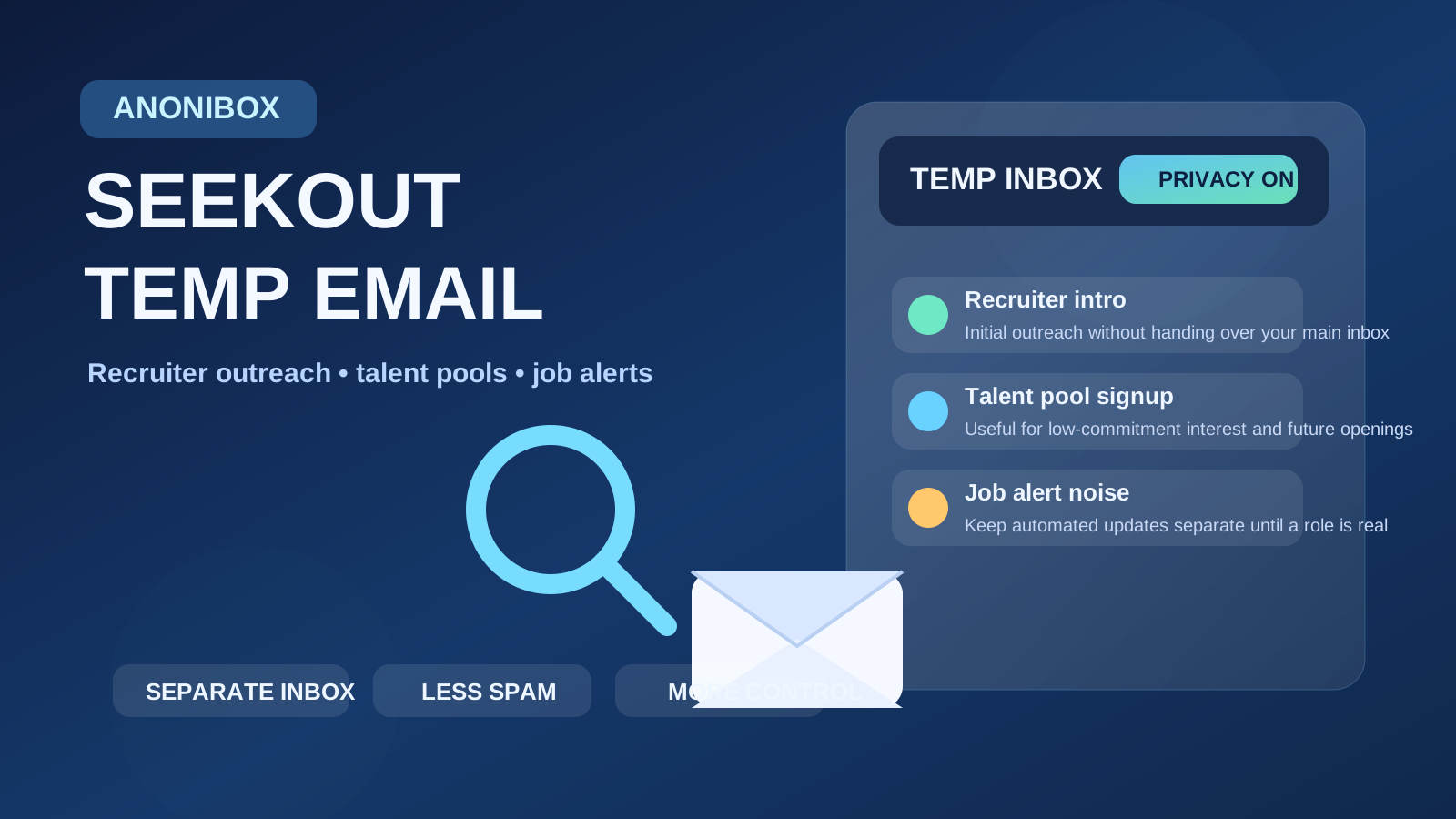
Why people search for a temp email for SeekOut
Most people are not looking for a disposable inbox because they want to hide from legitimate employers. They are looking for control. Job searches can create a surprising amount of inbox noise long before anything meaningful happens. One recruiter message leads to follow-up email. One talent network signup leads to alerts. One cautious reply can turn into months of low-fit outreach.
That is where a temporary inbox becomes useful. If you are testing the market, quietly exploring roles, or sorting real opportunities from generic recruiter traffic, a separate address helps you keep your main inbox cleaner. You still get the email you need, but you do not have to hand your everyday address to every sourcing workflow immediately.
SeekOut is especially relevant to that problem because it sits close to outbound recruiting, talent sourcing, candidate discovery, and early interest signals. Depending on how a recruiter or company uses it, you may not be deep in a formal application process yet. You may simply be deciding whether a conversation deserves more of your attention.
Short answer: useful for early outreach, risky for serious hiring stages
If the interaction is still low commitment, a temp email is often reasonable. That includes first-contact outreach, light interest checks, talent pool signups, or job-alert experiments where you want to see what happens before sharing your primary address more widely.
Once the opportunity becomes real, the trade-off changes. If a recruiter is scheduling interviews, sending prep materials, sharing assessments, or asking you to stay reachable over multiple days, reliability matters more than inbox protection. At that point, a stable email address is the better tool.
What kind of messages might follow a SeekOut-related interaction?
The exact workflow varies, but early recruiting and sourcing systems often lead to the same kinds of email:
- Initial recruiter introductions asking whether you are open to a role or conversation
- Interest checks to confirm location, availability, salary range, or experience fit
- Talent network or future-opportunity messages if you are not ready for one role but might match another later
- Job alerts or automated recommendations after you engage with a recruiting workflow
- Follow-up nudges from recruiters who want a quick reply before moving on to other candidates
None of those messages are automatically bad. The problem is that they can accumulate quickly, especially if you are talking to several recruiters, agencies, or hiring teams at once. A temporary inbox keeps that early-stage traffic in one place until you know which conversations deserve long-term access to you.
When using a temp email for SeekOut makes sense
1. You are exploring recruiter outreach, not chasing one dream role
If you are in broad market-scan mode, a temporary inbox is practical. Maybe you want to see what kinds of roles recruiters send. Maybe you are not sure whether the company is a match. Maybe you are curious, but you do not want every exploratory reply tied to the same inbox you use for banking, current work, and everyday life.
That is a good use case. You keep the door open without giving away permanent inbox access too early.
2. You want to separate low-priority recruiting traffic from serious applications
Many job seekers handle two search tracks at once. One is the serious track: direct applications, interviews, referrals, and roles they genuinely want. The other is the exploratory track: recruiter messages, talent communities, passive-market feelers, and alerts that may or may not matter. Mixing those together creates clutter fast.
A temp inbox works well for the exploratory side. It helps you keep job-search administration under control so you can notice the messages that actually matter.
3. You are job searching quietly
Not every search is public. Some people are casually testing the market while still employed. Others only want to respond to very specific roles, compensation levels, or locations. In that stage, it is reasonable to limit how widely your main contact details spread. A temporary inbox gives you one more layer of distance while you decide whether to engage further.
4. You want to test the quality of the outreach first
Recruiter email varies a lot. Some messages are personalized and credible. Others are clearly mass-sent, poorly targeted, or vague. A temporary address lets you evaluate the quality of the outreach before you move the conversation into the address you monitor most closely.
When a temp email is the wrong choice
A disposable inbox is not a permanent hiring identity. It becomes a bad idea when the cost of missing a message starts to outweigh the privacy benefit.
- Interview scheduling is happening. You need dependable access.
- You expect assessment links or next-step instructions. Those messages can be time sensitive.
- The recruiter is clearly legitimate and the role is a strong match. At that point, you want continuity.
- You may need to return to the same account repeatedly. Temporary inboxes are better for short bursts than long processes.
- Offer, onboarding, or compliance paperwork is in sight. Do not run serious employment steps through a disposable inbox.
Think of a temp email as a screening layer, not a forever address. It helps you decide where to invest attention. It should not become the fragile foundation for a real hiring process.
How to use a temp email for SeekOut without missing a real opportunity
Use it for the first layer only
If you are replying to early outreach or signing up for a low-commitment recruiting stream, a temp inbox is fine. Use it to collect the first messages, see how relevant they are, and judge whether the outreach looks human and credible.
Save the details that matter
When a message looks promising, do not leave it floating in a temporary inbox and assume you will remember it later. Save the recruiter’s name, company, role title, and any useful links right away. A simple tracker or notes file prevents good leads from getting lost.
Switch early if the conversation becomes real
The moment the recruiter starts acting like a serious path instead of a speculative lead, move to a permanent address. That handoff keeps you reachable and reduces the chance that an expired inbox or missed notification costs you an interview.
Pair it with a cleaner job-search system
A temp inbox works even better if you also separate the rest of your search. Many people use a dedicated spreadsheet, a separate calendar, and either an email alias or a dedicated job-search inbox for serious opportunities. If you use Anonibox or another temporary inbox service for the early stage, that is most effective when it fits into a broader system instead of being your only organizing method.
Red flags to watch for in recruiter outreach
A temporary inbox can reduce clutter, but it does not protect you from every bad interaction. Stay cautious if:
- The recruiter refuses to identify the employer clearly
- The message is extremely vague about the role
- You are pushed to move immediately to WhatsApp, Telegram, or another off-platform channel
- The pay looks unrealistically high for the job description
- You are asked for sensitive documents before a credible hiring process exists
- The outreach feels copied, mass-sent, or mismatched to your background
Those are signs to slow down, verify independently, and avoid giving away more information than necessary.
A better long-term alternative for serious opportunities
If you want privacy without the fragility of a disposable inbox, a dedicated permanent job-search address is usually the better long-term answer. It gives you many of the same benefits:
- Cleaner separation from your personal inbox
- Better organization for recruiter messages and applications
- Less risk of missing important follow-up
- An address you can keep active through interviews, offers, and later reference checks
That makes the best workflow fairly simple: use a temp inbox for low-trust, early-stage, or noisy outreach; use a separate permanent address for opportunities that become real.
Common mistakes to avoid
- Using one temporary inbox for every recruiter: it becomes hard to tell which messages belong to which opportunity.
- Waiting too long to switch: if you like the role, move to a stable address before the process speeds up.
- Treating every message as equally important: recruiter traffic ranges from highly relevant to pure noise.
- Forgetting to save names and links: a temporary inbox is only useful if you capture the details worth keeping.
- Assuming privacy equals anonymity: a temp inbox helps with inbox control, not total invisibility.
Final takeaway
A temp email for SeekOut is a smart tool for the earliest stage of recruiter outreach, talent-pool exploration, and job-alert testing. It helps you protect your main inbox, reduce low-value clutter, and decide which conversations deserve deeper attention.
Use it when the relationship is still exploratory. Switch to a stable address when the opportunity becomes serious. That balance gives you the privacy benefits of a temporary inbox without the risk of losing a real job opportunity to an avoidable communication miss.