Yes, recruiters can sometimes tell that you are using a temporary email, especially when the domain is obviously disposable or the address behaves like a short-lived signup inbox rather than a stable contact method.
No, it is not always instantly obvious, and many recruiters will not care unless the address looks unprofessional, stops receiving replies, or creates friction during interview scheduling and follow-up.
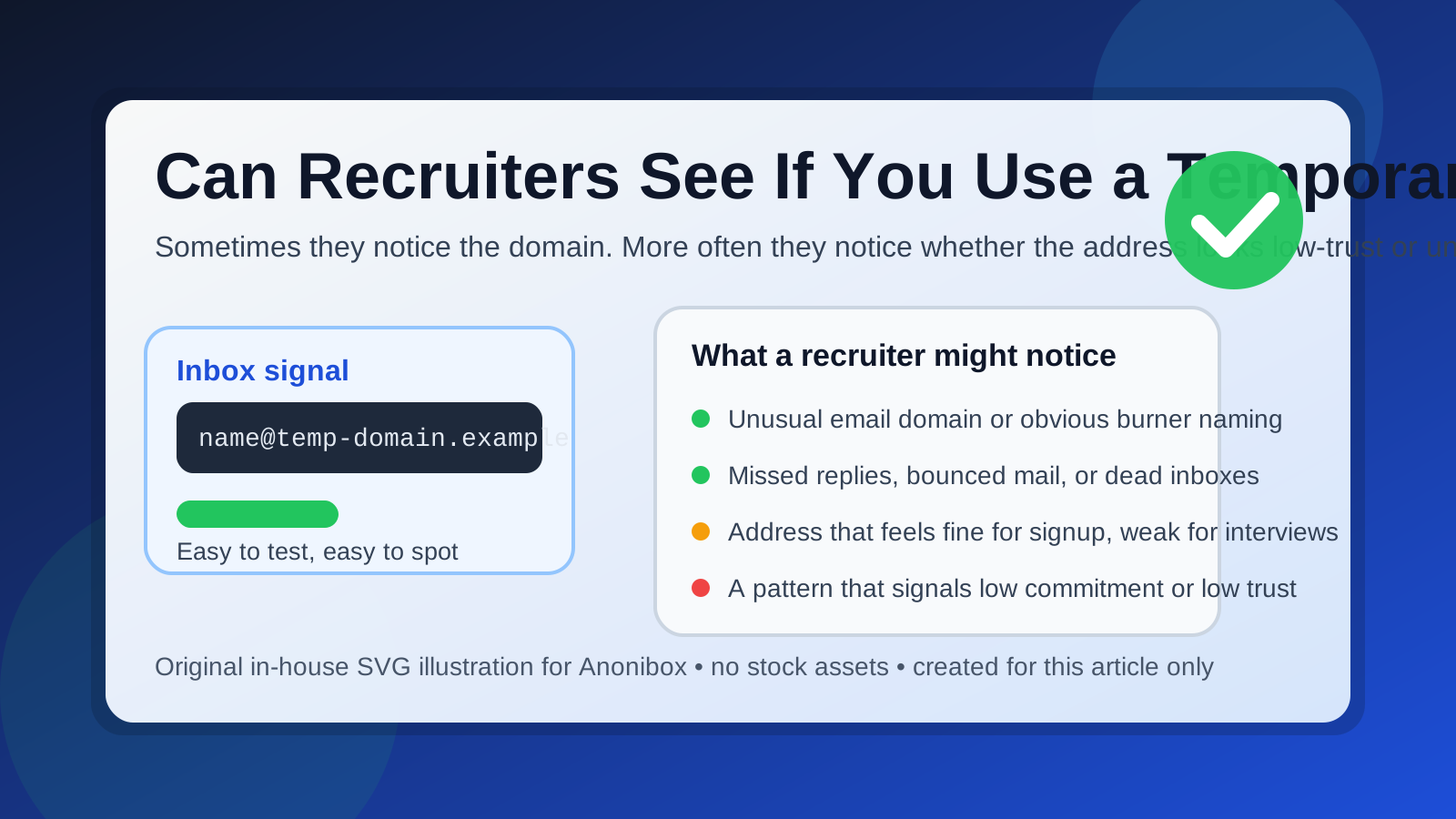
That distinction matters. People often assume there are only two possibilities: either recruiters never notice, or they always detect it immediately and reject you. Real life is messier. In many hiring workflows, a recruiter is not running some magical “burner email scanner” against every application. But they do notice patterns. If your address uses a well-known temporary domain, looks obviously disposable, stops working after a few days, or makes you hard to reach, it can absolutely affect how your application feels on the other side.
The better question is not just can recruiters see if you use a temporary email. It is what are they likely to notice, when does it matter, and what is the smarter privacy move if you still want to protect your main inbox? That is where a more practical answer helps.
Short answer: sometimes yes, sometimes effectively yes
A recruiter may not know the exact service you used, but they may still infer that the address is temporary. In practice, that can happen a few different ways:
- the domain is widely known as a disposable email provider
- the address format looks obviously throwaway or auto-generated
- reply attempts bounce or go unread during the hiring process
- the account disappears before interviews, assessments, or offer-stage follow-up
- the email choice feels out of step with the seriousness of the role
So yes, recruiters can sometimes see it directly from the domain, and even when they cannot identify the provider by name, they can still notice the consequences of using a disposable inbox.
How recruiters or hiring systems might notice
1. The domain itself stands out
This is the most obvious case. Some temporary email domains are widely recognized. A recruiter, coordinator, or applicant tracking system may see a domain that looks disposable and immediately assume the inbox is short-lived.
That does not guarantee rejection. But it can create questions the moment your application lands: Is this candidate trying to avoid follow-up? Will they still receive messages next week? Is this a real working inbox?
2. The address looks low-trust even if the domain is unfamiliar
Not every recruiter knows every temp mail service. Still, an email address can look suspicious without being famous. Random strings, awkward naming patterns, or a domain that feels synthetic can make the address look less stable than a normal personal or professional inbox.
Hiring is full of quick judgment calls. If your materials already need to earn trust, adding an email address that looks disposable does not help.
3. The inbox becomes unreliable during real communication
This is where temporary email hurts the most. A recruiter may not care what service you used at application time, but they will care if you miss an interview invitation, fail to respond to an assessment email, or lose access to a scheduling link because the inbox expired.
Once reliability breaks, the question is no longer theoretical. It becomes a workflow problem for the employer.
4. Some systems may screen risky or low-quality domains
Companies use many different hiring tools and fraud-prevention rules. Some systems may flag odd domains, low-deliverability patterns, or addresses associated with spammy behavior. That does not mean every employer blocks temporary email, and it does not mean all disposable domains are treated the same way. But it is one more reason to assume that the address may be more visible than you think.
When recruiters usually care more
Recruiters do not evaluate every email address with the same intensity. Context changes everything.
High-trust or competitive roles
If you are applying for professional, client-facing, regulated, or highly competitive positions, your contact details are part of your overall presentation. A temporary inbox may feel less credible there than it would for a low-stakes newsletter signup.
Interview-stage communication
Early applications are one thing. Active interview coordination is another. Once a recruiter is spending time on you, they want a stable channel. If your email looks temporary or becomes unreliable, it adds friction at the worst possible moment.
Roles involving background checks or longer timelines
Some hiring processes stretch across weeks. If your inbox may disappear or you do not check it consistently, that is a real operational risk. Recruiters care less about abstract privacy theory than about whether you can be reached when needed.
When they may care less
There are also situations where a temporary email is less likely to matter much.
- Low-stakes signups: joining a talent community, downloading a guide, or testing whether a jobs platform is useful.
- Job alerts and exploratory searches: if you are not yet deep in a real process, protecting your main inbox may matter more than perfect polish.
- One-off platform checks: sometimes you only want to see how a site works before deciding whether to engage seriously.
In those cases, a temporary inbox may be fine, especially if you are not yet asking an employer to treat you as an active candidate.
The real risk is often not “detection” but “signal”
This is the part many people miss. Even if a recruiter never thinks, “Aha, that is definitely a temporary mail provider,” they may still pick up on the signal the address sends.
An email address can signal a few things:
- you are privacy-conscious and trying to avoid spam
- you are exploring broadly but not yet committed
- you expect low-trust behavior from the platform or recruiter
- you may be harder to reach than someone using a stable inbox
Some of those signals are understandable. But hiring teams do not always interpret them generously. The more serious the interaction becomes, the more useful it is to send the opposite signal: reachable, organized, and stable.
So should you use a temporary email for job applications?
Sometimes, but selectively. A temporary inbox can be reasonable for:
- job board signups you do not fully trust yet
- alert subscriptions and low-value email flows
- early exploratory applications where you mainly want to limit spam
- testing a career portal before deciding whether to keep using it
It becomes riskier for:
- direct applications to employers you actually want to hear from
- interview scheduling
- assessment links and follow-up threads
- offer-stage or identity-sensitive communication
If the opportunity matters, the inbox should stay alive long enough to support the entire conversation.
A smarter privacy approach than a pure throwaway inbox
If your goal is to reduce spam without looking disposable, there are better middle-ground options.
Use a separate permanent job-search inbox
This is often the best answer. A dedicated inbox for applications keeps your main email cleaner while still giving recruiters a stable way to reach you. You control the account, you can check it consistently, and it still feels professional.
Use an email alias
An alias can give you separation without fragility. You can filter or disable the alias later if it attracts junk, while still receiving messages in an inbox you actually monitor.
Use a temp inbox only for low-trust entry points
Anonibox fits well here. If you are signing up for job alerts, talent communities, or platforms you are not ready to trust with your main address, a temporary inbox can be useful. Then, if a real opportunity appears, move the conversation to a stable account before the stakes rise.
Practical signs you should switch to a real inbox immediately
- a recruiter has responded personally
- you are being asked to schedule an interview
- an assessment or take-home task has been sent
- the role is one you seriously want
- the process may stretch across days or weeks
At that point, the downside of a disposable inbox is larger than the privacy upside. Stability matters more than inbox cleanliness.
Common mistakes job seekers make
Using a true burner for a real hiring process
A lot of people treat job applications like app trials. That is the wrong model once people are involved. Hiring workflows are messy, delayed, and human. Your inbox needs to survive that mess.
Assuming “if they can email me once, I’m fine”
The problem is not just first contact. It is the second, third, and fourth message: interview details, reschedules, assessment reminders, or follow-ups after you thought the role had gone quiet.
Thinking privacy and professionalism are opposites
You do not have to choose between total exposure and obvious throwaway behavior. A separate permanent inbox is often the best of both worlds.
A simple decision checklist
Before using a temporary email, ask yourself:
- Am I trying to avoid spam, or am I trying to stay reachable for a real opportunity?
- Would I be comfortable if this employer replied two weeks from now?
- Does this role matter enough that I want to look fully stable and professional from the start?
- Could a separate long-term inbox solve the problem better than a disposable one?
If the role matters and the answer is yes, use a stable inbox. If the interaction is still low-trust and low-stakes, a temporary inbox can still be useful as a filter.
Final answer
So, can recruiters see if you use a temporary email? Sometimes yes, directly from the domain. Other times they may not identify the service, but they can still notice the reliability, trust, and communication signals that come with it.
If you are only protecting yourself from spam during early exploration, a temporary inbox can make sense. But if you want a recruiter to take the relationship seriously and keep the process moving smoothly, a separate permanent inbox or email alias is usually the better privacy move. That gives you control without looking disposable.