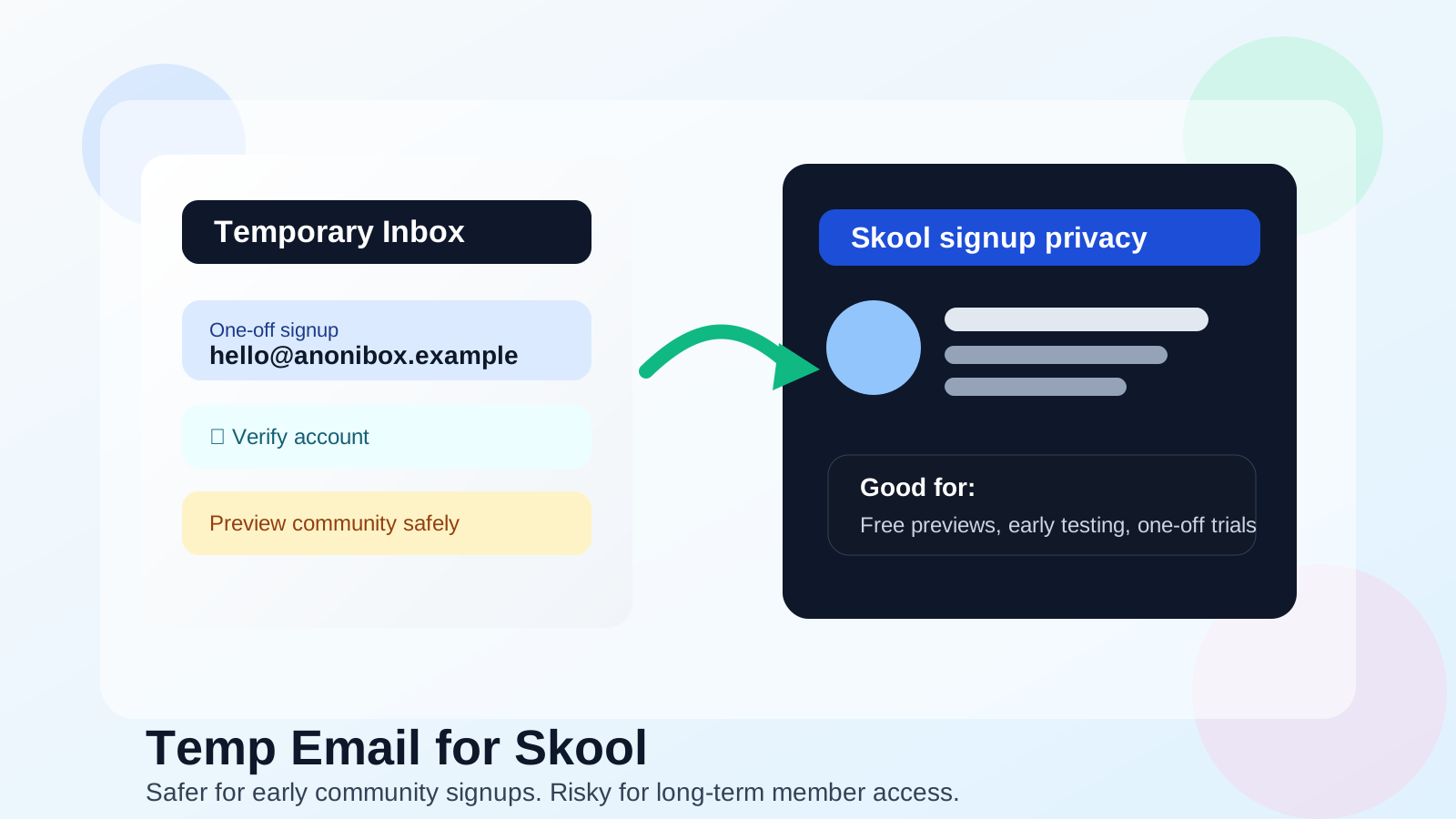
Yes — a temp email for Skool can be useful if you only want to preview a community, test a signup flow, or claim a one-off free resource without giving out your main address.
But it becomes risky fast if you expect to keep access, receive important updates, reset your password, or pay for a membership, because temporary inboxes are easy to lose and long-term account emails still matter.
Why people consider a temp email for Skool
Skool communities often sit at the intersection of courses, coaching, memberships, free lead magnets, and creator communities. That means a simple signup can lead to a lot more than one confirmation email. You may get welcome messages, reminders, marketing follow-ups, event announcements, community prompts, and upgrade offers. If you are only trying to see whether a group is worth your attention, using your permanent inbox for every test signup can get noisy quickly.
That is the real appeal of a temporary email: it gives you a low-commitment way to verify access, read the first few messages, and decide whether the community is actually worth joining more seriously. Instead of mixing one-off creator offers into your main inbox, you keep exploration separate from long-term account ownership.
This is where a service like Anonibox can be helpful. It lets you isolate those early messages so you can evaluate the offer without instantly turning your personal or work email into another marketing destination.
When a temporary email makes sense for Skool
A temp email is most useful when your goal is short-term evaluation, not long-term participation. Good examples include:
- Checking out a free community before you decide whether to stay.
- Claiming a one-time workshop, checklist, or creator bonus tied to a Skool signup.
- Testing your own funnel or onboarding flow if you run a community.
- Separating multiple creator or coaching trials while you compare them.
- Protecting your main inbox from broad nurture sequences during early research.
In those situations, the disposable inbox is doing exactly what it should do: helping you verify access without committing your permanent address too early. If the group turns out to be low value, overly salesy, or simply not relevant, you can walk away without carrying the follow-up messages with you.
When a temp email becomes a bad idea
A temporary inbox is a poor fit once the Skool account stops being “just a test.” If you are joining a serious paid community, using course materials regularly, networking with people inside the group, or relying on the platform for ongoing communication, you should not keep the account tied to an address you may lose.
That matters for practical reasons:
- Password resets: if you lose access to the inbox, account recovery becomes harder.
- Important notices: community updates, policy changes, access details, or support replies may still arrive by email.
- Paid memberships: billing receipts, renewal reminders, failed payment notices, and subscription changes should go somewhere stable.
- Invites and approvals: some communities depend on email-based entry, follow-up instructions, or moderator communication.
- Trust and continuity: if you are building real relationships inside a group, you do not want your account tied to a throwaway inbox that disappears.
In short, a temp email is great for a preview. It is weak for ownership.
A safer workflow: test first, then switch if the community is worth keeping
The most practical approach is not “always use a temporary email” and not “never use one.” It is to use the right address for the right stage.
1. Use a temp inbox for the first look
If you are exploring a free group, a free challenge, or a creator funnel you are not sure about yet, sign up with a temporary inbox first. Open the confirmation message, look at the onboarding flow, and judge whether the experience feels useful or just promotional.
2. Decide whether the community deserves long-term access
Ask a few basic questions:
- Is the content actually valuable, or is the community mainly a lead-generation layer?
- Will you want future announcements and updates from this group?
- Are there courses, replays, or member resources you expect to revisit?
- Is there any chance this becomes a paid relationship?
If the answer is yes to any of those, the account probably deserves a stable email address.
3. Move to a permanent address before it matters
If you decide to stay, switch to an inbox you control long term before your access becomes important. That way you are not scrambling later when you need a reset link, a billing message, or a support reply.
4. Keep your permanent inbox segmented
Permanent does not have to mean “main personal inbox.” A dedicated creator, education, or membership email can be smarter than tying every community to your primary address. That gives you continuity without giving up organization.
What can go wrong if you keep using a temp email?
The main risk is not some dramatic security event. It is loss of continuity. People often assume they will only need the email once, then later realize they need it for something routine:
- They forgot their password after a few weeks away.
- The group owner changes access rules and sends instructions by email.
- A payment issue interrupts a membership and the notification goes to an expired inbox.
- They want proof of purchase, receipts, or past communication for support.
- The group becomes genuinely useful, but the login is tied to an address they no longer control.
That is why temporary email works best as a buffer at the beginning, not as the permanent foundation of an account you value.
Privacy benefits of using a temp email for Skool
Used appropriately, a temp email does solve a real privacy problem. It helps you:
- avoid long-term inbox clutter from communities you only wanted to sample,
- reduce the spread of your main address across creator funnels,
- keep one-off signups separate from your work or personal correspondence,
- limit follow-up from offers that turn out to be too aggressive or not relevant.
That does not make temporary email a magic shield. It simply gives you more control over when a platform or creator gets your durable contact information. For privacy-conscious users, that control is often the whole point.
If you run a Skool community, what should you expect from users?
If you are a creator or operator, it is worth remembering that some people use temporary inboxes because they are cautious, not because they are low quality. They may just want to check whether your community is worth their attention before they open the door to long-term email follow-up.
That means a cleaner onboarding experience usually works better than pressure. If your group is genuinely useful, the right people will often switch to a stable address once they see value. If the entire funnel depends on endless email reminders to keep people engaged, the problem may not be the temporary inbox.
Best practices before you use a temp email for Skool
- Use it for trials, not commitments: keep it for exploration, free previews, and one-off claims.
- Save anything important immediately: if there is a confirmation link or access detail you need, do not assume it will still be there later.
- Do not attach payments to a disposable inbox: if money is involved, move to a stable address first.
- Switch early if the group matters: do not wait until you are locked out.
- Prefer a dedicated permanent inbox for memberships: that keeps your life organized without relying on an expiring address.
Quick checklist
Before signing up, ask yourself:
- Am I just previewing this community, or do I expect to stay?
- Could I need password resets or support later?
- Is there any chance I will pay for this membership or course?
- Do I want future announcements from this group?
- Would a dedicated permanent inbox serve me better than my main personal address?
If it is a casual test, a temp email is reasonable. If it is a real commitment, use a permanent address you control.
Final answer
A temp email for Skool is useful for early signups, previews, and creator-community trials when you want to protect your main inbox and avoid unnecessary follow-up. It is not a smart long-term home for an account tied to paid access, important course material, community relationships, or future support needs.
The safest middle ground is simple: use a temporary inbox during evaluation, then move to a stable address as soon as the community proves it is worth keeping. That gives you privacy at the start without creating avoidable headaches later.