A temp email for Ghost can be useful for early newsletter, membership, and site-signup testing, but it becomes risky once real subscribers, billing notices, admin recovery, or long-term account ownership matter.
If you are only evaluating Ghost, checking a free signup flow, or testing a draft publication without exposing your main inbox right away, a temporary address can be a practical first step. If the account will matter tomorrow, though, a disposable inbox becomes a weak foundation fast.
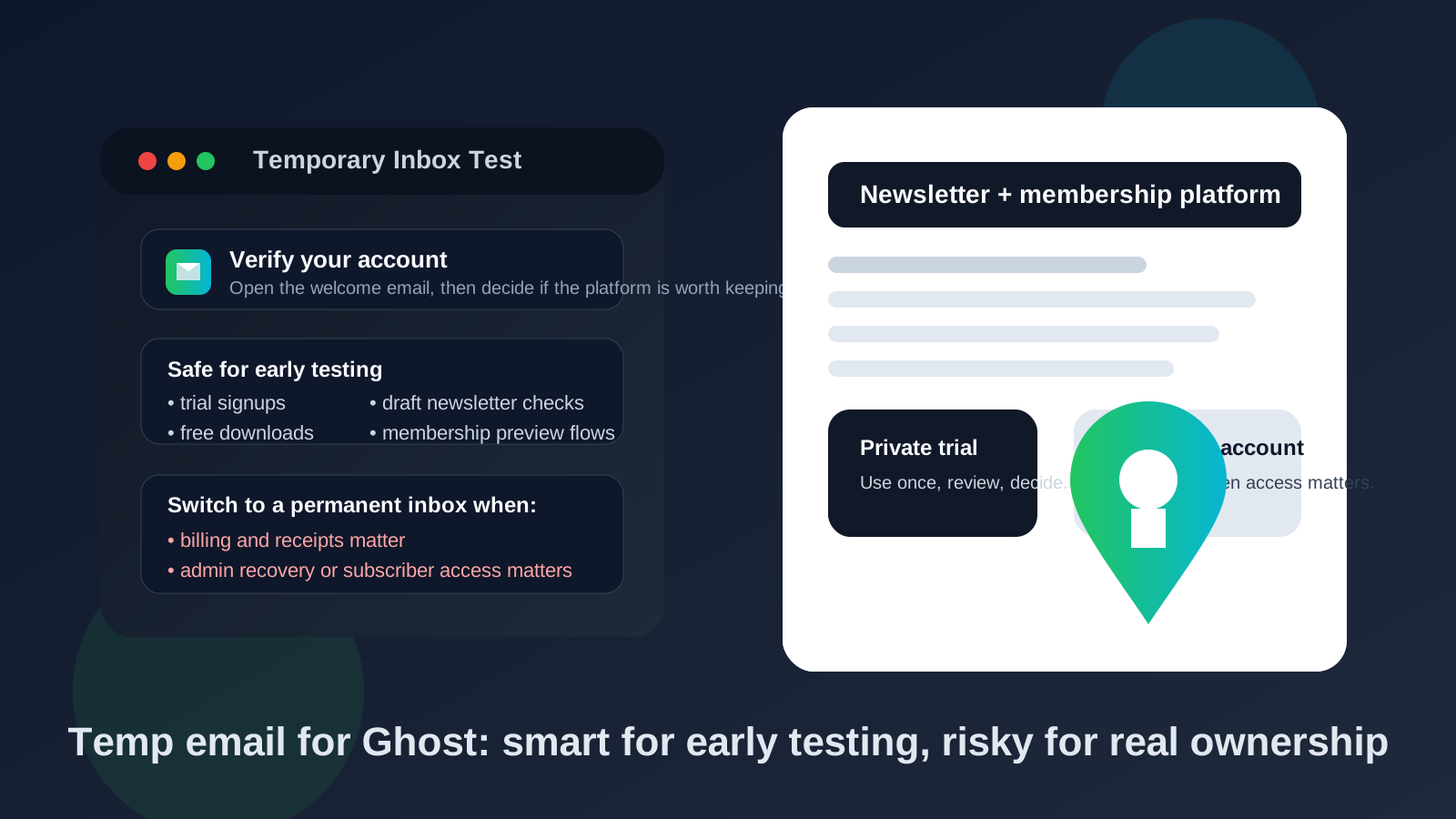
That distinction matters because Ghost sits in an interesting middle ground. It is not just a simple one-off app where you sign up, click around for five minutes, and leave forever. Ghost is often used for newsletters, memberships, paid content, subscriber relationships, custom domains, creator workflows, and publication management. That means email is usually doing more than basic verification. It may also handle login links, audience updates, billing messages, team invitations, member receipts, password resets, product announcements, and the admin notices you need when something breaks.
So the short answer is simple: a temp inbox is reasonable for low-stakes exploration, but it is a bad long-term home for anything tied to recurring content, subscribers, payments, or ownership. The more serious the Ghost setup becomes, the more important it is to move to an email address you control reliably.
What “Ghost” means in this context
Here, “Ghost” means the publishing and newsletter platform that creators, media sites, and membership businesses use to run blogs, email newsletters, paid subscriptions, and audience communities. Some people test Ghost as readers, some as creators, and some as site owners or admins. A temporary email can fit some of those situations well, but not all of them.
When a temp email for Ghost makes sense
There are a few clear situations where using a temporary inbox is perfectly reasonable.
- You are comparing platforms: maybe you are deciding between Ghost, Substack, Beehiiv, Kajabi, Memberful, or another creator tool and you want to see how each signup flow feels.
- You only want a first look: you want to inspect the dashboard, the onboarding sequence, or a free member area before giving out your permanent address.
- You are testing a draft publication: maybe you are checking how confirmation emails, member welcome steps, or trial pages behave in a safe sandbox.
- You want less inbox clutter: early product tours, launch emails, feature announcements, and nurture sequences pile up fast when you test multiple creator tools at once.
- You are claiming a one-off free resource: if a publication offers a free issue, preview, checklist, or gated download, a temp inbox can help you get the file without committing your real email immediately.
Those are all low-stakes, evaluation-focused use cases. In that stage, a temporary address works as a buffer. It keeps your main inbox cleaner while you decide whether Ghost is worth deeper involvement.
Why people use temporary email with Ghost
Email-based creator platforms create more follow-up than people expect. Even if your first action is simple, like claiming a free download or opening a trial account, the surrounding email trail can expand quickly. You may get welcome messages, setup checklists, “publish your first post” prompts, domain connection reminders, upgrade nudges, member onboarding emails, creator announcements, or suggested next steps.
That is not necessarily bad. If the product becomes important, those emails are often useful. The problem is timing. During the first hour of testing, you usually do not know whether the platform deserves space in your long-term inbox. A temporary inbox gives you a cleaner way to evaluate first and commit later.
That is where Anonibox fits naturally. It can help you separate early research from your permanent inbox, especially when you are comparing tools, trying one-off signups, or filtering out software that never becomes important enough to keep.
Where a temp email for Ghost starts to fail
The downside appears as soon as the account begins to matter.
1. Subscriber and member access depends on continuity
If you are using Ghost for a real publication or paid member experience, email is not just a disposable contact field. It may be the thread connecting login links, subscription status, member receipts, password resets, and access notices. A burner inbox creates fragility right where you eventually want stability.
2. Billing and receipts are not optional details
Once you are paying for a plan, managing paid members, or relying on subscription emails, you want consistent access to invoices, renewal reminders, failure notices, and account messages. A temporary inbox may be fine for browsing, but it is a poor place to anchor anything financial.
3. Admin ownership can become a problem
Creators sometimes start with “just a quick test” and accidentally build something that becomes operational. If the owner account, admin notices, or recovery path are tied to a throwaway inbox, you have created an avoidable account-management problem. That is especially risky if multiple team members get involved later.
4. Password resets and recovery matter more than people think
Even if everything feels simple on day one, the account may later need a login reset, security confirmation, member-access fix, or admin verification step. If those messages go to an inbox you no longer control or monitor, convenience turns into friction fast.
5. Audience trust is a real consideration for creators
If you are the person building a publication on Ghost, you will eventually care about deliverability, subscriber trust, branded communications, and clear ownership. A disposable inbox can be fine for experiments, but it is not the right long-term identity for a publication meant to feel credible and durable.
Ghost use cases where temporary email is usually fine
- Opening a low-stakes trial account just to inspect the interface
- Testing a free signup flow or gated preview area
- Comparing onboarding between Ghost and another creator platform
- Checking how welcome emails or confirmation links behave in an isolated test
- Claiming a free newsletter issue, download, or creator resource before deciding whether to stay
In these cases, the account itself is still disposable enough that a disposable inbox makes sense.
Ghost use cases where you should switch to a permanent inbox quickly
- You plan to run a real newsletter or publication
- You are collecting or managing actual subscribers
- You are enabling memberships or paid content
- You need dependable billing and account notices
- You expect collaborators, editors, or admins to rely on the account later
- You would be frustrated if you lost access to recovery emails tomorrow
That is the point where a stable email stops being a nice-to-have and becomes part of the infrastructure.
How to use a temp email for Ghost without creating future mess
Decide whether this is research or commitment
Before you sign up, ask a blunt question: am I just testing Ghost, or am I probably going to use it for something real? If the answer is “real,” skip the throwaway step or plan to switch early.
Use temporary email for first contact only
Temporary inboxes work best for verification, the first welcome message, and low-stakes onboarding. Treat them as staging areas, not permanent homes for important accounts.
Save key information immediately
If the trial sends an important setup link, checklist, or preview access message, save it right away. Disposable inboxes are not good long-term storage.
Move before billing, members, or admin work begins
If the project starts to feel real, switch before subscribers, payments, custom domains, or team workflows depend on the account. It is much easier to cleanly upgrade early than to untangle ownership later.
Separate privacy from laziness
Using a temp email to protect your inbox is sensible. Using one because you do not want to think about future account ownership is not. Privacy tools work best when they are deliberate, not when they postpone decisions that matter.
A better middle ground than a disposable inbox
In many cases, the smartest option is not your main personal email and not a burner inbox either. A separate but durable address can be better.
- For creators: use a stable dedicated address for publication ownership, billing, and admin notices.
- For software evaluation: use a dedicated testing inbox you can keep long term without mixing it into your personal life.
- For newsletter sampling: use temporary email for first contact, then move worthwhile publications to a real reading inbox.
That approach gives you privacy without sacrificing recoverability.
Practical examples
Example 1: you are comparing Ghost with other creator platforms
You want to inspect dashboards, test basic onboarding, and see how member setup feels before choosing a platform. A temp email is reasonable because you are still in research mode and nothing important depends on the account yet.
Example 2: you are launching a real publication next month
You are already planning a newsletter, membership offer, and branded site. In that case, use a durable inbox from the start or switch almost immediately. The project is already too important to anchor to a burner address.
Example 3: you just want a creator’s free sample
A publication offers a free issue or downloadable resource through a Ghost-powered signup. A temp inbox is a good fit because you only need the first message and do not yet know whether you want an ongoing relationship.
Example 4: you are testing a member flow for your team
If the test will influence a real rollout, keep notes, save important messages, and move to a stable inbox before the workflow becomes the one your team actually relies on.
Quick checklist before you use a temp email for Ghost
- Am I only exploring, or do I expect real ongoing use?
- Will the account eventually involve subscribers, members, or payments?
- Would missing a reset or billing notice be a problem?
- Am I testing a one-off resource, or am I creating something that will matter next month?
- If Ghost turns out to be the right platform, am I ready to switch to a permanent inbox quickly?
If your answers point toward short-term evaluation, a temp email is fine. If they point toward real ownership, a stable inbox is the safer call.
Final answer
Using a temp email for Ghost is a smart privacy move when you are doing early newsletter, membership, or platform testing and you want to avoid long-term inbox clutter from a tool you may never keep.
It becomes a bad long-term setup once real subscribers, paid memberships, billing notices, password resets, or admin recovery matter. Use temporary email for disposable curiosity; use a reliable inbox for anything you expect to own, monetize, or depend on.