Yes — a temp email can be smart for job boards when you are only testing alerts, browsing roles, or protecting your main inbox from recruiter spam.
No — it is usually the wrong choice for serious applications, interview scheduling, password resets, or anything that depends on reliable follow-up.
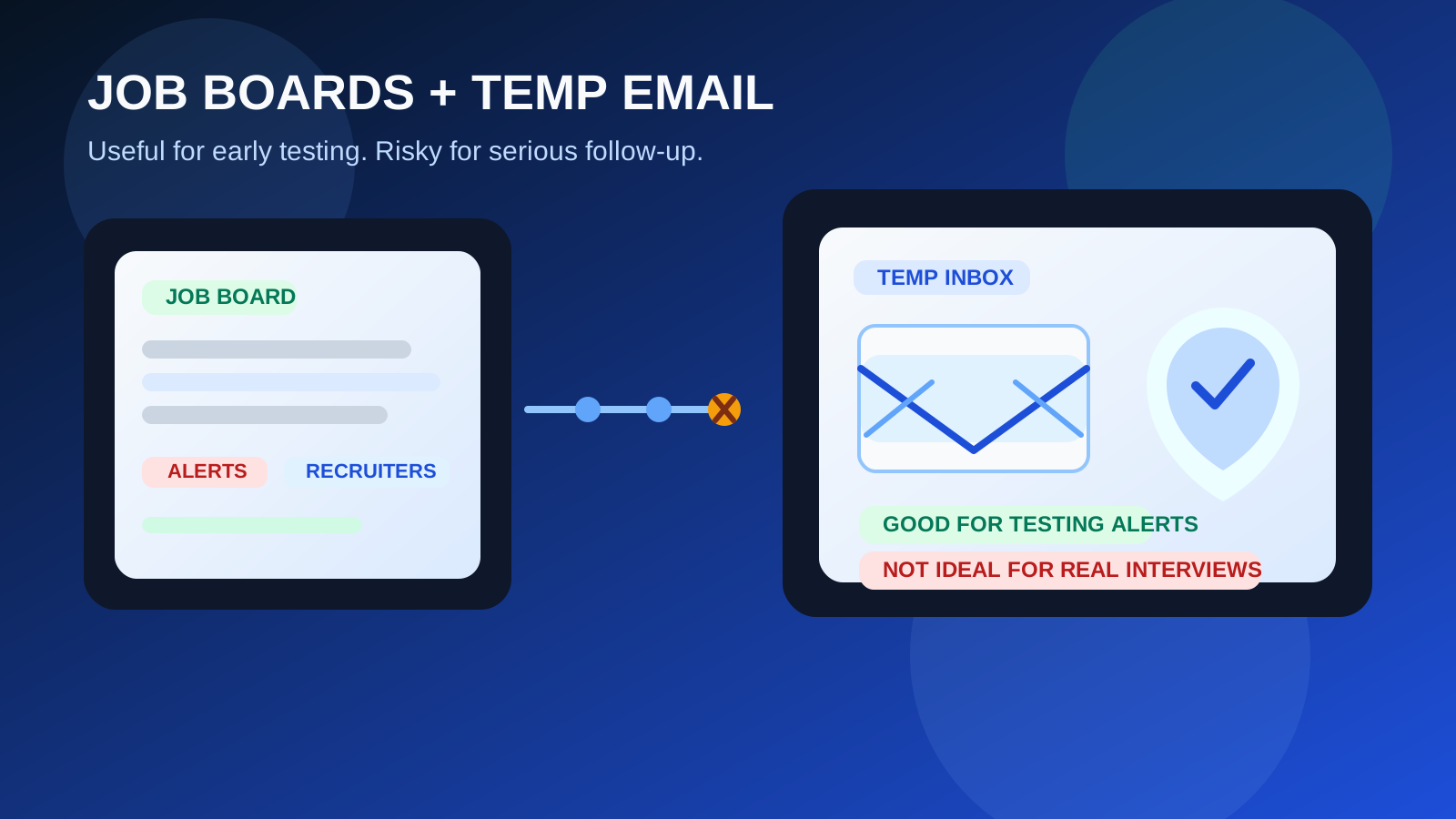
That distinction matters because job boards create two very different kinds of email traffic. One type is low-stakes noise: alert digests, talent-community nudges, resume-database notifications, recruiter blasts, and signups you only wanted to test once. The other type is high-stakes communication: real employer replies, screening requests, interview coordination, assessment links, and next-step instructions. A temp inbox can help with the first category, but it can quietly sabotage the second.
If you have been wondering should you use a temp email for job boards, the best answer is not a simple yes or no. It depends on what stage of the search you are in, how trustworthy the platform feels, how widely you are posting your details, and whether you can afford to miss a message. For many job seekers, the smartest setup is a layered one: temporary email for cautious early exploration, then a stable job-search inbox or alias once real applications and recruiter conversations begin.
That is also where a service like Anonibox fits naturally. It can help you keep early experimentation separate from your everyday inbox, without pretending that a disposable address is the right long-term home for serious hiring communication.
Why people consider using a temp email on job boards
The appeal is obvious. Job boards can be useful, but they can also be noisy fast. Depending on the platform, one signup can trigger job alerts, saved-search messages, recruiter outreach, staffing-agency campaigns, resume views, account reminders, and promotional nudges. Even when the platform itself is legitimate, the volume can become annoying.
People usually look for a temp email for job boards because they want to:
- test whether a board is worth using before exposing a main inbox
- separate recruiter noise from personal and professional email
- avoid months of alerts from searches they only wanted to try once
- limit privacy exposure on high-volume or low-trust platforms
- compare multiple job boards without turning one inbox into a mess
Those are reasonable goals. Using a temporary inbox for early-stage exploration is often a cleaner choice than blindly handing your primary address to every platform that promises better matches.
When using a temp email for job boards makes sense
A temp email tends to work best when the cost of missing a message is low. That includes situations like:
- Browsing the market: you want to see what kinds of roles appear before committing to one platform.
- Testing alert quality: you want to know whether the board sends helpful matches or generic junk.
- Trying a new or unfamiliar site: you are not yet sure how much you trust its email practices.
- Separating research from real applications: you want a clean way to explore without mixing that traffic into your long-term inbox.
- Short-lived signup experiments: you only need access long enough to verify the account or inspect the first wave of messages.
At this stage, a temp address functions like a filter. It helps you learn whether a job board deserves deeper attention without making your main inbox pay the price.
When a temp email is a bad idea
The moment a real opportunity appears, the trade-off changes. A disposable inbox is usually a poor fit when:
- you are applying to jobs you genuinely care about
- you expect interview scheduling over several days or weeks
- the employer may send assessment links or follow-up instructions later
- you need password resets, login codes, or account-recovery messages
- you want a stable thread for recruiter conversations and offer-stage communication
Hiring timelines are messy. A recruiter might reply in an hour, or in ten days. A hiring manager may reopen a candidate search weeks later. An assessment platform may send reminders from a different system than the original application. If your inbox has expired, been abandoned, or is no longer monitored closely, you can lose momentum without even realizing why.
The real issue: job boards are not the same as direct employer applications
This is where people get tripped up. A job board account is often part discovery tool, part resume database, part messaging channel, and part application gateway. That mix makes it tempting to use one email setup for everything. But the safe setup for casual browsing is not always the safe setup for actual candidacies.
A smart rule is to treat job boards as two phases:
- Discovery phase: search, compare, test alerts, explore salary ranges, judge message quality.
- Action phase: apply, respond, schedule, complete assessments, maintain continuity.
A temp inbox can work in phase one. In phase two, a stable address you control is usually much better.
Temp email vs. separate job-search inbox vs. email alias
Most people do not need to choose between “use my personal inbox everywhere” and “use a throwaway inbox for everything.” There is a better middle ground.
Temporary email
Best for low-stakes experiments, one-off signups, and early privacy protection. Weak for long threads, serious follow-up, or anything you cannot afford to lose.
Separate job-search inbox
Best for active searches, real applications, and recruiter communication. It keeps job traffic away from your everyday email without sacrificing continuity.
Email alias
Best for candidates who want separation and professionalism without maintaining a completely separate inbox. An alias can be a strong option when you want cleaner filtering and easier control over where your address spreads.
For most job seekers, the safest default is a dedicated long-term job-search email or alias, with temporary email reserved for low-commitment board testing and other early-stage tasks.
Privacy risks that temp email helps with — and the ones it does not
A temporary inbox can reduce one kind of risk very well: inbox exposure. If a board starts sending too many messages, your main address stays cleaner. If a signup turns into weeks of low-quality recruiter outreach, that spillover stays contained.
But temp email does not solve every privacy problem tied to job boards. It does not automatically protect you from:
- overly visible resume settings
- profile details that expose more than you intended
- spam texts if you also shared a real phone number widely
- fake recruiters reaching out through platform messaging or third-party channels
- account lockouts if important recovery messages go to a short-lived address
In other words, temporary email is one tool in a privacy workflow, not a magic shield. You still need decent judgment, conservative profile settings, and a reliable contact method for the roles you actually want.
A practical workflow that usually works well
1. Use temp email for low-trust or exploratory signups
If you are testing a board, opening an account just to inspect alerts, or checking whether recruiter volume is worth the trouble, a temp inbox is reasonable.
2. Watch the first wave of messages
Within the first day or two, ask:
- Are the alerts relevant?
- Are recruiter messages targeted or generic?
- Does the board feel useful enough to keep?
- Would you trust this platform with a long-term contact address?
3. Upgrade before applying seriously
If the platform starts producing real opportunities, switch to a stable address before anything important depends on the disposable one.
4. Keep important conversations out of fragile inboxes
Applications, assessments, interview scheduling, and recruiter threads belong in an inbox you check consistently and can keep for the full search.
5. Review your profile visibility and notification settings
Sometimes the best spam reduction does not come from changing the email at all. It comes from tightening alert frequency, resume visibility, recruiter access, and saved-search settings.
What about recruiter spam?
This is one of the strongest arguments for temporary email on job boards. Some boards are valuable precisely because they expose you to a lot of opportunities. Unfortunately, that same exposure can invite broad recruiter blasts that only weakly match your background.
If you are a developer, analyst, designer, marketer, or operations candidate who wants to measure the platform before fully committing, a temp inbox is a sensible buffer. It lets you answer a practical question quickly: “Is this board sending useful leads, or just more noise?”
That said, the best long-term fix for recruiter spam is usually not a disposable inbox. It is a controlled, separate, stable inbox combined with better filtering and more intentional platform settings.
Red flags that mean you should stop using the temp inbox and switch
Move away from a temp email immediately if:
- you land on a role you would be upset to miss
- a recruiter starts a credible back-and-forth that may lead to interviews
- you receive assessment instructions or scheduling links
- the platform starts using that inbox for account access or recovery
- you notice that the disposable setup is making you slower or less organized
Temporary email should reduce risk and clutter. The second it starts increasing friction, it has outlived its usefulness.
Common mistakes job seekers make
- Using temp email for every application. That is usually too brittle for real hiring timelines.
- Forgetting which address was used where. If you test many platforms, keep a simple record.
- Leaving a good job board tied to a disposable inbox for too long. Switch once the board proves useful.
- Assuming email privacy solves every problem. Your phone number, resume visibility, and recruiter vetting still matter.
- Confusing “private” with “reliable.” A contact method can protect privacy and still be the wrong tool for serious follow-up.
Final answer
You can use a temp email for job boards, but mostly for early-stage browsing, alerts, and low-trust signups — not for serious applications or long-running recruiter conversations.
If your goal is to protect your main inbox from spam while still staying reachable for real opportunities, the better default is usually a dedicated job-search inbox or alias that you control long term. Use temporary email selectively, not as the foundation of your entire search.
That balance gives you what you actually want: less inbox clutter, better privacy, and fewer missed chances when a legitimate opportunity finally arrives.