Yes — a temp email for Hashnode can be useful when you only want to test signup, create a draft, or check early notification flows without giving out your long-term inbox.
No — it is a poor choice for any Hashnode account that will own a real publication, represent your personal brand, or need reliable recovery and long-term email access later.
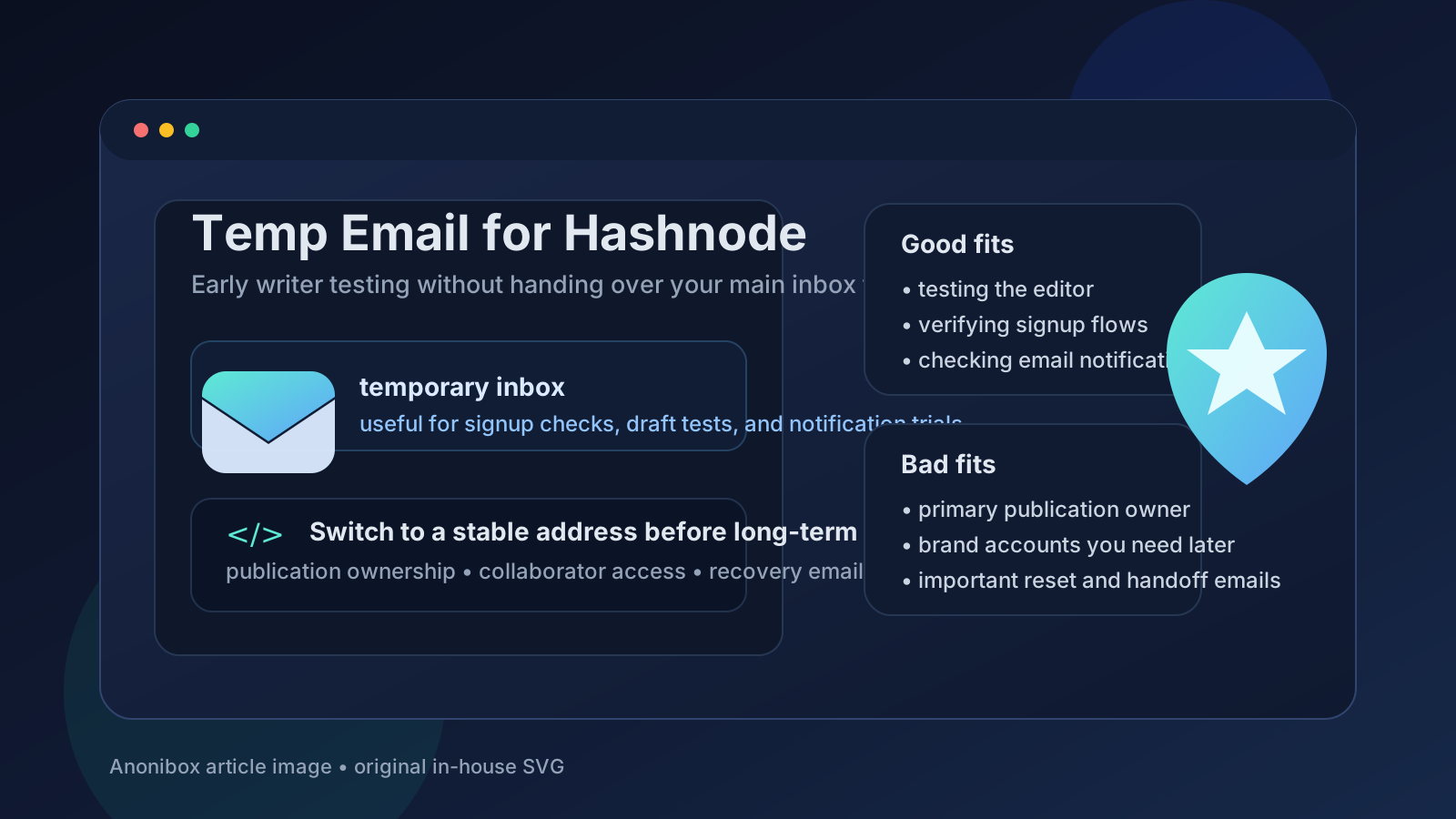
Why people consider a temp email for Hashnode
Hashnode sits in an awkward middle ground for privacy. On one hand, it is common to create an account just to explore the editor, test a post draft, follow a few writers, or see how notifications feel in practice. On the other hand, a Hashnode account can quickly become more important than it first appears. What starts as a casual experiment can turn into the place where you publish technical writing, build a public profile, connect a publication, or manage long-term account settings.
That is why the right answer depends on your goal. If you are simply evaluating the platform, a temporary inbox can reduce noise and protect your main address from one more stream of account emails. If you already know the account may become part of your real writing identity, you are better off using a stable email from day one.
When a temp email helps on Hashnode
1. You only want to test the signup and onboarding flow
Sometimes you are not trying to launch anything serious. You just want to see how quickly you can get in, whether the editor feels good, and what the first-run setup looks like. That is a solid use case for a disposable inbox. You can verify the address, click through the welcome emails, and decide whether the platform is worth your time before your real inbox starts collecting more product mail.
2. You want to draft privately before committing
Writers often compare a few tools before settling on one. If you are checking how Markdown feels, whether drafts save the way you like, or how your article formatting looks, the temporary-address stage can be useful. It creates a buffer between casual evaluation and long-term account ownership.
3. You are testing notifications, not building a permanent presence
Maybe you want to see what the notification flow looks like after signup, after a verification email, or after basic account activity. A short-lived inbox is fine for that. It is similar to testing any other platform where you want to understand the product before linking it to your everyday identity.
4. You want less inbox clutter while comparing tools
If you are trying multiple writing, publishing, or developer-community platforms in the same week, every one of them tends to send follow-up email. Separating early product tests from your real inbox makes those comparisons less annoying. An Anonibox address is useful here because it lets you verify the account, review the first emails, and move on without committing your permanent address too early.
When a temp email becomes a bad idea
1. The account may become your real publication home
This is the biggest line to draw. If you think the account could end up owning a real publication, an author profile you care about, or a public writing identity you plan to grow, a temporary inbox stops being a clever privacy trick and starts becoming a weak point. You do not want recovery, ownership, and important account messages tied to an address that may disappear or be inaccessible later.
2. You care about reliable account recovery
Email recovery is boring right up until you need it. If you lose access to the account, change devices, forget a password, or need to verify a security-related action, the email address on file matters. Disposable inboxes are fine for low-stakes testing, but they are a poor foundation for anything you may need to recover months later.
3. You expect important notifications to keep arriving
Once an account matters, its emails matter too. Reset links, verification prompts, unusual-login alerts, account notices, and collaboration-related messages are not the kind of things you want flowing to a short-lived inbox. If those messages would frustrate you to miss, the account has already outgrown a temporary email strategy.
4. Other people may depend on that account
The risk goes up if the account is connected to a team workflow, shared publication responsibility, or a public brand. The more the account stops being “just a test,” the less appropriate a throwaway address becomes. Even if the platform use started as a harmless experiment, the safe move is to switch to a stable address before other people, readers, or collaborators rely on it.
A practical way to use a temp email for Hashnode without creating problems
If you want the privacy benefit without turning the account into a future headache, keep the workflow simple:
- Create the temporary inbox first. Do that before you sign up so all the early verification mail stays isolated.
- Use it only for short evaluation. Think editor checks, onboarding, draft experiments, and other low-stakes testing.
- Save anything important immediately. If the welcome message, verification email, or setup note matters, copy what you need while you still have it.
- Decide early whether the account is disposable or real. Do not leave that question unresolved for months.
- Switch to a permanent address before the account matters. If you plan to publish seriously, keep the account reachable and recoverable.
The key is timing. A temporary address is most helpful right at the start. It is least helpful once the account has value.
Examples where the approach makes sense
A developer comparing publishing platforms
You want to test a few developer-writing platforms before choosing where to publish tutorials. In that case, a temp email can be reasonable for the first pass. You are not promising anything long term yet. You are just learning which editor, workflow, and overall feel suits you best.
A team member checking whether Hashnode fits a content workflow
Maybe someone on a developer-relations or content team wants to see whether the platform is worth considering. A temp inbox can help during that evaluation stage, especially if the goal is simply to inspect the interface and early account flow. But if the platform makes the shortlist, switch to a real address before anything public or collaborative depends on it.
A reader or casual user testing the experience
Some people just want to see what the platform feels like before they decide whether it deserves a real account. That is exactly the kind of low-risk, low-commitment case where temporary email can make sense. You get the confirmation email and the initial access without handing over your main inbox too soon.
Examples where it does not make sense
You are building a real author profile
If you plan to attach your name, portfolio, or long-term writing identity to the account, do not gamble on a temporary inbox. The privacy win is small compared with the inconvenience of losing dependable access later.
You are treating the account like a durable asset
Once a profile, publication, or content archive starts to matter, the account becomes infrastructure. Infrastructure should not depend on a disposable inbox.
You want dependable ownership and recovery
Any account you would be upset to lose deserves a real email address. That rule is simple, but it keeps people out of unnecessary trouble.
A quick checklist before you decide
- Am I only testing Hashnode, or do I expect to keep this account?
- Would I care if I could not recover this account later?
- Will this account represent my name, brand, or publication publicly?
- Do I need long-term notifications to reach me reliably?
- Is the goal privacy during early evaluation, or am I just postponing a real setup decision?
If your honest answer is “I am just testing,” a temp email is fine. If your answer is “this may become important,” use a permanent address now or switch as soon as possible.
What Hashnode users usually get wrong
The common mistake is not using a temp inbox in the first place. The common mistake is leaving it in place after the account stops being temporary. People tell themselves they will change the email later, then the account quietly becomes useful, public, and worth keeping. Months later, they realize that important recovery and ownership messages still point to a throwaway address.
That is why it helps to make the rule explicit: use temporary email only for temporary account value. As soon as the account crosses into real value, move it to a stable inbox.
Final answer
A temp email for Hashnode is a practical privacy tool for early testing, draft exploration, and one-off onboarding checks. It can save your real inbox from extra account mail while you decide whether the platform fits your workflow.
But it is the wrong tool for a serious publication account, a public author identity, or anything you may need to recover reliably later. If the account is just an experiment, temporary email is fine. If the account may become part of your real writing life, switch to a durable address before that experiment turns into something you cannot afford to lose.