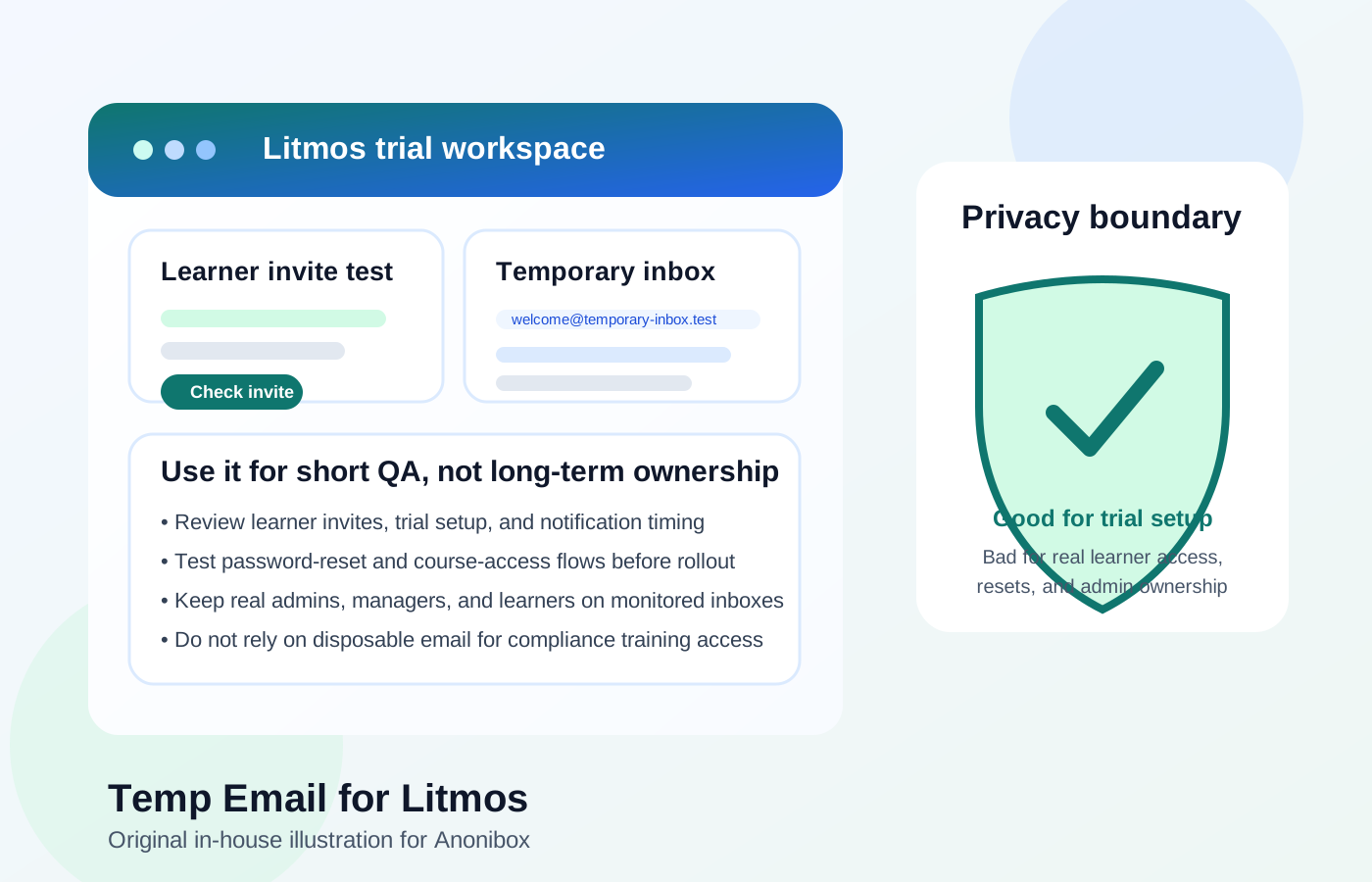
Yes, you can use a temp email for Litmos when you are testing a trial account, checking learner invites, or reviewing notification flows without pushing every LMS experiment into your main inbox.
No, it is a poor long-term address once a real admin, manager, or learner depends on that inbox for account recovery, recurring training access, compliance reminders, or production ownership.
That is the practical answer. Temporary email is useful during short-lived Litmos evaluation and QA, but it becomes risky the moment the account matters to live training, real people, or ongoing access. If you are piloting Litmos for employee onboarding, customer education, or compliance training, the safest pattern is to use a disposable inbox only during the early test phase and then move important accounts to permanent monitored addresses before the rollout becomes real.
Why people look for a temp email for Litmos
Litmos is exactly the kind of platform that can flood an inbox quickly during setup. Trials, learner invites, password-set emails, reminder sequences, assignment alerts, and admin notifications can all start appearing fast, especially when you are creating multiple test users or comparing several learning platforms at once.
That is why temporary inboxes look appealing. You might want to inspect how a learner invitation arrives, see what an enrollment email looks like, compare admin setup flows, or test automated reminders without tying every experiment to your everyday work address. A tool like Anonibox can be handy at that stage because it gives you a clean place to collect those messages while keeping your main inbox out of the earliest research and QA loops.
The problem is that Litmos accounts do not stay “temporary” for long if nobody draws a clear boundary. A pilot environment becomes the real environment, a test admin becomes the de facto owner, or a temporary learner account ends up attached to real course history. That is when a disposable inbox stops being convenient and starts becoming fragile.
When a temp email makes sense for Litmos
A temporary inbox is most useful when both the account and the environment are clearly short-lived. Good examples include:
- Free-trial evaluation: You want to see the first-run admin experience before committing your permanent work address to another vendor workflow.
- Learner invite testing: You need to validate how invitation emails, welcome links, or first-login instructions actually look.
- Notification QA: You want to review course assignment messages, reminder emails, and reset flows without cluttering your normal inbox.
- Workflow comparisons: You are comparing Litmos with platforms like Moodle, Brightspace, Canvas LMS, Blackboard, Docebo, or Absorb LMS and want cleaner inbox separation.
- Short pilot work: You are helping an internal training team, HR lead, or client evaluate the platform before real operational ownership is assigned.
In these cases, a disposable inbox can save time and keep evaluation work tidy. The key is that the account must stay disposable in practice, not just in theory.
When it becomes a bad idea
Litmos stops being casual as soon as real learners, admins, or managers depend on the account for ongoing access. At that point the email address behind the profile is no longer just a signup detail. It becomes part of the platform’s continuity.
A disposable inbox becomes risky when it is attached to:
- The primary admin account that owns setup, integrations, permissions, or course structure
- Managers or training owners who need dependable access to assignments, completions, and user management
- Real employee learners who may need password recovery, reminders, and long-term course history
- Compliance or certification workflows where missed messages can create operational confusion
- Any production process where account recovery or message delivery matters after the first week
If the account is tied to real onboarding, recurring compliance training, or live reporting, a disposable inbox is simply the wrong long-term foundation.
Litmos-specific complications people underestimate
Litmos has a few practical characteristics that make this decision more important than it first appears.
Recurring learning means recurring email
Unlike a one-off signup tool, Litmos can keep sending meaningful messages long after the first login. Training assignments, reminders, overdue notices, course launches, and reset flows all depend on reliable communication. A temporary inbox is fine for seeing how those messages are formatted during testing, but it is a weak place to anchor a real learner over time.
SSO and identity can change the risk, not remove it
Some organizations connect Litmos to single sign-on or broader identity systems. That can reduce dependence on email for daily login, but it does not make a disposable inbox harmless. Admin actions, notifications, fallback recovery, and ownership transitions can still rely on that address in ways that only become obvious later.
Compliance training is less forgiving than casual course testing
If Litmos is supporting policy training, certifications, or mandatory onboarding, you do not want an account attached to an inbox that was never designed for durability. Even when the training itself is accessible, the surrounding communication matters.
A safe way to use temporary email during Litmos evaluation
If you want the privacy and inbox-control benefits without creating future problems, use a simple boundary:
- Create the disposable inbox only for testing. Use it for trial registration, invite review, reset-flow checks, and notification QA.
- Label those accounts clearly. Make it obvious they are sandbox admins, demo learners, or short-term QA users.
- Capture the messages that matter. Save the invite wording, onboarding sequence, and reminder timing you actually want to review.
- Do not let the test identity become the owner. If the pilot is moving toward rollout, migrate important accounts to permanent monitored inboxes before launch.
- Retire throwaway accounts when testing ends. That keeps the Litmos environment cleaner and reduces confusion later.
This gives you the convenience of temp email during evaluation without accidentally turning a disposable address into part of your long-term training infrastructure.
What to test while the temporary inbox is active
If you are going to use temp email during the Litmos evaluation stage, make the most of it.
Invitation and first-login flow
Create a fresh learner or admin-style account and walk through the full invitation process. Does the email arrive quickly? Is the call to action clear? Is the first-login experience intuitive?
Password reset behavior
Do not stop at account creation. Trigger a reset on purpose. Recovery flows often expose friction that does not show up during the initial setup.
Reminder and notification cadence
Litmos can generate a lot of follow-up once assignments and reminders are enabled. A disposable inbox lets you see the actual cadence before exposing your main inbox or real users to the full stream.
Role-based differences
Admin, learner, and manager experiences are not always identical. If the rollout matters, test those roles separately instead of using one generic account for everything.
Common mistakes to avoid
Using one temp inbox for every test role
That makes message review messy and hides differences between learner, admin, and manager journeys.
Letting a pilot admin survive into production
This is one of the most common problems. The temporary account “works,” so nobody changes it, and months later it is still the account everyone depends on.
Ignoring long-term recovery needs
People often focus on the welcome email and forget that password resets, role changes, and unexpected ownership issues are part of the real lifecycle too.
Confusing privacy with durability
A temp inbox can improve privacy during early evaluation because it keeps your permanent address out of one more vendor funnel. It does not improve reliability. Once the account matters, reliability usually matters more.
What teams should do instead
If you are managing a serious Litmos evaluation, the best middle ground is usually not “use a disposable inbox forever” and not “use your personal or primary work inbox for every experiment.” A better pattern is to separate testing identities from production identities.
Use temporary email for short-lived verification, throwaway learners, and notification QA. Then move real admins, course owners, and any account tied to live training or meaningful reporting to monitored inboxes that someone intentionally owns. If the pilot is long enough to need persistence, a separate permanent project inbox is usually better than a disposable one.
Quick decision checklist
Before using a temp email for Litmos, ask:
- Is this account only for short-lived testing or trial work?
- Will a real admin, learner, or manager depend on it later?
- Do I need dependable password recovery for this account?
- Am I testing notification flows, or am I creating a real operational identity?
- Could this account become part of compliance, onboarding, or reporting workflows?
If the account is truly temporary and the answers stay low-stakes, a disposable inbox is probably fine. If the account is becoming real, switch to a permanent monitored address before it becomes a liability.
Final answer
A temp email for Litmos is useful for early LMS testing, trial setup, learner-invite review, and notification QA. It helps you evaluate the platform without turning your main inbox into a dumping ground for every pilot and test account.
It is a poor choice for production admins, real learners, managers, compliance workflows, or any account that may need reliable recovery and ongoing communication. Use temporary email to test Litmos early. Do not let it become the long-term home of an account people actually depend on.