Yes — a temp email can make sense for Ory Cloud if you are only doing a short, low-stakes evaluation. It is useful for the first signup, email verification, and a quick pass through the dashboard without sending long-term vendor mail to your main inbox.
No — it is usually the wrong choice for any Ory Cloud account you may keep, share with teammates, or depend on for admin recovery. Once a project starts to matter, move it to an address you control long term.
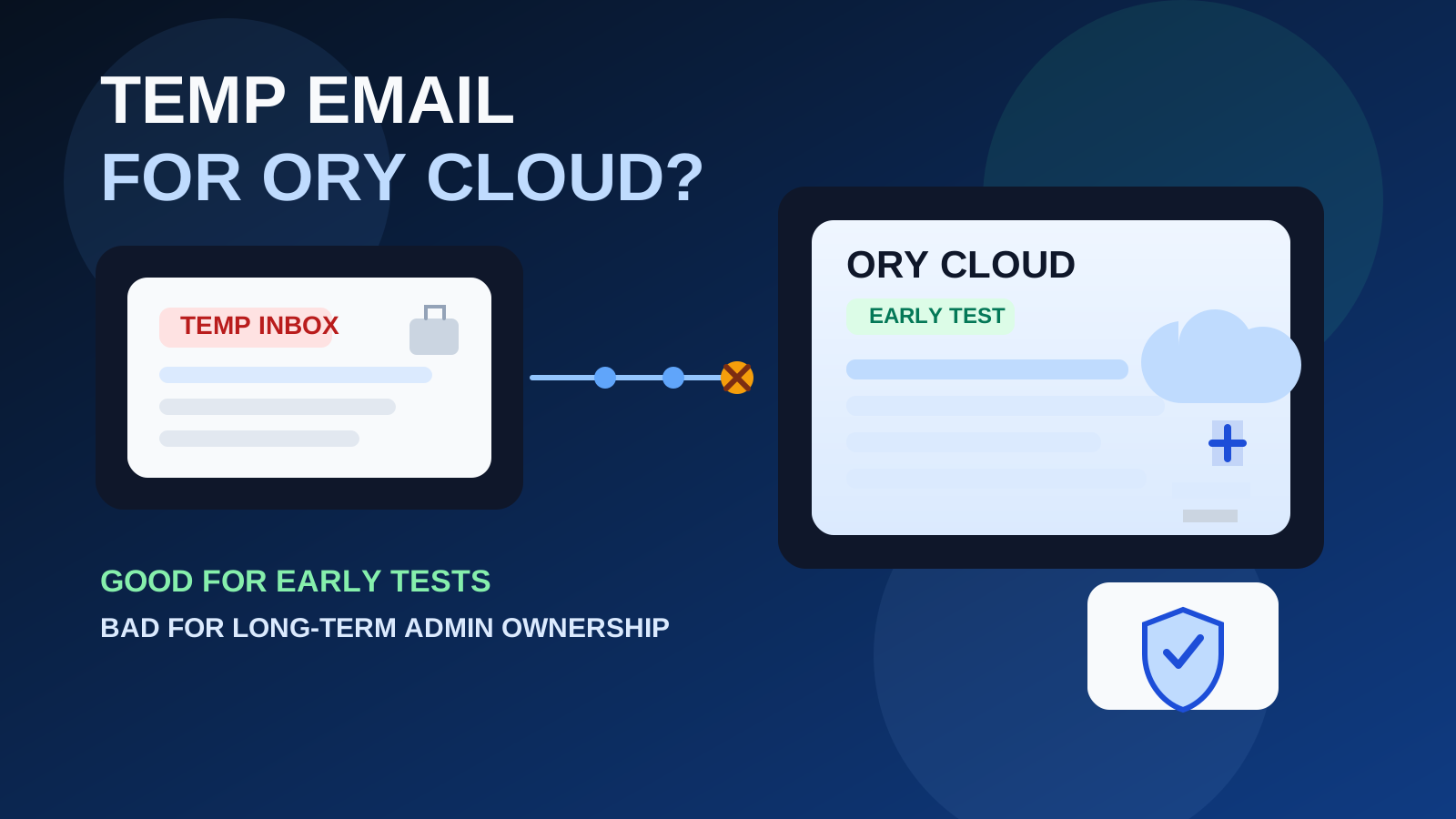
That distinction matters because Ory Cloud is not just another newsletter signup. It can become part of an identity stack, a staging environment, a proof of concept, or the early control plane for login, session, and user-management work. In the first half hour, a throwaway inbox can be genuinely helpful. A week later, the same decision can create avoidable friction around ownership, recovery, and team access.
If you are comparing identity platforms and want to keep your main inbox clean, a disposable address from a tool like Anonibox is a reasonable way to start. But you should treat it as an evaluation shortcut, not as the permanent home for something you may eventually connect to real applications, real teammates, or real users.
Why people consider a temp email for Ory Cloud
The appeal is obvious. You want to see the product, not commit to a long relationship with every vendor you test. Early identity tooling research often means signing up for several platforms, opening docs portals, verifying an address, and clicking through setup guides just to understand the basics. A temporary inbox helps with a few practical goals:
- It reduces inbox clutter. Trial confirmations, onboarding drips, webinar invites, and sales follow-ups do not have to land in your long-term mailbox.
- It keeps comparison work separate. If you are testing multiple identity or auth vendors, isolated inboxes can make it easier to keep each evaluation contained.
- It lowers the cost of curiosity. You can check the signup flow, documentation access, and first-run experience without deciding up front that this vendor deserves a permanent place in your stack.
- It protects your main contact address during early research. That matters when you are still sorting through options and do not know which platform, if any, will survive the first round.
Those are all legitimate reasons. The trouble starts when a quick trial quietly turns into the tenant, project, or admin account people keep using because nobody stopped to clean it up.
When a temporary inbox is actually a good fit
Used narrowly, a temp email can be a practical tool for Ory Cloud evaluation. These are the cases where it usually makes sense:
1. You are doing a short first-look trial
If your goal is simply to verify that signup works, look around the dashboard, and decide whether Ory Cloud deserves a deeper test, a disposable address is fine. At that stage, the account is still exploratory. You are not making a long-term platform decision yet.
2. You want to check the initial email flow
Identity platforms often begin with email verification, admin confirmation, or a welcome sequence that points you toward quick-start docs. A temp inbox lets you capture those messages and move through setup without exposing your main address immediately.
3. You are comparing several auth or identity tools at once
Ory Cloud is often evaluated alongside other products in the same decision window. If you are also looking at platforms like Authentik, WorkOS, Auth0, or similar tools, a throwaway inbox can keep early vendor traffic from mixing together. That makes the comparison cleaner.
4. You are building a one-person sandbox that may be discarded
Sometimes you just want to confirm whether the developer experience feels right: create a project, read the setup guidance, maybe test a basic flow, then delete everything if it is not promising. In that narrow scenario, a temp inbox is a reasonable convenience.
Where a temp email starts becoming risky
The same setup becomes a liability once the Ory Cloud account stops being disposable in practice.
1. Admin recovery starts to matter
If you lose access to the inbox tied to the account, recovery can become awkward at the exact moment you need it most. That may mean friction around password resets, admin verification, security notices, or proving account control. A disposable inbox is fine only while you genuinely do not care whether the account survives.
2. The project becomes shared
As soon as teammates, contractors, or stakeholders are involved, the account stops being a personal experiment. Team invites, ownership transfer, billing visibility, environment notes, and admin notifications all work better when the controlling email is stable and intentionally managed.
3. The tenant becomes part of staging or production planning
Identity work has a habit of graduating from “just testing” to “let’s connect this to the real app” faster than people expect. The moment an Ory Cloud setup starts informing actual architecture, rollout planning, or user management, a temp inbox becomes the wrong foundation.
4. Email-based test results become misleading
Some auth and identity evaluation work depends on realistic email handling: account verification, magic links, admin notices, or user-facing templates. If your inbox is deliberately short-lived, you can misread what the long-term operational experience will feel like.
5. Nobody remembers to switch later
This is the quietest but most common problem. A disposable address is chosen for convenience, the proof of concept goes well, everybody gets busy, and suddenly a meaningful environment is still tied to an inbox no one truly owns. That is not a theoretical risk. It is just normal team drift.
A better workflow: temporary first, controlled later
The safest approach is not “never use temp email” and it is not “use temp email for everything.” The better rule is to match the inbox to the stage of the work.
Step 1: Use a temp inbox only for the first evaluation pass
If all you need is initial access, a disposable address is fine. Use it to create the first account, verify the email, and decide whether the platform is worth more attention.
Step 2: Save the useful setup information immediately
Do not assume you will remember everything or keep the inbox forever. Capture the important details while the trial is fresh:
- project or tenant names
- links to the most relevant docs pages
- what you liked or disliked about the initial setup
- which features you still need to test
Step 3: Switch to a durable address as soon as the project survives the first filter
If Ory Cloud becomes a serious candidate, move the account to an address you control long term. For solo work, that may be your own professional inbox. For team work, it may be a shared engineering or platform alias with clear ownership.
Step 4: Add team access before the account becomes critical
Do not wait until the account holds important work before cleaning up access. If teammates will need visibility, invite them while the project is still easy to reorganize.
Step 5: Reserve temp email for disposable experiments only
Once the environment matters, stop treating it like a throwaway. Keep temporary inboxes for short-lived comparisons, not for the version of the account that people expect to trust next month.
A quick checklist before you use temp email for Ory Cloud
Ask yourself these questions before signing up:
- Am I just doing a quick evaluation, or could this become a real project?
- Will I need access to this account in a week, a month, or a quarter?
- Will teammates depend on the same environment?
- Could account recovery or admin notifications matter later?
- Am I testing only the product, or am I also testing realistic email-driven user flows?
If most answers point to a short, low-stakes experiment, a temp inbox is fine. If several answers suggest continuity, ownership, or shared responsibility, start with a durable address instead.
Common mistakes to avoid
Keeping the disposable inbox after the trial is clearly real
The biggest mistake is simple inertia. Teams often keep using the first account because it already exists. That saves five minutes today and can create needless cleanup later.
Using temp email for shared admin ownership
Anything that multiple people may need to manage should not depend on an inbox one person created for convenience during a trial.
Confusing low inbox exposure with full security
A temporary inbox reduces clutter and limits where your main address goes. It does not make a platform magically safer, prevent phishing, or solve account-governance problems. It is just one small privacy tool.
Testing realistic user journeys with unrealistic email assumptions
If part of your evaluation depends on how verification emails, magic links, or admin notifications behave over time, a disposable inbox may distort the experience. Use the right tool for the question you are actually asking.
Where Anonibox fits naturally
Anonibox is useful at the exact stage where curiosity is high and commitment is still low. If you want to verify an Ory Cloud trial, read the welcome emails, and decide whether the product deserves deeper time, a temporary inbox is convenient and tidy. That is especially true when you are evaluating multiple vendors and do not want your real inbox filling with follow-up messages from tools you may never touch again.
But Anonibox is not a substitute for durable ownership. Once Ory Cloud becomes part of a real engineering conversation, a shared admin setup, or a serious proof of concept, move the account to an email address that can survive handoffs, vacations, org changes, and recovery needs.
Final takeaway
Temp email for Ory Cloud is useful for early identity testing, but it is a poor long-term choice for any account that may become operationally important. Use it for quick evaluation, low-stakes verification, and short-lived comparisons.
If the project survives the first test, switch early. A durable inbox or team-controlled alias is better for admin continuity, shared access, and recovery. That gives you the privacy upside of a temporary inbox at the start without letting a disposable choice quietly become a production dependency.