Yes — a temp email for Casdoor makes sense when you are only doing a short, low-stakes test of signup, verification, or identity flows.
No — it is usually the wrong choice for any Casdoor account tied to production admins, long-lived users, shared team ownership, or recovery you may need later.
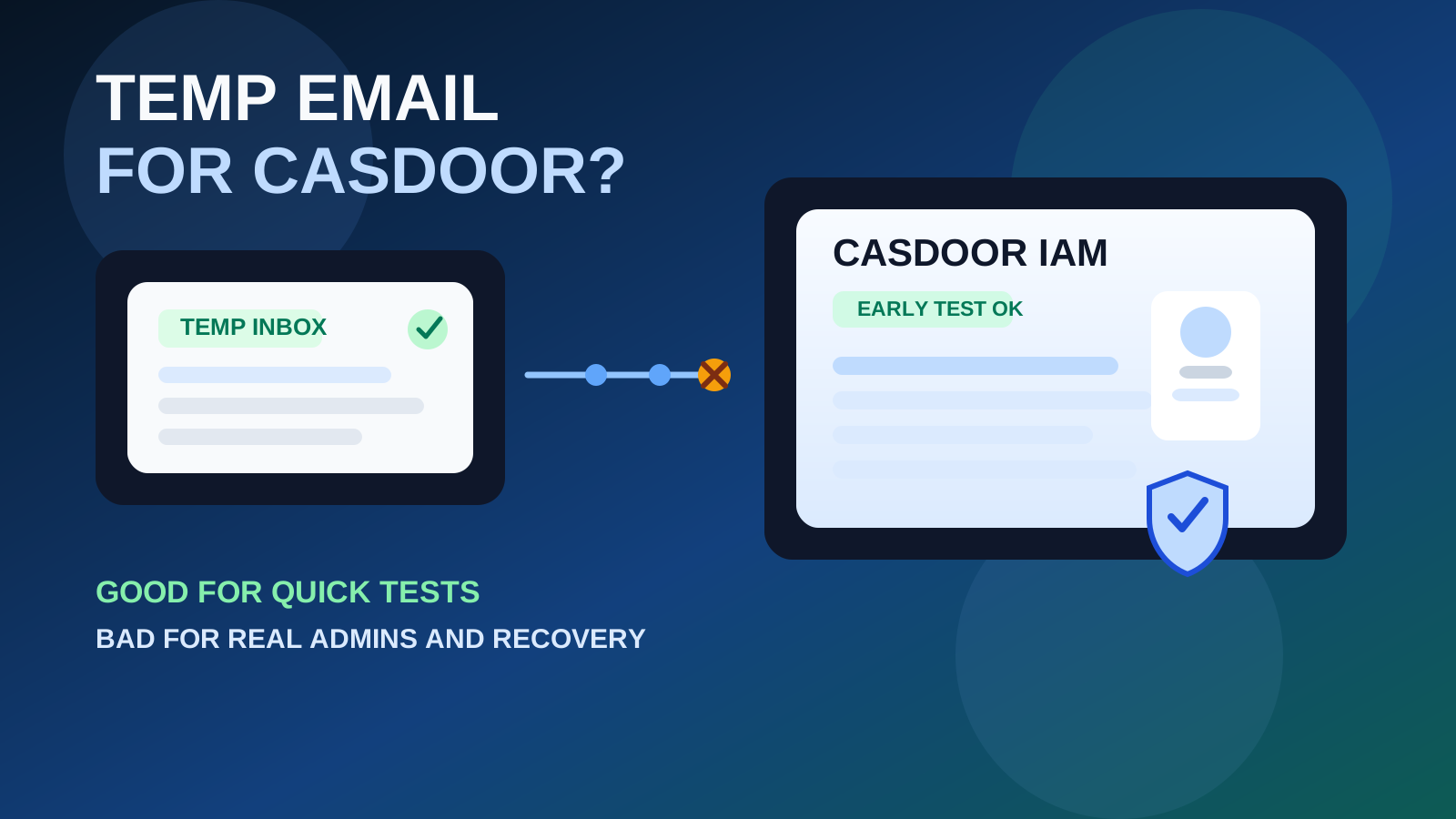
That distinction matters because Casdoor is not just another newsletter signup or lightweight app trial. It sits in the identity and access layer. If you are using it for login, email verification, password recovery, SSO, or user management, the email address attached to an account can become part of your operational safety net faster than you expect.
For early testing, a disposable inbox can be genuinely useful. You can create a sandbox account, receive the first verification messages, check how codes and reset emails behave, and keep your main inbox from collecting long-term follow-up mail tied to an experiment you may abandon in an hour. A tool like Anonibox fits naturally in that phase.
But the moment the environment stops being disposable in practice, the inbox should stop being disposable too. If a Casdoor account may end up owning applications, protecting production users, receiving recovery messages, or being shared across a team, a throwaway address becomes a weak foundation.
Why this question matters more with Casdoor than with a normal app signup
Casdoor is an identity and access management platform, not just a simple end-user service. In a typical evaluation, you may test things like user registration, email verification codes, password recovery, third-party login options, or how an application connects through OAuth, OIDC, SAML, or other auth flows. In all of those cases, the inbox is not just a contact field. It can affect verification, reset paths, ownership, and access continuity.
That means the right answer depends on what stage you are in. If the goal is to learn, compare, and discard, a temp email is efficient. If the goal is to build something you may keep, share, or depend on, you should think about continuity from the start.
When a temp email for Casdoor is a good idea
1. You are doing a quick first-pass product evaluation
If you simply want to see how Casdoor feels, verify the initial account, and click through the admin UI, a temporary inbox is a sensible choice. It gives you a clean boundary around the trial and avoids dumping early evaluation mail into an address you use every day.
This is especially useful when you are comparing several identity tools in the same week. Once you are looking at multiple dashboards, verification emails, and setup guides at once, a separate disposable inbox for each product can keep the comparison much cleaner.
2. You want to test registration and verification flows without long-term inbox clutter
Casdoor supports direct user registration and email verification. If your main question is simply “does the verification email arrive, and does the code or link behave the way I expect?” then a throwaway inbox is fine. That is a short-lived, low-risk test.
It can also help when you are tuning templates, retrying flows, or deliberately creating multiple staged identities. You are keeping the experiment isolated rather than mixing test messages into your real inbox forever.
3. You are creating throwaway sandbox users
Sometimes you need more than one test account. You may want an admin-like user, a normal user, a limited user, and a deliberately disposable account for reset testing. In that scenario, temporary email is convenient because not every test identity needs a permanent mailbox behind it.
The key is to treat those users as disposable on purpose. If they exist only to validate a workflow and then get deleted, a temporary inbox is a practical tool.
4. You are protecting your main inbox during early research
Even when a product is self-hosted or developer-oriented, the broader evaluation process can still create email noise: documentation signups, onboarding prompts, announcements, or related account messages. Using a temporary inbox early on reduces long-term clutter and keeps your real address out of experiments that may go nowhere.
When a temp email for Casdoor becomes risky
1. The account is tied to your real admin ownership
If the mailbox belongs to the account that truly owns the environment, you should not treat it as disposable. Admin continuity matters. If you lose access to the address later, recovery becomes harder at exactly the wrong moment.
This is true even if the deployment still feels “small.” A lot of production problems start as staging shortcuts that nobody revisited once the system became real.
2. The environment may keep real users or client data
As soon as the identity layer starts serving real employees, customers, or members, the mailbox decisions behind it should become durable too. You do not want the account managing those identities to depend on an inbox created for convenience during an early test.
3. Multiple people may need access or oversight
If teammates, contractors, or stakeholders will rely on the same environment, a temp inbox is a poor ownership model. Shared systems need shared clarity about who controls the email address, who can recover the account, and how access survives handoffs or vacations.
In practice, this usually means moving important ownership to a stable personal work address or, even better, to an organization-controlled alias with clear responsibility.
4. Password recovery and verification paths matter now
Casdoor supports password recovery and verification workflows. Those are exactly the kinds of features that stop feeling optional when something breaks. If recovery messages may matter in the future, the account should use an inbox you can still access later.
5. You are testing realistic long-term email behavior
A disposable inbox is useful for quick validation, but it is not always a good stand-in for a real managed mailbox. If you are evaluating the long-term user experience of verification, password recovery, or operational notifications, you should also test with a normal inbox you actually control. Otherwise, you may learn only that the short-term demo path works.
A safer workflow: disposable first, durable when the project survives
The best answer is usually not “never use temp email” and not “always use temp email.” The right move is to match the inbox to the stage of the work.
Step 1: Use a temp inbox only for the first evaluation pass
If all you need is the initial account, the first verification email, and a short walk through the product, a disposable inbox is fine. Keep the scope narrow and intentional.
Step 2: Capture the details that matter while the test is fresh
Before the inbox expires or the experiment blurs together with other tools, save the useful context:
- which application or project you created
- which auth flow you tested
- whether verification and reset emails behaved correctly
- which login providers or integrations still need review
- what made Casdoor promising or not worth continuing
That way, the disposable inbox does its job without becoming the only place important setup context lived.
Step 3: Move serious environments to a durable mailbox early
If Casdoor survives the first round and becomes a real candidate, switch quickly. Do not wait until the environment holds meaningful users, policies, or integrations. Early cleanup is easy. Delayed cleanup tends to get postponed forever.
Step 4: Separate permanent admin identities from throwaway test identities
This is one of the cleanest patterns. Keep one or more temporary users for experiments, but make sure the real owner accounts sit on durable inboxes from the moment the environment matters. That gives you the convenience of disposable testing without turning a temporary choice into a long-term operational risk.
Step 5: Re-test important flows on the real mailbox before rollout
Once the project is moving forward, test the verification and reset experience again using the durable address that will actually stay attached to the account. That final step confirms you are not relying on a shortcut that only worked in the disposable setup.
Quick checklist before using a temp email for Casdoor
- Am I doing a quick evaluation, or could this become a real environment?
- Will this account need password recovery later?
- Could other people depend on this same admin account?
- Am I creating a throwaway test user or a real owner identity?
- Do I need realistic long-term email behavior, or just a fast verification check?
If most answers point to a short-lived test, a temp inbox is reasonable. If several answers point to continuity, shared ownership, or recovery, use a real mailbox instead.
Common mistakes to avoid
Letting the trial account become the permanent account by inertia
This is the most common problem. The disposable inbox feels harmless in the first hour, then nobody bothers to replace it once the proof of concept becomes useful. What started as a convenience choice quietly becomes production debt.
Using a temp inbox for the only true owner account
Test users can be disposable. The account that ultimately controls applications, users, or policies should not be.
Assuming privacy convenience equals account safety
A temporary inbox reduces inbox clutter and keeps your main address out of early experiments. That is useful, but it is not the same thing as durable governance, recovery planning, or strong operational security. It solves one problem, not every problem.
Skipping the handoff from evaluation to ownership
The transition matters. Many teams remember to test quickly but forget to formalize ownership once they decide to keep the tool. That is where the trouble usually starts.
Where Anonibox fits naturally
Anonibox is most useful at the experimentation edge: short-lived email verification, sandbox identities, and first-pass product evaluation where you want less inbox clutter and more privacy. That is exactly the stage where curiosity is high and commitment is still low.
But Anonibox should stay a testing tool, not the long-term anchor for identities you may need to recover or hand off later. Once the Casdoor environment becomes meaningful, move the important accounts to an address you or your organization actually control for the long run.
Final takeaway
Temp email for Casdoor is a smart choice for early identity testing, verification checks, and throwaway sandbox users. It keeps experiments tidy and protects your main inbox while you are still deciding whether the platform is worth deeper time.
It is a bad long-term choice for production admins, real users, shared ownership, and recovery-critical accounts. Use a temporary inbox to explore, then switch to a durable mailbox as soon as the project stops being disposable in practice.