Yes — a temp email for Aserto can make sense if you are only doing short-lived authorization testing, a quick product evaluation, or a disposable sandbox signup.
No — it is usually the wrong choice once the account is tied to production policies, team access, admin continuity, or any recovery path you may actually need later.
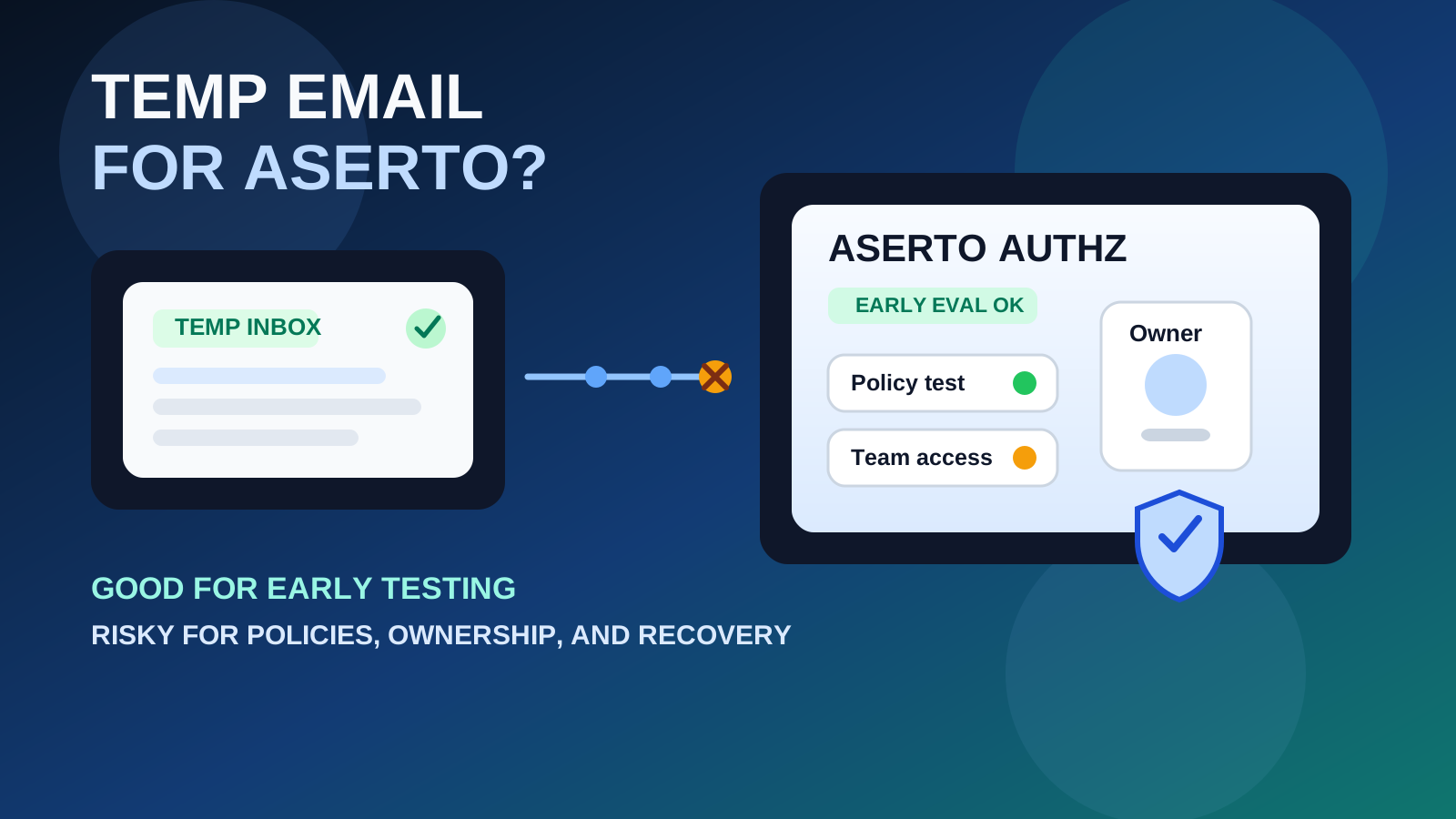
That is the real dividing line. Aserto sits in the authorization layer, which means the account behind your test can stop feeling disposable faster than you expect. What begins as a low-stakes evaluation can turn into something that influences policy logic, shared access, internal demos, or production planning. At that point the inbox attached to the account stops being a convenience detail and starts becoming part of your operational setup.
For early testing, though, a temporary inbox can be genuinely practical. You may want to request access, verify an email, unlock a trial, compare Aserto with neighboring tools, or validate a workflow without feeding yet another product sequence into your main mailbox. That is exactly where a tool like Anonibox fits naturally: short-lived research, inbox hygiene, and privacy during the evaluation stage.
The safest approach is not to ban temporary email outright. It is to use it only while the account itself is truly temporary. If the environment may survive, grow, or end up mattering to other people, move the important account to an address you will still control later.
Why this question matters with Aserto
Authorization products are different from casual app signups because they can become deeply connected to how access decisions are made. Even if you are only experimenting at first, the things you test may include roles, policies, permissions, directory relationships, environment ownership, and internal approval logic. None of that means every Aserto-related email is mission-critical on day one. It does mean the cost of sloppy ownership can rise quickly.
That is why the temp-email decision should follow the stage of the work. If you are just exploring whether Aserto belongs on your shortlist, a disposable inbox is fine. If you are creating the account that may later anchor team access, policy ownership, or recovery, a throwaway address is usually too fragile.
When a temp email for Aserto makes sense
1. First-look evaluation
If you are only trying to understand the product, review onboarding, or compare it with other authorization platforms, a temporary inbox is reasonable. In that stage you mostly need the initial email verification or account-access message, not a permanent relationship with the mailbox.
This is especially useful when you are researching multiple tools at once. Product trials create noise quickly: welcome emails, setup prompts, demo invitations, follow-up campaigns, and “are you still evaluating?” sequences. A disposable address lets you collect the one or two messages you actually need without turning your everyday inbox into an authorization-software archive.
2. Short-lived sandbox work
Sometimes a team spins up a quick test environment just to see whether a product feels promising. If the environment is intentionally disposable and there is no expectation that it will become a shared long-term system, a temp email fits that use case well.
The important word there is intentionally. If the sandbox really will be torn down, a throwaway inbox is consistent with the lifecycle of the account. If everyone says “temporary” but keeps the environment around for months, that shortcut becomes technical debt.
3. Solo experimentation
A temporary inbox is strongest when one person is exploring alone. You can verify the account, inspect the platform, maybe test a few policy ideas, and then decide whether to keep going. Because no one else depends on the mailbox, the downside is limited.
That is a very different scenario from shared ownership. Once teammates, security reviewers, or platform engineers need consistent access, the mailbox choice stops being a private convenience.
4. Inbox privacy during tool comparisons
If you want to keep your main work address out of early-stage vendor funnels, temporary email is a clean solution. It protects your long-term inbox from clutter while still giving you the verification link or setup email needed to evaluate the platform. Many people underestimate how helpful this is until they are comparing several infrastructure tools at once and every vendor wants a meeting.
When a temp email for Aserto becomes risky
1. The account starts owning real policy work
Once the Aserto account is connected to policies that may actually influence production behavior, the inbox matters more. You do not want ownership, important notices, or future changes tied to an address that might disappear or that you may not monitor consistently.
Authorization is one of those areas where the pain may not show up immediately. Everything can seem fine until you need to recover access, confirm ownership, or revisit a setup decision months later.
2. Team access enters the picture
The moment another person depends on the environment, a temporary inbox becomes much less defensible. Shared systems need clear ownership, predictable recovery, and a stable contact point. A throwaway mailbox is bad at all three.
This is not just about convenience. It is about avoiding confusion over who controls the account, who receives important messages, and how access is recovered if something breaks or a teammate leaves.
3. You may need recovery later
Password resets, verification prompts, suspicious-login warnings, ownership confirmations, and other account messages rarely feel important until the day they suddenly are. If the mailbox behind the account is disposable, your recovery path may be weaker than you intended.
Even if you never expect to lose access, strong setups assume that eventually something unexpected will happen. Recovery is part of the design, not an afterthought.
4. The environment is becoming a real candidate, not just a test
There is a predictable trap in infrastructure evaluation: the “trial” quietly turns into the real starting point. The account you created for convenience becomes the account everyone keeps using because nobody paused to formalize ownership. That is one of the main reasons disposable inboxes become a problem in practice.
If Aserto has made it onto the serious shortlist, that is already a sign the account may deserve a durable mailbox.
5. You need continuity for audits, procurement, or internal handoffs
As soon as the tool becomes something you might adopt seriously, email ownership gets more operational. Durable mailboxes are easier to document, hand over, and explain than a temporary inbox that was only meant for a quick experiment. What looks like a small housekeeping issue at the start can become awkward during a later review.
A safer workflow: temporary for evaluation, durable for ownership
The best answer is a staged workflow rather than a rigid rule.
Step 1: Use the temp inbox only for the earliest evaluation edge
If all you need is the first verification email, initial access, and a quick walk through the platform, a temporary mailbox is fine. Keep the purpose narrow and intentional.
Step 2: Save important context outside the mailbox
Do not let the inbox become the only place that contains meaningful setup information. If you learn something useful during the evaluation, write it down in your notes or internal docs:
- which environment you created
- which policies or permission models you tested
- which workflows felt strong or weak
- whether email verification and account access worked as expected
- what would need to change before wider adoption
That way the mailbox stays a disposable transport layer instead of becoming an accidental knowledge base.
Step 3: Switch to a stable inbox before other people depend on it
Do not wait for the environment to become messy. The cleanest time to move to a durable address is before shared access, serious policy work, or production planning begins. Early transitions are easy. Delayed transitions are what create hidden ownership problems.
Step 4: Separate throwaway tests from real owner accounts
This is the most practical long-term pattern. Use temporary email for disposable test identities if you want, but keep real admin or owner identities on an address you or your organization actually control. That gives you privacy during experimentation without weakening the foundation of the account that matters.
Step 5: Re-test important flows on the durable mailbox
Before you treat the environment as serious, test the email-dependent flows again using the permanent mailbox. Verification, resets, and other account paths should be confirmed on the setup you will actually keep, not only on the disposable shortcut that got you through the first hour.
A quick decision checklist
- Am I just evaluating Aserto, or could this account become important later?
- Will anyone besides me need reliable access?
- Could this environment end up tied to real policy ownership?
- Would losing the mailbox cause recovery pain next month?
- Am I trying to avoid inbox clutter, or am I actually creating something that may last?
If the answers point to short-lived solo testing, a temp inbox is fine. If they point to continuity, collaboration, or real operational importance, use a durable address instead.
Common mistakes to avoid
Letting inertia choose the permanent owner account
This is the biggest one. A disposable inbox is often harmless at the start, but it becomes risky when nobody ever upgrades the account ownership once the project survives. If you remember only one thing, remember this: convenience accounts have a habit of becoming permanent by accident.
Confusing inbox privacy with long-term account safety
A temp email helps with spam control and privacy. That is useful, but it does not automatically make the account well managed. Durable ownership, recovery planning, and shared accountability still matter.
Using the same temporary inbox for work that has stopped being temporary
The inbox should match the lifecycle of the system. If the Aserto work has become real enough that you would be annoyed or blocked by losing access, the mailbox choice should already have changed.
Where Anonibox fits naturally
Anonibox is a good fit for the earliest phase of Aserto evaluation: quick signup, email verification, sandbox testing, and keeping your main inbox cleaner while you compare tools. It is useful exactly where curiosity is high and commitment is still low.
But once the account becomes meaningful, Anonibox should stop being the anchor for the important owner identity. At that stage, the smart move is to migrate the serious account to a durable mailbox and keep temporary inboxes only for disposable tests.
Bottom line
A temp email for Aserto is a smart option for early authorization testing, product comparison, and short-lived sandbox work. It keeps evaluation friction low and protects your main inbox during the research phase.
It becomes the wrong option once production policies, team access, admin continuity, or account recovery depend on that mailbox. Use temporary email while the account is temporary too, then switch to a durable address before the shortcut turns into long-term ownership debt.