A temp email for SumTotal is fine for a quick first-pass LMS trial, but it becomes risky once compliance training, admin ownership, learner notifications, or account recovery depend on that inbox.
If you only need to verify the signup, look around the platform, and decide whether SumTotal belongs on your shortlist, a temporary inbox works; if the trial may turn into a real pilot, switch to a durable work-owned address early.
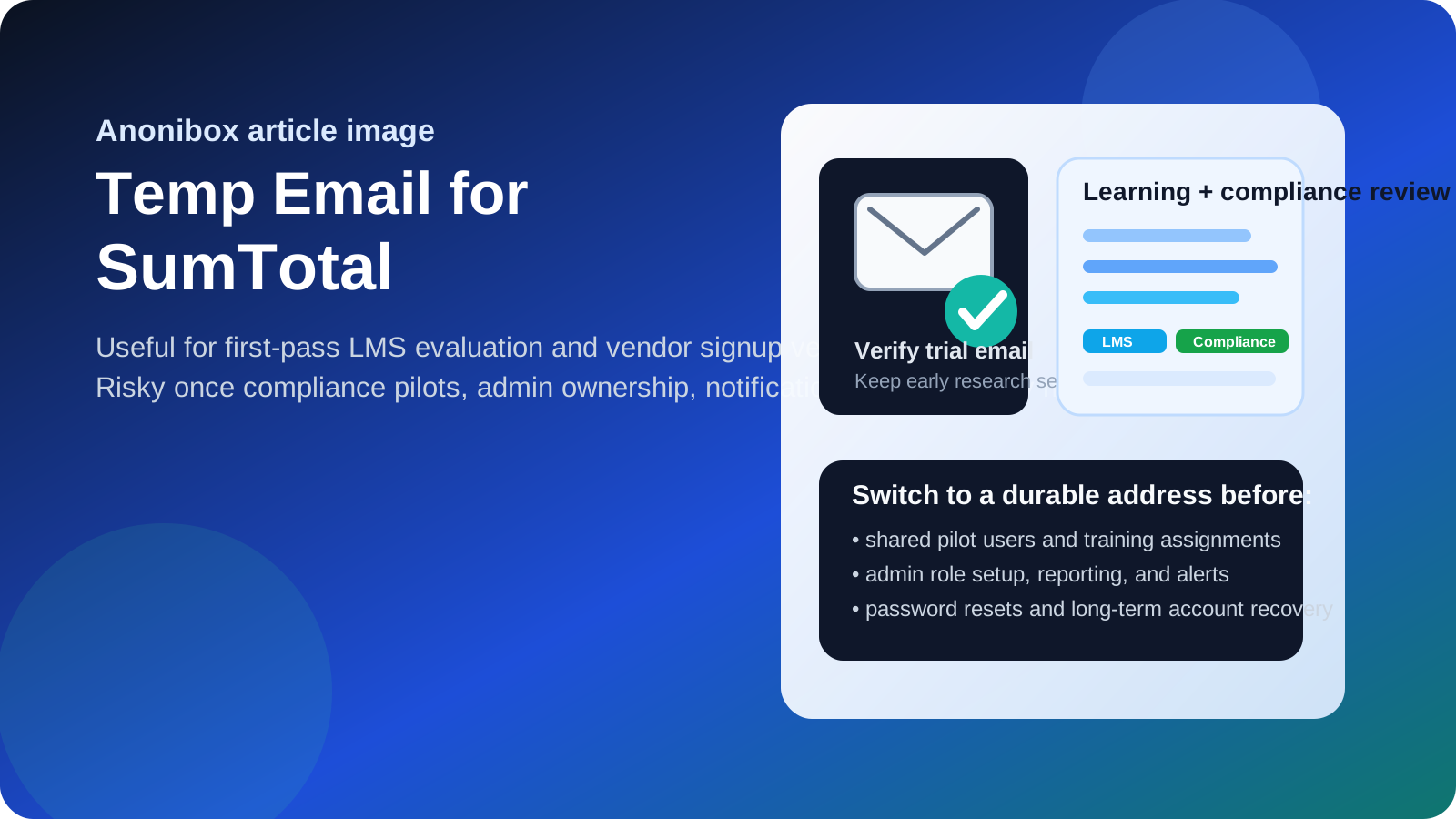
That is the practical answer behind most searches for temp email for SumTotal. Teams reviewing enterprise learning platforms often want to keep their main work inbox clean while they compare vendors, request trial access, and sit through the first round of onboarding messages. That instinct is reasonable. The moment you sign up for a learning platform demo or trial, you can start receiving setup instructions, nurture emails, webinar invites, follow-up reminders, and sales outreach long before you have decided whether the platform is actually a fit.
A temporary inbox gives you breathing room. With a service like Anonibox, you can receive the verification message, complete the first login, and evaluate the product without instantly committing your long-term team address to another vendor sequence. Used carefully, that makes early research cleaner and less noisy.
But SumTotal is not the kind of product where the email on the account stays unimportant for long. As soon as the evaluation becomes more serious, the inbox tied to the account starts affecting ownership, access continuity, admin workflow, and recovery. That is where a disposable address can stop being useful and start becoming a liability.
Why someone would use a temp email for SumTotal
Most teams are not using a temporary inbox because they are trying to hide. They are trying to control the chaos that comes with software evaluation. If your HR, learning, compliance, or IT team is reviewing multiple platforms at once, every new signup adds more messages to the pile.
A temp inbox can help when you want to:
- verify access without giving every vendor your permanent team address immediately
- keep multiple learning-platform trials separated instead of mixing them into one shared inbox
- reduce follow-up clutter during the early comparison phase
- decide whether the platform is worth a deeper pilot before you involve more stakeholders
That is a valid use case. In the earliest stage, the evaluation itself may still be disposable. Your inbox strategy can reflect that.
When a temporary inbox actually makes sense
You are doing a true first-pass evaluation
If the goal is simply to understand whether SumTotal looks promising, a temporary inbox is reasonable. You may only need to get inside, review the interface, inspect the admin flow, and see whether the platform belongs on a shortlist next to other enterprise learning tools.
One evaluator is exploring independently
The risk stays low when a single person is browsing alone and no learners, managers, or teammates depend on that trial yet. If access gets lost at that stage, the cost is mostly time, not operational disruption.
You only need the initial verification and early onboarding emails
Sometimes the inbox is only there to unlock the product. If you need the confirmation link, welcome message, and maybe one setup note, a temporary address can do the job. The key is recognizing when the account is still just an experiment and when it is no longer one.
Why SumTotal gets riskier than a casual SaaS trial
Learning platforms are not just dashboards. They often become systems that affect assignments, notifications, reporting, certifications, and internal accountability. That makes the account email more important than it first appears.
Compliance and certification workflows raise the stakes
If the evaluation moves toward compliance training or certification tracking, continuity matters. Reminder emails, assignment notices, access resets, and admin messages stop being background noise and start becoming part of the workflow. A throwaway inbox is not a strong foundation for that.
Admin ownership matters
Once a platform survives the first evaluation round, someone on the team needs to own it clearly. If the original trial was created with a temporary inbox that expires or becomes hard to monitor, the handoff gets messy fast. Nobody wants to be in a meeting asking who still has access to the first signup address.
Shared pilots create real dependency
A solo evaluation can turn into a shared pilot almost overnight. You might invite internal reviewers, training leads, compliance stakeholders, or line managers. The moment more than one person depends on that workspace, the account is no longer just a disposable test. It needs stable ownership.
Recovery problems show up later, not on day one
The biggest weakness of a burner inbox usually does not show up during signup. It shows up later, when you need to reset a password, confirm account control, change roles, or recover access after a delay. By then, the temporary inbox that seemed convenient at the start can become the exact thing that blocks momentum.
A safer workflow: temp first, durable later
The smartest approach is not to treat temporary email as all-or-nothing. Use it at the stage where it helps, then switch before the account becomes important.
- Start with a temporary inbox for early access. Use it to verify the account and inspect the platform.
- Capture what matters. Save the important onboarding details, screenshots, and evaluation notes.
- Move to a durable work-owned inbox if the platform survives the first pass. Do this before shared users, reporting, or pilot assignments start to matter.
That keeps the best part of the temporary-email workflow, less inbox clutter and faster experimentation, without carrying its weaknesses into the more serious stage of evaluation.
Signs it is time to stop using a temp inbox
If any of these are happening, the trial has probably outgrown a disposable address:
- multiple people are logging in or reviewing the platform
- you are discussing a pilot instead of just a demo
- the account is tied to admin permissions or configuration work
- you are receiving training, compliance, or assignment-related notifications that matter
- you would be genuinely inconvenienced if the inbox disappeared tomorrow
At that point, the cleanup benefit of the temp inbox is smaller than the continuity risk it creates.
What to evaluate inside SumTotal before committing further
If you are using a temporary inbox for the first pass, make the session count. Focus on the things that actually determine whether the platform deserves more time.
Admin usability
Look beyond the polished surfaces. Can the team realistically manage assignments, roles, catalogs, reporting, and content administration without turning everyday work into a chore?
Learner experience
Think about whether the platform feels intuitive for actual learners. A product can check feature boxes while still feeling heavy or confusing in practice.
Compliance workflow fit
If compliance training matters in your environment, evaluate the parts tied to tracking, reminders, completion logic, and audit readiness. This is one place where weak account ownership can create downstream friction quickly.
Reporting and visibility
Make sure the platform surfaces the information your L&D, HR, or compliance team really needs. The early trial is the right time to ask whether the product supports the decisions your team actually makes.
Identity and access planning
If the evaluation looks promising, do not leave identity questions for later. Shared ownership, durable contact points, and recovery planning are part of good implementation hygiene, even in the pilot stage.
Mistakes to avoid
- Do not leave the main trial account on a throwaway inbox after multiple stakeholders get involved.
- Do not assume recovery will never matter. It usually matters right when the project becomes important.
- Do not confuse a quiet inbox with a healthy setup. Convenience during signup is not the same thing as continuity later.
- Do not wait until there is a problem to switch the account email. The cleanest time to move is before the account becomes operationally important.
So, should you use a temp email for SumTotal?
Yes, for a first look. No, not as the long-term owner inbox for a real pilot or rollout.
If you just want to verify access, compare the platform, and decide whether SumTotal deserves a deeper review, a temporary inbox is a practical tool. It helps separate early research from long-term vendor communication and keeps your main inbox cleaner while you evaluate options.
But if the trial starts touching compliance training, shared admin work, learner access, reporting, or account recovery, move to a durable work-owned address early. That is the point where the account stops being disposable, even if the original signup was.
Used that way, Anonibox fits the early stage well: quick verification, less inbox clutter, and a cleaner evaluation process. Just make sure the inbox strategy matures as soon as the evaluation does.