Usually yes for low-trust signups and early job-board testing, but no as your only inbox for serious applications.
A burner email for job applications can protect your main inbox from spam, but you should switch to a stable job-search address as soon as a real employer starts interviewing you.
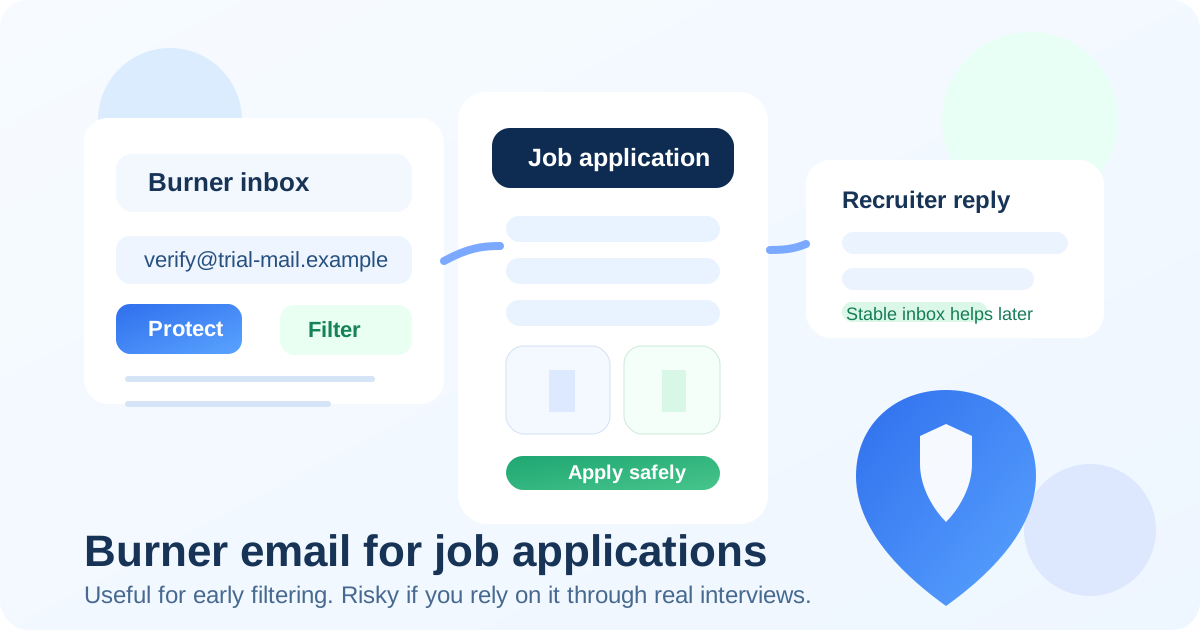
That is the short version behind searches for burner email for job applications. Job hunting creates a weird privacy tradeoff. You need employers to reach you quickly, but you may not want your main personal inbox spread across job boards, resume tools, recruiter databases, staffing platforms, and low-trust listings that may keep emailing long after you stop searching.
A burner address can be a useful shield during that early filtering stage. It gives you breathing room, keeps your primary inbox cleaner, and makes it easier to tell which sites are worth trusting. But a burner email is not magic. It does not make sketchy listings safe, it does not guarantee anonymity, and it can absolutely hurt you if an important interview message lands in an inbox you no longer monitor.
What people usually mean by a burner email in a job search
The term burner email gets used loosely, and that confusion matters. In practice, job seekers usually mean one of three things:
- A true temporary inbox: short-lived, disposable, great for testing or low-trust signups, but fragile for long conversations.
- A separate permanent job-search inbox: still isolated from your main email, but stable enough for interviews, assessments, and follow-up.
- An email alias: a separate receiving address that forwards into a mailbox you already control.
If you are deciding whether to use a burner email for job applications, the real answer depends on which of those you mean. A true throwaway inbox is helpful in some places and a bad idea in others. A separate long-term inbox is often the best middle ground. An alias can work when you want organization without fragility.
When a burner email actually helps
A burner inbox is most useful when the risk of spam or low-quality follow-up is higher than the risk of missing an important message.
1. Testing unfamiliar job boards and talent platforms
Some sites want registration before they reveal alerts, saved searches, salary estimates, resume scans, or recruiter messages. If you are not sure whether the platform is useful, a burner address can protect your main inbox while you see what kind of traffic it generates.
2. Signing up for alerts, newsletters, and gated career tools
Career sites often send daily alerts, webinar invites, profile reminders, resume tips, and marketing sequences. If your goal is just to evaluate the service, a burner inbox is a reasonable buffer.
3. Exploring the market quietly
If you are employed and researching options discreetly, separating exploratory job-search traffic from your everyday email can reduce stress. It also makes it easier to keep search-related mail out of the account you rely on for bills, personal conversations, and other important messages.
4. Filtering low-trust listings
Some aggregators and third-party recruiter funnels are legitimate but noisy. Others are sloppy enough that you should be cautious from the start. A burner inbox helps you compartmentalize that exposure. If a lead turns into a credible opportunity, you can move the conversation later.
Where a burner email starts to hurt you
The problem is not the first signup. The problem is everything that comes after it once a real person, real timeline, and real opportunity get involved.
Interview scheduling is time-sensitive
Recruiters often move fast when they finally reach out. A missed screening request, scheduling link, or reschedule email can cost you momentum. If your burner inbox is easy to forget, expires too soon, or is not part of your daily routine, it becomes a liability.
Applicant systems like continuity
Many hiring systems tie your application, account login, and follow-up messages to one email address. Changing addresses later is sometimes easy and sometimes annoyingly messy. That is one reason a pure disposable inbox is weaker than a separate long-term job-search mailbox.
Recruiters care about reachability more than privacy theory
Most recruiters are not trying to punish you for protecting your inbox. What they care about is whether you are reachable, responsive, and consistent. If your email looks obviously throwaway or stops working halfway through the process, the issue is not philosophy. It is workflow friction.
You can lose your own paper trail
Job searches already involve enough chaos: multiple roles, different deadlines, portal logins, assessment links, and interview threads. If you scatter those messages across short-lived inboxes with no system, you may protect privacy while making your search harder to manage.
Burner email vs. better alternatives
For most people, the smartest setup is not an all-or-nothing one. Here is how the options compare in real life:
True burner or temporary inbox
Best for low-trust registrations, job alerts, platform testing, and early filtering. Weak for long hiring processes, repeated logins, or any role you genuinely care about.
Dedicated job-search inbox
Usually the best overall choice. It keeps your main inbox clean, still feels professional, and remains stable enough for assessments, interview loops, and offer-stage communication.
Email alias
Useful when you want separation without creating another full account. It can help with filtering and organization, though you still need a reliable mailbox behind it.
If you like the privacy logic of a burner email but want fewer risks, a dedicated job-search inbox or alias often beats a true throwaway address.
What recruiters are likely to notice
People often ask whether employers can tell. Sometimes yes, especially if the domain is obviously disposable. But the bigger issue is what the address signals.
- Low-trust domain: if the email looks synthetic or obviously temporary, some recruiters may hesitate.
- Delayed replies: the fastest way to look unreliable is to miss a message.
- Bounces or expired inboxes: once contact breaks, the recruiter stops caring why.
- Inconsistent records: switching addresses mid-process can create confusion in applicant systems.
That does not mean every burner email causes problems. It means the downside grows as the opportunity gets more serious.
A practical workflow that usually works better
Step 1: Use a burner inbox only where trust is low
If you are checking unfamiliar job boards, recruiter marketplaces, resume tools, or gated career resources, a temporary inbox can be useful. This is the stage where a tool like Anonibox fits naturally: you can receive the verification email, confirm access, and decide whether the platform deserves any deeper relationship with you.
Step 2: Move worthwhile roles into a stable inbox quickly
As soon as a real recruiter replies personally, an employer wants to schedule a call, or an application starts requiring repeat access, switch to a job-search inbox you control long term. Do it early, before the process depends on a fragile address.
Step 3: Keep one reliable address through interviews
Once a role matters, consistency matters too. Use the same stable inbox for interview invites, take-home assignments, follow-up questions, and offer-stage communication. That makes you easier to reach and makes your own recordkeeping easier.
Step 4: Track where your email went
Keep a simple list of which sites received which address. If one platform turns noisy or suspicious, you can cut it off without affecting the employers that matter.
Red flags where a burner email is especially useful
- The job board looks more interested in collecting profiles than surfacing real roles.
- The site demands registration before showing basic job details.
- You expect a flood of alerts, newsletters, or recruiter blasts.
- The listing quality feels uneven and you are not ready to trust the platform with your main address.
- You are testing resume tools, salary tools, or talent communities rather than pursuing one specific role.
In those cases, using a burner email is not overthinking it. It is basic inbox hygiene.
Common mistakes job seekers make
Using a true throwaway inbox for a role they actually want
If you would be upset to miss a reply, do not leave that opportunity in a fragile inbox.
Assuming privacy equals invisibility
A burner address reduces exposure, but it does not make a suspicious listing safe and it does not erase every other signal you leave behind.
Switching too late
People often wait until an interview is already scheduled before moving to a stable inbox. Earlier is better. The ideal moment is when the opportunity first becomes real, not after the workflow gets complicated.
Confusing a burner inbox with a dedicated job-search setup
Those are not the same thing. One is a short-term shield. The other is part of a reliable search process.
Quick checklist: should you use a burner email for this application?
- Is this a low-trust platform or just a quick signup?
- Would it be okay if the employer replied next week instead of today?
- Am I testing a service, or am I pursuing a role I genuinely want?
- Will this application require logins, assessments, or multiple follow-ups?
- Would a dedicated job-search inbox solve the problem more safely?
If the interaction is exploratory and noisy, a burner email can be smart. If the opportunity is real and time-sensitive, a stable inbox is the better tool.
Final answer
Yes, you can use a burner email for job applications, but only selectively. It is strongest as a privacy layer for low-trust registrations, job-board testing, and early filtering. It is weakest when real recruiters, interview schedules, and multi-step hiring workflows depend on it.
The safest balance is simple: use a burner inbox to protect your main address when uncertainty is high, then move serious opportunities to a reliable job-search inbox before the stakes rise. That way, you get the privacy benefits without making yourself hard to hire.