Yes, you can use a temp email for 15Five when you are only testing a demo, gated resource, or early trial, but it is a poor choice for long-term admin ownership, review cycles, and account recovery.
If 15Five becomes a real people-ops tool for your company, move to a permanent work inbox quickly so performance reviews, manager workflows, and recovery emails stay under team control.
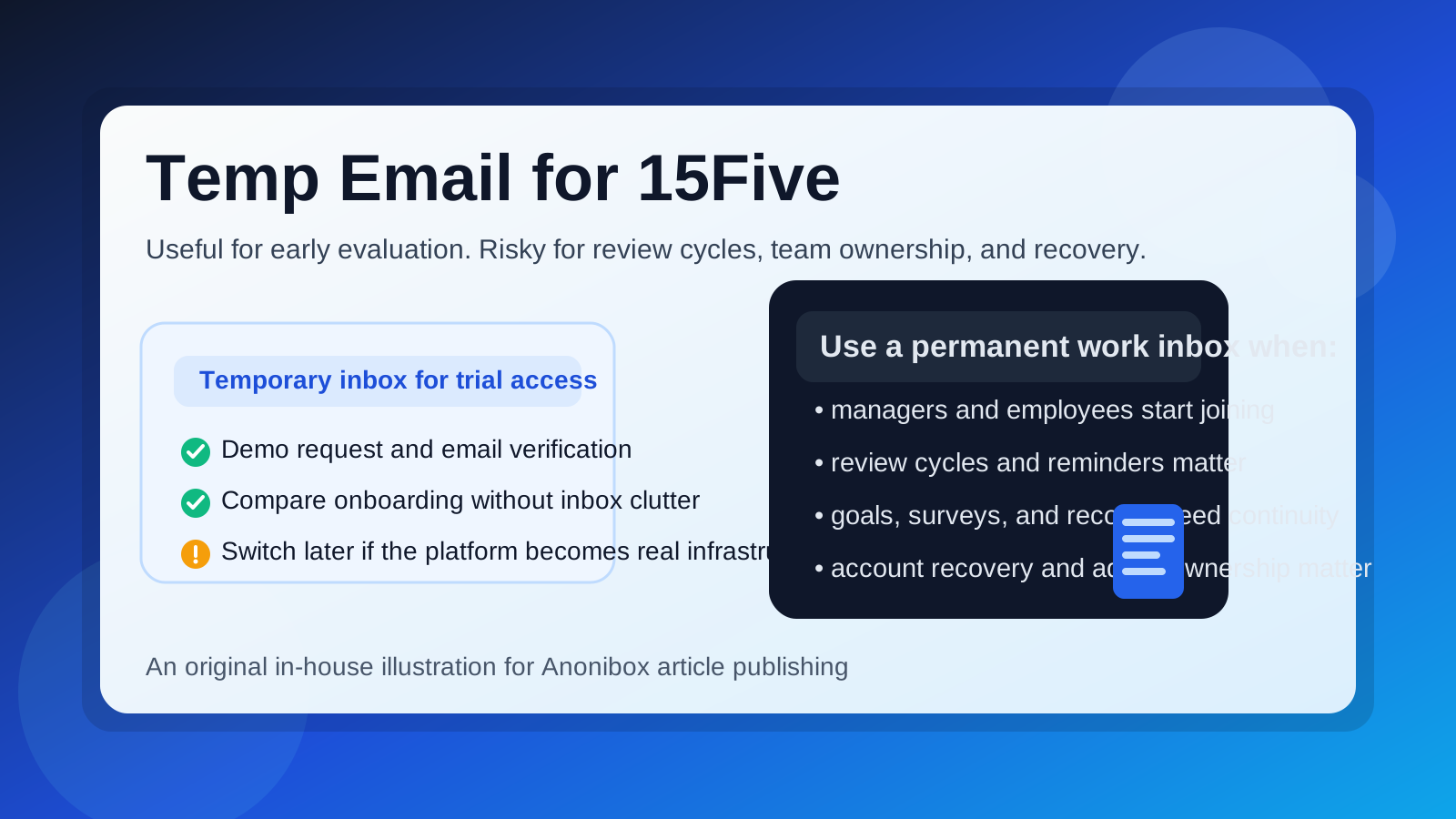
That split is the simplest way to think about it. A temporary inbox is useful during the research phase because it keeps your main work email out of another vendor nurture funnel while you decide whether the platform deserves deeper attention. But once the product moves beyond a quick evaluation and starts touching real people data, employee review cycles, or manager communications, a disposable address becomes more liability than convenience.
15Five sits in a category where continuity matters. Performance management, engagement surveys, manager check-ins, goal tracking, and review reminders are not one-click experiments that live in isolation. Even when your first touchpoint is just a demo request or a short trial, the tool is ultimately meant to support recurring workflows across teams. That means the email attached to the account matters more than it would for a casual newsletter signup.
When a temp email for 15Five makes sense
There are still real situations where a temporary address is sensible.
1. You are only requesting a demo or a first look
If you want to see the product, watch how the onboarding works, or unlock a gated walkthrough, a temp inbox can be a clean buffer. You get the verification email and early product information without committing your main inbox to every follow-up sequence right away.
2. You are comparing several people-ops platforms at once
Many HR, performance, and employee-experience tools ask for contact details before you can explore them properly. If your shortlist includes platforms like 15Five plus adjacent options in the same space, a disposable inbox can keep the first round of vendor outreach organized and stop your regular work inbox from filling with overlapping “book a call” messages.
3. You want to evaluate the signup experience before involving the wider team
Sometimes the goal is not to run a full pilot yet. You may just want to judge whether the product feels easy to understand, whether the onboarding emails are clear, and whether the overall setup appears serious enough to warrant internal discussion.
4. You are protecting your inbox during very early research
People-search and people-ops software vendors often follow up more than once after a lead form. That is normal business behavior, but it can still be noisy. A tool like Anonibox can help you isolate that first layer of contact until you decide which vendors are actually worth a permanent relationship.
When a temp email becomes a bad idea
The moment 15Five stops being a casual evaluation and starts becoming part of a real workflow, a temporary email becomes risky.
1. You are setting up real account ownership
If someone on your team is becoming the owner or primary admin for the platform, that account should live under a stable work inbox that your organization controls. Losing access to a throwaway address can turn basic account recovery into a headache.
2. You are inviting managers or employees
Performance tools depend on participation. Once invites are going out, reminders are being triggered, and managers are expected to complete tasks on schedule, it is important that the admin contact path stays reliable.
3. You are testing real review cycles
15Five is not just another dashboard login. It is tied to recurring people processes such as check-ins, feedback, engagement measurement, goal reviews, and formal review cycles. If those messages are routed through an inbox that may vanish, you create unnecessary risk around timing and coordination.
4. You need dependable recovery, billing, or compliance communication
Even if you are not fully live yet, serious evaluation often leads to security reviews, procurement conversations, billing contacts, or documentation requests. A disposable address is a bad long-term anchor for those conversations.
A practical workflow that balances privacy and continuity
The safest approach is not “always use a temp email” or “never use one.” It is to use the right inbox for the right stage.
Step 1: Use a temp inbox for the earliest touchpoint
If you are only requesting a demo, downloading a comparison guide, or opening a first sandbox, start with a temporary address. That keeps exploratory vendor contact separate from your main work inbox.
Step 2: Save the messages that actually matter
During this phase, capture the useful emails: the verification link, welcome instructions, product-tour access, or setup checklist. You do not need to preserve every marketing email, but you should keep anything that affects access or evaluation.
Step 3: Evaluate the product, not the email sequence
Inside the trial, focus on whether the platform solves the actual problem your team has. For 15Five, that usually means questions like:
- Is the manager and employee experience clear enough for regular use?
- Do check-ins, goals, and feedback workflows feel practical or overly heavy?
- Are review-cycle tools understandable for admins, managers, and employees?
- Does reporting provide useful insight, or just extra dashboards?
- Will rollout complexity match your team size and HR maturity?
Step 4: Switch to a permanent work email if the tool makes the shortlist
Once 15Five becomes a real contender, move the account to a durable address controlled by your company. In some teams that is a named work inbox. In others it is a shared people-ops or HR operations alias. Either way, the goal is long-term continuity rather than personal convenience.
Step 5: Keep ownership clear from the start
If more than one person will evaluate or manage the platform, define who owns the account and where critical notifications should land. This matters for password resets, legal notices, admin actions, and rollouts.
What to look for during a 15Five evaluation
If you are using a temp email purely to open the door, make sure you do real product evaluation once you are inside. Useful checkpoints include:
- Check-ins and manager cadence: Are recurring workflows realistic for your managers, or likely to be ignored?
- Review administration: Can your HR or people team set up cycles without creating unnecessary overhead?
- Goal alignment: Does goal tracking feel connected to actual performance conversations?
- Employee engagement: Are pulse or survey workflows actionable, or just another reporting layer?
- Permissions and ownership: Is it clear who controls settings, data visibility, and account administration?
- Integration path: If the product succeeds, can it fit the rest of your HR stack cleanly?
Those questions matter much more than whether the signup email arrived quickly. A temp inbox is there to reduce clutter, not to replace serious evaluation.
Common mistakes to avoid
Using a disposable inbox for too long
This is the most common problem. A temporary address can be handy for the first step, but if the trial expands, the account should move to a stable business email before the platform becomes operationally important.
Letting one person own an important trial informally
If a product is being evaluated for the company, it should not quietly depend on one private inbox that nobody else can access. That is true even if the inbox is a normal work address, and it is even more true if it is temporary.
Forgetting that people software creates process dependency
Some tools are easy to test casually. Performance management platforms are different because the product becomes part of recurring human workflows. That means reminders, records, and accountability matter.
Confusing privacy protection with risk elimination
A temp email reduces inbox exposure. It does not magically solve governance, security, or rollout risk. You still need normal care around data handling, permissions, ownership, and rollout planning.
A better long-term alternative than a temp inbox
If your real goal is privacy plus professionalism, a permanent work alias is often better than a disposable address once a vendor becomes serious. For example, a shared HR or people-ops mailbox can give you continuity, internal visibility, and easier handoff if responsibilities change.
That approach also avoids the awkward middle ground where a product is clearly under serious consideration but still tied to a temporary inbox that was only meant for a quick first look.
Final answer
A temp email for 15Five is useful when you are only exploring the platform and want to protect your main inbox from early marketing noise. It is not a good long-term choice for admin ownership, team invitations, performance cycles, or account recovery.
Use the disposable inbox to reach the product and judge whether it is worth deeper attention. If 15Five becomes part of a real evaluation or rollout, switch quickly to a permanent work address your organization controls. That keeps the early research phase tidy without creating avoidable problems later.