A temp email for Bonusly is fine for a quick, low-stakes evaluation when you only need account verification, a short product tour, and a first look at whether the platform belongs on your shortlist.
It becomes a poor long-term choice once rewards budgets, peer-recognition activity, team access, integrations, or account recovery depend on that inbox.
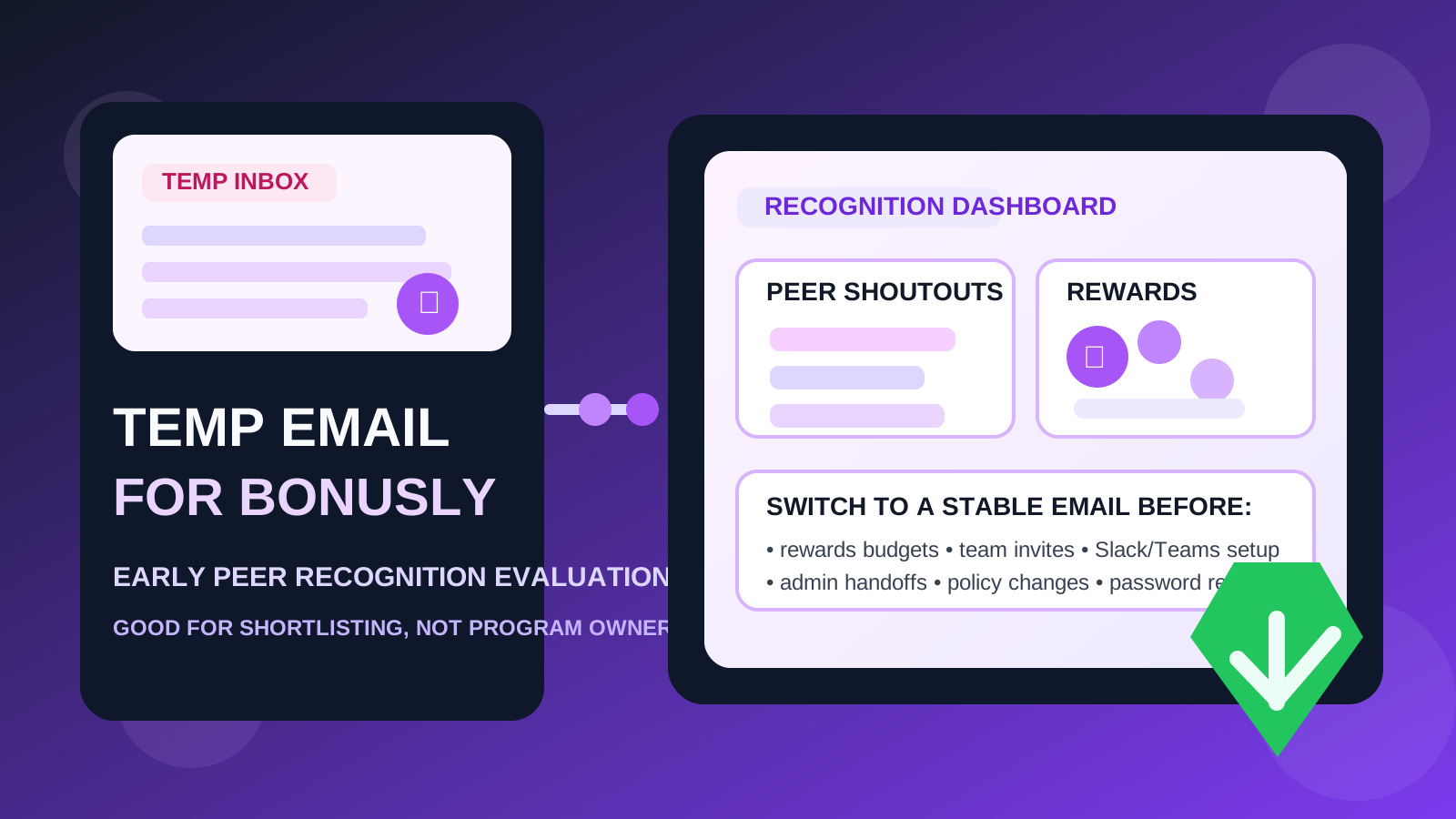
That is the practical answer behind most searches for temp email for Bonusly. Plenty of people want to explore recognition software without sending another stream of product tours, webinar invites, nurture emails, and sales follow-ups into a permanent work inbox before they even know whether the product is a fit. In the early research phase, that is reasonable.
A temporary inbox can help you get through signup, receive the first verification message, and compare Bonusly with other recognition or employee-experience tools without tying the earliest stage of research to your everyday email. A tool like Anonibox is useful for that kind of filtering because it keeps exploratory vendor traffic separate from the inbox you actually depend on.
The catch is that Bonusly is not just a brochure product. It is the kind of platform where ownership and continuity matter fast if the evaluation goes well. Once the account starts touching real recognition activity, reward budgets, user invitations, Slack or Microsoft Teams connections, or program settings, a throwaway inbox stops being a convenience and starts becoming weak infrastructure.
The safest rule is simple: use a temp inbox only while the Bonusly account is temporary in every other sense too. If the workspace may become a real pilot, a shared evaluation, or the start of a company recognition program, move to a stable company-controlled address early.
Why someone would use a temp email for Bonusly
Most people using a temporary inbox are not trying to avoid legitimate process. They are trying to avoid unnecessary noise. Software trials often create a long tail of follow-up messages, and recognition platforms are no exception. You might get product tips, setup nudges, “book a demo” prompts, feature walkthroughs, and reminders long after you decide the tool is not for you.
A temp inbox can make sense if you want to:
- verify signup quickly without linking another vendor to your main work inbox right away
- compare several recognition tools before deciding which one deserves deeper review
- keep product research separate from real HR, people-ops, or management communication
- reduce inbox clutter from tools that may never move beyond a first pass
Used this way, a disposable inbox is acting like a buffer. It helps you inspect the product before you commit real internal ownership to it.
When a temporary inbox makes sense
You are doing a first-pass evaluation
If you only want to answer basic questions like “Does this look usable?”, “Do the recognition workflows make sense?”, or “Should this stay on the shortlist?”, a temp inbox can be fine. At that stage, you are still gathering signal rather than building process.
You are evaluating alone
The approach is lowest risk when a single evaluator is looking around privately and nobody else depends on the workspace. If the account is truly disposable, the inbox can be disposable too.
You want to contain vendor follow-up
This is one of the best reasons to use a temporary inbox. Recognition and culture software vendors often begin outreach quickly, especially after someone creates an account. If you are still sorting through options, keeping those messages out of your permanent inbox is practical.
You are comfortable abandoning the workspace
Temporary email works best when you are genuinely willing to walk away from the whole environment if the product is not a fit. If nothing inside the workspace needs to survive, using a temporary inbox is much less risky.
Where the temp-email approach starts to break down
The problem begins when the account accumulates real value. What looked like a harmless trial can become the beginning of an actual program much faster than people expect.
1. Rewards budgets turn ownership into a real issue
Bonusly is not just about logging in and browsing screens. If the evaluation grows into a pilot, points allocations, reward rules, approval settings, or budget ownership can start to matter. Once money, value, or internal recognition structure is involved, the owner inbox should be durable and monitored.
2. Recognition workflows become socially sticky
A recognition tool often gains value the moment more than one person uses it. If peers start giving recognition, managers start watching engagement, or admins begin testing rules and visibility settings, the original workspace stops being a disposable sandbox. That makes a temporary owner inbox much more fragile.
3. Team invitations change the risk profile
A solo evaluation might quickly turn into a shared test. Someone from HR may want a look, a manager may want to explore adoption, or an IT stakeholder may want to discuss integrations. Once several people care about the same workspace, the original inbox should already be stable.
4. Integrations matter more after the first hour
If the account is only for a quick product tour, you may never care about integrations. But if the tool looks promising, questions about Slack, Microsoft Teams, SSO, HRIS connections, notifications, and admin control follow quickly. Those are not the kinds of workflows you want hanging from an inbox that may vanish.
5. Recovery only matters after something goes wrong
Password resets, suspicious-login alerts, verification links, and ownership handoffs are easy to ignore on day one. They matter later, when the account has become useful. If the inbox on file was only meant to be temporary, recovering access can become harder than it should be.
A simple rule that actually works
Use a temp email for Bonusly only while the workspace is disposable in every other sense too.
If the account exists purely for short-term exploration, a temporary inbox is fine. If there is any real chance the workspace will become a pilot, a team evaluation, or a serious buying path, switch to a stable work-owned address before the account becomes important.
How to evaluate Bonusly safely with a temp inbox
1. Decide whether this is research or rollout
Before you even sign up, ask the honest question: are you just looking around, or do you already suspect this could become a real internal program? If it is simply research, a temp inbox is acceptable. If it may become operational, starting with a permanent address is cleaner.
2. Keep the first session focused
Do not wander through the product randomly. Go in with a shortlist of questions you want answered:
- Does the recognition flow feel intuitive?
- Would employees actually use this regularly?
- Do the rewards and governance controls seem suitable for your team?
- Does the product feel lightweight in a good way, or too thin for real use?
- Would it deserve a deeper comparison against other recognition tools?
A focused session helps you preserve the “temporary means temporary” boundary.
3. Avoid attaching real process too early
If the account sits behind a temporary inbox, keep the test low stakes. Avoid importing real employee lists, announcing a live recognition program, or building rules that other people will start depending on. The more genuine internal process you attach to the workspace, the less appropriate a temporary owner email becomes.
4. Save the insights that matter outside the platform
During the evaluation, capture your observations elsewhere: what you liked, where it felt limited, what adoption concerns came up, and whether reward settings looked manageable. If you later recreate the workspace under a permanent address, you keep the value of the first pass without needing the original inbox forever.
5. Switch before the account becomes shared infrastructure
The best time to move from a temporary inbox to a stable company address is before multiple stakeholders rely on the same environment. Early migration is boring, but boring is good. It prevents a future scramble around ownership, password resets, or admin continuity.
When a permanent inbox is clearly the better choice
Skip the temporary step and use a durable email from the start if any of these are already true:
- you expect to run a real pilot rather than a casual product look
- multiple stakeholders may need access soon
- the platform may touch actual recognition activity or reward budgets
- you care about clean ownership and recovery from the beginning
- the workspace belongs to a real HR or people-ops initiative, not just individual curiosity
In those situations, the privacy benefit of a burner inbox is smaller than the operational weakness it introduces.
Common mistakes to avoid
Letting the trial account become the real account
This is the classic problem. The original signup feels temporary, the product turns out to be promising, and nobody bothers to fix the owner email before more people start depending on the workspace.
Confusing inbox hygiene with account safety
Keeping vendor messages out of your main inbox is useful. That does not automatically make a disposable inbox the right long-term foundation for software that may end up supporting real employee workflows.
Waiting for a lockout before switching
If you only think about stable ownership after a password reset, a handoff, or a suspicious login event, you are already handling the problem the hard way. Changing the email early is simpler.
Adding teammates before stabilizing the owner inbox
The moment another admin, manager, or HR stakeholder depends on the environment, the owner inbox should already be something durable and monitored.
Forgetting that recognition software can become culturally important
Recognition tools can look lightweight because they feel friendly and social. But once they are tied to participation habits, company rituals, or rewards, they become more important than a casual trial account suggests.
A quick decision checklist
Before using a temp email for Bonusly, ask yourself:
- Is this only a first-pass evaluation?
- Will anyone else need access soon?
- Could this become a real pilot or rollout?
- Would losing the inbox create an ownership or recovery problem later?
- Am I reducing spam, or am I weakening account continuity?
If the workspace is genuinely temporary, a disposable inbox is a practical tool. If the account may gain real value, move to a permanent email before the platform becomes part of serious internal workflow.
Final takeaway
A temp email for Bonusly is useful when you want to explore the platform quickly, keep early vendor follow-up out of your main inbox, and decide whether the product belongs on a serious shortlist.
It becomes risky once rewards budgets, recognition activity, team collaboration, integrations, admin ownership, or account recovery depends on that inbox. Use a temporary address for low-stakes exploration, then switch to a stable company-controlled email before the workspace becomes part of real employee recognition work.
That gives you the privacy and inbox-control benefits of a disposable address without turning a short trial convenience into a long-term ownership problem.