Yes, you can use HEY email for job applications if the address looks professional, you check it every day, and you use it as a stable inbox rather than a throwaway shortcut.
No, it is not automatically the best choice for everyone: if you want maximum mainstream familiarity or you tend to neglect secondary inboxes, a better-monitored address may be safer.
That is the short answer, but the better answer is about context. Job searching is partly a communication problem and partly a privacy problem. Recruiters need a reliable way to reach you for screening calls, interview scheduling, assessment links, and follow-up questions. At the same time, job boards, staffing firms, career portals, and gated salary guides can spread your contact details much more widely than most people expect. A provider like HEY can make sense when you want a dedicated long-term inbox for serious job-search communication without turning your oldest personal address into a magnet for recruiter clutter.
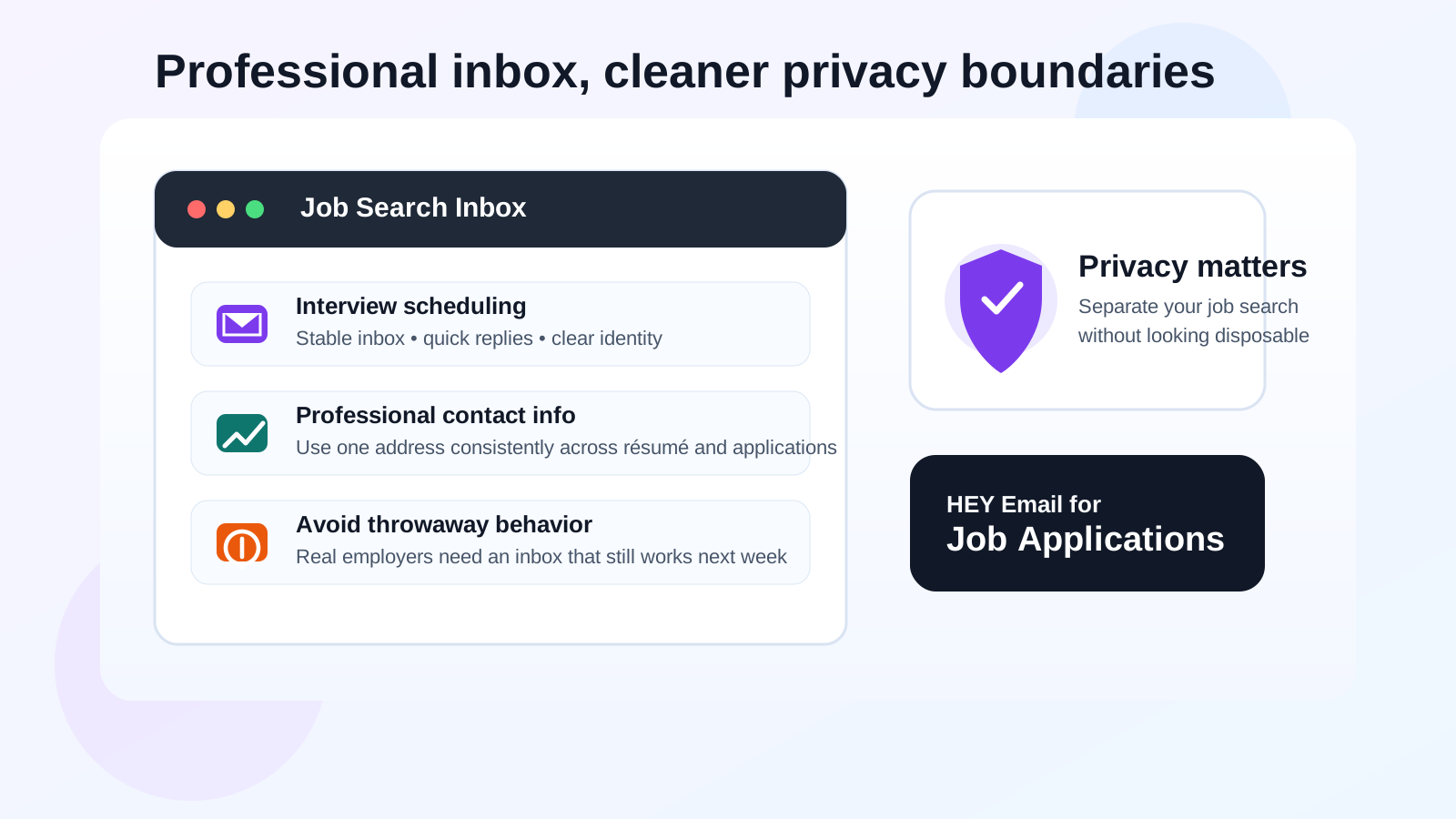
What recruiters actually care about
Most recruiters are not making deep judgments about your email provider. They are usually paying attention to simpler signals:
- Does the address look readable and professional?
- Do you reply quickly and consistently?
- Does the same address appear across your résumé, application, and follow-up emails?
- Will the inbox still work a week from now when interview coordination starts?
That is why HEY can work perfectly well. It is a real email inbox, not an obvious disposable address. If your address is something clean like your name or initials, and you respond promptly, most hiring teams will care far more about your reliability than about the logo behind the inbox.
Why HEY can be a strong choice for job applications
1. It gives you a dedicated long-term inbox
One of the biggest job-search headaches is email sprawl. Applications can trigger confirmation messages, interview requests, rejection emails, scheduling links, recruiter follow-ups, and automated reminders from several systems at once. A dedicated inbox helps keep that traffic out of your oldest personal mailbox so it is easier to spot important messages quickly.
That separation is not just about neatness. It can reduce the chance that a real employer email gets buried under receipts, newsletters, shopping alerts, family threads, and other everyday noise.
2. It can support cleaner privacy boundaries
Many people do not want their main personal address attached to every career page, résumé database, and staffing contact they touch during a search. HEY can work as a stable boundary layer: serious enough for real communication, but separate enough that your oldest identity does not need to go everywhere.
That is especially useful if you are applying widely, exploring several industries at once, or expecting recruiter traffic to last for months.
3. It is better suited to real hiring workflows than a temporary inbox
A real job application is rarely a one-email event. Even when you apply only once, the process can keep generating messages later: portal logins, password resets, interview invites, assessment deadlines, travel details, or offer documents. That is why a stable inbox matters. HEY can handle that kind of continuing relationship much better than a temporary email address that was only meant to catch a verification code.
Where HEY can create friction
1. It is less familiar than Gmail or Outlook
Familiarity is not everything, but it is not nothing either. Gmail and Outlook are so common that they create almost zero mental friction for recruiters. HEY is less mainstream, so you should remove every other possible issue. If the address is oddly formatted, overly branded, or hard to read aloud on a phone call, the lesser-known provider becomes one more piece of avoidable friction.
2. A separate inbox only helps if you monitor it seriously
A dedicated job-search inbox is useful only when you treat it like a primary communication channel during the search. If you check it inconsistently, disable notifications, or forget to look at it on weekends, the privacy benefit is not worth the risk of missing a real opportunity.
3. Overusing aliases or rotating identities can backfire
Privacy-conscious users sometimes create more complexity than they need. If you apply with one address, reply from another, and later switch to a third inbox for scheduling, you create confusion for yourself and the employer. Job searches work better when your contact details feel stable. Use one clean address for the full process unless there is a strong reason to change it.
When HEY makes the most sense
HEY is usually a strong fit when:
- you want a dedicated job-search inbox separate from your main personal address;
- you expect the process to last more than a few days;
- you are applying directly to legitimate employers and need a serious, stable contact point;
- you want cleaner privacy boundaries while still looking professional; or
- you are changing jobs while still employed and want search traffic separated from your daily life.
In those situations, HEY can provide a practical middle ground between an all-purpose personal inbox and a disposable address.
When HEY is probably not the best choice
It may not be the best option if:
- you want the most universally familiar provider possible and do not care about inbox separation;
- your HEY address looks unusual, jokey, or hard to spell;
- you know you are bad at checking secondary inboxes;
- you only need an address for a low-trust, one-time signup; or
- you are trying to use a privacy workflow as a substitute for normal responsiveness.
In other words, HEY is strongest as a stable communication tool. It is weaker when you use it like a disposable trick.
HEY versus temporary email for job searching
This is the distinction that matters most. HEY and temporary email solve different problems.
Use HEY when the opportunity is real. If you are applying to a legitimate employer, expect follow-up, may need account recovery later, or want a durable inbox for interviews and offers, use a stable address like HEY.
Use temporary email when the interaction is low trust or low commitment. If you are testing a job board, downloading a gated career guide, checking a resource page, or trying to avoid long-term spam from early-stage signups, a disposable inbox is often better.
That is where Anonibox fits naturally. It can be useful at the top of the funnel, when you are protecting your long-term address from noisy or uncertain signups. Once a role becomes serious, switching to a stable inbox is usually the smarter move.
How to make a HEY address look professional
Choose a simple address
Your provider matters less than your formatting. A clean version of your name is far better than a nickname, joke, or string of random numbers. If a recruiter has to squint at it, that is a problem you can avoid.
Keep the same address everywhere
Use the same inbox on your résumé, application forms, portfolio contact details, and follow-up messages. Consistency reduces confusion and makes you look more organized.
Check it daily during an active search
Fast replies matter. Even a strong candidate can lose momentum if they answer too slowly. If HEY is your job-search inbox, treat it like an inbox that matters every day.
Use notifications, forwarding, or routines if needed
The exact setup matters less than the outcome: you should not miss important messages. If you need reminders or forwarding rules to stay on top of it, use them.
Do not switch providers mid-process without a good reason
If an employer is already writing to one address, keep that channel stable. A mid-process switch can create missed messages, broken threads, and avoidable confusion.
Common mistakes to avoid
- Using a privacy-focused inbox but checking it less often than your regular email.
- Applying with one address and replying from a different one.
- Using a clever or cryptic username that looks less professional than the provider itself.
- Treating a real job application like a one-off signup.
- Sending every early-stage job-board signup to the same long-term inbox and then wondering why it becomes cluttered.
A quick decision checklist
Before you use HEY for job applications, ask yourself:
- Will I monitor this inbox every day?
- Does the address look clean and professional?
- Am I using it for real employer communication rather than disposable signups?
- Do I want stronger separation from my oldest personal inbox?
- Will I keep this address stable through the full hiring process?
If the answer to most of those is yes, HEY can be a very reasonable choice.
Final answer
So, should you use HEY email for job applications? Usually yes, if you want a separate long-term inbox, the address looks professional, and you will monitor it reliably. It can give you cleaner privacy boundaries without looking disposable.
The key is to use it like a serious communication channel, not like a burner. For low-trust job-board experiments and one-off downloads, temporary email can still be smarter. But for real applications, recruiter conversations, interview scheduling, and anything that may matter later, a stable HEY inbox can work well.
If you keep the address simple, stay consistent, and respond quickly, most employers will care much more about your reliability than about the fact that you chose HEY instead of a more common provider.