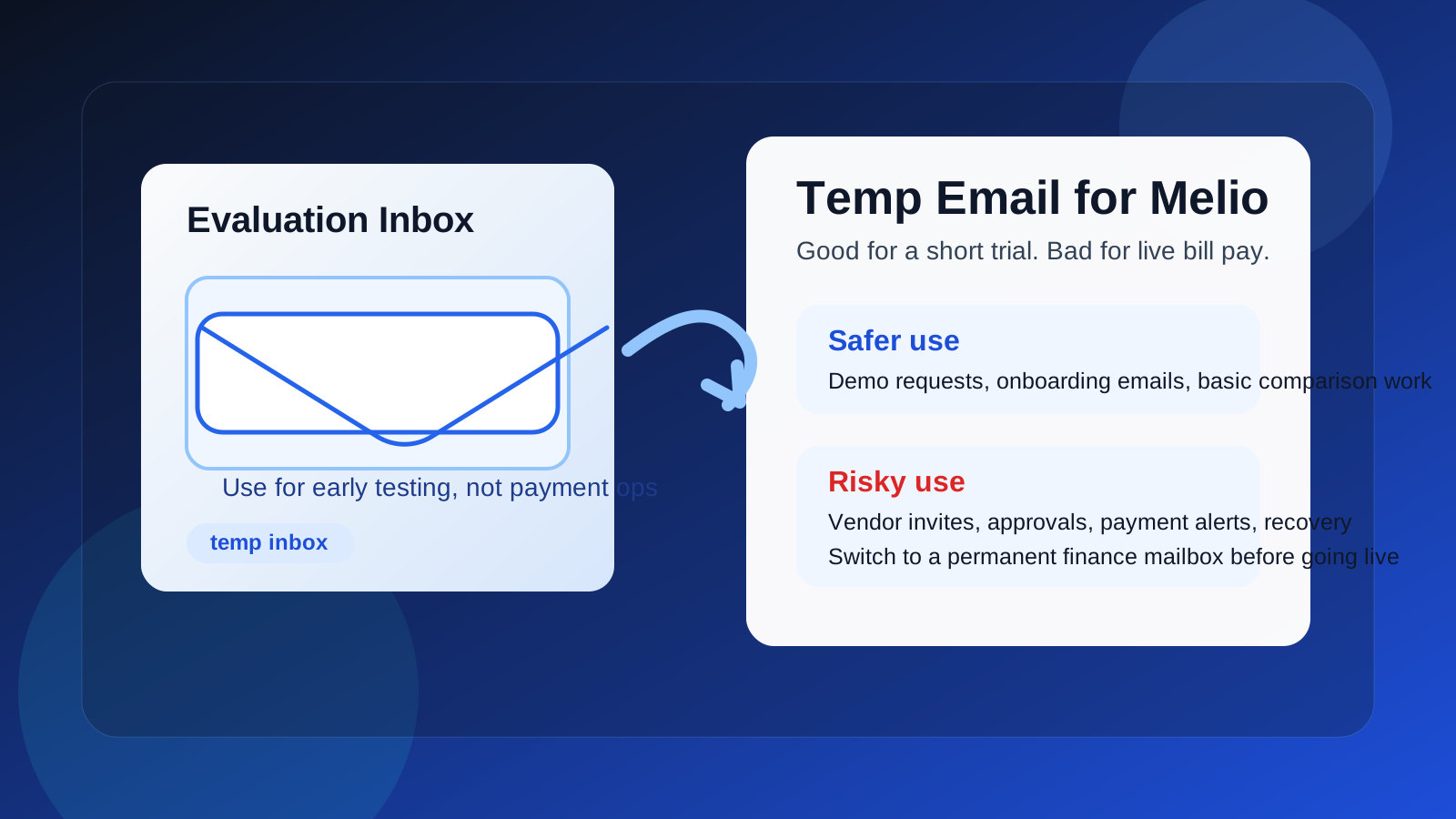
A temp email for Melio can be useful for a short first-pass evaluation, demo request, or basic onboarding check. It becomes a poor choice once vendor payments, approval workflows, shared ownership, or account recovery depend on that inbox.
If you only want to see how the platform feels before giving another finance vendor your long-term mailbox, a temporary inbox can reduce clutter. But if you plan to move beyond an early trial, you should switch to a permanent business address before anything payment-related becomes real.
Why people look for a temp email for Melio
Finance teams, founders, bookkeepers, and operations leads often compare several tools in a short period of time. That usually means sign-up forms, follow-up emails, demo confirmations, feature tours, and sales sequences arriving from multiple vendors at once. If you are reviewing bill-pay or accounts-payable tools side by side, your main inbox can become noisy fast.
That is the practical reason a temp email enters the picture. It lets you receive the first verification email, inspect the onboarding flow, and decide whether a tool deserves deeper attention before you attach it to a permanent finance mailbox.
For a site like Anonibox, that early-stage use case is the right one to focus on: evaluate cleanly, avoid extra inbox clutter, and keep your primary address out of low-value follow-up campaigns until you know the software is worth more time.
When a temporary inbox makes sense
Using a temporary inbox is most reasonable when your goal is limited, short-term, and low risk. Examples include:
- Checking whether Melio’s initial setup flow matches your team’s needs
- Reviewing welcome emails, product-tour links, or trial instructions
- Comparing early impressions against tools like BILL, Ramp, Airbase, or other AP and finance platforms
- Keeping marketing follow-up separate while you are still deciding whether the product belongs on your shortlist
- Testing from a research perspective before introducing a real company mailbox
In that narrow window, a temp email can be efficient. You get the messages you actually need, and you do not automatically sign your everyday inbox up for weeks or months of vendor outreach.
Where a temp email becomes risky fast
The problem is not the first verification email. The problem is what happens when evaluation turns into real workflow.
As soon as a finance tool starts touching real business activity, inbox stability matters. Payment-related tools can generate important notices, approvals, receipts, vendor communications, support threads, and access-recovery messages. Even if you begin with a harmless trial mindset, it is easy for a test account to become “good enough for now” and stay that way longer than it should.
That is where a temporary inbox stops being clever and starts being fragile.
1. Vendor and bill-related communication can get stranded
If you invite other people, save billing contacts, or rely on email notifications for approvals or payment status, you do not want those messages tied to an inbox that may disappear or that nobody monitors long-term.
2. Shared ownership gets messy
Finance workflows rarely stay personal for long. A founder may sign up first, but controllers, AP staff, bookkeepers, or operations teammates often need visibility later. A disposable inbox is a weak foundation for a shared business system.
3. Recovery and support become harder
When something breaks, the inbox on file often becomes part of the recovery path. If the address was temporary, abandoned, or inaccessible, getting control back can become more painful than it needed to be.
4. Auditability suffers
Even in smaller companies, it helps to know where critical notifications are going. Role-based, durable inboxes are easier to document and hand off than one-off temporary addresses used during a rushed trial.
A safer way to evaluate Melio with a temp email
If you still want the privacy and clutter-control benefits of a temporary inbox, the safest approach is to use it only for a tightly scoped evaluation process.
Use it for the first layer only
Create the temp inbox for initial sign-up, confirmation messages, and the first round of product exploration. Keep the purpose narrow: does the product look promising enough to continue?
Save what matters immediately
If the trial sends setup notes, getting-started steps, or a useful onboarding message, copy the important details into your internal notes right away. Temporary inboxes are not where critical business context should live.
Do not connect it to real operating work
Once you are moving toward genuine use, stop treating the account like a disposable experiment. Switch the login and key contact address to a permanent mailbox before there are live vendors, real bills, approval routing, or ongoing payment-related activity attached to it.
Move to a proper business inbox early
A good permanent choice is usually a stable business address that your team can actually keep monitoring. In many companies, that means a role-based mailbox or alias rather than a personal inbox. The point is durability, not glamour.
What kind of permanent email is better?
If Melio makes it onto your shortlist or into real use, a better email choice is usually one of these:
- A role-based finance mailbox such as an AP or billing alias
- A team-monitored operations inbox if finance and ops share responsibility
- A founder or admin mailbox only as a temporary bridge before moving to shared ownership
The best option depends on how your team works, but the common theme is stability. Production tools should not depend on inboxes that expire, disappear, or belong to a single person who might be unavailable later.
Common mistakes to avoid
- Leaving the temp inbox in place too long: what starts as a trial can quietly turn into a live account.
- Forgetting to change notification settings: important messages may still route to the temporary address even after you start using the platform seriously.
- Assuming you can “fix it later”: later usually arrives after teammates, vendors, or workflow rules are already attached.
- Using a personal inbox as the permanent fallback: this can create ownership problems even if it feels easier in the moment.
Is a temp email for Melio ever the right final setup?
For most real business use, no. A temporary inbox is best understood as a screening tool, not a production setup. It can help you decide whether a platform deserves more serious testing, but it is not the right home for a live finance workflow.
That is especially true when a tool may affect vendor coordination, payment timing, approval chains, or recovery access. Those are not areas where you want avoidable email fragility.
A practical evaluation workflow
- Create a temporary inbox only if you are still in the research phase.
- Use it for sign-up, verification, and initial orientation.
- Document anything useful from onboarding emails in your own notes.
- Decide quickly whether the product is a real contender.
- If yes, switch to a durable business mailbox before any real payment or approval process depends on the account.
- If no, let the test die cleanly without adding more vendor noise to your main inbox.
This is the balanced approach. You still get the convenience and privacy benefits of a temporary email early on, but you do not carry that convenience into stages where reliability matters more than inbox cleanliness.
Final answer
A temp email for Melio is fine for a quick evaluation, a demo request, or a low-stakes first pass. It is a bad long-term choice for anything involving real vendor payments, approval workflows, shared ownership, or account recovery.
If you want to keep your primary inbox cleaner during early research, a temporary address from a service like Anonibox can help. Just treat it as a short-lived evaluation tool and switch to a permanent business mailbox before the account becomes operational.