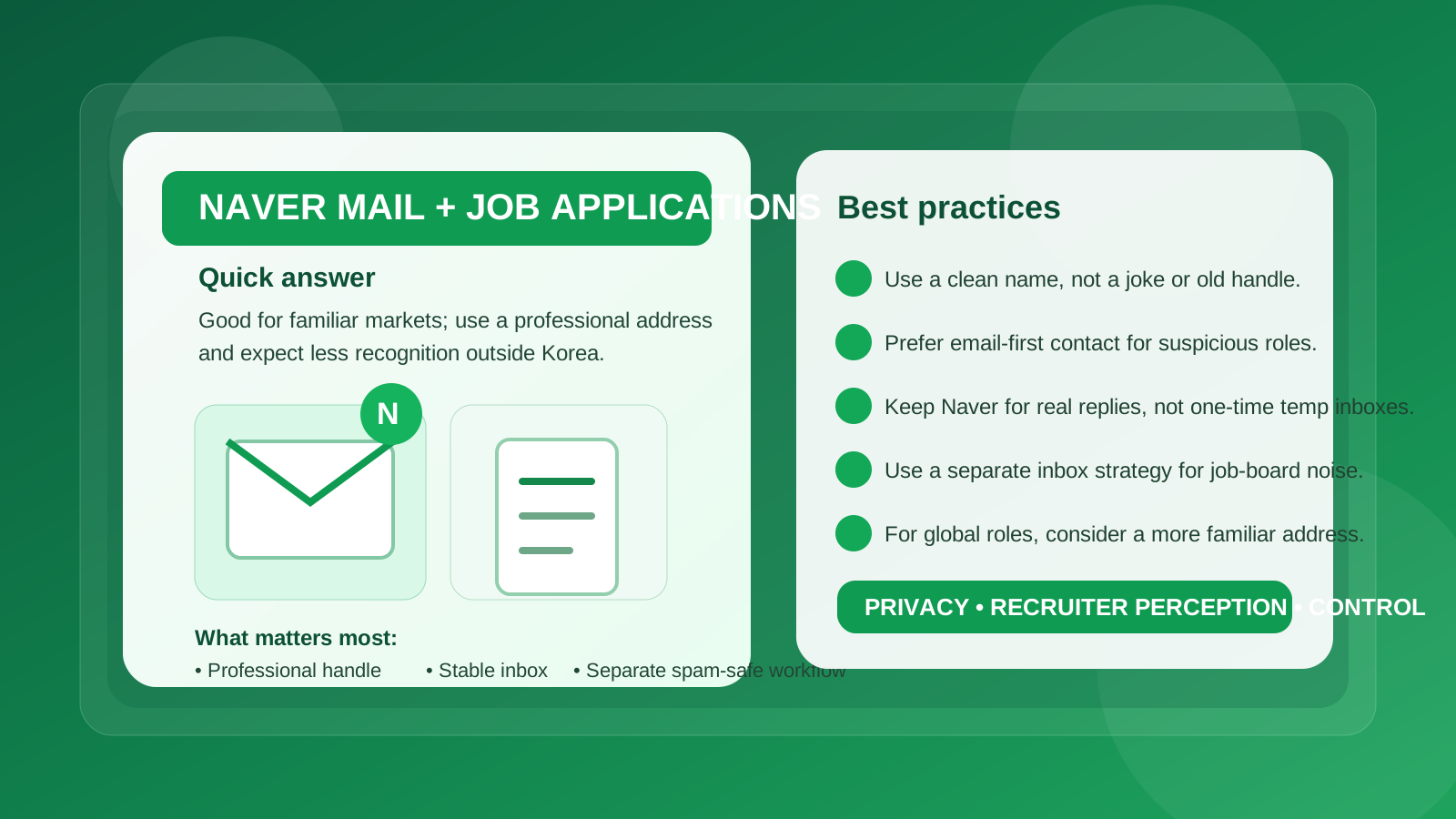
If you are applying mainly to employers in South Korea or to companies that already recognize Naver as a normal email provider, Naver Mail can be fine for job applications. If you are applying internationally, it can still work, but a more globally familiar address may reduce unnecessary friction.
The bigger issue is not whether Naver exists as a provider. It is whether your address looks professional, stays organized, and protects your privacy while you handle recruiter replies, interview invites, and job-board spam.
Why people ask about Naver Mail in the first place
Email addresses quietly shape first impressions during a job search. Recruiters rarely make final decisions based on the provider alone, but they do notice whether an address looks established, easy to trust, and easy to contact. That matters more when they are reviewing many applicants quickly.
Naver Mail creates a slightly different situation from Gmail or Outlook because it is highly familiar in some markets and less familiar in others. In South Korea, it is ordinary. Outside that context, some recruiters may not know it well, and unfamiliarity can create small but real friction even when the candidate is qualified.
That does not mean you need to abandon Naver Mail. It means you should use it deliberately.
Short answer: yes, but context matters
If your target employers are in South Korea, have Korean-speaking hiring teams, or regularly work with candidates who use regional providers, Naver Mail is usually a reasonable choice. It is a legitimate long-term inbox, not a disposable service, and it can absolutely function as a real professional contact address.
If you are applying to international companies, remote roles with global recruiting teams, or employers that expect more familiar global providers, Naver Mail may still work, but it may not be the smoothest option. In that case, the goal is not to hide Naver. The goal is to remove avoidable doubt.
When Naver Mail is a strong choice for job applications
There are several situations where using Naver Mail is perfectly sensible:
- You are applying within South Korea: recruiters are likely to recognize it immediately.
- Your professional network already uses it: especially if your résumés, portfolio, and other accounts already point to the same address.
- You want one stable inbox: job searches create long threads, and a reliable inbox matters more than brand familiarity alone.
- Your address itself is professional: something based on your name is usually more important than the provider.
- You actively monitor the account: the best email provider still fails you if interview requests sit unread.
For many candidates, this is enough. A clean address like firstname.lastname or a close variation will usually look more credible than a globally familiar provider paired with a messy username.
Where Naver Mail can create friction
The most common problem is not technical deliverability. It is recruiter perception and convenience.
1. Some international recruiters may not recognize it
If a recruiter mostly sees Gmail, Outlook, and company-domain addresses, a Naver address can look unusual simply because it is less familiar in that hiring market. Most professionals will move past that quickly, but some may pause longer than they otherwise would.
2. It may complicate brand consistency for global applications
If your LinkedIn profile, portfolio, résumé file name, and interview scheduling habits all signal an international job search, using a regional provider can feel slightly inconsistent to some employers. Again, this is not a deal-breaker. It is just one small piece of presentation.
3. A weak username magnifies the issue
An unfamiliar provider combined with an old nickname, gaming handle, or cluttered number string looks less professional than it would on a cleaner email platform. If you are using Naver Mail for applications, the username matters even more.
Privacy and spam considerations
Job applications are not just about appearance. They are also about inbox control. Once you apply through job boards, recruiting marketplaces, staffing firms, and resume databases, your address can attract newsletters, low-quality recruiter blasts, and outright scam attempts.
That is where strategy matters. Naver Mail can work well as a dedicated real job-search inbox, but you may not want it exposed everywhere in the earliest stages of your search. There is a difference between:
- sending a serious application directly to a legitimate employer, and
- dropping your email into every job board, salary guide download form, and vague recruiter funnel you can find.
If you want more privacy, keep a separation between your long-term application inbox and your higher-risk signup activity. For example, a tool like Anonibox can be useful for early research, one-off job-board experiments, or low-trust forms where you want to limit future spam. For actual applications and interview communication, though, a stable inbox such as Naver Mail is usually the better choice because employers need a dependable way to reach you later.
Should you use a temporary email instead of Naver Mail?
Usually not for real applications. A temporary inbox is great for privacy experiments, early-stage signups, or situations where you do not yet trust the source. It is a poor choice for roles you genuinely care about because hiring processes stretch over days or weeks. Recruiters may reply later than you expect, resend scheduling links, or revive a role after silence.
That means the best comparison is not “Naver Mail versus temp mail forever.” It is “Naver Mail for real job contact, temporary or separate inboxes for noise control where appropriate.”
How to make Naver Mail look professional
If you decide to use it, a few habits make a bigger difference than switching providers out of panic.
Use a clean address format
Your name, or a close professional version of it, is ideal. Avoid slang, birth years if possible, random punctuation chains, or inside jokes. The provider is only one part of the impression; the username is often the bigger signal.
Keep the inbox organized
Job searches move quickly. Create folders or labels for applications, interviews, recruiter outreach, and offers. If you use Naver Mail as your real job-search inbox, treat it like an active work tool rather than a casual personal account.
Check spam and promotions regularly
Important interview emails sometimes land in the wrong place, especially when companies send automated scheduling links or messages from unfamiliar domains.
Match it with the rest of your professional identity
Make sure the same address appears consistently on your résumé, portfolio, LinkedIn, and application forms. Consistency helps recruiters trust that they are contacting the right person.
Respond promptly and clearly
Fast, professional replies matter more than your provider choice. A familiar email service does not save a slow or disorganized communication style.
When you may want a more globally familiar address
There are a few cases where switching or adding another professional inbox may be worth the effort:
- You are applying mostly to employers outside Korea.
- You want to minimize any extra explanation or unfamiliarity.
- Your current Naver username is not ideal and cannot be cleaned up easily.
- You want one address dedicated only to international job searches.
That does not mean Naver Mail is wrong. It simply means presentation can be optimized for the audience. If a different address reduces friction, that can be a practical branding decision rather than a judgment about the provider itself.
Red flags that matter more than the provider
Job seekers sometimes worry too much about the email brand and not enough about the actual risks. The bigger concerns are usually:
- using an unprofessional username,
- mixing job applications with a chaotic personal inbox,
- missing recruiter replies,
- submitting your address to low-trust forms, and
- replying to scam outreach that only looks vaguely job-related.
Those problems can hurt you whether you use Naver, Gmail, Outlook, or anything else.
A quick decision checklist
Before you decide, ask yourself:
- Are most of my target employers likely to recognize Naver Mail?
- Does my address look professional when written on a résumé?
- Do I want one stable inbox for real application replies?
- Do I need a separate privacy layer for low-trust job-board signups?
- Would a more globally familiar address make my search smoother for international roles?
If your answers point toward local familiarity, stability, and a professional-looking handle, Naver Mail is usually fine. If your search is international and highly presentation-sensitive, a second professional inbox may be smarter.
Final answer
Yes, you can use Naver Mail for job applications, especially if you are applying in markets where the provider is already normal and trusted. It is a real email service, and for many employers that is enough.
But if you are applying globally, recruiter familiarity matters a little, and privacy management matters a lot. Use a professional Naver address if it fits your market, keep it stable for real application conversations, and use separate privacy tactics for spam-heavy job-search activity. That gives you the best balance between credibility, organization, and control.