Yes — a temp email for NetSuite can be useful if you only want to verify a trial, reach the first onboarding screens, and compare the product without tying your main inbox to another vendor follow-up sequence too early.
No — it is a poor long-term setup once your NetSuite account touches live finance workflows, admin access, approvals, shared ownership, or account recovery.
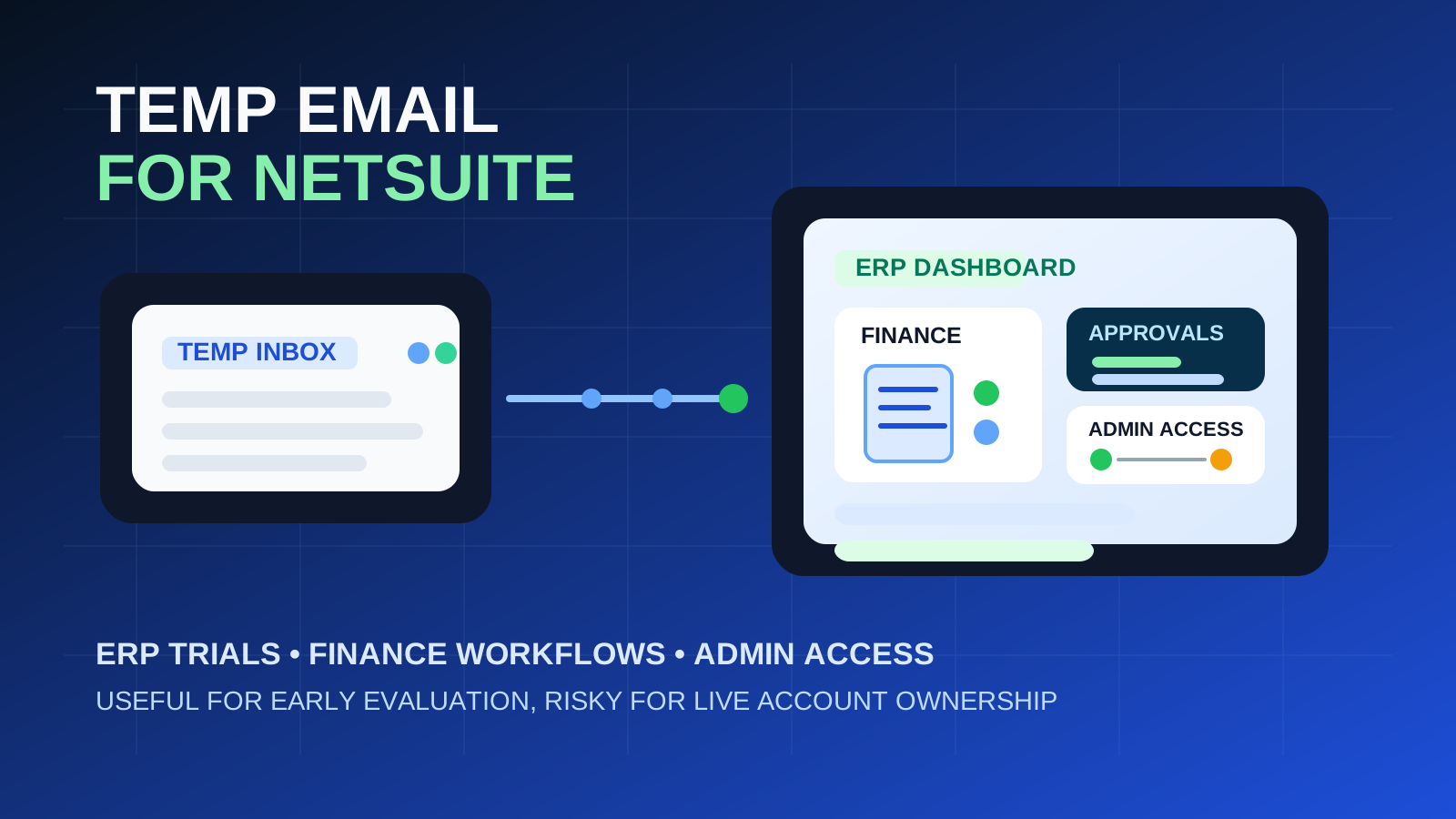
That is the practical answer behind most searches for a temp email for NetSuite. People usually are not looking for a loophole. They are trying to keep an early software evaluation organized. NetSuite is a serious ERP platform, and even a basic trial or demo request can trigger welcome emails, consultant follow-ups, onboarding material, webinar invitations, pricing outreach, and internal coordination messages. If you are comparing several finance or ERP tools at once, that can turn into inbox clutter fast.
A disposable inbox can make sense for that first-pass research stage. You get the verification email, the initial setup messages, and the product information you actually need while protecting your permanent work inbox from a long chain of marketing and sales follow-up. But the second the account starts looking like something your finance, ops, or accounting team may genuinely rely on, the logic changes. Durable ownership matters much more than convenience.
When a temp email helps with NetSuite
There are a few situations where using a temporary inbox is reasonable.
- Early product comparison: You want to see how NetSuite feels next to other accounting, ERP, AP, or business management platforms before committing a real team inbox.
- Demo-gated research: You need an address for a webinar, a product walkthrough, or access to first-pass materials.
- Inbox control during vendor evaluation: You are trying to avoid months of nurturing emails before your shortlist is even real.
- Short sandbox-style testing: You only need to confirm access, click through basic navigation, and understand whether the platform belongs in a deeper review.
In those cases, a temp email is acting as a filter. It keeps exploratory research separate from the inboxes already handling real invoices, customer billing, supplier communication, payroll questions, finance approvals, and daily operational noise.
Why NetSuite becomes risky fast
The problem is not that NetSuite sends email. The problem is that the account can quickly become connected to processes that matter.
1. Finance workflows create real dependency
NetSuite is often tied to accounting, billing, purchasing, reporting, planning, and cross-team approvals. Once the account starts holding meaningful configuration, transaction history, saved reports, or workflow notifications, the email address behind it is no longer just a signup detail. It becomes part of the platform’s control layer.
If password resets, security alerts, billing notices, approval reminders, or administrator messages go to an inbox that expires or disappears, you create an avoidable recovery problem. What was fine for a two-hour test becomes reckless for a live business system.
2. Admin and role ownership matters
ERP platforms are usually not single-user toys. Even during evaluation, one person may invite a controller, finance lead, operations manager, implementation consultant, or outside accountant. If the original account is attached to a throwaway inbox, you risk confusion over who actually owns the environment and how recovery will work later.
That can become especially messy if the trial turns into a proof of concept or implementation discussion. A stable company-controlled address is simply better when multiple people may depend on the same workspace.
3. Account recovery is too important to improvise
Temporary inboxes are good at being temporary. That is exactly why they are a bad fit for anything that may become operationally important. If the inbox expires, gets recycled, or is no longer monitored, you can lose access to password resets, verification requests, security notices, and ownership confirmations right when you need them most.
For a lightweight marketing signup, that may not matter. For a platform tied to finance or ERP evaluation, it matters a lot.
4. Serious evaluation usually leads to serious conversations
If NetSuite stays on your shortlist, the next phase often includes implementation scope, pricing discussions, partner conversations, migration planning, or module-specific follow-up. At that point, keeping the account on a disposable inbox stops being efficient. It starts getting in the way of continuity.
The safest way to use a temp email for NetSuite
If you still want the privacy and inbox-control benefits, use the temporary address as a short-term screening tool only.
- Use it for the earliest touchpoint. Demo access, the first verification message, or a quick exploratory signup are the safest use cases.
- Save anything important immediately. If the trial sends onboarding instructions, implementation checklists, or links you may want later, capture them before the inbox disappears.
- Decide quickly whether NetSuite is a real contender. Do not let a temporary inbox stay attached by inertia. Make an early yes-or-no decision.
- Move promising evaluations to a permanent address. If the platform survives your first screen, switch to a company-controlled email before deeper setup, role invites, or meaningful workflow testing.
- Keep ownership clear. Use an address your team can actually govern if the account becomes valuable.
A tool like Anonibox can help during that first evaluation stage because it gives you a clean inbox for verification and early vendor contact. The important part is treating it as a staging step, not the permanent home of a platform that could end up close to your finance stack.
When you should switch to a permanent email
Move off the temporary inbox as soon as any of the following become true:
- You are inviting teammates or outside advisors into the environment.
- You are testing real approval chains or workflow automation.
- You are connecting meaningful data or configuring production-like settings.
- You care about long-term access to billing notices, alerts, or admin messages.
- You are entering pricing, procurement, or implementation discussions.
That handoff point is the difference between a clean evaluation tactic and a future recovery headache.
Mistakes to avoid
- Letting a disposable inbox linger: what starts as a quick test can accidentally become the default owner account.
- Using the same temp inbox for every vendor: that defeats the organizational benefit and makes it harder to track who sent what.
- Forgetting what the account now controls: once finance or ERP workflows depend on the login, it is no longer a harmless trial.
- Assuming recovery will be easy later: it often is not, especially once multiple people or settings are involved.
Does using a temp email hurt a NetSuite evaluation?
Not necessarily. For very early research, it can improve the process because it lets you compare platforms without polluting the inbox your team uses for real work. In fact, that separation can make evaluation cleaner. You can judge the product on the dashboard, capabilities, and workflow fit instead of on how aggressively the vendor emails you afterward.
Just be honest about where the temporary inbox stops making sense. NetSuite is not a throwaway consumer app. If the account is headed toward implementation or serious proof-of-concept work, the inbox behind it should reflect that reality.
A quick checklist before you use one
- Am I only doing early-stage trial access or demo research?
- Will this account stay personal, or could it become shared and business-critical?
- Do I have a plan to save important setup messages?
- Will I switch to a permanent company-controlled inbox if the evaluation continues?
- Am I avoiding unnecessary vendor spam without creating a future ownership problem?
If you can answer those clearly, you are using the temp inbox intentionally rather than casually.
Final answer
A temp email for NetSuite is useful for the earliest evaluation stage: verifying access, collecting initial onboarding emails, and protecting your main inbox while you compare options. It becomes a bad idea once the account connects to live finance workflows, admin ownership, approvals, shared access, or recovery paths.
Use a temporary inbox to screen the product. Use a permanent company-controlled inbox for anything you may actually keep. That balance gives you the privacy benefit without turning a serious ERP evaluation into an avoidable account-management mess later.