Yes — should you use mail.com for job interviews can be a reasonable choice if the address is professional, the inbox is stable, and you monitor it closely enough to catch scheduling messages and follow-ups quickly.
No email provider gets you hired by itself, though. For job interviews, responsiveness, clarity, and reliability matter more than brand name, so Mail.com only works well if you treat it like a real interview inbox rather than a neglected side account.
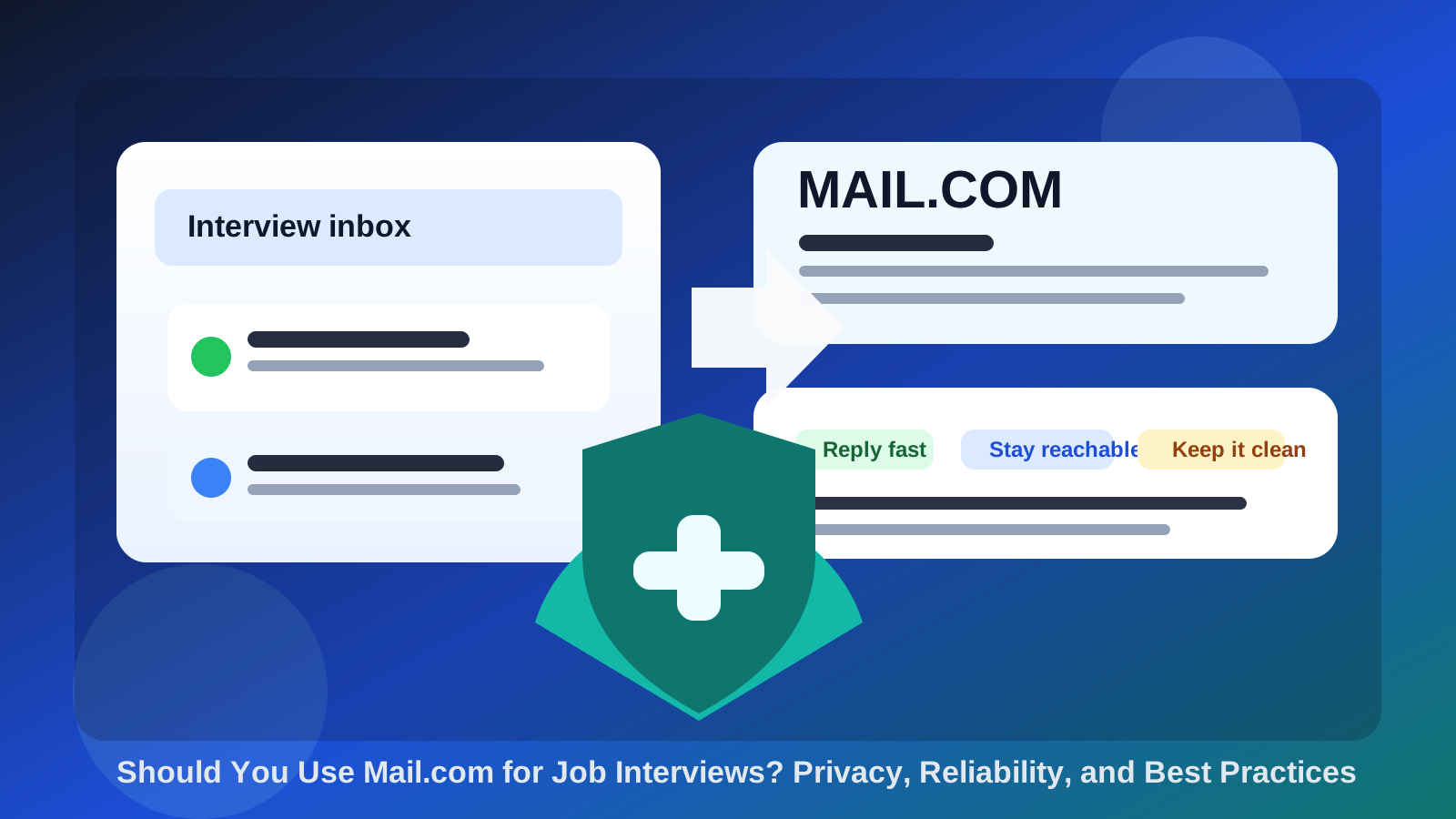
That is the short answer, but it helps to unpack why the question comes up. Interview communication is a little different from early-stage job applications. An application can sometimes sit for days without consequence. Interviews cannot. Reschedules, calendar invites, assessment links, recruiter follow-ups, and “are you still available?” messages can arrive with very little warning. That makes inbox reliability much more important once the hiring process is active.
If you are wondering whether to use Mail.com, you are probably balancing two concerns at once. First, you want an address that looks normal and is easy for recruiters to trust. Second, you want to protect your privacy and keep your job search separate from your main personal life where possible. Those goals are compatible, but only if the inbox stays stable and well-managed.
Mail.com is not the first provider many people think of when they picture a job-search inbox, but that does not automatically make it a bad choice. Recruiters are usually not grading you on brand popularity. They mostly care whether your address looks normal, your replies arrive on time, and the conversation stays smooth from screening to scheduling to offer-stage coordination.
The bigger question is presentation. A less-common provider can work well if the address is simple and professional. It can create friction if the inbox looks neglected, the username feels gimmicky, or messages sit unanswered because the account is not part of your daily routine. That is why Mail.com can be fine for interviews, but only when the account is treated like a serious communication channel.
What recruiters actually care about
Most recruiters are not sitting there ranking inbox providers like judges at a wine tasting. In practice, they usually care about a handful of basic things:
- Does the address look professional? A clean address built around your name is better than a joke, a random string, or anything overly personal.
- Do you reply quickly? Interview scheduling often moves fast, especially when hiring teams are trying to lock in time slots.
- Do messages reliably reach you? Missed confirmations and delayed replies create more concern than the provider itself.
- Does the inbox feel stable? Employers want to know you will still be reachable for later rounds, offer discussions, and logistics.
That is why the right question is not just “Is Mail.com acceptable?” It is “Will this particular Mail.com inbox help me look reachable, organized, and easy to work with during a live interview process?”
When Mail.com usually makes sense for job interviews
Mail.com is usually fine if most of the following are true:
- You already use the inbox regularly and know you will see important messages fast.
- The address itself is simple, professional, and based on your real name or a close variation.
- You have notifications or checking habits strong enough to avoid missing interview invites.
- You are comfortable keeping the account active for the full hiring process, not just the first round.
- You have tested basic things like sending, receiving, and opening links so nothing surprises you mid-process.
If that sounds like your setup, Mail.com is probably good enough. Interview communication is mostly about operational trust. An inbox that works consistently earns that trust.
When you should be more cautious
There are also cases where using Mail.com may be the wrong call, even if the provider itself is not inherently a problem.
- The inbox is old and messy. If it already collects too much spam or you routinely miss messages there, do not suddenly rely on it for interviews.
- The address looks unprofessional. A weak username can create a poor first impression no matter which provider sits behind it.
- You barely check it. A technically valid account is still a bad interview inbox if it is not part of your daily habit.
- You plan to switch addresses halfway through the process. Midstream changes can confuse recruiters and split the conversation history.
- You are treating it like a disposable inbox. Interviews need continuity. A throwaway feeling is exactly what you do not want once scheduling starts.
The provider itself is rarely the deciding factor. A polished address on a less-common email service is usually better than a sloppy address on a famous one. What hurts candidates is not the logo in the address bar. It is missing messages, replying late, or creating doubt that they are organized.
How privacy fits into the decision
Privacy still matters, of course. A job search can expose your inbox to recruiters, applicant-tracking systems, staffing agencies, and sometimes low-quality third-party postings. It is reasonable to want separation between interview communication and the address you use for banking, family, shopping, or years of personal accounts.
That is where a separate but stable job-search inbox often makes more sense than a truly temporary one. If you want privacy, use an address dedicated to your search or to professional communication. Keep it organized, easy to monitor, and suitable for a real hiring process. That gives you cleaner boundaries without creating the instability of a throwaway inbox.
Anonibox fits naturally earlier in the funnel than live interviews. A temporary inbox can be useful when you are testing job boards, signing up for alerts, or exploring low-commitment opportunities that may never go anywhere. But once a real employer starts scheduling actual interviews, you usually want a durable inbox you can trust for every calendar invite, follow-up question, and next-round message.
Best practices if you use Mail.com for interviews
1. Use a professional address format
Keep it simple. Your name, initials, or another clean professional format is ideal. Avoid extra numbers, jokes, slang, or anything that makes the address feel unserious.
2. Turn on notifications and check often
Interview timelines can move quickly. A same-day response can be the difference between getting a preferred slot and looking disengaged. If you use Mail.com, make sure it is configured so you actually see messages when they land.
3. Search your spam and promotions folders during active hiring cycles
Even legitimate messages sometimes land in the wrong place. Assessment invites, calendar links, and recruiter follow-ups are all worth checking for manually if you are waiting on a next step.
4. Reply from the same address consistently
Switching between accounts creates unnecessary confusion. If you start the interview process with Mail.com, keep the thread there unless you have a strong reason to change and explain the change clearly.
5. Keep the inbox clean enough to act fast
An interview inbox should not feel like a junk drawer. Use folders, flags, stars, or simple labels if that helps you keep recruiter emails visible and easy to find.
6. Make sure you can access the account from your phone
A lot of interview logistics happen while you are away from your desk. Mobile access matters because recruiters and coordinators often send timing questions during the day.
Common mistakes to avoid
- Using a temporary inbox for active interviews. That is too fragile once real scheduling and follow-up begin.
- Creating a “professional” account you never actually monitor. A polished address is useless if you answer late.
- Assuming provider reputation matters more than behavior. Your responsiveness counts far more.
- Changing email addresses mid-process without warning. That can split threads and make you harder to reach.
- Ignoring message organization. A cluttered interview inbox makes time-sensitive mistakes more likely.
Should you use a separate email for interviews instead?
Often, yes. For many people, the best setup is a dedicated professional inbox used for job searching and interviews but not for everything else in life. That gives you better privacy than using your oldest personal address everywhere, while still giving employers a stable contact point. It is the middle ground between oversharing and overcomplicating.
If Mail.com is serving that role well, there may be no reason to change. If not, the problem is probably not that Mail.com exists. The problem is that the account is not set up or managed like an interview inbox should be.
A quick decision checklist
Before you use Mail.com for interviews, ask yourself:
- Does the address look professional at a glance?
- Do I check this inbox fast enough for active scheduling?
- Can I depend on this account for the whole hiring process?
- Is the inbox organized enough to avoid missing critical messages?
- Am I using it for privacy in a practical way, or am I making the workflow harder than it needs to be?
If the answers are mostly yes, Mail.com is probably fine. If several answers are no, choose a stronger interview inbox before the process gets busy.
Final answer: should you use Mail.com for job interviews?
Yes, you can — as long as the account is professional, stable, and actively monitored. Mail.com is not automatically a problem, and most recruiters will care far more about your responsiveness and organization than the specific provider behind the address.
But interviews are not the stage for disposable habits. If privacy matters, use a separate inbox that you control and check often. Use temporary-email tools like Anonibox for earlier, lower-commitment signup moments when they make sense, then switch to a durable interview inbox once real scheduling begins. That gives you the privacy benefits you want without risking missed messages when the hiring process becomes real.