Yes — you can use SimpleLogin for job interviews if the alias stays active, forwards reliably, and routes into an inbox you check constantly.
It is usually safer than a throwaway temporary inbox, but once an interview process becomes serious, a stable long-term email address is often the better default.
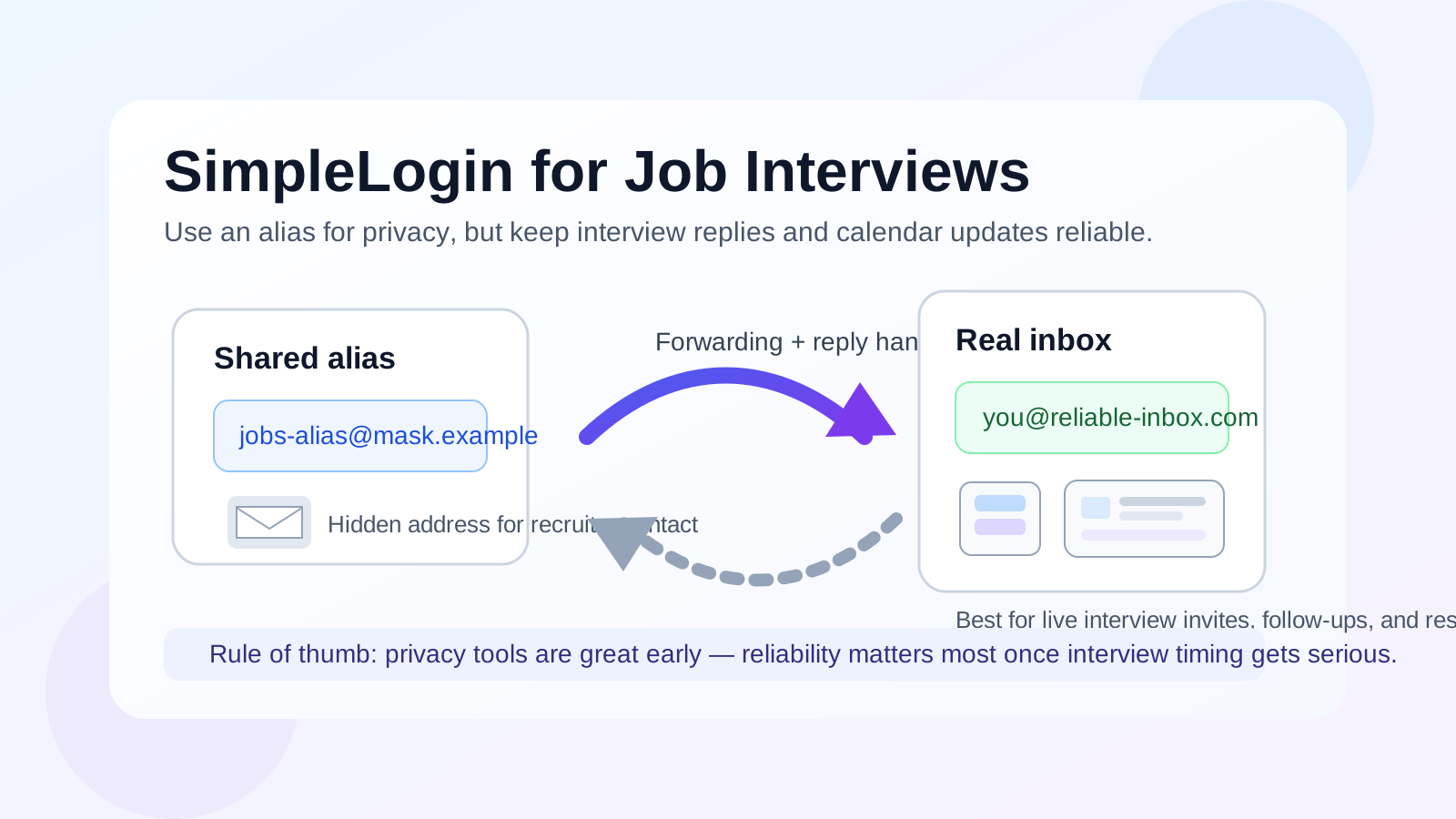
That short answer matters because interview-stage communication is different from ordinary signups. At the application stage, missing one newsletter or promo email is annoying but manageable. During interviews, one missed recruiter reply can mean a delayed screen, a lost calendar invite, or a scramble to find the right meeting link ten minutes before a call.
SimpleLogin sits in an interesting middle ground. It is not a classic disposable inbox, and it is not the same as handing out your primary long-term email address everywhere. It gives you an alias layer that can protect your real inbox from extra exposure while still forwarding messages into an account you already control. For privacy-conscious job seekers, that is genuinely appealing. The real question is whether that extra layer helps more than it hurts once hiring conversations become time-sensitive.
Why job seekers consider SimpleLogin in the first place
Most people look at SimpleLogin for one of three reasons:
- They do not want every recruiter, staffing firm, and job board to get their long-term personal address.
- They want cleaner organization during a search that may involve multiple companies at once.
- They want something more durable than a temporary inbox, but more private than using the same personal email everywhere.
Those are sensible goals. Interviews often begin before you feel completely sure a company is legitimate, organized, or worth deeper investment. A recruiter may message from a third-party staffing domain. A coordinator may use a scheduling tool you have never seen before. A founder at a small startup may reply from a personal-looking address. In those situations, it is reasonable to want some privacy without becoming hard to reach.
What SimpleLogin does better than a throwaway inbox
For job interviews, SimpleLogin is usually a better fit than a true temporary email address because it preserves continuity. A disposable inbox can be fine for low-stakes account verification or noisy job-board experiments, but interview communication is supposed to continue. You may need follow-up messages next week, a reschedule tomorrow, or a take-home assignment link later in the process.
With SimpleLogin, the alias can forward into an inbox you already monitor, which solves one of the biggest problems with temporary email: you are not relying on a mailbox that may expire or feel disposable by design. If you use Anonibox or another temp inbox tool earlier in the funnel, that can still make sense for signup-heavy exploration. Once a real person is trying to schedule an interview with you, a forwarding alias is usually the more practical privacy layer.
When using SimpleLogin for job interviews makes sense
Early recruiter screens
If you are in the stage where recruiters are asking for availability, confirming interest, or sending a first scheduling link, SimpleLogin can work well. You get privacy without making the conversation feel like it is tied to a fully disposable address.
Low-trust or mixed-quality recruiting channels
Not every interview lead begins on a polished company careers page. Sometimes the opportunity comes through a recruiter database, a staffing agency, or a job board with uneven quality. In those situations, using an alias lets you avoid exposing your primary address too early.
Broad job searches with lots of parallel conversations
If several interview loops are active at once, an alias-based workflow can help you keep those messages contained. That is especially useful if your normal inbox is already busy with personal, work, and financial mail that you do not want mixed together with interview traffic.
What can go wrong with SimpleLogin at the interview stage
The risk is not that employers will panic because you used an alias. Most recruiters mainly care that email arrives, replies are prompt, and scheduling stays smooth. The real risks are operational.
1. Alias management gets messy
If you create too many aliases without a clear system, you may forget which employer has which address. That sounds minor until you need to search old threads, confirm whether a message is legitimate, or understand why follow-ups are landing in unexpected places.
2. Reply handling matters as much as forwarding
Receiving mail is only half the story. You also need to make sure your replies behave the way you expect. If a recruiter writes to one address but your reply appears from a different underlying inbox, the conversation may still work, but it can look messy and make future filtering harder.
3. Calendar invites and scheduling updates are less forgiving
Interview communication is not just text in an inbox. It often includes Google Calendar invites, Outlook meeting updates, video links, and reschedule notes from automated tools. A setup that feels fine for ordinary mail may become stressful if you are not confident that those updates are reaching you cleanly.
4. Serious processes stop being “temporary” very quickly
A quick recruiter screen can turn into a multi-round interview loop faster than expected. Once you are coordinating panel interviews, assignments, references, or offer-stage logistics, the value of a very straightforward long-term inbox goes up sharply. Privacy is still nice, but reliability becomes the priority.
Best practices if you want to use SimpleLogin for interviews
Use a boring, stable destination inbox
The inbox behind the alias should be one you already trust for important communication. It should have notifications enabled, predictable filtering, and a spam folder you actually check. If the destination inbox is chaotic, SimpleLogin does not solve the bigger problem.
Test the setup before live interviews start
Send test messages from more than one provider if you can. Make sure they arrive quickly. Reply to them and confirm the visible sender is what you expect. If you can, test a calendar invite too. Interview-stage email is not the right place to discover edge cases.
Keep the alias active for the entire process
Do not rotate or disable the alias halfway through an interview loop unless there is a real problem. Employers may come back weeks later with schedule changes, reopened roles, or extra follow-up. Stability matters.
Keep naming simple
Use an alias that looks normal and easy to understand. A clean, professional address is better than something clever, disposable-looking, or confusing to type. The goal is not to impress anyone with your privacy stack. The goal is to remain reachable.
Track where you used each alias
A basic note in a document or password manager is enough. You just want to know which employer, recruiter, or platform got which address. That reduces confusion when several threads are moving at once.
When a dedicated long-term inbox is the better choice
SimpleLogin can be reasonable, but it is not always the best answer. A dedicated job-search inbox is often better when:
- you are already in late-stage interviews
- you expect offer letters, benefit details, or background-check communication soon
- you dislike managing aliases and want the simplest possible workflow
- you already know the role matters enough that you do not want any extra routing complexity
- you need a single long-term address for multiple systems, candidate portals, and scheduling tools
In other words, the more serious the opportunity becomes, the more valuable simplicity becomes. A dedicated inbox may expose a little more of your email footprint, but it can reduce the risk of missed messages or awkward handoffs.
How SimpleLogin compares with other privacy options
If your only goal is avoiding spam during early experimentation, a temporary inbox is often the fastest option. If your goal is protecting your real address while still keeping message continuity, SimpleLogin is usually the better fit. If your goal is maximizing stability during high-stakes interviewing, a separate long-term mailbox you fully control is often safest.
That gives you a simple ladder:
- Lowest-stakes exploration: temporary inboxes for signups, alerts, and one-off testing
- Privacy with continuity: a well-managed alias setup such as SimpleLogin
- Highest-stakes interview and offer flow: a dedicated long-term inbox you monitor obsessively
Red flags that mean you should switch away from the alias
- You are unsure whether replies are leaving from the right visible address.
- You have already missed one legitimate scheduling email or invite update.
- The process is expanding into multiple rounds, documents, or portal logins.
- You keep second-guessing whether an employer message arrived.
- The alias setup feels clever, but not boringly dependable.
That last point is important. Interview communication should feel boring. If your privacy setup adds anxiety, it is time to simplify.
Final answer
So, should you use SimpleLogin for job interviews? Yes, you can — and for early interview coordination it can be a smart privacy tool, especially if you want to shield your long-term inbox from recruiter databases and mixed-quality job-search channels.
But SimpleLogin only works well when the alias is stable, the forwarding is reliable, and the inbox behind it is one you watch closely. If the opportunity becomes serious, time-sensitive, or paperwork-heavy, moving to a dedicated long-term inbox is often the safer call. The best setup is the one that protects your privacy without creating even a small chance that you miss an interview invite, a recruiter reply, or a last-minute schedule change.