Usually no. A burner email can help during early job-search research, but it is a risky primary inbox for real job interviews because you need stable access to invites, reschedules, take-home tests, and follow-up messages.
If a real employer is actively interviewing you, a separate long-term inbox or well-managed alias is usually the better choice. A truly disposable address is more useful for low-trust signups than for live interview logistics.
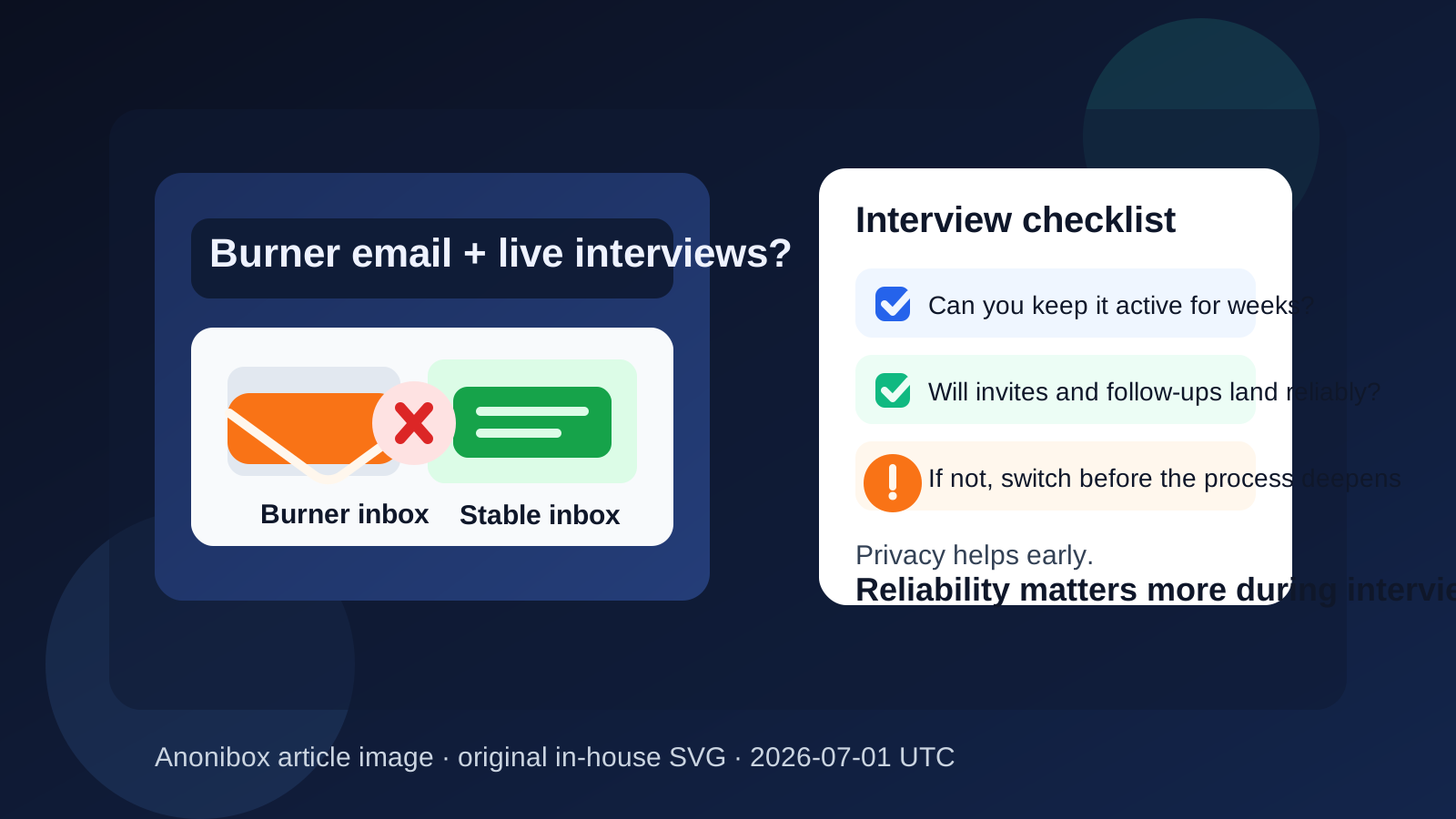
That is the short answer, but the phrase burner email causes confusion, and that confusion matters. Some people mean a true throwaway inbox that may expire soon. Others mean a second Gmail or Outlook account they keep separate from their main identity. Others mean an alias that forwards into a mailbox they already control.
Those options are not equally risky. For job interviews, the best choice depends less on whether the inbox feels private and more on whether it is dependable enough to carry a multi-step hiring process without breaking your communication chain.
Why interview-stage email is different from early job-search email
The early part of a job search is noisy. You may sign up for job boards, salary tools, résumé builders, recruiter databases, webinars, and alerts you are not sure you even want. In that phase, a burner address can be genuinely useful because it protects your main inbox from long-term spam and helps you test low-trust platforms without overcommitting.
Interviews change the stakes. Once a recruiter, coordinator, or hiring manager is sending real messages, email stops being a simple signup tool and becomes part of the hiring workflow itself. Missing one message can have real consequences:
- You miss a scheduling request and look unresponsive.
- You miss a calendar update and show up at the wrong time.
- You miss a video link, take-home assignment, or reference request.
- You lose the thread of a conversation because the inbox expired or stopped forwarding.
That is why the same privacy setup that works perfectly for a one-off signup can become a liability once interviews begin.
What counts as a burner email in practice?
People use the term loosely, so it helps to separate three common setups.
1. A true temporary or disposable inbox
This is the classic throwaway address: quick, low-friction, and often short-lived. It can be great for testing job boards, gated career tools, or suspicious-looking signup funnels. It is usually a bad fit for active interviews because continuity is fragile by design.
2. A separate long-term job-search inbox
This is a dedicated account that you intentionally keep for job hunting. It is not your main personal inbox, but it is stable, monitored, and under your control. For many people, this is the best compromise between privacy and reliability.
3. An alias that forwards to your real mailbox
An alias can work well if it is dependable and you control the destination inbox. It gives you separation and filtering without forcing recruiters to rely on a mailbox you might abandon. The catch is that forwarding must be trustworthy, and you still need to monitor the receiving account closely.
So when people ask whether they should use a burner email for job interviews, the answer is different depending on which of these they mean. A true disposable inbox is usually too risky. A stable secondary inbox is often fine. A well-managed alias can also work.
When a burner email can still help during the interview stage
There are a few situations where a burner-style setup can still make sense, but the details matter.
- You used it earlier and the employer just replied: If the address is still active, monitored, and stable, you may be able to continue briefly while you transition to a better inbox.
- Your “burner” is actually a long-term secondary account: In that case it is not really disposable, and it may be perfectly suitable if you check it reliably.
- You need privacy from noisy intermediaries: A separate interview inbox can help keep recruiters, staffing firms, and job-board follow-up out of your main account.
The key is reliability. If you cannot promise yourself that the inbox will stay alive, receive messages consistently, and remain easy to monitor for several weeks, it is not a good interview inbox no matter how private it feels.
When a burner email is the wrong tool
A burner email is usually the wrong choice for job interviews when any of the following are true:
- The address may expire soon or be auto-deleted.
- You do not check it multiple times per day.
- You are relying on fragile forwarding that sometimes fails.
- You expect attachments, calendar invites, security codes, or assessment links.
- You are already in second-round or final-round interviews.
- You may need the same address later for background checks, onboarding, or offer discussions.
At that point, privacy is still important, but stability matters more. You do not want an employer wondering why their interview confirmation bounced, why you missed a scheduling email, or why you suddenly changed contact details mid-process without context.
Better alternatives than a true throwaway inbox
Use a separate permanent job-search email
This is the cleanest option for most candidates. You keep your main inbox protected, but you still give employers a professional-looking address that you can monitor throughout the process. It is simple, credible, and easy to keep organized.
Use a stable alias for screening, then a core inbox for serious roles
If you like privacy tools, an alias can be useful early on. But once a recruiter becomes real and the conversation matters, consider moving the thread to a stable long-term address you fully trust. A short note such as “I’m moving interview correspondence to this inbox so I don’t miss scheduling updates” is completely reasonable.
Keep a staged system
One practical approach is to use three levels of trust:
- Low trust: disposable inboxes for sketchy boards, gated downloads, or experimental signups.
- Medium trust: a separate job-search inbox for applications and real recruiter contact.
- High trust: your most stable inbox for late-stage interviews, offers, and onboarding.
This approach lets you stay privacy-aware without forcing every stage of the process into the same fragile setup.
If you already applied with a burner email, what should you do?
If you already used a burner email and a legitimate employer starts responding, do not panic. The problem is manageable if you act early.
1. Audit the inbox immediately
Make sure it still receives mail reliably. Test it, check spam folders if the service has them, and confirm that you can access older messages and attachments.
2. Decide whether it is stable enough for two to four more weeks
If the honest answer is no, switch now rather than later.
3. Move serious conversations to a better inbox
You do not need a dramatic explanation. A short, calm note is enough: you are moving interview communication to a monitored address so you do not miss scheduling or assessment messages.
4. Save key messages locally
Keep records of invites, take-home assignments, contact names, and important instructions. Even stable services fail sometimes, and relying on one inbox alone is not ideal during a busy interview cycle.
5. Keep the old address alive until the transition is complete
Do not abandon it the same day you switch. Leave it active long enough to catch late replies, auto-generated updates, or messages from a different interviewer who uses the old thread.
How recruiters may perceive a burner email
Most recruiters care more about responsiveness than about the exact provider name, but perception still matters in edge cases. A clearly disposable-looking address can create avoidable friction if it suggests that:
- you may not monitor the inbox consistently,
- you expect the conversation to be short-lived, or
- you are hard to keep in contact with as the process gets more serious.
That does not mean every non-mainstream address looks suspicious. Privacy-focused tools are more common now than they used to be. But an obviously temporary inbox can still raise practical concerns, especially when an employer needs dependable back-and-forth communication.
Privacy risks are real, but so is interview risk
The privacy instinct behind a burner email is not wrong. Job seekers deal with spam, data resale, phishing, fake recruiters, and low-quality job boards all the time. If you used Anonibox or another temporary inbox to test the market earlier, that was probably a sensible move.
The mistake is assuming that the same solution should carry you all the way through a real interview process. Once interviews begin, your biggest risk is often not inbox exposure alone. It is missed communication, broken continuity, and the appearance of being hard to reach.
Good privacy practice is not about hiding at every stage. It is about matching the tool to the stage. Early exploration and live interviews are not the same stage.
A quick decision checklist
Before you use a burner email for job interviews, ask yourself:
- Will this address definitely stay active until the process ends?
- Can it reliably receive invites, attachments, and follow-up messages?
- Will I check it often enough to respond quickly?
- Would a recruiter feel comfortable depending on this inbox for scheduling?
- Would a separate permanent job-search inbox solve the same privacy problem with less risk?
If several answers are no, switch to a more stable option.
Final answer
So, should you use a burner email for job interviews? Usually no, at least not if “burner” means truly disposable or hard to monitor. Interview-stage communication needs continuity, and real opportunities are too easy to lose over one missed message.
A separate long-term job-search inbox or dependable alias is usually the smarter compromise. You still protect your main address, but you give recruiters a stable way to reach you from screening to scheduling to final follow-up. Privacy matters, but in interviews, reliability usually matters more.