Yes — Gmail is usually a perfectly good choice for job offers if the address looks professional, you check it consistently, and you keep access to it long term.
The real risk is not Gmail itself. It is using a cluttered, shared, temporary, or work-managed inbox when offer letters, deadlines, benefits documents, and onboarding steps start arriving.
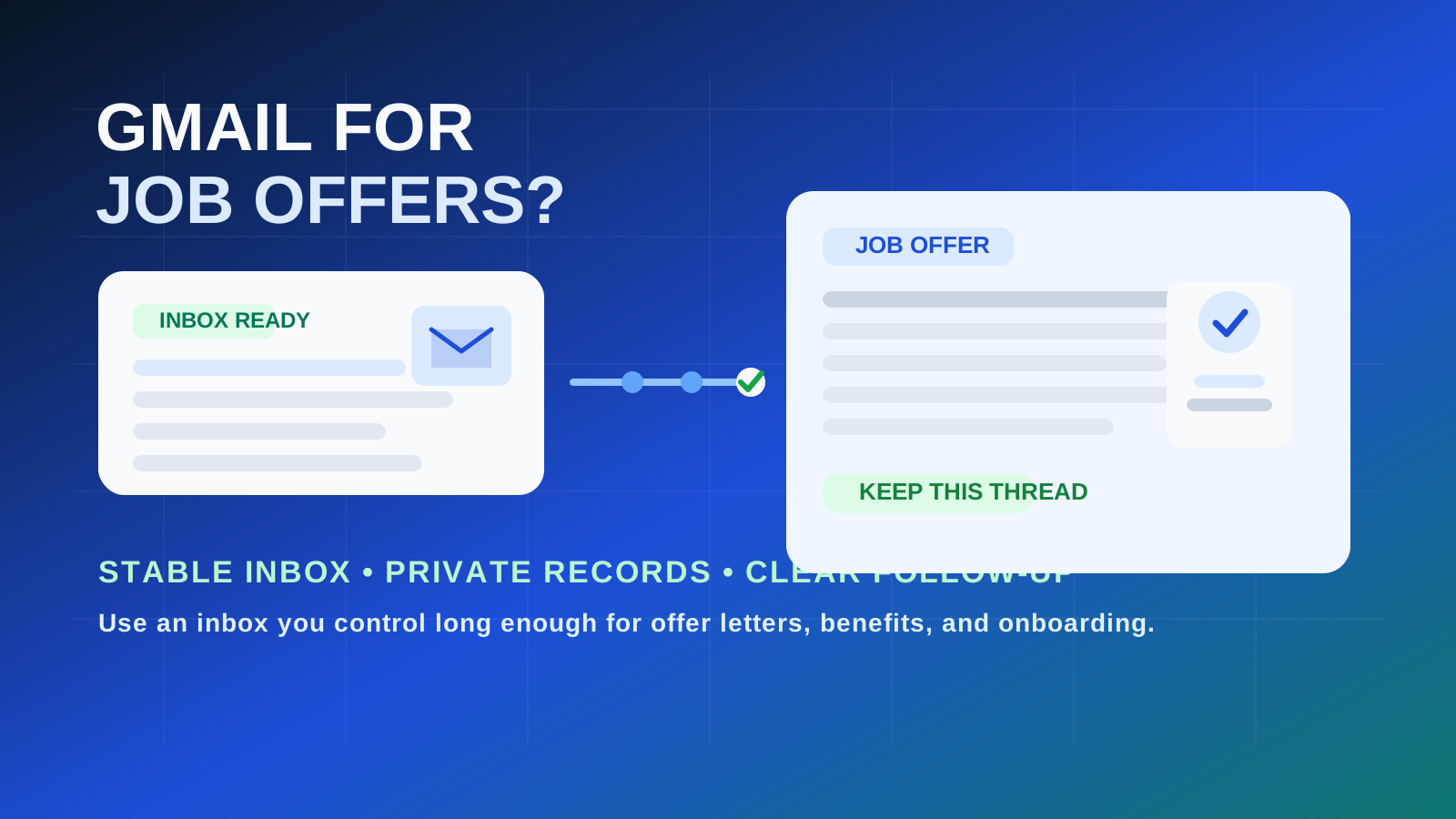
If you are searching for should you use Gmail for job offers, the short answer is that Gmail is usually one of the safer mainstream options at this stage of the hiring process. Employers know it, attachments usually work without drama, and you are unlikely to look unprofessional just because your address ends in @gmail.com. In other words, Gmail itself is not the problem.
What matters is whether the specific Gmail inbox you use is appropriate for high-stakes communication. The offer stage is not the same as casual job browsing or low-trust signups. Once a company is ready to hire you, email threads can include compensation details, offer letters, background-check links, e-signature requests, benefits summaries, start-date discussions, equipment instructions, and account-setup emails. That means reliability, organization, privacy, and long-term access all matter more than they did at the application stage.
Why Gmail is usually fine for job offers
Most employers care far more about whether they can reliably reach you than whether you use Gmail, Outlook, or another mainstream provider. Gmail is familiar, stable, and rarely raises credibility questions on its own. It also handles the kinds of messages that become important after an offer arrives:
- PDF attachments and signed documents such as offer letters and compensation summaries
- Threaded conversations with recruiters, HR staff, hiring managers, and benefits contacts
- Searchable history in case you need to find an earlier salary note, timeline, or attachment
- Calendar integration for follow-up calls, onboarding meetings, and first-day logistics
- Long-term continuity if the conversation continues after you accept the offer
That is why Gmail is usually much better suited to job offers than a disposable address. At this point you do not just need a place to receive one verification email. You need an inbox that can hold an active paper trail.
Why the offer stage changes the privacy equation
Earlier in a job search, many people use temporary or secondary inboxes to avoid spam from job boards, low-trust listings, or recruiter databases. That can be sensible. But the moment a company wants to send a real offer, the goal changes. You are no longer trying to minimize low-value outreach. You are trying to manage important records safely.
An offer-stage inbox should help you do four things well:
- Receive important messages quickly
- Keep documents accessible for weeks or months
- Protect private personal information
- Stay organized enough to avoid mistakes
Gmail can do all of that. The question is whether you are using the right Gmail account for the job.
When Gmail is a smart choice for job offers
Gmail is usually a strong option when the address is stable, professional, and fully under your control. That is especially true if:
- You use the inbox regularly and are unlikely to miss time-sensitive messages
- The address looks clean and professional
- You plan to keep the inbox active after accepting the offer
- You want a searchable record of offer terms, deadlines, and attachments
- You are dealing with multiple companies and need filters, labels, or folders to stay organized
For most job seekers, those are real advantages. Offer-stage communication often involves several people: recruiter, HR partner, hiring manager, background-check vendor, payroll team, and IT onboarding contacts. Gmail is capable of keeping those threads organized without feeling fragile.
The bigger question: which Gmail inbox should you use?
The brand name matters less than the structure of your setup. There are three broad Gmail situations, and they are not equally good.
1. A dedicated personal Gmail for job searching
This is often the best option. A separate Gmail account used only for your job search gives you clean boundaries, strong continuity, and easier organization. It keeps offer-stage traffic out of your everyday personal clutter while still giving you a stable inbox you control.
If you expect negotiations, signed documents, or several active interview pipelines, a dedicated Gmail can make the entire process calmer. You can label each company, star critical emails, and archive less important messages without mixing them into your usual life admin.
2. Your normal personal Gmail
This can also be fine if it is well-managed. Many people use one main Gmail account for everything and handle job offers without a problem. The only downside is that crowded inboxes create more room for mistakes. If your main Gmail receives newsletters, receipts, school notices, shipping alerts, and social notifications all day, an important offer email can get buried faster than you expect.
If you use your main Gmail, make sure you can create filters or labels quickly and that you check the inbox often during active offer discussions.
3. A work-managed Google account or shared Gmail setup
This is where things get riskier. Even if the interface looks like Gmail, an employer-controlled Google Workspace account is not the same thing as a personal Gmail you fully own. If the inbox belongs to your current employer, or if anyone else can access it, it is usually the wrong place for job offers.
Offer-stage emails may contain compensation details, personal legal name confirmations, home-address forms, onboarding instructions, and benefit deadlines. That information should live in an account you control, not one managed by someone else.
What can go wrong if you use the wrong Gmail account?
A messy inbox can cause missed deadlines
Offer emails often come with expiration dates, signing windows, and next-step instructions. If your Gmail is overloaded, you may overlook a message that actually matters.
You may lose continuity at the worst time
A temporary or lightly used inbox may seem convenient until you need to retrieve a prior attachment, confirm the exact wording of the offer, or find an old HR thread three weeks later. Stability matters more once the stakes go up.
You may expose private information unnecessarily
If you use a work-managed account, a family-shared inbox, or any email tied to someone else’s systems, you are creating privacy risk that simply is not necessary. An offer stage usually includes sensitive information, and it deserves a private inbox.
You may keep using an address that no longer fits the process
Some people start with a temporary or low-stakes setup and forget to switch once things become serious. That is the real danger zone. Gmail is fine, but it should be the kind of Gmail account that can carry the process from offer to onboarding without falling apart.
Should you use Gmail instead of a temporary email for job offers?
Usually yes. Once you are dealing with real offers, Gmail is almost always safer than a temporary inbox. A temporary address may help you reduce spam earlier in a search, but it is the wrong tool for storing offer letters, benefits packets, account-creation messages, and deadline-driven follow-up. If you used a temporary email during low-trust browsing, this is the point where you should switch to a permanent inbox you control.
That is also where a service like Anonibox fits naturally: helpful for reducing exposure during earlier, noisier stages, but not a replacement for a durable inbox once an employer is sending formal hiring documents.
Should you use Gmail instead of your work email?
Almost always, yes. A personal Gmail account is usually a much better choice than a current employer’s email account. Your work inbox may be monitored, archived, or cut off if your employment status changes. A job offer is exactly the kind of conversation that should stay out of employer-controlled systems.
If your choice is between personal Gmail and a current work email, Gmail is normally the safer option for privacy, continuity, and long-term access.
Best practices when using Gmail for job offers
Use a professional-looking address
Recruiters are not obsessing over email brands, but a clean sender address still helps. If your Gmail username is old, joke-based, or hard to take seriously, create a better one before high-stakes offer conversations begin.
Create one label per company
Offer-stage communication becomes easier to manage when each employer has its own label. That makes it much faster to find documents, compare timelines, and separate active offers from old conversations.
Star or pin critical emails
Flag the messages that contain deadlines, official letters, salary details, or onboarding steps. You do not want those buried under generic follow-up notes.
Turn on strong account security
Offer emails can include sensitive information, so basic security matters. Use a strong password and enable two-factor authentication on the Gmail account if you have not already.
Save key attachments somewhere secure
Do not rely on your inbox alone. Download offer letters, benefits summaries, and signed copies to a secure personal storage location you control. That makes later reference easier and protects you if you accidentally archive or mislabel something.
Do not mix low-trust job-board spam with high-value offer threads
If your Gmail account is flooded with alerts and random recruiter mail, clean it up fast or move serious offer communication to a dedicated personal Gmail. Organization becomes more important once real decisions are in play.
Red flags that are not really about Gmail
Sometimes people worry about whether Gmail is acceptable when the bigger issue is whether the offer itself is legitimate. Watch out for these warning signs:
- The sender asks you to move sensitive discussion to a different channel immediately
- You receive requests for banking details before the company has clearly verified itself
- The message contains poor formatting, urgent pressure, or inconsistent company names
- The “offer” arrives before a believable interview process has happened
- You are asked to buy equipment, send money, or share verification codes
Those are not Gmail problems. They are legitimacy problems. A trustworthy inbox helps you manage real offers, but it cannot turn a scam into a safe opportunity.
A simple rule of thumb
If the inbox is private, stable, professional, and likely to remain accessible through onboarding, Gmail is usually a good option for job offers. If the inbox is temporary, shared, work-managed, or too chaotic to trust, it is the wrong setup even if it technically uses Gmail.
Final answer
Yes, you can usually use Gmail for job offers, and for many people it is one of the better mainstream choices. Gmail works well because it is familiar, stable, and practical for storing offer letters, tracking deadlines, and handling follow-up.
The real decision is not Gmail versus non-Gmail. It is whether you are using a controlled, professional, long-term inbox that fits the seriousness of the offer stage. A dedicated personal Gmail or a well-managed main personal Gmail is usually a smart choice. A temporary inbox or employer-managed account usually is not.