Yes — Proton Mail is usually a solid choice for job offers if you want a privacy-focused inbox that still feels stable, professional, and easy to monitor.
It is a much better fit for offer letters, negotiation threads, and onboarding than a temporary or burner address, but you still need to treat it like a long-term inbox you will keep, check, and recover if something goes wrong.
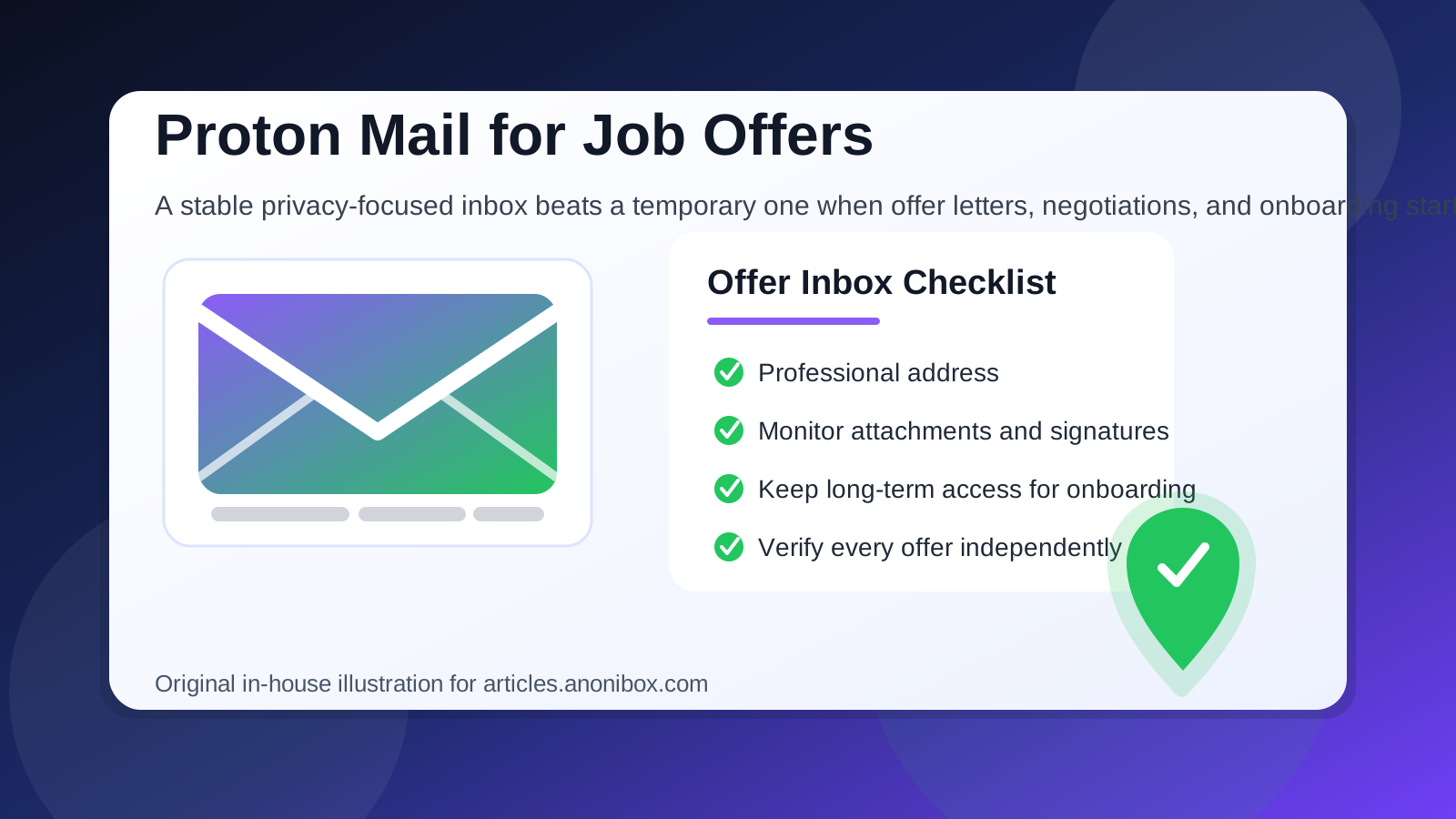
That distinction matters. The question is not just whether Proton Mail is private. The real question is whether it is reliable enough for the stage of the hiring process you are in. By the time an employer is sending an offer, the stakes are much higher than they were during early applications. You may be receiving salary details, deadline reminders, attached documents, e-signature links, benefits information, start-date instructions, or background-check notices. At that point, your inbox needs to be dependable first and privacy-conscious second — ideally both.
If you used a temporary inbox earlier in your search to avoid spam, moving important offer communication into a stable account is the smarter move. That is where Proton Mail can fit well: it gives you more separation and privacy than reusing a messy everyday inbox, without the fragility of a disposable address.
Why Proton Mail can work well for job offers
For most employers, the mail provider itself is not the main issue. What matters more is whether your address looks professional, whether you respond promptly, and whether you keep the thread intact. Proton Mail can support that just fine.
- It is a stable inbox: unlike a throwaway address, you can keep it active through negotiation, signed documents, and onboarding.
- It can improve privacy separation: a dedicated job-search inbox reduces the amount of personal life mixed into sensitive hiring conversations.
- It is easy to monitor if you set it up properly: mobile notifications, folders, and a clean inbox can make offer follow-up easier.
- It avoids the biggest temp-email weakness: you are not gambling that an inbox will expire before the employer sends something important.
That last point is the big one. A real offer often arrives in phases: verbal confirmation, written summary, official letter, requested documents, benefits follow-up, and sometimes revised paperwork after negotiation. A disposable inbox is a bad place for that chain. Proton Mail is much more appropriate because it is built for continued use.
What changes when the conversation reaches the offer stage
Applications and interviews are one thing. Offers are another. Once an employer wants to hire you, email stops being a simple contact channel and starts becoming part of a record.
You may need to keep:
- the original compensation details for comparison later,
- signed or unsigned offer letters,
- benefits enrollment instructions,
- identity-verification or background-check notices,
- start-date confirmations,
- equipment or onboarding logistics, and
- the full negotiation thread in case anything needs to be clarified.
That is why a provider like Proton Mail can make sense here. You still keep a degree of privacy, but you are no longer treating the conversation like a one-time signup. You are treating it like a professional record you may need for weeks or months.
When Proton Mail is a particularly good choice
Using Proton Mail for job offers is often a smart move in these situations:
- You already used Proton Mail earlier in the process. Keeping the same address preserves continuity and reduces confusion.
- You want a dedicated job-search inbox. A separate inbox makes it easier to spot offer messages quickly and keep related files organized.
- You are privacy-conscious. If you do not want your main personal inbox tied to every recruiter, vendor, or employment portal you touch, Proton Mail gives you cleaner separation.
- You are comparing multiple offers. A tidy, dedicated inbox can make it easier to track deadlines, attached documents, and follow-up questions.
- You expect longer negotiations. If salary, equity, remote-work terms, or relocation details may take several rounds, a stable inbox matters.
In other words, Proton Mail is not just “acceptable.” In many cases it is a better choice than recycling an old personal inbox full of newsletters, family threads, shopping receipts, and other distractions.
Where Proton Mail can still create friction
There are a few ways people make a good email provider look worse than it is. Usually the problem is not Proton Mail itself — it is how the address is used.
1. An unprofessional address name
If your address looks random, jokey, or overly anonymous, that can hurt perception more than the provider helps. An offer-stage inbox should look like it belongs to an adult professional, not a one-hour signup.
2. Weak monitoring habits
If you forget to check the inbox, miss notification settings, or let important messages sit for two days, the employer does not care that the provider is privacy-focused. They care that you missed an offer deadline.
3. Poor recovery planning
Offer-stage email is too important for casual account hygiene. If you lose access, forget your credentials, or do not keep recovery details current, you can create a problem at exactly the wrong moment.
4. Treating it like a burner account
Proton Mail is not a burner email by default. But if you create a rushed account, never organize it, and plan to abandon it immediately, you are still bringing burner-account behavior into a situation that needs stability.
Best practices before you use Proton Mail for a job offer
Choose a normal, professional address
Use a straightforward version of your name whenever possible. Clean and boring wins here.
Turn on notifications immediately
Offer letters and negotiation deadlines can move quickly. Make sure the inbox is connected to a device you actually check.
Create a simple folder or label structure
Even one folder for each employer can help. It keeps compensation notes, signed letters, benefits emails, and next-step instructions from getting buried.
Save critical documents outside the inbox too
Do not leave everything trapped in one mailbox. Download offer letters, save important PDFs, and keep copies of the details that matter.
Keep account recovery updated
A stable offer inbox should stay accessible even if you change phones, travel, or get locked out temporarily.
If you used temporary email earlier, when should you switch?
Early in a job search, a disposable inbox can help with low-trust signups, job-board alerts, or experiments you do not want tied to your main address. But once an employer becomes real, the trade-off changes.
A good rule is this: switch to a stable inbox as soon as the opportunity becomes serious enough that losing the thread would hurt you. That could be when a recruiter starts scheduling structured interviews, when compensation discussions begin, or definitely when an offer is coming.
If you used Anonibox or another temporary-address workflow to control spam during early applications, that was reasonable. Just do not let that convenience carry too far into the stage where contracts, attachments, and deadlines matter. Job offers are where permanence starts to beat short-term privacy tricks.
How Proton Mail compares with the wrong alternatives
Proton Mail vs a temporary email
Proton Mail wins easily for job offers because it is persistent, recoverable, and appropriate for long-running conversations.
Proton Mail vs a burner email
A burner inbox might still be too disposable for offer letters, onboarding, and post-offer clarifications. Proton Mail is safer if you want privacy without short-term fragility.
Proton Mail vs a cluttered personal inbox
This is the closer comparison. A normal personal inbox can work, but a dedicated Proton Mail account may keep your offer process cleaner and easier to manage.
Red flags that matter more than the provider
No email provider makes a fake offer legitimate. Even if the message lands in a good inbox, you still need to check the basics:
- Does the sender domain match the real company?
- Are you being rushed into signing or sharing sensitive data?
- Does the offer match the role, salary discussions, and interview history you actually had?
- Are you being asked for money, gift cards, or unusual personal information too early?
- Can you independently verify the recruiter or hiring manager?
Privacy tools help you manage exposure. They do not remove the need for normal scam awareness.
So, should you use Proton Mail for job offers?
Yes, usually. Proton Mail is a sensible choice for job offers if you want a privacy-conscious inbox that still behaves like a real long-term email account. It is much better suited to offer letters, negotiation, onboarding, and document retention than a temporary or burner address.
The key is to use it professionally: choose a clean address, monitor it closely, keep recovery in order, and save the important paperwork. If you do that, Proton Mail can give you the best of both worlds — stronger separation from your everyday inbox without the instability that makes disposable email risky at the offer stage.
That balance is what most job seekers actually need: enough privacy to stay in control, and enough reliability to avoid missing the message that matters most.