Yes — you can use an email alias for job offers if it forwards reliably to an inbox you monitor closely and control long term. For many job seekers, though, the safest approach is to use aliases earlier in the search and switch to a direct durable inbox once an offer becomes real.
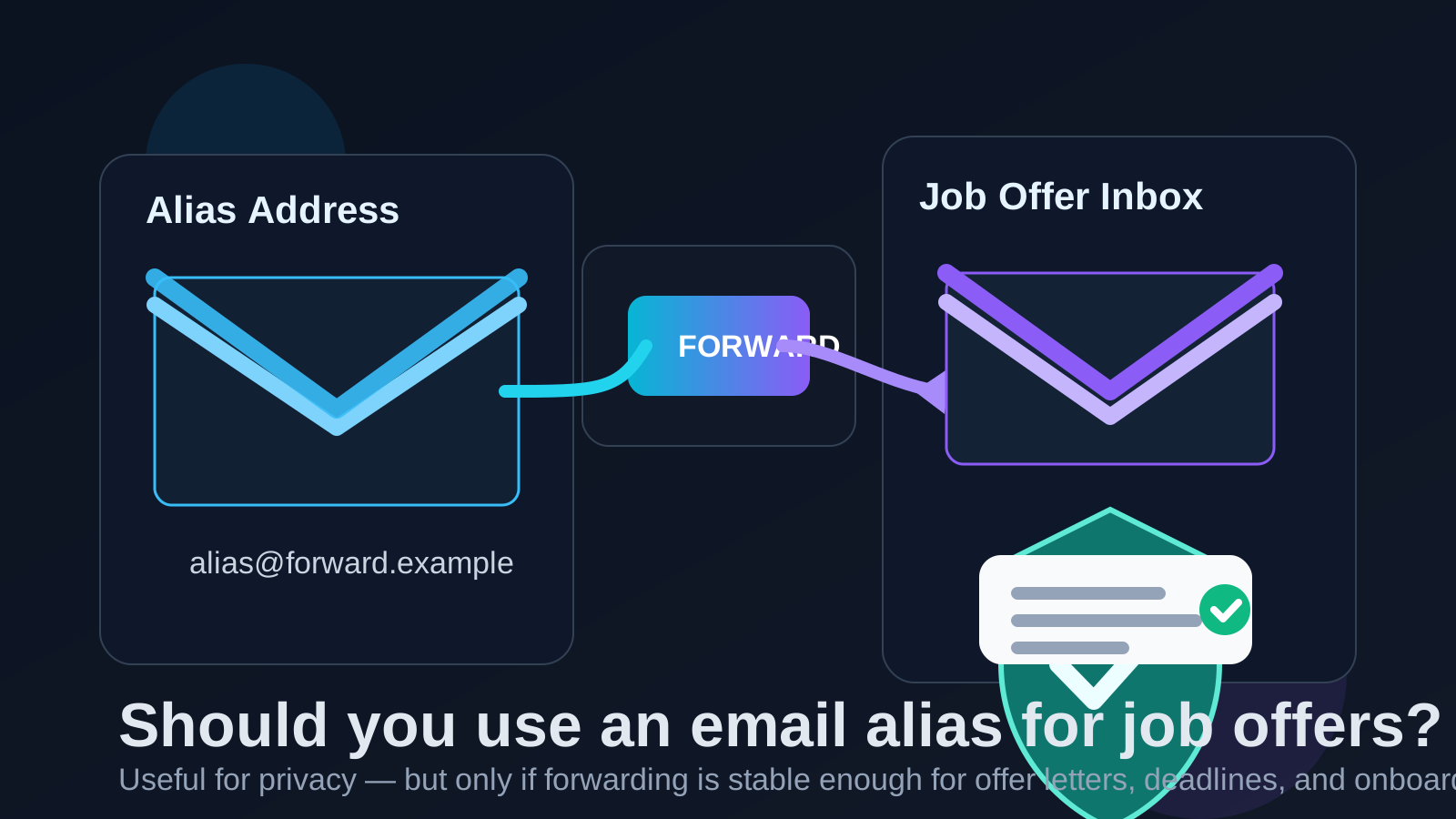
If you are asking should you use an email alias for job offers, the real issue is not whether aliases are clever. It is whether your forwarding setup is dependable enough for offer letters, deadlines, background-check instructions, benefits paperwork, and onboarding follow-ups that may arrive days or weeks apart.
Why the offer stage is different from applications and interviews
At the application stage, privacy usually dominates the decision. You may be uploading your resume to several job boards, replying to recruiters you have not worked with before, or testing whether a role is even worth pursuing. In that phase, an alias can be a smart buffer between your main inbox and the outside world.
Job offers are different. Once a company wants to hire you, the messages stop being casual. A real offer thread can include salary details, updated compensation PDFs, equity summaries, e-signature links, benefits enrollment deadlines, background-check portals, start-date changes, and account-setup instructions. Missing even one of those messages can create confusion or make you look disorganized.
That is why the answer is not a simple yes or no. An alias can still work, but the standard for reliability is much higher than it is during early job-search browsing.
What an email alias does well
An email alias still has real advantages at the offer stage when it is set up properly.
- Privacy: you can avoid handing your primary everyday address to every recruiter and hiring system you encounter.
- Organization: offer-related messages can stay separate from personal email, newsletters, and job-board clutter.
- Filtering control: aliases make it easier to see exactly which company contacted you and where a message came from.
- Spam containment: if a company or recruiter keeps emailing long after the process ends, you can disable or re-route the alias instead of changing your main address.
Those benefits are real, and they explain why alias tools remain appealing even late in a job search. If you used Anonibox or another alias workflow during applications, keeping that separation can feel cleaner than suddenly moving everything back into your primary inbox.
When using an alias for job offers makes sense
Using an alias for job offers is usually reasonable when all of the following are true:
- The alias forwards to a stable inbox you already trust and check several times a day.
- You control the alias and can keep it active for months if needed.
- You have already tested that replies, attachments, and important sender domains arrive correctly.
- The alias address looks professional enough that it will not distract a recruiter or HR team.
- You are prepared to monitor spam and junk folders in the destination inbox as well.
In that setup, an alias can function like a privacy layer rather than a disposable identity. That distinction matters. A stable alias that forwards to a serious mailbox is very different from a temporary inbox that may expire or become hard to access later.
The main risks of using an alias at the offer stage
1. Forwarding becomes a single point of failure
With a direct email address, the employer sends the message and you receive it. With an alias, there is an extra step in the chain. If forwarding breaks, a sender is blocked, a rule changes, or the destination inbox starts filtering messages aggressively, you may not realize something important went missing until a deadline is already close.
2. Attachments and secure links may behave differently
Offer-stage emails often include document attachments, e-signature links, identity-verification portals, and HR system invitations. Those are more sensitive than normal recruiter follow-ups. Even if most forwarded mail works, this is the point where one odd deliverability issue matters more than usual.
3. Long timelines are common
A job offer is not always resolved in two days. Negotiation, approvals, revised paperwork, background checks, and onboarding can stretch the timeline. If you treat the alias like a short-term convenience instead of a long-term communication channel, you may create avoidable risk for yourself.
4. Some aliases look less professional than others
Even when a company never comments on it, an unusual-looking address can quietly affect perception. A clean alias on a normal-looking domain is one thing. An address that looks obviously disposable or temporary is another. At the offer stage, reducing friction matters.
Best practices if you keep using an alias for job offers
If you want the privacy benefits without unnecessary risk, treat the setup seriously.
Use a durable destination inbox
The destination mailbox should be one you intend to keep, not a short-lived experiment. You want a place where you can still find the offer thread later if payroll, tax forms, equipment shipping, or benefits questions come up.
Test the alias before it matters
Do not wait for the actual offer letter to discover whether the forwarding chain is reliable. Send yourself messages through the alias, reply to them, open attachments, and confirm that nothing lands in spam unexpectedly.
Keep the alias active through onboarding
Do not disable the alias as soon as you accept. Employers often keep using the original contact address during background checks, start-date coordination, first-day reminders, and setup instructions.
Watch multiple folders
Check the alias dashboard if you have one, the destination inbox, and the spam folder. Offer-stage communication is too important for a single-folder habit.
Save critical messages outside the inbox
Store copies of offer letters, signed documents, and onboarding instructions in a secure folder you control. Even a reliable alias should not be your only long-term archive.
When you should switch from the alias to a direct inbox
Sometimes the best move is to start with an alias and then transition once the company is clearly serious. That usually makes sense when:
- The employer begins sending formal HR paperwork.
- You are asked to create accounts in payroll, benefits, or identity systems.
- You are negotiating details and expect several document revisions.
- You notice any delay, filtering issue, or missed message in the forwarding chain.
- You realize the alias address may look too casual or too obviously temporary.
A simple message is enough: “For offer and onboarding documents, please use this address going forward.” Most legitimate employers will not care as long as the handoff is clear and timely.
Email alias vs temporary email for job offers
This is where people sometimes blur two very different tools. A stable alias forwards into a mailbox you own and monitor. A temporary email is usually designed for short-lived signups, quick verifications, or low-trust situations where long-term continuity does not matter.
For real job offers, that difference is enormous. A stable alias may be workable. A temporary inbox is usually a bad fit. Offer-stage communication depends on continuity, archives, and confidence that you can still access the thread later. Temporary email is much better suited to earlier browsing, experimental signups, or recruiter forms you do not fully trust yet.
How to judge whether an alias is “professional enough”
You do not need the perfect domain to look credible, but you do want something that feels normal. A good alias for job offers should:
- Use a readable address format that resembles a real professional inbox.
- Avoid random strings or joke names.
- Stay consistent across the hiring process.
- Route to a mailbox where you can reply promptly with a clear signature.
If you are ever unsure, imagine the recruiter forwarding the thread internally to HR, legal, finance, or a hiring manager. Does the address still look calm and credible in that context? If yes, you are probably fine. If not, a direct inbox may be the smarter move.
Do not let privacy tools hide fake-offer warning signs
An alias can help with privacy, but it does not make a fake job offer safe. Stay alert if the employer:
- pushes you to act immediately without giving you time to review documents,
- asks for banking details or identity documents before the role is clearly verified,
- sends attachments from a suspicious domain that does not match the company,
- moves the conversation into random chat apps after using email only briefly, or
- offers unusually high pay with vague responsibilities and little real interview process.
The alias protects your address. It does not replace normal judgment about whether the employer and the offer itself are legitimate.
A practical workflow that keeps both privacy and reliability
- Early search: use aliases or other privacy-friendly email separation for job boards, recruiter outreach, and lower-trust application flows.
- Active interview stage: keep the alias if communication is flowing well, but confirm the forwarding path works with real replies and attachments.
- Offer stage: either continue with a stable tested alias or switch to a direct inbox you plan to keep long term.
- Onboarding stage: archive everything important and avoid changing addresses again unless you clearly notify the employer.
That workflow is usually more realistic than trying to apply one rule to the entire hiring process. Privacy needs are highest when you are exposing your details broadly. Reliability needs are highest when one real employer is sending high-stakes documents.
Final answer
Yes, you can use an email alias for job offers — but only if it behaves like a dependable long-term contact method, not like a disposable layer you might drop next week. If the alias forwards cleanly, looks professional, and lands in a destination inbox you monitor carefully, it can give you useful privacy without much downside.
For many people, though, the offer stage is where simplicity wins. If there is any doubt about forwarding reliability, sender trust, attachment handling, or how long the process may last, switching to a direct durable inbox is usually the safer choice. The best setup is the one that protects your privacy and keeps every important hiring message easy to receive, search, and preserve.