Yes — you can use Hushmail for job offers if it is a stable inbox you check constantly and plan to keep active through offer letters, negotiation replies, and onboarding follow-up.
For most people, though, the real test is not whether Hushmail is private enough. It is whether your Hushmail setup is simple and durable enough for time-sensitive offer-stage communication.
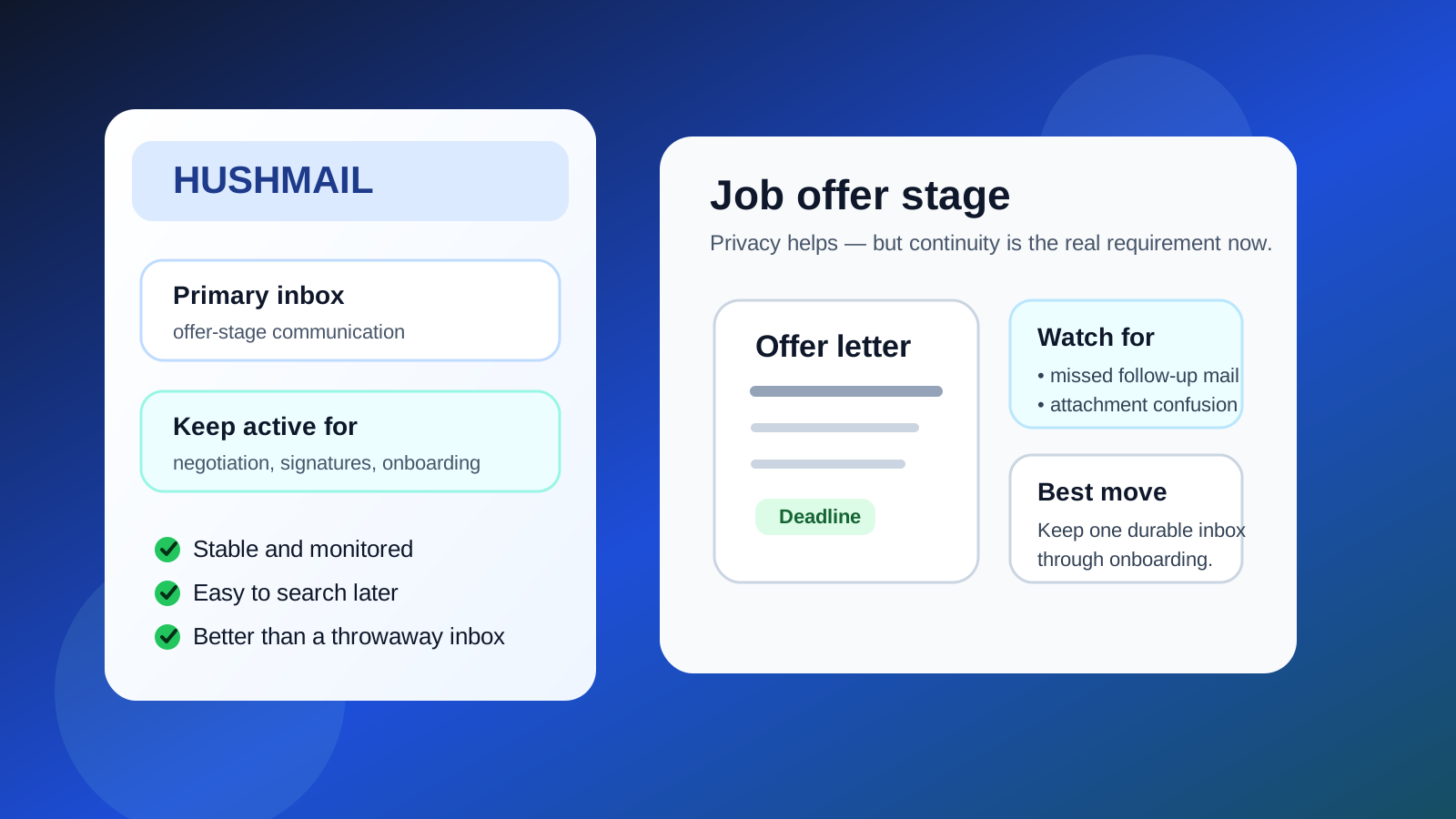
That is the practical answer behind searches for should you use Hushmail for job offers. A privacy-focused inbox can be appealing during a job search because it creates separation from your everyday personal accounts and may feel more deliberate than a mainstream mailbox tied to years of random signups. But a job offer is not just another recruiter email. It is the point where communication becomes formal, document-heavy, and deadline-sensitive.
At this stage, the inbox you use has to support more than casual contact. It may receive compensation details, formal offer letters, revised documents after negotiation, signature requests, benefits summaries, background-check links, and onboarding instructions that arrive days later from different people or systems. That means the best inbox for job offers is usually the one that feels boring in the best possible way: stable, monitored, searchable, and unlikely to create confusion.
Hushmail can absolutely meet that standard for some job seekers. The problem is not the provider name. The question is whether you are using Hushmail as a serious long-term communication channel or as a privacy tool that becomes awkward once the stakes rise.
Why the offer stage changes the rules
Earlier in a job search, it often makes sense to think mainly about exposure. Job boards, recruiter databases, and low-trust signup flows can create spam that lasts long after your search ends. That is where a separate inbox or a temporary privacy layer can be genuinely useful. A tool like Anonibox fits naturally in that earlier phase when you want to test interest, verify signups, and keep your main inbox from being sprayed across the internet.
A real job offer is different. Now your main risk is not only spam. It is operational failure. Missing a message, losing track of a PDF, replying from the wrong address, or forgetting which inbox is receiving updates can all create friction when the employer expects quick, clear communication. Once the process includes deadlines and formal paperwork, continuity matters more than pure separation.
Why Hushmail can be a good choice for job offers
It gives you a stable private inbox instead of a throwaway one
If you already use Hushmail as a real account rather than a temporary experiment, that is a meaningful advantage. A stable privacy-focused inbox is much safer than a disposable mailbox when an employer starts sending important documents.
It can keep your job search separate from your everyday personal traffic
Offer-stage emails are easier to manage when they are not buried under shopping receipts, app alerts, and unrelated personal messages. If your Hushmail inbox is clean and intentional, it may actually be better organized than a more familiar but chaotic personal account.
It supports a privacy-conscious workflow without looking inherently unprofessional
Most recruiters and HR teams care more about whether your address looks readable and whether you respond promptly than about which email brand you use. A clean Hushmail address based on your name can look perfectly fine for serious communication. The address format matters more than the provider label.
It can stay useful after the initial yes or no
Offer-stage communication often continues after the first decision point. You may need the same inbox for revised terms, benefits questions, or onboarding tasks. If your Hushmail account is one you intend to keep active, it can provide the continuity that a burner-style setup cannot.
Where Hushmail can become the wrong choice
1. You are treating it like a temporary privacy shield
If you only created the account for early-stage job-search privacy and never intended to rely on it for important documents, the offer stage is the moment to pause. A mailbox that was “good enough for recruiter traffic” may not be the mailbox you want handling signed letters and start-date logistics.
2. You do not monitor it obsessively during the active offer window
This is a bigger issue than the provider itself. Offer-stage communication can move quickly. If you do not check the inbox multiple times a day or if notifications are weak, you are introducing avoidable risk. Privacy means very little if you miss the message that matters most.
3. Your address looks odd, outdated, or hard to trust
A well-structured Hushmail address is usually fine. A messy one can work against you. Employers are not normally judging the provider, but they do notice whether the full address feels calm and professional or noisy and improvised.
4. You are adding extra complexity on top of it
Even a good inbox becomes less useful if you route it through too many layers, bounce between addresses, or keep changing where replies should go. Offer-stage email should feel easy. If your setup makes you think too hard about where the thread lives, that is a sign to simplify.
5. You expect long onboarding follow-up but plan to abandon the account soon
Some candidates focus only on the offer letter itself. In reality, the same thread can keep producing important messages for days or weeks. If you are not willing to keep the Hushmail account active and easy to monitor for that entire period, it is probably not the right place for the conversation.
What employers actually care about
Most employers do not have strong feelings about Hushmail specifically. They care about whether communication feels dependable. In practical terms, that means:
- you reply promptly
- your inbox appears stable
- attachments and links do not get lost
- the same address can keep receiving messages later
- the thread stays clean and easy to follow
If your Hushmail account supports those basics, it can work well. If it interferes with them, its privacy appeal stops being very valuable.
Should you switch away from temporary email before the offer stage?
Usually, yes. This is one of the clearest transitions in a privacy-first job search.
Temporary inboxes and burner-style workflows can be helpful for low-trust signups, one-off listings, and noisy early-stage forms. They are much less suited to formal employment communication. If you started the process with Anonibox or another disposable layer to avoid spam, that was probably sensible. But once an employer is preparing a real offer, most people are better off moving to one durable inbox they genuinely control.
Hushmail can be that durable inbox if you already treat it as one. If not, the better move may be to switch to a stable account before negotiations, signatures, and onboarding begin to pile up.
Best practices if you use Hushmail for job offers
Use one address consistently
Do not keep hopping between multiple job-search addresses at the exact moment the process becomes formal. If you need to switch, do it once, explain it clearly, and keep everything there afterward.
Create a dedicated folder for the employer
Offer-stage threads can become messy fast. Keep the full chain, attachments, and related questions in one place so you can review it quickly before replying.
Save important files outside the inbox too
Download offer letters, compensation summaries, and onboarding documents into a folder you control. A good inbox is useful, but it should not be your only copy of critical files.
Watch for follow-up from other systems
The first offer email may come from a recruiter, but later steps may come from HR software, e-signature tools, or background-check vendors. Stay alert for new senders that are part of the same real process.
Keep the account active through onboarding
If you use Hushmail for the offer itself, do not assume the job is “done” once you respond. The communication trail often continues well beyond that point.
When you should probably choose another inbox instead
You may want a different email for job offers if:
- you rarely check Hushmail
- the address looks dated or confusing
- you created it only as a short-term privacy experiment
- your workflow depends on too many forwarding or alias layers
- you already have another stable inbox that is easier to monitor daily
In those cases, the issue is not that Hushmail is bad. It is that your specific setup is not ideal for a stage where small communication mistakes can become expensive.
A quick checklist before you use Hushmail for a job offer
- Will this inbox still be active next month?
- Do you check it several times a day right now?
- Does the address look calm and professional?
- Can you easily find past recruiter messages and attachments in it?
- Would you trust this same inbox for onboarding follow-up after you accept?
If the answer to those questions is yes, Hushmail is probably a reasonable offer-stage inbox. If several answers are no, you are better off switching before the process gets heavier.
Final answer: should you use Hushmail for job offers?
Yes, you can use Hushmail for job offers — but only if it functions as a durable, actively monitored mailbox rather than a temporary privacy layer. At this stage, employers need to know you will actually receive offer letters, revised terms, and onboarding instructions without confusion.
For privacy-conscious job seekers, Hushmail can be a strong middle ground: more deliberate than a cluttered mainstream inbox, but still stable enough for formal communication when used properly. Just do not confuse privacy with temporary convenience. A real offer deserves a mailbox you trust for the full life of the conversation.