Yes — you can use Hushmail for job referrals if the address is professional, stable, and checked regularly. It is usually a better fit than a temporary inbox because referrals depend on trust, continuity, and fast follow-up.
If you are asking should you use Hushmail for job referrals, the short answer is that Hushmail can work well when you want more privacy without looking disposable.
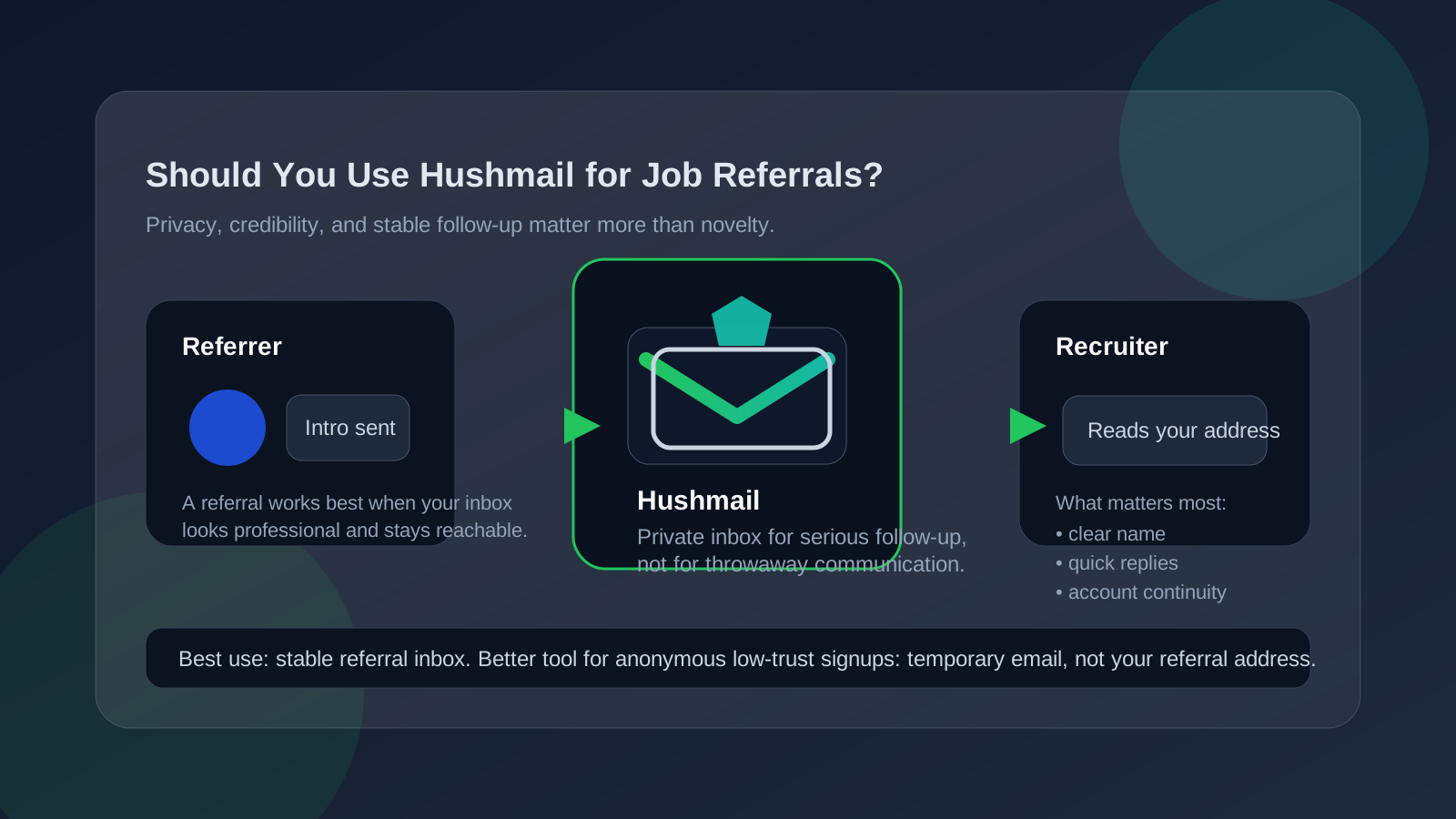
A referral is different from a cold application. When someone inside a company introduces you, forwards your résumé, or copies you into an email thread, your contact details become part of that first impression immediately. The employer is not just seeing your background. They are also seeing whether you appear organized, reachable, and credible. That means the inbox you use matters, but not in the simplistic way most people assume.
Most recruiters will not reject you because you use Hushmail instead of Gmail or Outlook. What they care about is whether your address looks normal, whether you reply on time, and whether the inbox will still be available if the referral turns into interviews, scheduling, follow-up questions, or offer-stage communication. Hushmail can absolutely meet that standard. The main risk is not the provider itself. The risk is using a setup that feels overly temporary, hard to monitor, or inconsistent with the seriousness of a referral.
Why referrals need a more stable inbox than anonymous signups
Temporary email tools are useful in some parts of the internet, especially when you want to avoid spam from low-trust signups, one-off downloads, or services you are not ready to trust with your real inbox. Referrals are different. A referral is relationship-based communication. Someone is effectively saying, “This person is worth your attention.”
Because of that, the email address attached to your résumé or reply chain should support three things:
- Continuity: the address should still be active if the process stretches across weeks.
- Credibility: it should look like a real inbox you genuinely use.
- Responsiveness: you should be able to notice and answer messages quickly.
Hushmail is much closer to that standard than a burner inbox. It is a real provider, not a throwaway mailbox, so it can work well if you treat it like a serious job-search account.
When Hushmail is a good choice for job referrals
You want more privacy without using a disposable address
Some job seekers do not want every referral, recruiter, or hiring manager to get their long-term primary inbox right away. That is reasonable. Hushmail can give you separation and a more privacy-conscious setup while still looking like a stable, legitimate email account.
You use a clean, readable address
The address format matters more than the provider name. A simple address based on your name is usually best. Something clear like a name-based mailbox tends to feel more trustworthy than a handle that looks random, joke-based, or overly anonymous.
You actually monitor the inbox
Referrals can move quickly. A referred candidate may get a same-day message from a recruiter, a request for availability, or a short follow-up from the person who made the introduction. Hushmail is a strong option only if it is part of your real workflow. If you barely check it, the privacy advantage is not worth the communication risk.
You expect the conversation to last beyond one email
Many referrals do not turn into immediate interviews. Sometimes the hiring team is busy, the role is opening soon, or the internal contact is collecting candidate details before anything formal starts. A stable Hushmail inbox works much better than a temporary inbox in that kind of slower process.
Will recruiters care that you use Hushmail?
Usually, no. Most recruiters are not scoring applicants based on email providers. They are looking for more practical signals:
- Does the email address look professional?
- Does the candidate respond in a timely way?
- Does the communication stay consistent across the process?
- Does the inbox appear reliable enough for scheduling and follow-up?
If those answers are yes, the provider itself is rarely the deciding factor. Hushmail may even feel like a thoughtful choice for someone who values privacy, as long as the address does not look strange or overly hidden.
What can create friction is not “Hushmail” specifically. It is using any address that looks temporary, cluttered, or hard to trust. That is why presentation matters. A stable Hushmail inbox is one thing. A referral email sent from a chaotic-looking alias or an address you may abandon next week is another.
When Hushmail may not be the best option
You are using it like a burner account
If your real plan is to keep distance, ignore most replies, or replace the inbox quickly, then Hushmail is not solving the right problem. Referrals are not a good place for throwaway communication. If you want anonymity above all else, the referral channel itself may not match that goal.
You forget to check it consistently
A more private inbox is only useful if it stays active in your routine. If your primary inbox gets checked all day but your Hushmail address gets checked every few days, you may miss exactly the kind of fast-moving opportunity a referral creates.
You rely on an address format that hurts first impressions
An unusual or unserious username can undermine an otherwise solid provider. Even privacy-oriented recruiters still notice whether an address looks mature and intentional.
You may need broader ecosystem convenience
Some people prefer to keep referrals inside the same inbox they already use for calendar invites, meeting links, and daily follow-up. If another account already handles that smoothly and professionally, there may be no reason to switch just for the sake of switching.
Best practices if you use Hushmail for referrals
1. Keep the address simple
Use your name or a close professional variation. Avoid nicknames, extra numbers, or anything that looks like a spammy fallback account.
2. Turn on the habits that help you reply fast
Referrals reward speed. Make sure you have a routine for checking the inbox, watching your spam folder, and catching replies that may matter.
3. Use the same address consistently
If the referrer introduces you with one inbox, do not reply later from a different address unless you explain why. Consistency reduces confusion and looks more professional.
4. Save serious opportunities from getting mixed with low-trust traffic
One of the easiest ways to protect a referral inbox is to keep it away from random marketing signups, sketchy job boards, and one-off downloads. That is where a temporary inbox can still be useful. For example, Anonibox makes more sense for low-trust or spam-prone signups than for the referral conversation itself. Use the stable inbox for the human relationship, and use temporary inboxes for the noisy edges of the job search.
5. Be ready for the referral to turn into a normal hiring process
A referral often starts informally, then becomes formal quickly. The same inbox may receive interview invitations, benefits questions, assessments, or offer-stage details later. Choose an address you will still be comfortable using if the process goes well.
Hushmail vs a temporary email for job referrals
This is where a lot of people get stuck. They know privacy matters, so they assume the most private-looking option is automatically the best one. For referrals, that is usually not true.
- Hushmail: better for stable communication, ongoing follow-up, and a professional appearance.
- Temporary email: better for low-trust signups, spam reduction, and one-time verification flows.
A referral is rarely a one-time verification flow. It is the start of a relationship. That is why a stable provider almost always beats a disposable inbox here.
A practical checklist before you use Hushmail in a referral
- Does the address look professional at a glance?
- Will you check it several times a day during an active search?
- Can you keep using it through interviews and offers if needed?
- Have you kept this inbox separate from spam-heavy signups?
- Would you feel comfortable seeing this address on a forwarded email thread inside a company?
If you can answer yes to those questions, Hushmail is probably a solid referral inbox.
Final answer
So, should you use Hushmail for job referrals? Yes, in many cases. It can be a good choice if you want a more privacy-conscious inbox without looking temporary or unreliable. For referrals, what matters most is that the address looks professional, stays active, and helps you respond quickly when someone opens a door for you.
If your goal is to protect your main inbox while still looking credible, Hushmail can do that well. Just do not treat a referral like a disposable interaction. Save temporary inboxes for low-trust signups and spam control, and use a stable email account for the conversations that can actually move your career forward.