Yes — a separate Gmail account can be a smart choice for job offers if you want cleaner organization, better privacy, and less clutter than using your everyday personal inbox.
No — it is not a smart choice if you rarely check it, set it up like a throwaway address, or plan to abandon it right when offer letters, follow-up questions, and scheduling details start arriving.
That distinction matters because the offer stage is where job-search communication becomes more sensitive and more practical at the same time. Early applications can be messy. Referrals can still be exploratory. But once an employer is discussing compensation, written terms, background-check steps, start dates, or benefits paperwork, your inbox needs to do three things well: stay active, stay organized, and keep important messages easy to find.
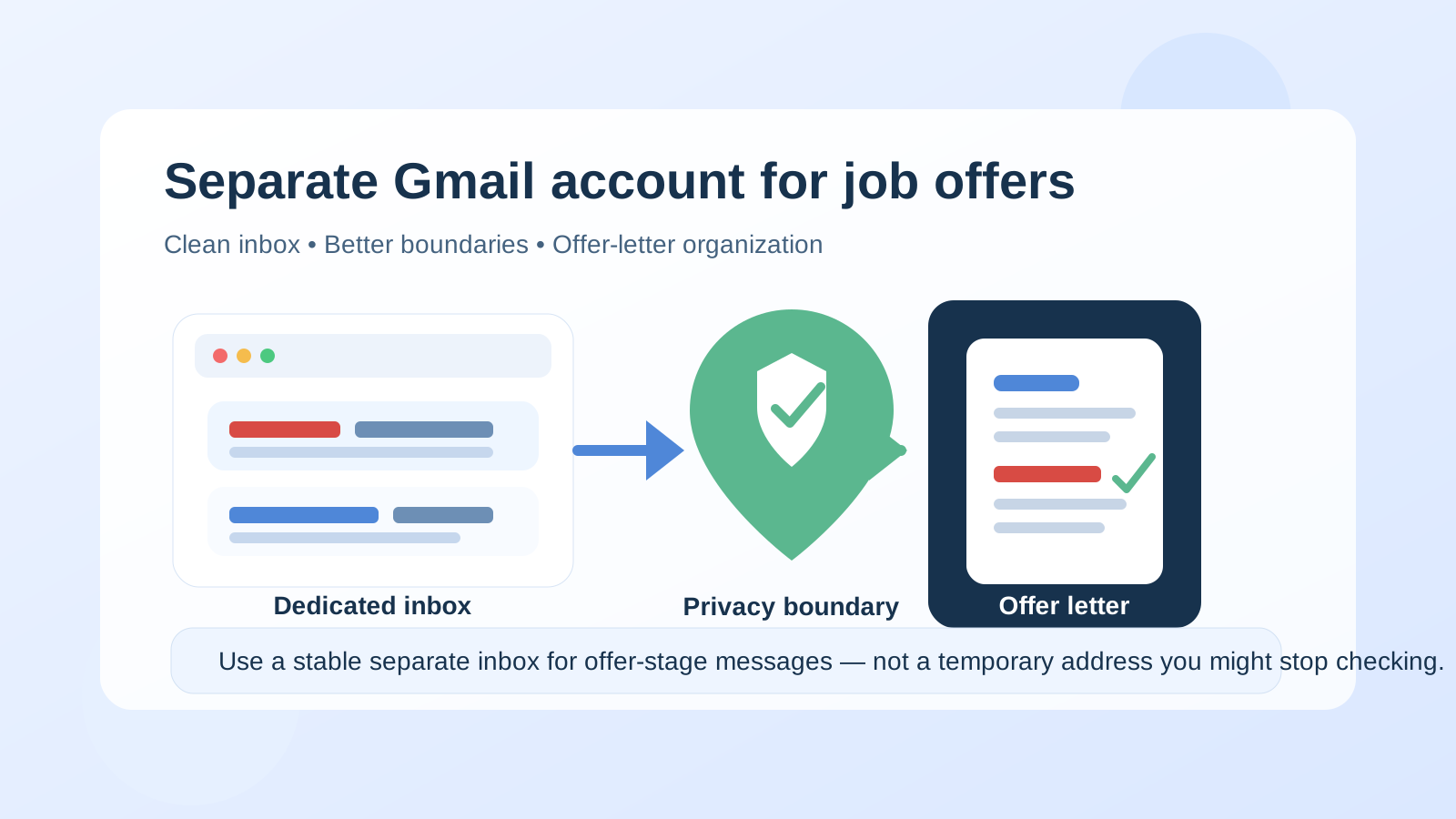
That is why the real answer to should you use a separate Gmail account for job offers is usually yes — as long as the account behaves like a real long-term mailbox, not a disposable privacy trick. If you used Anonibox or another temporary inbox earlier in your search to reduce spam from low-trust listings or one-off signups, the offer stage is usually where you should graduate to a stable address you intend to keep checking.
Why the job-offer stage is different
Job offers are not just another round of casual recruiter outreach. By the time an employer is ready to send one, the messages often include details that matter later:
- written offer letters,
- salary or equity discussions,
- benefits summaries,
- start-date coordination,
- background-check or onboarding instructions, and
- follow-up questions that may need quick replies.
Those messages are not necessarily secret, but they are important. They are also easy to lose if your main Gmail inbox is already overloaded with newsletters, receipts, travel emails, social notifications, and everything else in your life. A separate Gmail account can help because it creates a focused space where offer-stage messages stand out instead of getting buried.
What a separate Gmail account gets right
A dedicated Gmail account for job offers can work well for a few practical reasons.
Cleaner organization
When every offer-related message lives in one inbox, you spend less time searching and less time worrying that you missed something important. Recruiter replies, calendar confirmations, attachments, and offer-letter revisions all stay together.
Better privacy boundaries
Your main personal inbox often reveals more about your habits than you realize. It may already be tied to shopping accounts, mailing lists, app logins, or long personal history. A separate Gmail account gives you a little more control over how widely your everyday address spreads during a job search.
Less stress when comparing multiple opportunities
If you are discussing more than one role at once, a dedicated account makes it easier to track who sent what, when deadlines are due, and which company still needs an answer.
Strong continuity
Unlike a temporary inbox, Gmail is stable enough for longer back-and-forth communication. That matters because job offers do not always resolve in a day. Sometimes the process stretches across negotiation, internal approvals, and revised paperwork.
Why Gmail specifically can be a comfortable middle ground
There is nothing magical about Gmail, but it is familiar, easy to access on different devices, and simple for most job seekers to manage. For many people, that combination matters more than the provider brand itself.
A separate Gmail account can be a good middle ground between two extremes:
- Using your oldest personal inbox for everything, where job-offer messages may disappear into everyday clutter.
- Using a throwaway or disposable inbox, which can feel fragile and easy to abandon once the process gets serious.
With Gmail, you can set labels, filters, stars, and notifications without much effort. You can also keep documents, calendar invites, and follow-up threads easier to manage if you are already comfortable with the Google ecosystem.
When a separate Gmail account is a smart choice
This setup is usually a good idea when most of the following are true:
- you are actively interviewing and expect real offer-stage communication soon,
- your main inbox is noisy enough that important emails could be missed,
- you want a cleaner boundary between job-search communication and personal life,
- you expect to keep the same account through negotiation and onboarding steps, and
- you will actually check the account often.
If those points sound like you, a separate Gmail account can make your search calmer and more professional without adding much friction.
When it is probably the wrong move
A separate Gmail account is not automatically better in every case. It can become the wrong tool when:
- you already miss messages across several accounts and another inbox would make that worse,
- you created the account recently but are not in the habit of checking it,
- the address name looks random, immature, or hard to trust,
- you intend to keep switching contact addresses mid-process, or
- you only want a short-term burner, not a stable communication channel.
The biggest risk is not Gmail itself. The biggest risk is fragmentation. If the employer sends an offer to one address, the recruiter texts another, and you reply from a third account, the process becomes harder to follow than it needs to be.
What kind of Gmail address works best?
If you use a separate Gmail account for job offers, keep the address boring in the best possible way. A simple name-based format is usually ideal. The goal is not to sound creative. The goal is to sound easy to trust.
Good habits include:
- using your real name or a close professional variation,
- avoiding nicknames, joke phrases, or unrelated numbers,
- keeping the same address across applications, interviews, and offers when possible, and
- making sure the display name also looks professional.
Most recruiters care far more about responsiveness than branding, but an unnecessarily messy address still creates avoidable friction.
How to use a separate Gmail account well during offer discussions
1. Move to it before the offer stage gets busy
If you plan to use a separate Gmail account, set it up before the written-offer stage becomes active. You do not want to be scrambling to change contact details once deadlines are already in motion.
2. Turn on strong notifications
A dedicated inbox only helps if you actually see the messages. Make sure mobile alerts, desktop access, and backup recovery options are set up properly.
3. Use labels or filters by company
If you are talking with several employers, simple organization goes a long way. A company label, star system, or filter can keep compensation threads, scheduling emails, and onboarding notes easy to review later.
4. Save critical documents locally
Offer letters, attachments, and benefits summaries should not exist only in your inbox. Keep local copies so you can compare terms carefully and still reference them if something changes.
5. Reply consistently from the same account
Once an employer is using that Gmail address, keep the thread coherent. Do not introduce confusion by bouncing the conversation across multiple inboxes unless there is a strong reason.
What about using your main personal Gmail instead?
That can still be perfectly fine if your personal Gmail account is already well managed, professional, and easy for you to monitor. Some people respond fastest from the inbox they already live in every day, and that speed can matter more than theoretical neatness.
But if your main account is overloaded, deeply tied to personal life, or exposed in many places already, a separate Gmail account often gives you better control. The answer is less about what looks “correct” and more about which setup keeps important messages visible and manageable.
What about using a work-managed Google account?
That is a different question, and usually a riskier one. A separate personal Gmail account that you control is very different from using a work-managed Google Workspace account for outside job offers. If your current employer controls the account, they may control access, retention, device policies, and monitoring rules too. For obvious privacy reasons, that is usually a bad trade.
So if you want the convenience of Gmail, the safer version is usually a separate personal Gmail account you own yourself — not a company-managed one.
Why a temporary or burner inbox is usually worse for job offers
This is where a lot of privacy advice gets overused. Temporary inboxes are useful in some earlier-stage situations, especially when you are testing low-trust signups or limiting spam exposure. But once you are receiving actual job offers, the priorities change.
Offer-stage communication needs continuity. You may need to revisit the thread days later, compare attachments, respond to revised terms, or search for a specific document. A burner-style inbox is usually the wrong fit for that. If you used Anonibox during the discovery phase, job offers are often the moment to switch to a stable inbox like a separate Gmail account that you will keep monitoring.
Common mistakes to avoid
- Creating the account too late: changing addresses right when an offer is arriving adds friction.
- Checking it casually: a dedicated inbox only works if it is actively monitored.
- Using an unprofessional address: simple and name-based beats clever every time.
- Mixing too many accounts: one clear contact path is easier for everyone.
- Treating it like a disposable inbox: offer-stage communication may continue through negotiation and onboarding.
A quick decision checklist
Before using a separate Gmail account for job offers, ask yourself:
- Will I keep this exact address active through the whole decision process?
- Will I check it often enough for time-sensitive replies?
- Does the address look professional?
- Would it help me stay more organized than my main inbox?
- Am I choosing a stable account rather than a short-term burner?
If the answers are mostly yes, the setup is probably a good fit.
Final answer
Yes — a separate Gmail account can be a very good choice for job offers when you want cleaner organization, more privacy, and better control over important follow-up. It is especially useful if your main inbox is crowded or if you want job-search communication separated from everyday life.
The important part is to use it like a real long-term mailbox, not a disposable trick. Keep it professional, check it often, save important documents, and stay consistent once the employer starts using it. If you do that, a separate Gmail account can give you the benefits of a clean job-search inbox without the fragility that comes with temporary or burner email habits.