Usually no—Discord should not be the main place to handle a job referral.
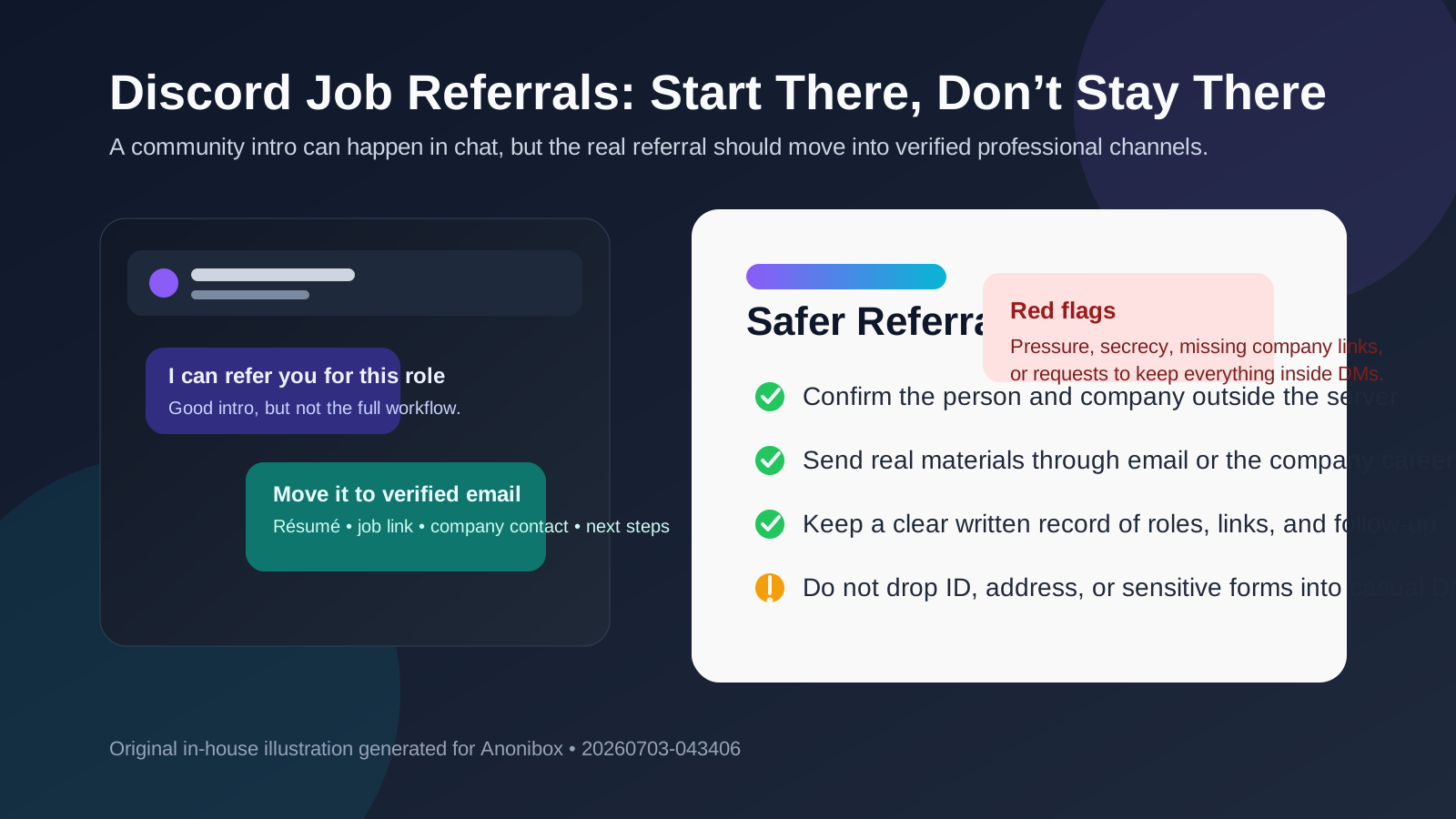
It can be fine for an initial introduction inside a real community, but the actual referral, résumé sharing, and next steps are usually better moved to verified email, LinkedIn, or the employer’s own application process.
That is the practical answer behind searches for should you use discord for job referrals. Discord is where a lot of communities already live: gaming, developer groups, startup circles, creator networks, niche job servers, alumni communities, and hobby spaces that sometimes turn into real work opportunities. Because of that, it is not weird for someone to say, “Send me your résumé” or “I can refer you” in a Discord DM.
The problem is not that Discord is inherently bad. The problem is that it is a casual, identity-light environment. A referral can start there, but if you treat Discord as the full professional workflow, you can blur the line between a warm introduction and an unverifiable stranger asking for personal information.
Short answer: Discord is okay for the intro, not ideal for the full process
If someone you already know from a real community wants to introduce you to a hiring manager or share a job link, Discord can be a perfectly normal starting point. It is fast, familiar, and often where the relationship already exists.
But a good referral should move quickly into a more professional channel. That usually means email from a recognizable domain, a LinkedIn message tied to a real profile, or the employer’s own application system. Once the conversation becomes serious, you want better verification, better record-keeping, and better boundaries than casual chat provides.
Why people use Discord for job referrals in the first place
Discord sits in an unusual middle ground between social chat and professional networking. In some fields, especially gaming, software, creator economy work, and online communities, real opportunities genuinely do surface there.
- Communities already exist there: referrals often come from people you met in a server, not from formal recruiter outreach.
- It is fast: a quick DM is easier than an email thread when someone wants to share a job link or ask if you are interested.
- It feels warm and informal: referrals are often about trust, and Discord can feel more personal than a cold message on LinkedIn.
- Some niche roles are community-driven: indie teams, mods, contractors, and startup founders may genuinely coordinate inside Discord first.
So the question is not whether Discord can ever be part of a referral. It can. The real question is whether you should rely on it for identity, documents, and decision-making. Usually, you should not.
Where Discord helps
Used carefully, Discord can be useful at the very beginning of the process.
It is good for a quick warm introduction
If a person you already know says they can refer you, Discord is a reasonable place for the first exchange. You can confirm interest, ask for the role link, and decide whether the opportunity is worth pursuing.
It can keep momentum high
In active communities, people respond faster on Discord than they do by email. That can help when a referral depends on timing, especially for short hiring windows or fast-moving startup roles.
It gives community context
A referral inside a shared server sometimes comes with useful context you would not get in a formal channel. You can see how long you have known the person, what projects you discussed, and whether other community members treat them as credible.
Those are real benefits. They just do not erase the risks.
The biggest risks of using Discord for job referrals
1. Identity is easier to fake
Discord usernames, avatars, and roles can look convincing without proving much. Someone can sound professional and still be misrepresenting who they are, what company they work for, or how much influence they actually have in hiring.
2. Important details get lost in chat
Referral workflows are easier to manage when job titles, application links, recruiter names, and deadlines live in a searchable, structured place. Discord DMs are convenient, but they are not the clearest long-term record for something as important as a career move.
3. Casual tone can lower your guard
People often trust community chat more than they should. A friendly server conversation can make a questionable request feel normal, especially if the other person seems familiar.
4. Privacy boundaries get messy
Once a referral conversation starts moving, people sometimes overshare in DMs: phone number, résumé, personal email, location, salary expectations, or even sensitive documents. That is more exposure than you usually need at the referral stage.
5. Scammers like informal channels
Job scammers want speed, emotion, and low verification. Discord gives them all three. If someone wants to keep everything inside DMs, avoid official company channels, or rush you into downloads or forms, that is a bad sign.
When it is reasonable to use Discord for a job referral
Discord can be fine if most of these are true:
- You already know the person from a real community, not just one random DM.
- You share server history, project history, or some other verifiable relationship.
- The Discord message is only the introduction, not the final destination for the whole process.
- The person can point you to a real company page, real recruiter, or real job listing.
- You are comfortable moving the serious parts of the process somewhere more formal right away.
In that setup, Discord is not the risk. Treating it like an official hiring system would be the risk.
When Discord is the wrong channel
You should be far more cautious if:
- The message comes from someone you do not actually know.
- The “referral” is vague and no real company information is provided.
- You are asked for sensitive personal details before seeing a legitimate job posting.
- The person insists on staying inside Discord instead of moving to email or a company site.
- The opportunity sounds unusually urgent, unusually lucrative, or unusually secretive.
A real referral should make the process clearer. If the conversation becomes murkier after the referral offer, that is a warning sign, not a shortcut.
Best practices if a referral starts on Discord
Verify the person outside Discord
Look for a real LinkedIn profile, company page, staff directory, portfolio site, GitHub account, or other external proof that the person is who they claim to be. Do not rely on their server role alone.
Move the real handoff to a professional channel
Once interest is confirmed, ask to continue through email, LinkedIn, or the employer’s official application system. A good referral should produce a real role link, a recruiter name, or a clear introduction you can reference later.
Share the minimum in Discord DMs
Early on, the person usually only needs enough to decide whether to introduce you: maybe your LinkedIn profile, portfolio, or a simple note about your background. You do not need to dump every personal detail into chat immediately.
Use a dedicated job-search email strategy
Even when the referral begins in Discord, email usually becomes part of the next step. Using a dedicated inbox or alias for job searching keeps those follow-ups organized and reduces the spam risk that can follow broad networking activity. If you use Anonibox for low-stakes signups, community tools, or early exploratory outreach, keep in mind that serious applications and referral follow-up work best with an address you can monitor consistently over time.
Save the important details somewhere else
Copy the role link, recruiter name, referral source, and deadlines into your notes or job tracker. Discord is fine for conversation, but you should not trust chat history to be your only system of record.
Protect your Discord account too
Strong passwords, two-factor authentication, and caution around suspicious links matter. If someone claims to be helping with a job referral but pushes you toward downloads, fake forms, or weird “verification” steps, stop there.
Red flags that mean you should slow down
- The person cannot show a real connection to the employer.
- The company has no visible role listing, but they want your full details immediately.
- The referral is paired with pressure to act right now or keep the process secret.
- You are asked for government ID, banking details, or tax forms through DMs.
- The person resists moving the conversation to verified company channels.
- The server or account feels newly created, thin, or inconsistent with the story.
Not every awkward Discord message is a scam. But if the professional proof never catches up with the casual message, do not assume the opportunity is real.
A better workflow for Discord-based referrals
- Accept the intro on Discord if it comes from a real and plausible community connection.
- Ask for the exact role link and the company name early.
- Verify the person independently before sending anything sensitive.
- Move the referral to email, LinkedIn, or the official careers page as soon as possible.
- Track the opportunity in your own system so the conversation does not disappear into chat clutter.
That approach lets you keep the convenience of Discord without letting Discord become the whole trust model.
Final answer: should you use Discord for job referrals?
Yes, Discord can be fine for the first message or a warm community introduction. No, it is usually not the best place to keep the full referral process. The stronger move is to use Discord for the opening, then shift into channels with clearer identity, better records, and better privacy boundaries.
If the referral is real, the other person should have no problem giving you a job link, a verified contact, or an official next step. That is the line to watch. A genuine referral gets more credible as it moves forward. A bad one usually gets vaguer, pushier, or more private. Keep that distinction in mind, and you can benefit from community networking without handing too much trust to a casual chat app.