Yes — an email alias can be a smart choice for networking events if it is stable, forwards reliably, and you actually monitor it. It helps protect your main inbox, but a disposable or poorly managed alias can cause missed follow-ups.
For most people, the best setup is a reusable alias for signups, speaker downloads, and first-contact outreach — not a temporary inbox that may disappear before replies arrive.
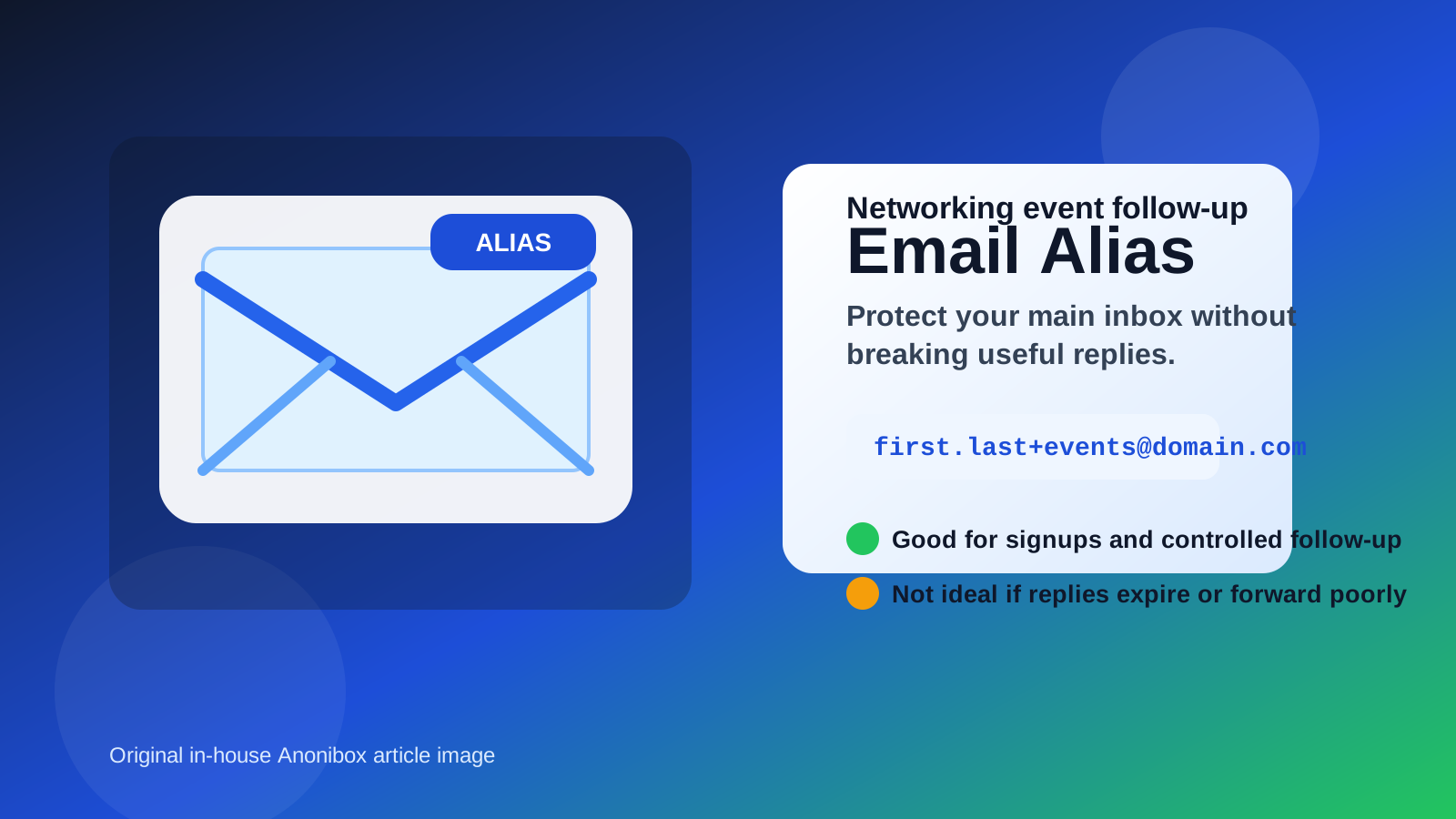
Why people use an email alias at networking events
Networking events are useful, but they also create inbox mess fast. You may register for the event itself, download slides, join sponsor raffles, request follow-up materials, subscribe to newsletters, hand out a contact address, or sign up for future meetups — all in the same evening. That means your email can end up with organizers, speakers, exhibitors, recruiters, marketers, and mailing tools you did not think much about at the time.
An email alias gives you a buffer. Instead of exposing your primary personal or work inbox everywhere, you can use a separate address that still routes messages to you. That keeps your main inbox cleaner and makes it easier to see which event or contact produced which follow-up.
What counts as an email alias?
An email alias is a secondary address that either forwards to your real inbox or lives under the same mailbox setup. Depending on the service, it might be a plus-address variation, a masked forwarding address, or a custom alias you created specifically for networking and job-search activity.
The key difference is this: a good alias is stable enough for real replies. It is not just a one-time throwaway that vanishes before someone sends the follow-up note you were hoping to get.
When an alias is a good fit for networking events
An alias works especially well when you want some separation without becoming unreachable. Common examples include:
- Registering for conferences, meetups, panels, and virtual networking sessions
- Downloading sponsor resources or speaker decks
- Giving a contact email to new professional connections you do not know well yet
- Keeping career-networking activity out of a crowded personal inbox
- Tracking which event organizer or vendor led to later follow-up
In those cases, an alias gives you control without making you look flaky. People can still email you back, and you can still respond from a monitored inbox.
Why an alias is often better than a temporary email for networking events
This is the important distinction. Temporary inboxes are useful for low-trust, one-time verification flows. They are great when you want to avoid long-term spam from a signup that probably does not matter later. But networking events often involve delayed follow-up. A speaker may email next week. A recruiter may reach out after the event ends. An organizer may share recordings later. A person you met may remember you two weeks from now.
That is why a reusable alias is usually safer than a disposable inbox for this specific use case. If you want the privacy benefits of a separate address without risking missed replies, an alias is the cleaner middle ground.
Tools like Anonibox make sense when you want to protect your main inbox during one-off registrations or early filtering. But for real professional follow-up, you generally want something more persistent than a temporary mailbox.
When an alias can create problems
An alias is not automatically the right answer. It can cause trouble if the setup is sloppy or if the address looks too temporary for the context.
1. You forget to monitor it
The biggest risk is simple: if messages forward somewhere you never check, the privacy benefit is meaningless. Networking works because of follow-up, and missed follow-up kills opportunities faster than spam does.
2. The alias expires or breaks
Some masking tools or temporary forwarding setups are fine for quick tests but bad for professional contact. If there is any chance the alias will stop working before replies arrive, do not use it for event networking.
3. It looks too disposable
Most people will not inspect your email address closely, but a clearly throwaway-looking address can sometimes make you look less serious. A clean alias under a normal-looking domain is usually fine. A random string that feels machine-generated may be less ideal when you are trying to build trust.
4. Replies may not thread cleanly
Some forwarding or masking systems handle replies well; others are awkward. Before using an alias at an event, test it. Send a message to it, reply to it, and confirm the workflow feels normal.
Good alias setups for networking events
If you want an alias to help rather than hurt, keep the setup boring and dependable.
- Use a stable alias: something you can leave active long enough for delayed follow-up.
- Make it readable: a clear name-based alias is better than a chaotic random one for professional situations.
- Forward it to an inbox you already monitor: the alias should reduce clutter, not create another forgotten mailbox.
- Label or filter it: route event-related mail into a dedicated folder so you can review it quickly.
- Test reply behavior first: especially if the alias uses forwarding or masking.
A good rule is this: if you would trust the alias to receive an interview scheduling email or a useful introduction a week later, it is probably strong enough for networking events.
When you should use your main email instead
Sometimes the simplest answer is still the best one. Use your main email if:
- You already know the organizers or the people you are meeting
- You want long-term, direct relationship-building without any friction
- Your current inbox is already well-managed and you are not worried about spam
- The event is tightly tied to an existing professional community where you expect ongoing contact
If you are sharing your address with a small number of trusted people, privacy separation may matter less than convenience.
What about using your work email?
In most cases, your work email is not the best choice for networking events unless the event is explicitly part of your current job. A work address can expose your employer, create retention issues, and mix personal career exploration with company-owned infrastructure. It can also become awkward if you later change jobs and lose access to those threads.
An alias tied to a personal account is often a better balance: professional enough for follow-up, private enough for personal control.
Red flags that mean you should be more cautious
Even at legitimate events, not every signup deserves your best contact address. Be more careful if:
- The event registration page is overloaded with sponsor opt-ins
- You are asked to share your address with many third parties by default
- A “networking” event seems mostly designed to collect leads
- The organizer will not explain how your contact details will be used
- You are scanning QR codes or joining forms from unknown vendors on the spot
These are exactly the situations where an alias is useful. It gives you a safer lane for first contact without blocking legitimate messages entirely.
Best practices after the event
The event itself is only half the workflow. What you do afterward matters just as much.
- Review messages within 24 to 48 hours. That is when the most useful replies usually arrive.
- Move real opportunities to a long-term thread. If someone becomes an important contact, you can keep using the alias or transition to your preferred regular address.
- Unsubscribe from obvious noise early. Do not let sponsor mail pile up for weeks.
- Keep notes on where the alias was used. If spam rises later, you will know the source.
- Retire or rotate aliases when they stop being useful. That is part of the privacy advantage.
A quick decision checklist
Before using an alias at a networking event, ask yourself:
- Will this address still work when people reply later?
- Can I send and receive normally through it?
- Does it look professional enough for this setting?
- Am I trying to reduce spam, protect identity details, or track source-specific mail?
- Would I be frustrated if an important reply landed there next week?
If the alias is stable and monitored, the answer is usually yes. If it is temporary, messy, or hard to reply from, use something better.
Bottom line
Yes, you should use an email alias for networking events when you want privacy without losing real follow-up. It is often a smarter choice than giving out your main inbox everywhere, and usually a better fit than a disposable email if the event may lead to useful conversations later.
The winning setup is simple: use a clean, reliable alias that you monitor, keep it separate from your main inbox for organization, and switch to a more permanent thread only when the relationship becomes worth it. That way you get the privacy benefits of separation without turning networking into a missed-message problem.