Yes, a separate phone number for networking events can be a smart privacy move if you expect a lot of follow-up, QR-code signups, recruiter texts, or attendee-list sharing.
No, not everyone needs one for every event, but it becomes useful when you want clearer boundaries between professional outreach and your everyday personal phone life.
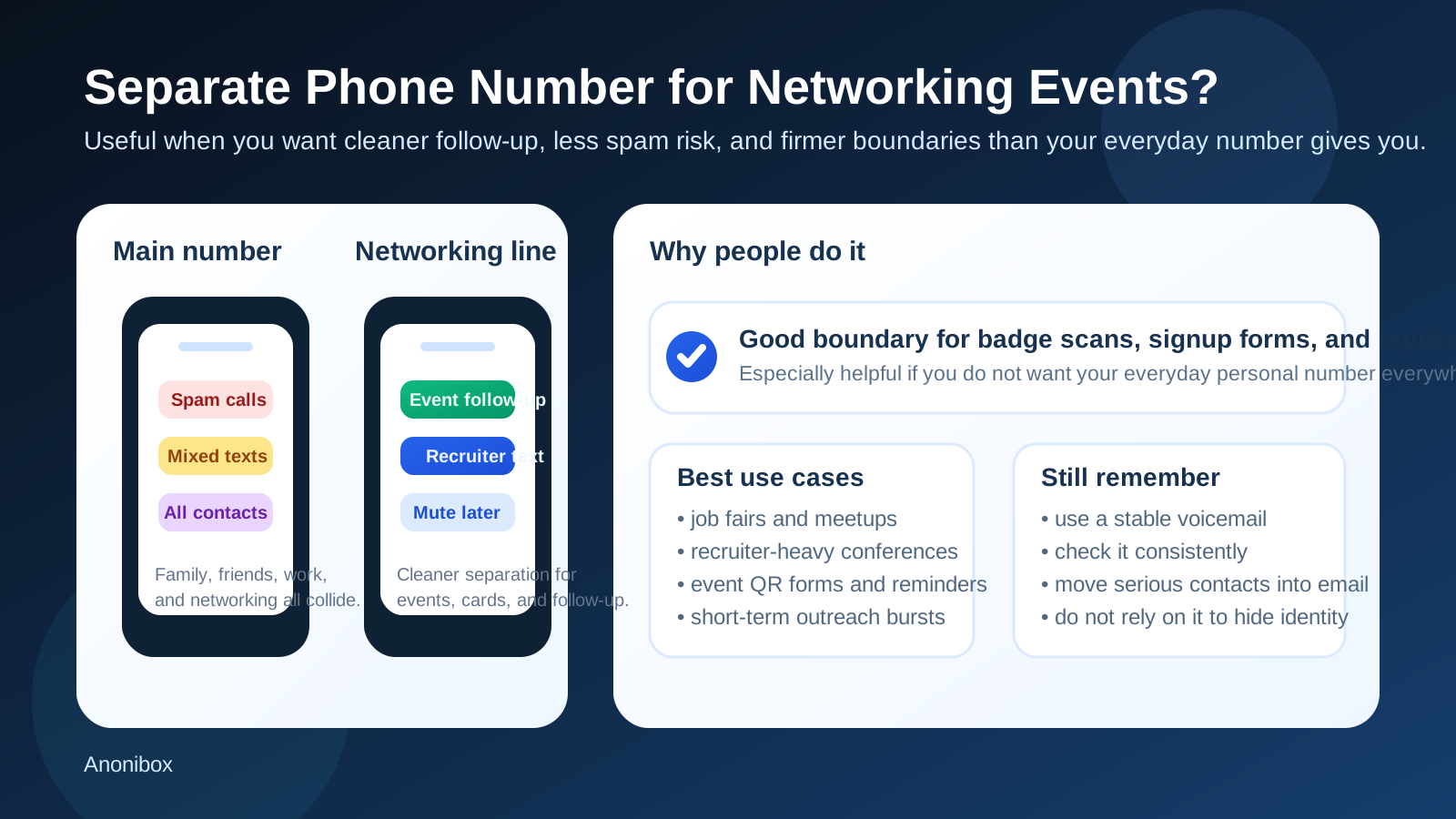
That is the practical answer behind searches for should you use a separate phone number for networking events. Networking events seem low-stakes on the surface. You exchange a few contacts, scan a badge, join a mailing list, maybe text a recruiter afterward, and move on. But in practice, those small interactions can spread your phone number faster than you expect. One event can turn into weeks of recruiter texts, generic follow-up, conference reminders, vendor outreach, and messages from people you barely remember meeting.
A separate number does not magically solve every privacy issue, but it gives you more control over where those messages land and how long they keep reaching you. If you are already careful about using a separate email address for networking or job-search activity, a dedicated phone number is the natural next step when you want the same kind of separation for calls and texts.
Why networking events create phone-number spillover so easily
At a networking event, people are often encouraged to connect quickly. That can happen through registration forms, event apps, QR-code profile tools, digital business cards, speaker meetups, recruiting booths, follow-up texts, or group chats that form on the spot. Unlike a formal job application, the boundaries are looser. You may not always know exactly who will keep your number, how long they will keep it, or whether it will be added to future outreach lists.
That does not mean every event is shady. Most are not. It just means phone-number sharing at events is often messier than people realize. The issue is not one bad actor. It is accumulated exposure from lots of ordinary interactions.
Short answer: when a separate number makes the most sense
A separate number is usually worth considering when networking events are part of an active professional strategy rather than a once-a-year random meetup. It is especially useful if:
- you attend job fairs, conferences, or industry meetups regularly,
- you expect recruiter or employer follow-up by text,
- you do not want your main personal number on every registration form,
- you want to mute or retire the line later if it becomes noisy, or
- you are already using a separate inbox or alias for networking and want your phone workflow to match.
If none of those apply, your regular number may be fine. But if event networking is becoming a real channel for opportunities, the extra layer of separation is often worth it.
What a separate phone number actually helps with
1. Cleaner boundaries between personal life and networking
Your main phone number often connects to everything: family, friends, banks, deliveries, two-factor codes, healthcare, school, and day-to-day logistics. Adding event networking to that same line means every recruiter text, conference reminder, and “great meeting you” message lands in the same place as the rest of your life. A separate number reduces that overlap.
2. Better spam control
Some networking lists are well-run. Some are not. If your number ends up in too many event systems or low-quality contact chains, a separate line gives you an escape hatch. You can silence it, filter it, or stop using it without disrupting the number that matters for the rest of your life.
3. Easier event follow-up tracking
When all event-related messages go to one place, it becomes easier to tell which opportunities are real and which ones are just noise. You can review the thread history, keep callback windows straight, and decide who is worth answering without hunting through your main text inbox.
4. Less social pressure to stay permanently reachable
At events, people sometimes exchange numbers faster than they exchange trust. A separate number lets you be reachable without promising lifelong access to your everyday line.
What a separate number does not do
It is worth being realistic. A separate number is a boundary tool, not a guarantee of anonymity or safety.
- It does not prevent someone from misusing your number if you share it with the wrong person.
- It does not make a suspicious recruiter automatically legitimate.
- It does not replace basic scam awareness.
- It does not mean you should ignore important follow-up because the number feels temporary.
If you use one, you still need to verify who you are talking to, avoid sharing sensitive information casually, and move serious conversations into stable channels when appropriate.
When using your main personal number is probably fine
You probably do not need a separate line if networking events are infrequent, low-volume, or very local to a professional community you already know well. The same is true if you only share your number selectively and prefer to keep first contact in email or LinkedIn messages instead.
In other words, a separate number is helpful when your exposure increases. It is not a rule for every coffee meetup, alumni panel, or one-off conference ticket.
When a separate number is the better choice
Recruiter-heavy events
Career fairs, hiring expos, and conferences with active recruiting teams are classic cases. Those events often generate rapid follow-up and lots of short text-based coordination.
Large conferences with apps, badge scans, or lead capture
When you are entering your phone number into multiple systems over a few days, separation becomes more valuable.
Public-facing networking while job searching discreetly
If you are exploring options quietly, a separate number can help keep your networking activity more compartmentalized from your everyday routine.
Periods of intense outreach
Sometimes you are not attending one event. You are attending six in a month, following up with twenty people, and testing which channels create real opportunities. That is where a dedicated number starts paying off.
Best practices if you use a separate number
Use a professional voicemail greeting
If someone important calls, the voicemail should sound normal and credible. Your name and a short greeting are enough.
Check it consistently
A separate number only helps if you actually monitor it. Missing legitimate follow-up because the line became an afterthought defeats the purpose.
Pair it with a stable email workflow
Phone numbers are useful for quick contact. Email is usually better for the longer record: thank-you notes, calendar details, documents, and clearer next steps. If you use Anonibox or another privacy-first workflow to keep signup clutter out of your main inbox, that can work well for low-trust event forms or early lead capture. But for genuine one-to-one follow-up with a real employer or contact, you still want an email address you actively manage and plan to keep.
Do not overshare by text
A phone number is for coordination, not for handing over sensitive details. If someone quickly asks for identity documents, payment information, banking details, or verification codes, stop.
Retire or filter the number if it turns noisy
One of the biggest advantages of a separate line is that it gives you options later. If the event-driven noise outlives the useful opportunities, you can scale back that exposure without harming your main number.
Better first-channel choices when you are unsure
You do not always have to lead with a phone number. In many cases, LinkedIn messages, email, or even an event platform’s built-in chat are better first steps. Those channels can create enough trust to decide whether exchanging numbers is actually necessary.
That is an important point: the question is not just whether you should use a separate phone number. It is whether a phone number needs to be the first channel at all. Often the best approach is layered:
- start with LinkedIn or email,
- move to phone only when the conversation becomes real, and
- use a separate number if you want that phone layer to stay compartmentalized.
Red flags at networking events
- Someone pressures you to move immediately to private chat apps with no real professional context.
- You are asked for personal details that go far beyond normal networking follow-up.
- The event or recruiter message becomes pushy the moment you ask basic questions.
- You receive job-like promises without clear company information or a normal hiring process.
- The contact seems more interested in collecting data than having a real professional conversation.
A separate number helps limit some downside, but it is not a substitute for paying attention to those signals.
A practical decision checklist
Before you share your number at an event, ask yourself:
- Is this event likely to generate a lot of follow-up texts or calls?
- Am I giving my number to a person I trust or to a form I barely understand?
- Would I be annoyed if this contact chain kept messaging me for months?
- Do I want networking to stay separate from family and everyday personal communication?
- Would email or LinkedIn be enough for now?
If those questions point toward higher exposure or looser boundaries, a separate number is probably the smarter choice.
Should you use your main line, a separate line, or no phone number at all?
For many people, the best ranking looks like this:
- Separate phone number: best if you network often and want control over follow-up volume.
- Main personal number: acceptable if your event volume is low and you share it selectively.
- No phone number at all: reasonable when email or LinkedIn is enough and the trust level is still low.
That order can shift depending on your industry and comfort level, but it is a useful default. The more event-based exposure you expect, the more attractive a dedicated number becomes.
Final answer
Yes, using a separate phone number for networking events is often a smart idea when you want cleaner privacy boundaries, better spam control, and a more organized follow-up workflow. It is especially helpful if you attend events regularly, interact with recruiters, or expect your number to pass through multiple forms and contact systems.
No, it is not mandatory for every event. If your networking is occasional and selective, your main number may be enough. But if you want a practical way to stay reachable without giving every badge scan, signup form, and follow-up thread direct access to your everyday personal line, a separate number is one of the simplest upgrades you can make.