Yes, text messages can work for networking events, especially for quick follow-up after a real conversation.
They work best when the message is timely, professional, and limited to a clear purpose rather than becoming your default channel for every networking interaction.
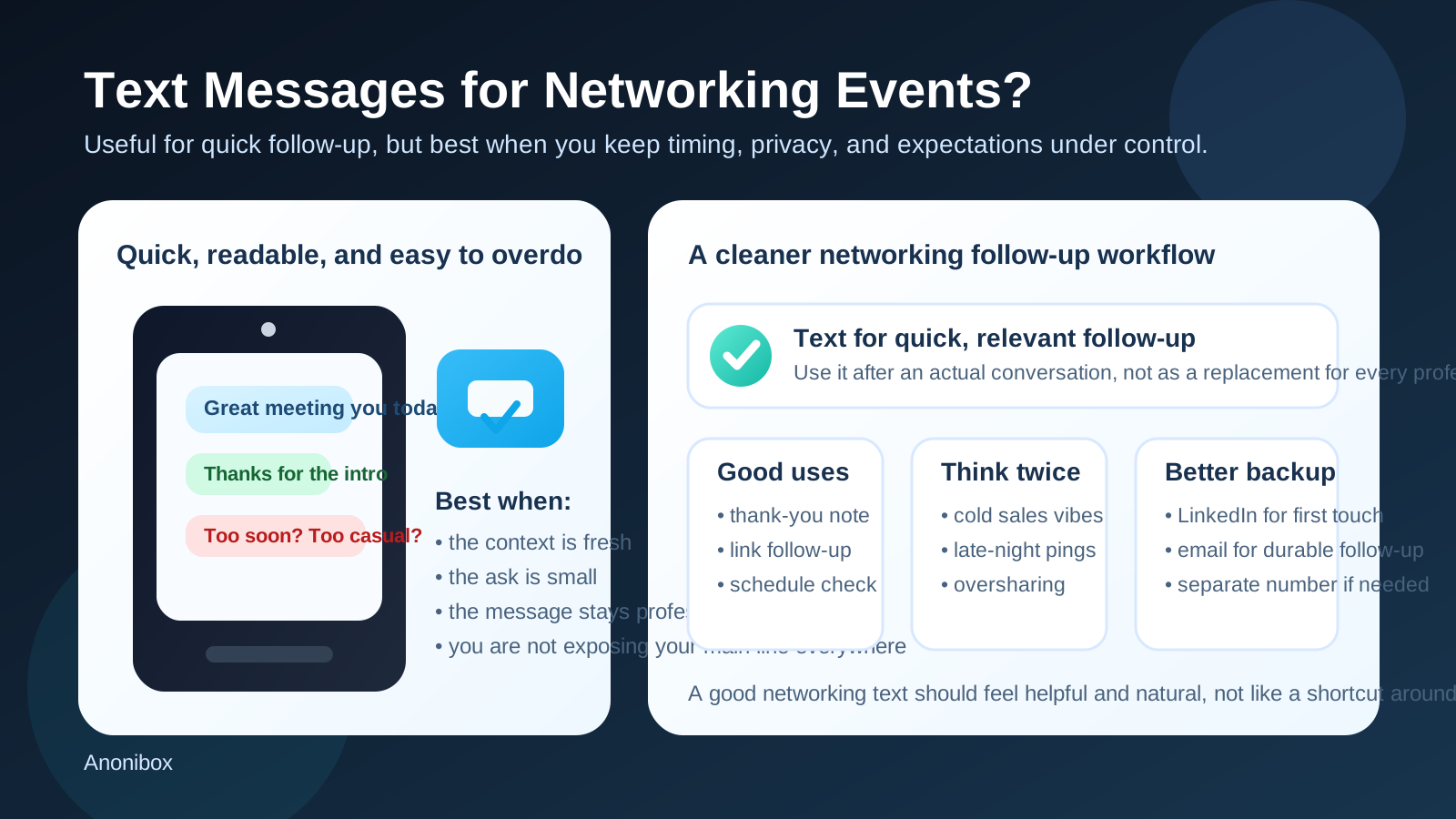
That is the practical answer behind searches for should you use text messages for networking events. Networking events create a strange communication problem. You meet people quickly, swap contact details in awkward conditions, and then have to decide what kind of follow-up feels warm, useful, and professional without becoming intrusive. A text message can feel natural because it is short, direct, and easy to send. But that same convenience is also what makes texting easy to misuse.
In other words, the question is not whether texting is allowed. It is whether texting is the right fit for the relationship, the timing, and the level of trust you have actually built. Sometimes it is the easiest way to keep momentum after an event. Sometimes it feels too personal too early, or it exposes your phone number more widely than you intended.
Why people even think about texting after networking events
Networking events move fast. You might meet someone in a hallway, during a panel, at a badge scan table, or over coffee between sessions. Often the connection is real but fragile. If you wait too long, the moment fades. If you write too much, the follow-up feels heavy. Texting seems attractive because it sits between a formal email and a social-media message. It is fast, familiar, and easy to answer.
That makes texts useful for a few specific situations:
- saying it was good to meet someone,
- sending a promised link or article,
- confirming a coffee chat or short follow-up call,
- sharing a calendar detail after both people already agreed to connect, or
- keeping a warm introduction alive while the conversation is still fresh.
Those are all normal. The problem starts when texting becomes the default even when a better professional channel exists.
Short answer: texting is good for light follow-up, not every stage
Text messages are usually a good fit for brief, low-friction communication after a networking event. They are usually a weak fit for anything that requires long context, formal record-keeping, sensitive personal details, or ongoing professional coordination.
If you had an actual conversation and both people intentionally exchanged numbers, a short text can feel natural. If the number came from an event roster, a badge database, or a group list where consent is less obvious, texting may feel much more intrusive. That difference matters more than the technology itself.
When text messages are a smart choice
1. The context is fresh and the message is specific
A good networking text refers to a real interaction. Maybe you spoke after a panel about product operations, discussed a hiring trend, or promised to send a book recommendation. In those cases, a short text makes sense because it continues an active conversation instead of creating one from nothing.
2. The ask is small
Texts work well when the goal is simple: “Great meeting you,” “Here is the article I mentioned,” or “Would next Tuesday still work for the coffee chat?” They work less well when you are trying to tell your whole career story, ask for a referral, or unpack a complicated work situation.
3. Both people already expect phone-based follow-up
If the other person offered their number directly, texted you first, or clearly invited phone follow-up, texting is usually fine. Consent and expectation make a big difference. A message feels much less intrusive when both people understand why it is happening.
4. You want speed without too much formality
Email can feel heavier. LinkedIn can feel slower or easier to lose. A text is often the cleanest way to keep a warm contact from cooling off, especially right after an event or before a short scheduled meeting.
When texting is probably the wrong move
1. You barely interacted
If the “connection” was a quick hello, a badge scan, or a panel audience question, texting may feel too personal unless the other person explicitly invited it. LinkedIn or email is usually safer for the first follow-up when the relationship is still thin.
2. You got the number indirectly
A number from a registration sheet, group thread, event app, or shared attendee list is not the same as a number handed to you directly. People often treat phone numbers as more personal than email addresses. Using one without clear invitation can make a professional interaction feel pushy.
3. You need a durable record
If you are confirming a meeting time, sending a calendar invite, sharing a résumé, or building an ongoing relationship, email is usually a better home for that information. Texts are easy to skim, forget, or lose in a busy inbox.
4. The message would sound awkward if read out loud
This is a useful test. If your message sounds too intimate, too eager, too long, or too transactional when spoken plainly, it probably needs a different channel or a rewrite.
Privacy trade-offs most people miss
Texting feels simple, but the privacy side matters. Your phone number is not just another contact field. Once it spreads, it can stay in personal address books, event CRM systems, recruiter databases, sponsor follow-up lists, and group chats long after the event ends.
That creates a few real trade-offs:
- Long-tail outreach: one useful contact can turn into months of low-value follow-up from other people.
- Spam and sales noise: event sponsors, recruiters, and vendors may reuse numbers more aggressively than you expected.
- Blurry personal boundaries: your main personal line can quietly become a networking channel you never meant to create.
- Scam exposure: event-related texts can sound credible enough to lower your guard if someone knows where you met.
That is why some people prefer a separate number for networking and job-search activity. If you already use Anonibox to protect your main inbox from event signups, waitlists, gated downloads, or low-trust registration flows, the same general logic can apply to phone contact: keep early-stage exposure separate when possible. The goal is not secrecy for its own sake. It is keeping routine networking from spreading into every personal channel you own.
How texting compares with LinkedIn and email
Texting
Best for quick, timely, low-context follow-up after a real interaction. Weakest when you need structure, long context, or professional record-keeping.
LinkedIn Messages
Best for first outreach when you have not yet built enough trust for phone contact. Stronger for initial context. Weaker for scheduling details and long-term thread management.
Best for durable follow-up, calendar invites, longer thank-you notes, and anything you may need to reference later. Slightly heavier than text, but usually cleaner once the relationship becomes real.
A lot of networking works best when you use these channels in sequence rather than forcing one of them to do everything. For example: LinkedIn for the first message, text for quick day-of coordination if invited, and email for the actual follow-up conversation or thank-you note.
Best practices if you do text after a networking event
Keep it short
One screen is usually enough. If you need multiple paragraphs, you probably need email instead.
Anchor the message to the real interaction
Mention where you met, what you discussed, or what you promised to send. That makes the text feel like a continuation rather than a random interruption.
Send it at a reasonable time
Professional texts should respect basic boundaries. Right after the event, the same evening, or the next business day usually works. Late-night messages or repeated pings look careless.
Do not force intimacy
Networking texts should sound warm, not familiar in a way you have not earned. A short thank-you or follow-up question is fine. Oversharing personal details is not.
Move important details elsewhere when needed
If a conversation turns into a coffee chat, interview, or longer mentoring relationship, email is often the better place for logistics. Text can open the door. It does not have to become the filing cabinet.
Use a separate number if you need stronger boundaries
If you attend lots of events, work in recruiting-heavy spaces, or simply do not want your main number spreading through conference lists and casual introductions, a separate number can be a sensible buffer. It lets you stay reachable without making every networking contact part of your personal daily life forever.
What a good networking text usually looks like
A strong text usually does three things:
- reminds the person who you are,
- connects the message to the event or conversation, and
- makes one clear, modest point.
For example, a solid follow-up might thank someone for a specific insight and include the article or link you mentioned. Another good text might confirm a coffee time you already discussed. What tends to fail is a vague message that immediately asks for a job, a referral, or a huge amount of attention.
Red flags to watch for when someone texts you after an event
- They push immediately toward money, payments, or registration fees.
- They want you to click unfamiliar links without context.
- They claim urgent professional opportunities but refuse normal verification.
- They pressure you to move into another app for no clear reason.
- The text feels like a mass message that only pretends to be personal.
Not every bad networking text is a scam. Some are just low-quality outreach. But if something feels off, slowing down is smart.
A quick checklist before you text
- Did we actually have a real conversation?
- Did they share or invite use of this number directly?
- Is my message short, specific, and professional?
- Would LinkedIn or email be a better first channel?
- Am I protecting my own privacy and boundaries well enough?
If the answers are mostly yes, texting is probably fine. If several answers are no, use a less personal channel first.
Final answer
Yes, you can use text messages for networking events, and sometimes they are the best way to keep a promising connection alive while the event is still fresh.
But they work best when you use them selectively: after a real interaction, for a clear purpose, with good timing, and without treating your personal phone number like disposable networking inventory. In many cases, the smartest approach is to use text for light follow-up, LinkedIn for first-contact context, and email for anything you may need to manage more carefully later.
That balance keeps your networking responsive and human without turning every professional encounter into long-term phone noise.