Yes, you can use your college email for networking events while you are a student, especially for alumni mixers, campus recruiting nights, and university-sponsored events. But it is usually not the best long-term default if you want privacy, continuity, and an address that still makes sense after graduation.
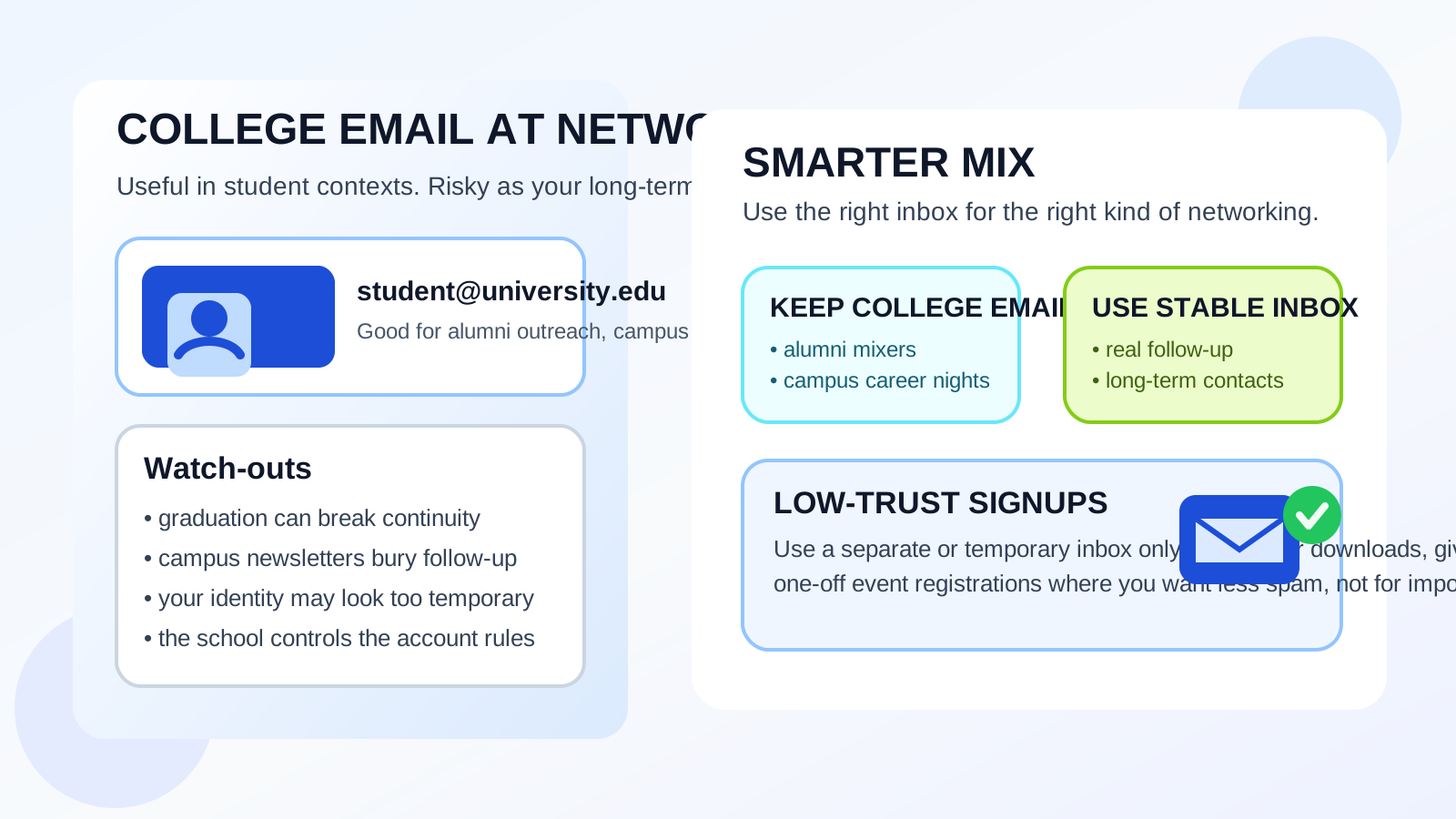
The practical middle ground is simple: use your college email when your student identity genuinely helps, use a stable inbox you control for real relationship-building, and reserve temporary inboxes for low-trust registrations or sponsor downloads rather than important follow-up.
Why this question matters more at networking events than people expect
Networking events look casual on the surface. You register for a career fair, an alumni panel, an industry meetup, a conference, a hackathon, or a campus employer session. You scan a badge, trade contact details, download a speaker deck, maybe join a follow-up mailing list, and move on with your day.
But one event can easily create several different kinds of email traffic at once. You may get registration confirmations, venue updates, app invites, recruiter follow-ups, sponsor outreach, workshop materials, attendee introductions, and later check-ins from people you actually want to know. That is why the address you use matters. It is not just about getting through the registration form. It is about what happens after the event.
If you use your college email for everything, you may gain a little student credibility in the moment. You may also end up tying long-term professional relationships to an inbox controlled by your school, buried under campus mail, or likely to become less relevant as you get closer to graduation.
Short answer: college email is acceptable in some student contexts, but weak as a universal default
A college email is not automatically a bad choice. In the right context, it can help. If you are a current student attending a university-hosted event, contacting alumni through a school program, or joining a student-only recruiting session, a college address may fit naturally and even improve your response rate.
The problem is not legitimacy. The problem is longevity. Networking is not just about one exchange. The person you meet at a panel may email you next month. The recruiter you met at a fair may reach out next semester. The alumnus you spoke with casually may remember you when a team starts hiring later. For that kind of long-tail follow-up, an address you personally control is usually the stronger choice.
When using your college email can actually help
1. Alumni or campus-community outreach
If you are reaching out to alumni from your school, a college email can instantly explain the connection. It signals that you are part of the same community, which can make your initial message feel more credible and less random.
2. School-sponsored events
For university career fairs, department networking nights, employer sessions run through the campus career center, or student organization events, using your college email often makes practical sense. Event tools may already recognize it, and the address matches the environment.
3. Student-only perks or early-career programs
Some mentorship programs, internship communities, and discounted conference registrations are specifically for students. In those cases, your college address may be the cleanest way to prove eligibility without extra friction.
4. Very early exploratory networking
If you are in the early stage of figuring out industries, talking to alumni, or testing your comfort with professional outreach, a college inbox can be good enough for a small number of conversations, especially if it is the address you already monitor most closely.
Why college email becomes risky at networking events
Graduation changes the continuity problem
This is the biggest issue. Schools vary widely in what happens after graduation. Some let you keep your address indefinitely. Some reduce functionality. Some change login rules, storage limits, or forwarding options. Some eventually deactivate the account. Even if your school says you can keep it today, policies can change later.
Networking depends on continuity. A contact from a conference or alumni mixer may not become useful for six months. If your identity is tied to a school-managed inbox that stops feeling stable, you create unnecessary friction right when the relationship starts to matter.
Campus inbox clutter is real
College inboxes get noisy fast. Course notices, system alerts, student club promotions, department newsletters, campus event blasts, housing messages, and administrative reminders all compete for attention. A thoughtful follow-up from a recruiter or professional contact can disappear in that flood, especially because networking emails often look informal rather than urgent.
Your identity may feel too temporary
A college address is not unprofessional, but it can communicate a narrower identity than you intend. If you are trying to build long-term relationships in an industry, launch a side project, freelance, or transition from student to professional, an inbox attached only to your institution may make you look more temporary than you really are.
You do not fully control the account
Your school manages the account, policies, and authentication rules. That does not automatically mean something bad will happen. It simply means the inbox is not fully yours in the same way a personal long-term address is. When career relationships are involved, ownership matters.
What networking contacts actually care about
Most people you meet at networking events are not grading you on whether your address ends in .edu. They care about simpler things:
- Does the address look professional and easy to read?
- Will you reply reliably?
- Can they reach you again later without the thread going dead?
- Does your email identity match the context of the relationship?
That means a college email is not automatically a disadvantage. It is just rarely the best all-purpose answer. A clean personal or dedicated professional inbox often works better because it gives you long-term stability without making you look disposable or hard to reach.
Better alternatives for most people
A stable personal-professional inbox
For most students and recent graduates, the best default is a personal email address you control and plan to keep for years. It should be simple, professional, and easy to monitor. This gives you consistency across networking, applications, referrals, and interviews.
A dedicated networking or job-search inbox
If you want more privacy and cleaner organization, create a separate inbox just for professional outreach. That keeps event follow-up, recruiter messages, and career leads away from your everyday personal clutter without tying them to a school-controlled address.
An alias or custom domain if you want more control
If you care about flexibility and long-term ownership, an alias setup or custom domain email can give you a more durable professional identity. That is especially useful if you want to keep the same contact identity from student life into early career and beyond.
A temporary inbox for low-trust forms only
Temporary email has a place, but not for core relationship-building. If an event site looks spammy, a sponsor gate demands an email for a one-off download, or you want to avoid promotional follow-up from exhibitors, a temporary or disposable address can help. A service like Anonibox makes sense for that narrow use case. It does not make sense for the actual people you want to hear from later. If a recruiter, alumnus, founder, or hiring contact may reply again, use an address you can keep and monitor.
Best practices if you decide to use your college email anyway
- Check account retention rules now. Do not assume you will keep the inbox forever after graduation.
- Turn on forwarding if appropriate. If your school allows it, forwarding can reduce the risk of missed replies.
- Keep the inbox organized. Filters and folders can stop campus noise from burying event follow-up.
- Use it selectively. It is better for alumni outreach and campus events than for every professional interaction.
- Move good contacts to a stable address early. If a conversation becomes ongoing, it is fine to say, “Here is the best email for future follow-up.”
How to decide based on your situation
If you are a current student attending campus events
Your college email is usually fine, especially if the event is tied closely to your university and your student identity is part of why you are there. Just make sure you still have a plan for long-term continuity.
If you are graduating soon
Start shifting now. Even if your school says you keep the address after graduation, a separate long-term inbox gives you more control and avoids future scrambling.
If you are already mixing networking with job searching
Use one stable career inbox across networking events, referrals, applications, and interviews. That reduces confusion and makes follow-up easier to track.
If you are using events mostly for sponsor downloads or random signups
That is where temporary email or a low-priority separate inbox can be useful. Protect your main inbox from noise, but keep serious human follow-up on a real long-term address.
A quick decision checklist
Before you register for the next networking event, ask yourself:
- Is this event strongly tied to my school or student status?
- Do I expect real professional follow-up after the event?
- Will I still control this inbox comfortably a year from now?
- Is my college inbox already too cluttered to trust for important replies?
- Would a separate long-term career inbox make the relationship easier to manage?
If most of those answers point toward continuity and control, your college email probably should not be your default.
Final answer
Yes, you can use your college email for networking events, and in student or alumni contexts it may even help. But it is usually a situational tool, not the strongest permanent choice. The main risks are simple: graduation can break continuity, campus mail can bury follow-up, and your school controls the account more than you do.
For most people, the best setup is a stable inbox you personally control, with your college email used selectively when your student identity genuinely adds value. Use temporary email only for low-trust event forms or sponsor downloads, not for the conversations you actually hope will lead somewhere.