Yes, you can use Zoho Mail for informational interviews, and for many people it is a smart choice if they want a separate, more controlled inbox for career conversations.
The important part is not the brand name by itself. What matters is whether the address looks professional enough, stays reliable for replies, and helps you keep networking outreach separate from your everyday inbox without missing follow-up.
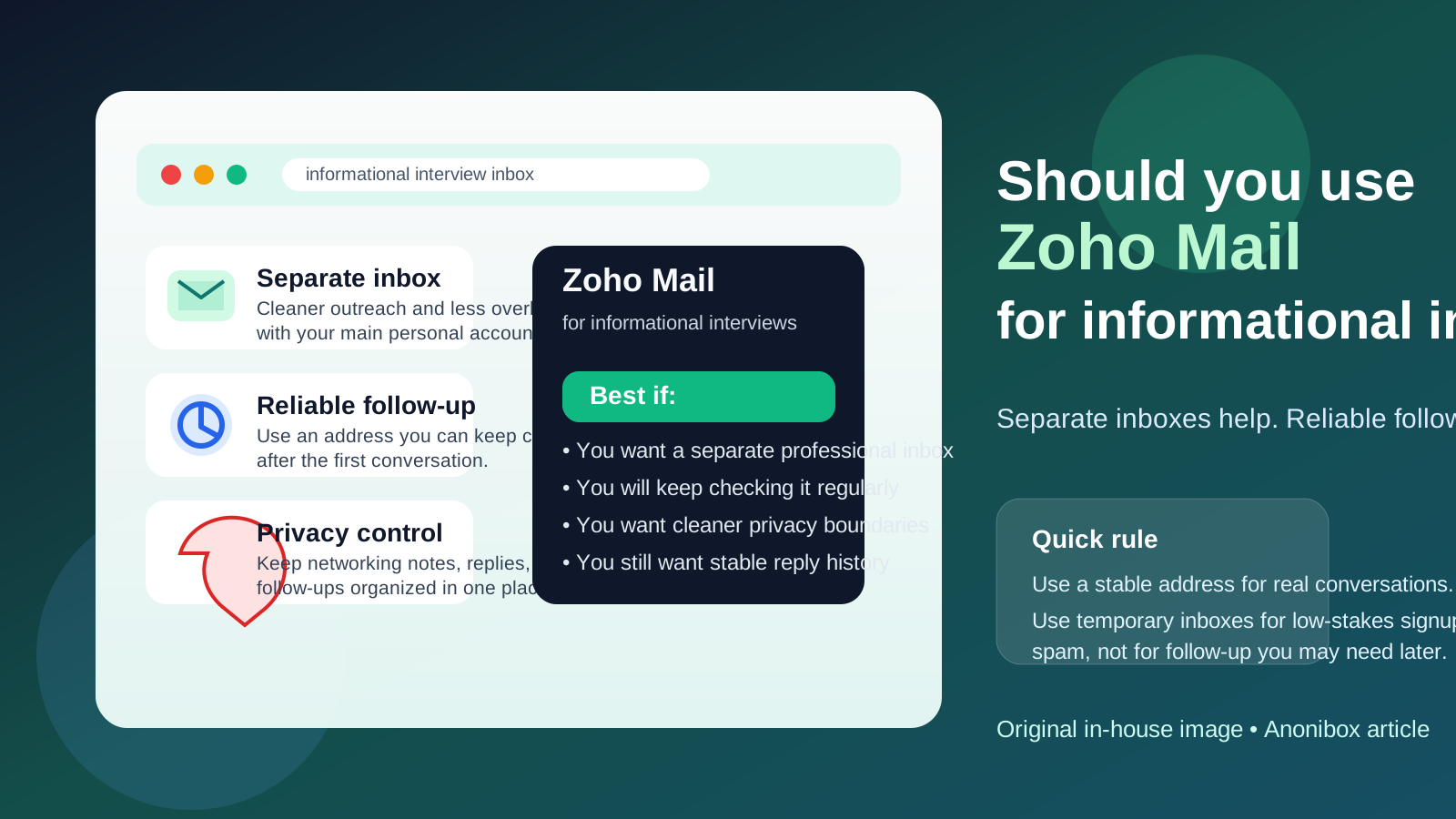
Why people consider Zoho Mail for informational interviews
Informational interviews sit in a strange middle ground. They are not formal job applications, but they are still career-related conversations with real professional upside. You might be reaching out to alumni, former coworkers, hiring managers, recruiters, or people working in a role you want to understand better. That means your email choice matters.
Many people do not want to use the same inbox they use for personal newsletters, shopping receipts, travel confirmations, family messages, and every account they have collected for years. A separate mailbox can make those conversations feel more intentional. It can also reduce the chance that a thoughtful reply gets buried under unrelated clutter.
Zoho Mail appeals to people who want that separation without immediately buying a custom domain or using their work email. It can feel more deliberate than using an overloaded personal inbox, while still being stable enough for an ongoing professional exchange.
Short answer: Zoho Mail is usually a reasonable choice
If your goal is to keep informational interviews organized, protect some privacy, and present yourself professionally, Zoho Mail is usually a reasonable option. It is especially useful when you want a dedicated inbox for networking and career exploration.
That said, it is not automatically the best option for everyone. A separate inbox only helps if you check it regularly, keep it tidy, and use a good address format. If you create a new account and then forget to monitor it, the privacy advantage will not matter because missed replies will hurt you more.
When Zoho Mail makes sense for informational interviews
You want a separate career-conversation inbox
This is the clearest reason. Informational interviews often lead to follow-up notes, introductions, shared resources, and occasional future opportunities. If those threads are mixed into a chaotic personal inbox, it becomes harder to stay organized. A separate Zoho Mail account can create a cleaner lane for all of that.
You do not want to use your work email
Using a work address for exploratory networking is often a bad idea. It can blur boundaries, expose your activity to your employer’s systems, and make your outreach feel less independent. A separate personal career inbox is usually safer and more appropriate.
You want something more stable than a disposable inbox
Temporary email services are great for low-stakes signups, one-off downloads, and trial access where you mainly want to avoid spam. Informational interviews are different. If someone replies two weeks later with advice, a referral, or an invitation to keep talking, you need an inbox that still exists and that you are still monitoring. That makes a stable mailbox the better fit.
You are building a more intentional networking workflow
Some job seekers keep separate folders for alumni outreach, mentor conversations, recruiter contacts, and industry research. If you are trying to build that kind of system, a dedicated Zoho Mail account can support it well.
What Zoho Mail does well in this context
1. Better privacy boundaries than your main personal address
Every new networking thread reveals a little bit about your current goals. Keeping those conversations away from your oldest personal inbox gives you more control over where career-related contact lives. That does not make Zoho Mail magical or risk-free, but it does help you avoid spreading one long-used personal address everywhere.
2. Cleaner organization
Informational interviews are easy to mishandle because they feel casual. People tell themselves they will remember who offered advice or who said, “Feel free to follow up in a month.” Then the message gets buried. A dedicated inbox makes it easier to label threads, star important replies, and revisit them when it is time to reconnect.
3. More professional separation
A separate address can help you look more intentional, especially if your main personal email is old, crowded, or built around a nickname that no longer feels very professional. The key is not that Zoho Mail is automatically impressive. The key is that a clean address used consistently can make your outreach feel more polished.
What Zoho Mail does not solve by itself
Your outreach quality still matters more than the provider
If your email is vague, too long, obviously copy-pasted, or purely transactional, switching providers will not fix that. Informational interviews work best when the message is respectful, concise, and specific about why you are reaching out.
You still need to monitor replies reliably
A separate inbox only helps if you actually check it. If you send outreach from a brand-new address and then only open it once a week, you may miss the short response window when someone is ready to talk.
You should not expect a provider name to create credibility on its own
Most people do not care deeply whether your email comes from Zoho Mail, Gmail, Outlook, or another mainstream provider. They care whether the message seems legitimate and whether replying feels straightforward. In other words, use a sensible address and good etiquette instead of overthinking the badge on the inbox.
Zoho Mail vs other options
Zoho Mail vs your personal email
If your personal inbox is already neat, professional, and easy to manage, you may not need a separate account at all. But if it is cluttered, years old, or tied to a lot of unrelated activity, Zoho Mail can give you a cleaner reset.
Zoho Mail vs your work email
Zoho Mail is usually the better choice for informational interviews. Work email can create privacy issues, awkwardness, and possible visibility concerns. Career exploration usually belongs outside your employer’s environment.
Zoho Mail vs temporary email
For actual informational interviews, Zoho Mail is the better option almost every time. A temporary inbox is useful when you want quick access without long-term exposure, but real networking conversations often continue beyond the first message. If the relationship matters, use an inbox you can keep.
If you are signing up for newsletters, event lists, low-trust downloads, or early research before you decide who deserves a reply, a temporary inbox from Anonibox can still be useful on the side. Just do not confuse that role with the inbox you rely on for real follow-up.
How to set up Zoho Mail well for informational interviews
Choose a simple, adult-looking address
Use something close to your real name if possible. Avoid random numbers, jokes, old gamer-style handles, or anything that makes the message feel disposable. You want the address to sound like a real person who is worth replying to.
Set your display name carefully
Make sure the sender name matches how you introduce yourself in the email. Consistency lowers friction and makes the thread feel more trustworthy.
Add a minimal signature
You do not need a giant corporate signature block. Your name, LinkedIn profile if relevant, and maybe one short context line are usually enough. The goal is clarity, not decoration.
Create a few folders or labels
Even a basic structure helps:
- Outreach sent
- Replies received
- Follow up later
- People I should thank
This sounds simple because it is. Simple systems are the ones you actually maintain.
Test sending and receiving before you start serious outreach
Send yourself a message. Send one to another address you control. Make sure replies arrive normally and that you are comfortable using the account from your phone or laptop before real networking messages depend on it.
Best practices once you start using it
Reply promptly
Informational interviews are favors, not obligations. If someone takes time to answer you, respond like it matters. Even a brief, thoughtful reply within a reasonable window helps build trust.
Keep notes outside the inbox too
The inbox is where conversations happen, but it is not always the best place to remember context. Keep a lightweight note of who you contacted, when you wrote, what they shared, and whether you should follow up later.
Do not over-automate your networking
A separate inbox can make outreach feel like a system, which is useful. But do not let that turn into robotic messaging. Informational interviews work best when the note sounds human and specific.
Know when to retire or keep the account
If the account becomes your long-term networking inbox, keep it. If it was only for a concentrated exploration period, you can scale it back later. The point is having control, not creating yet another inbox you ignore.
When Zoho Mail may not be the best choice
- You already have a clean, professional personal inbox and do not need extra separation.
- You are likely to forget checking a second account.
- You want the strongest possible personal branding and would rather use a custom-domain address tied to your name.
- You are trying to use a disposable mentality for conversations that actually need continuity.
None of these make Zoho Mail bad. They just mean the best answer depends on your habits, not only on the provider.
Final answer
Yes, Zoho Mail can be a good choice for informational interviews if you want a separate, professional-looking inbox that gives you better privacy boundaries than your main personal account. It is usually a better fit than work email and a much better fit than temporary email for real career conversations.
The real test is simple: will you use it consistently, keep it organized, and stay on top of replies? If the answer is yes, Zoho Mail is a sensible option. If not, a provider change will not solve the underlying follow-up problem. For informational interviews, reliability and thoughtful communication matter more than the logo in the corner of your inbox.