Yes — an email alias for alumni networking can be a smart choice if you want to protect your main address while still staying reachable for real introductions, coffee chats, referrals, and follow-up.
It usually works best when the alias forwards to a stable inbox you control long term, not when it behaves like a disposable address you may stop checking after the first message.
Why alumni networking creates a different privacy problem
Alumni networking is not the same as applying to a job board or downloading a one-off guide. The communication is often lower volume but more personal, more delayed, and more relationship-based. You might send outreach to graduates from your school, reconnect with people from a former program, sign up for alumni events, or follow a warm introduction to someone who may refer you months later.
That creates a strange tension. You want to look professional and easy to reach, but you may not want to hand your oldest personal email address to every alumni directory, event signup, chapter mailing list, volunteer organizer, and “let’s stay in touch” exchange that grows out of your search. If all of that goes into your main inbox, useful messages can get buried, your address can spread farther than you expected, and you lose a clean way to separate genuine networking from background noise.
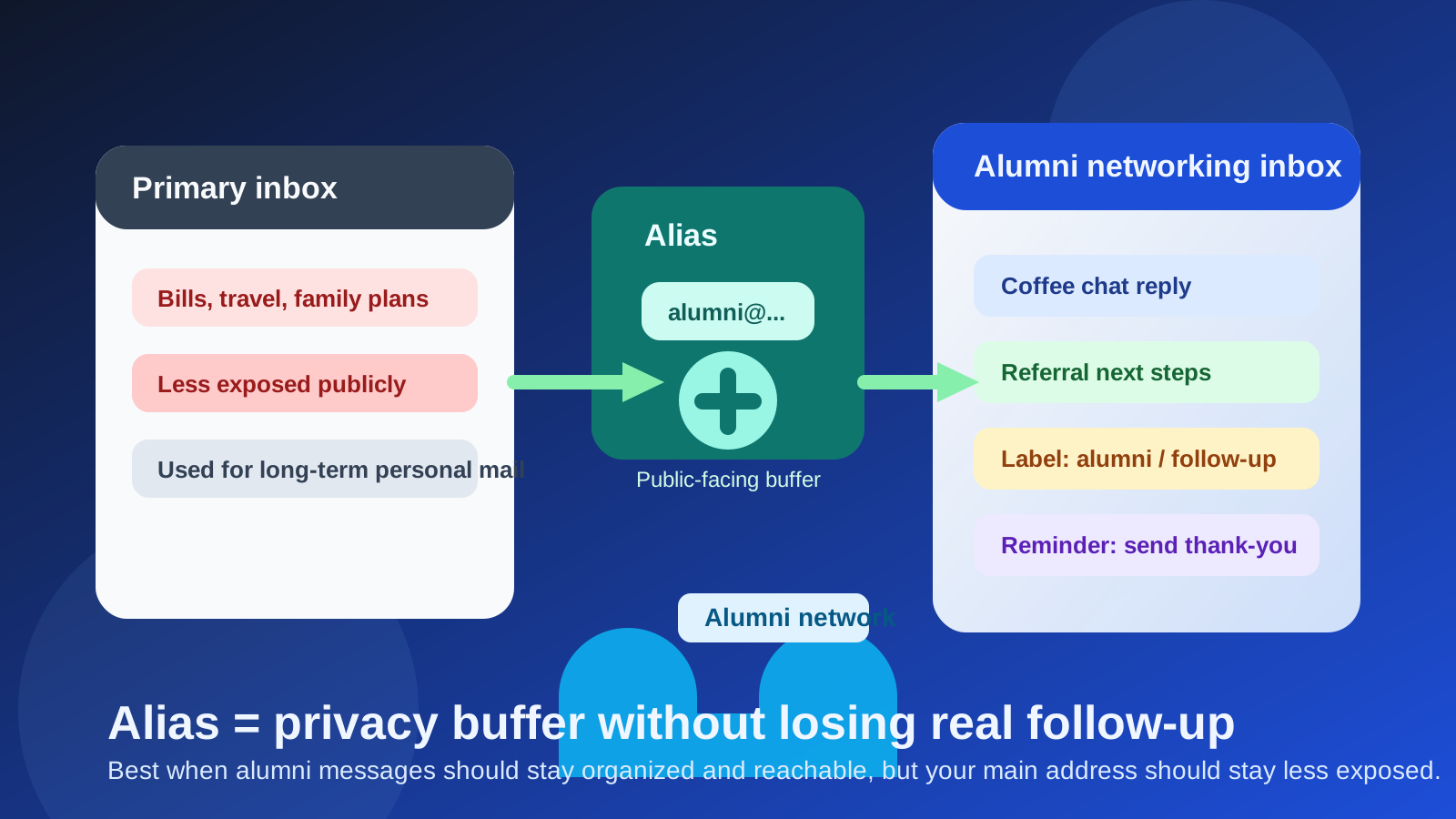
An email alias helps because it gives you a buffer. Instead of publishing or sharing your primary address directly, you can use an alternate address that forwards to an inbox you already trust and check regularly. That gives you better control without making yourself hard to reach.
What an email alias actually does
An email alias is not necessarily a whole new mailbox. In many setups, it is simply another address that forwards mail into your real inbox. To the person contacting you, it looks like a normal email address. To you, it can act like a layer between the outside world and the address you prefer to keep more private.
That makes aliases useful for alumni networking because they preserve continuity. If someone you meet through an alumni group follows up later about an informational chat, referral, event, or introduction, the message still lands where you can see it. You do not have to manage a throwaway inbox that might disappear or a forgotten separate account you never open.
When an alias is a good fit for alumni networking
An alias is usually a strong option when you want some privacy but do not want the overhead of managing a completely separate inbox.
- One-to-one outreach: You are emailing alumni for advice, coffee chats, or warm introductions and want a clean public-facing address.
- Alumni directories and chapter signups: You want to participate, but you do not want every list or organizer to have your primary inbox.
- Referral-related conversations: You expect real follow-up and need a stable address, but you still want more control over where your personal contact details spread.
- Testing which sources generate noise: An alias can help you spot where unwanted follow-up or newsletter-style mail starts coming from.
- Longer networking seasons: If you are doing sustained outreach over weeks or months, an alias can keep that activity organized without forcing you into a fully separate mailbox.
In short, an alias works well when the relationship is real enough to require ongoing reachability, but you still want separation and tracking.
Alias vs temporary email: important difference
This is where people sometimes make the wrong choice. A temporary email address and an email alias are not doing the same job.
A temporary inbox is better for low-stakes, low-trust, or one-off actions: downloading an event guide, unlocking a registration link you may never use again, or testing whether a signup form leads to spam. That is where a tool like Anonibox fits naturally. It can help you avoid exposing your long-term address too early when you are not sure the interaction will matter later.
But alumni networking often depends on delayed follow-up. Someone might reply next week. A chapter organizer might invite you to something next month. A graduate you met through a shared connection may surface an opportunity later. That is why an alias is often better than a temporary inbox for genuine alumni networking. It protects your primary address more than direct sharing, but it still supports the long tail of real professional communication.
Alias vs separate inbox: which one is better?
An alias and a separate inbox are closer cousins, but they still solve slightly different problems.
A separate inbox is usually better when you want stronger boundaries, heavier organization, and less mixing between job-search communication and your everyday life. If you are doing a lot of outreach, attending many events, or want a fully dedicated networking space, a separate inbox may be the cleaner choice.
An alias is usually better when you want lighter-weight separation. You still want messages landing in an inbox you already monitor, but you do not want to expose your primary address directly. That makes an alias a nice middle ground: more durable than a disposable inbox, less cumbersome than running another mailbox full time.
If you already feel overwhelmed by your current inbox, a separate inbox may serve you better. If your main goal is privacy and source control without adding too much complexity, the alias route often wins.
Why an alias can be especially useful for alumni networking
1. It protects your primary address from wider circulation
Alumni communities can be messy in a harmless but annoying way. An address shared with one organizer may end up in a mailing list, event platform, spreadsheet, or future outreach thread. An alias gives you some insulation from that spread.
2. It lets you see where messages are coming from
Depending on how you organize aliases, you may be able to tell whether mail is tied to a specific alumni group, event, or outreach stream. That helps when you are deciding what is worth replying to, what should be filtered, and what is creating too much noise.
3. It preserves long-term follow-up
Unlike a short-lived temporary inbox, an alias can stay active as long as the relationship matters. That is useful when networking turns into a real professional connection rather than a one-time exchange.
4. It keeps outreach more organized
If you use an alias specifically for alumni networking, replies are easier to search and mentally separate from everyday personal mail. Even if everything still lands in one underlying inbox, the alias itself can act like a label for that whole networking stream.
When you probably should not use an alias
An alias is not automatically the best choice in every situation.
- If you already have a clean, professional separate networking inbox, adding an alias may be unnecessary extra complexity.
- If the connection is extremely high-trust and long-term, using your normal professional address may be simpler.
- If the alias looks strange, confusing, or obviously disposable, it can create friction instead of helping.
- If you are likely to stop maintaining the alias soon, it can hurt continuity more than it helps privacy.
The key is that an alias should make you more reachable and organized, not less.
How to use an email alias for alumni networking well
Choose an alias that looks normal
Professional beats clever. An address that looks like a real personal or networking address is usually better than something that feels random, overly technical, or obviously disposable.
Make sure forwarding is reliable
If the alias forwards to your main inbox, test it before you start using it. Send yourself a few messages. Confirm you can reply smoothly. Confirm important mail does not land in spam. An alias is only useful if it behaves predictably.
Keep it long enough for real follow-up
Alumni networking is rarely instant. Keep the alias active for as long as you may realistically need it. That may be a semester, a recruiting cycle, or longer if the relationship turns into ongoing mentorship.
Pair it with light organization
Even simple habits help. Use a label, filter, or folder for alumni messages. Star important threads. Save promising introductions before they get buried. The alias gives you a cleaner front door, but your follow-up habits still matter.
Reply like a real person, not a masked identity
The goal is privacy and control, not anonymity theater. Once the conversation is real, your messages should still be clear, polite, and personal. You are building professional trust, not trying to hide from everyone forever.
Mistakes to avoid
Treating an alias like a disposable inbox
If you share it with real alumni contacts, do not abandon it after a few days. That defeats the point.
Using too many aliases too quickly
One useful alias is often better than a messy web of slightly different addresses you cannot remember. If you overcomplicate the system, you become the bottleneck.
Forgetting that a real relationship may outlast the job search
Some alumni contacts become mentors, collaborators, or future colleagues. Choose a setup that supports that possibility instead of one that assumes every conversation is temporary.
Assuming an alias solves every privacy risk
An alias reduces direct exposure of your primary address, but it does not eliminate phishing, spam, or bad judgment from the people or platforms you use. You still need normal caution with links, attachments, and requests for personal information.
Practical examples
If you join a local alumni chapter mailing list and are not sure how much future mail it will generate, an alias makes sense. If you email a few alumni from your university asking for brief advice calls, an alias can help there too, especially if you want those replies organized without exposing your oldest inbox.
On the other hand, if a trusted alumnus becomes an active mentor and you are now talking regularly about interviews, referrals, and career moves, you may decide there is no harm in continuing with your normal long-term professional address. The alias got the relationship started cleanly; that may be enough.
A simple decision checklist
- Do I want to keep my main address less exposed to alumni lists, event tools, or broad networking circulation?
- Do I still need a stable address for replies that may arrive later?
- Would a separate inbox be overkill for my current level of outreach?
- Can I keep this alias active and monitored long enough for real follow-up?
- Does the alias look professional and work reliably?
If most of those answers are yes, an email alias is probably a strong fit.
Final answer
So, should you use an email alias for alumni networking? In many cases, yes. It is one of the best middle-ground options for people who want privacy, cleaner organization, and long-term reachability without the overhead of running a fully separate mailbox for every networking effort.
Use a temporary inbox for low-trust one-off signups, use a separate inbox when you need stronger boundaries, and use an alias when you want a stable professional buffer between alumni networking activity and the address you keep closest to your everyday life. That balance is what makes aliases genuinely useful here: they protect your exposure without breaking the follow-up that alumni networking depends on.