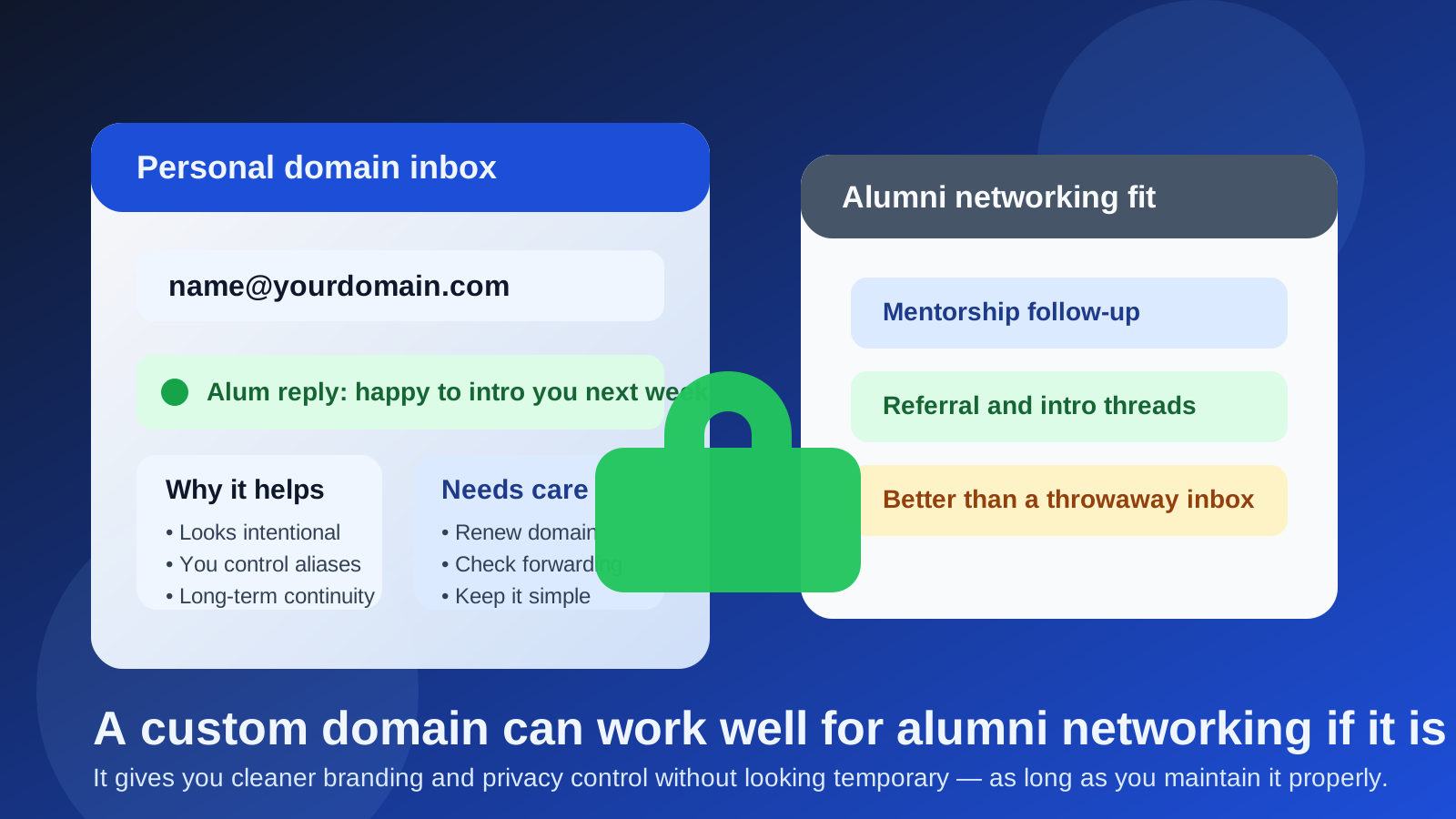
Yes, a custom domain email for alumni networking can be a very good choice if the address is simple, stable, and tied to a domain you fully control.
For most people, the best version is a personal domain inbox you actually monitor — not a work-managed domain, not a neglected side project address, and not a clever setup that becomes hard to maintain later.
Why this question matters
Alumni networking often sits in a strange in-between space. It is not as formal as a job application, but it is more personal and longer-lived than a one-off event signup. You may reach out to a graduate from your university for advice, follow up after an alumni panel, reconnect with a former club leader, or ask for a warm introduction months after your first contact. In that kind of relationship-driven communication, the email address you use matters more than people first assume.
A custom domain email can signal intention. It can look cleaner than an old inbox full of random signups, and it can give you more control over aliases, forwarding, and long-term identity. At the same time, it introduces real tradeoffs. If your domain lapses, your forwarding breaks, or the address feels too branded, too quirky, or too tied to a side project, the setup can work against you.
So the real question is not whether custom domain email is “allowed.” The real question is whether your specific setup helps alumni contacts trust you, remember you, and reach you again later.
Short answer: a good custom domain can help, but only if it is stable
Most alumni will not object to a custom domain email. In fact, many people will see it as polished and intentional if it uses your real name or a clear personal identity. A clean address on a personal domain can look more thoughtful than a cluttered free inbox you barely manage.
What matters is stability. Alumni networking depends on delayed replies, introductions, and long-tail follow-up. If your custom domain setup is likely to break, expire, or confuse people, then a mainstream personal inbox may be the safer choice.
Why a custom domain email can work well for alumni networking
It can look professional without looking corporate
Alumni outreach usually works best when you sound like a real person, not a sales funnel and not a stranger hiding behind a disposable address. A personal domain can hit that middle ground well. It can feel polished, memorable, and intentional without making you look like you are speaking on behalf of an employer.
It gives you better privacy and alias control
One of the biggest practical advantages of a custom domain is flexibility. You can create a dedicated address or alias specifically for alumni outreach, chapter events, mentorship requests, or school directories. That keeps your main personal inbox more private and makes it easier to see where messages are coming from. If one alias starts attracting noise, you can change the routing without abandoning your whole online identity.
It is portable across career changes
Your alumni network often outlasts your current job, school account, and even the free email provider you happen to use this year. A custom domain gives you a contact identity you can keep through job changes and relocations as long as you keep managing it. That long-term continuity is genuinely useful when someone remembers you months later.
It can support cleaner organization
If you care about boundaries, a custom domain setup can make alumni networking easier to manage. You can separate alumni messages from family mail, shopping receipts, newsletters, and random internet signups. That is not just a productivity win. It helps you respond more consistently when a useful conversation resurfaces.
When a custom domain email is a bad idea
The domain is tied to your current employer
If the domain belongs to your employer or is clearly connected to your current company, that is usually the wrong choice for alumni networking with any career angle. It can blur boundaries, create visibility concerns, and make future job-related outreach feel exposed in ways that are unnecessary.
The domain is unstable or easy to forget
If you are not good at renewing domains, maintaining inbox forwarding, or checking the account consistently, do not romanticize the setup. A fancy email identity is useless if you miss the message that mattered because the forwarding silently broke or the domain renewal failed.
The domain feels gimmicky
A personal domain should help people remember you, not make them wonder what it is. If the domain is too cute, too joke-based, too startup-branded, or too unrelated to your real identity, it can distract from the actual conversation. Alumni networking works better when your address feels easy to trust.
You rarely check that inbox
This is the most common real-world failure. A custom domain can be an excellent setup on paper and still fail because you do not monitor it. Alumni replies often come late. If you are not checking the inbox, the theoretical privacy benefits do not matter much.
Custom domain email vs Gmail, Outlook, and temporary inboxes
Compared with Gmail or Outlook
Mainstream providers are familiar and low-friction. A personal Gmail or Outlook account is usually easier to trust immediately because everybody recognizes it. A custom domain can feel more polished, but it also places more responsibility on you. If the custom domain is clean and reliable, it may be stronger than a cluttered free inbox. If it is fragile or awkward, the mainstream option is better.
Compared with a temporary or burner inbox
This is where the difference becomes clearer. Temporary inboxes are useful for low-stakes signups, alumni event registrations, or platform previews that may produce spam. They are much less useful for real people you want to hear from again. If you are screening newsletter-heavy alumni systems, a temporary inbox like Anonibox can be useful at the intake stage. For direct outreach, mentorship requests, and introductions, a stable custom domain inbox is usually much better.
Compared with a work email
A personal custom domain is usually far better than a work address for alumni networking tied to career exploration. Your own domain gives you control. A work account gives your employer control. That distinction matters.
Best situations for using a custom domain in alumni networking
- You want a cleaner professional identity than your oldest personal inbox provides.
- You are actively doing alumni outreach for mentoring, referrals, or industry conversations.
- You want a long-term contact address that can outlast your current job or city.
- You like the idea of aliases or routing without exposing your main daily inbox everywhere.
- You are willing to keep the domain renewed and the inbox monitored.
In those cases, a personal domain can be an excellent fit. It gives you more control without looking temporary or disposable.
When you should probably not bother
- You are only contacting a few alumni casually and already have a clean personal inbox.
- You do not want the extra maintenance of domain renewals and configuration.
- Your current personal Gmail or Outlook address is already simple, professional, and well managed.
- You tend to abandon side projects and infrastructure after a few months.
There is nothing wrong with choosing the simpler route. A mainstream personal email you check regularly is often better than a theoretically impressive custom domain you neglect.
How to set up a custom domain email well
1. Use a simple address format
Your name or a clear variation of it is usually best. The address should be easy to read aloud, easy to type correctly, and easy to remember after a short conversation.
2. Choose a domain that feels like you, not a campaign
If the domain sounds like a company, people may assume you are reaching out in a business capacity. If it sounds like a joke, they may hesitate. A straightforward personal domain is usually the strongest option.
3. Test reliability before sharing it
Send messages back and forth, check spam placement, confirm that forwarding works if you use it, and make sure replies arrive where you expect them. Good setup reduces avoidable problems, but it does not create a guarantee, so checking your real workflow matters.
4. Keep it independent from your employer
Do not build alumni networking on infrastructure you do not control. If the account disappears when you change jobs, it was never a durable identity in the first place.
5. Keep one lane for real conversations
If you use aliases for event registrations or alumni directories, that can be helpful. But for one-to-one outreach, use a stable address and keep the thread searchable. Alumni networking is too relationship-driven for a constantly shifting contact trail.
Common mistakes
Overbranding the domain
A custom domain is supposed to make communication smoother, not turn your email address into a talking point. If the domain looks like a side hustle, a startup pitch, or a personal brand experiment, it may create distance instead of trust.
Using a domain you may not keep
If you are not confident you will still own the domain in two years, it is not ideal for long-term networking. Alumni relationships often pay off later than expected.
Building a setup that is too clever
Lots of aliases and routing rules can be useful, but do not make the system so complicated that you stop checking the right inbox. Clean and boring usually wins.
Confusing privacy with invisibility
Privacy-friendly does not mean hard to reach. The best email setup for alumni networking is one that protects your boundaries while still making it easy for helpful people to reply.
Quick decision checklist
- Do I fully control this domain and plan to keep it long term?
- Is the address simple, readable, and professional?
- Do I actually check this inbox often enough to catch delayed replies?
- Would this setup be more stable than my existing personal email, not just more interesting?
- Am I using this for real person-to-person follow-up rather than just signups?
If most of those answers are yes, a custom domain email can be a strong choice for alumni networking. If several are no, a well-managed personal inbox may be the better answer.
Final answer
Yes, you can absolutely use a custom domain email for alumni networking, and in the right setup it can be one of the better options. It gives you a polished identity, better control, and a contact address that can move with you over time.
Just make sure the setup is boring in the best possible way: personal, stable, easy to trust, and easy to maintain. If your domain is reliable and your inbox habits are solid, a custom domain can support alumni networking very well. If not, a plain personal Gmail or Outlook account may still serve you better than a clever system you do not reliably keep alive.